终身寿险

Search documents
阳光保险如何绘就民生新图景?一图带你解锁→
21世纪经济报道· 2026-03-06 01:15
Core Viewpoint - Sunshine Insurance actively responds to national policies and regulatory guidance, focusing on providing inclusive financial insurance services to enhance social welfare and ensure that insurance benefits reach more people [4]. Group 1: Inclusive Insurance Services - By 2025, Sunshine Insurance aims to provide various inclusive insurance protections for specific groups such as the elderly, disabled, new citizens, and workers in new industries, with a total coverage of 25 trillion yuan and a payout of approximately 99 billion yuan [6]. - The company is committed to building a diversified product service system for the elderly, including personal pensions, critical illness insurance, lifelong life insurance, and tax-advantaged care [8]. Group 2: Elderly Care Services - Sunshine Insurance continuously upgrades its elderly care services, improving infrastructure for barrier-free access at offline outlets and establishing green channels for elderly services [12]. - Online services have been enhanced for elderly customers, including a direct access to customer service and audio broadcasting features on the official WeChat platform [15]. Group 3: Healthcare Integration - The company leverages its partnership with Ronghe Hospital and internet hospitals to create a comprehensive "online + offline" medical service network, providing clients with full lifecycle medical health management services [19]. - Sunshine Insurance is developing a one-stop insurance service platform that covers everything from hospitalization to health management and claims consulting [21]. Group 4: Support for Small and Micro Enterprises - Sunshine Insurance tailors product services to meet the needs of small and micro enterprises, helping them build risk barriers with customized insurance solutions [24]. - By 2025, the company plans to provide nearly 15 trillion yuan in inclusive insurance for small and micro enterprises [27]. Group 5: Rural Financial Services - The company is enhancing its service system in rural areas, exploring comprehensive financial insurance services to support rural industry development, cultural prosperity, ecological protection, and urban-rural integration [29]. - By 2025, Sunshine Insurance aims to provide agricultural insurance and related protections totaling 47.5 billion yuan [30]. Group 6: Philanthropic Initiatives - Since 2008, Sunshine Insurance has initiated the "Benevolence School" project, establishing 78 schools and benefiting nearly 30,000 teachers and students [32]. - The company has also implemented a plan to support impoverished students and rural doctors, covering 34 impoverished counties and training over 20,000 rural doctors [43].


多家银行推出亲子产品 让压岁钱变身财商课
Xin Lang Cai Jing· 2026-02-26 23:52
Core Insights - The article discusses how banks are competing for children's New Year's money by offering attractive savings products and higher interest rates, emphasizing financial education for children [2][4]. Interest Rate Competition - Major banks, including state-owned and city commercial banks, have increased their medium to long-term deposit rates, particularly for three-year fixed deposits, which are now more appealing [2]. - The five major state-owned banks maintain a three-year deposit interest rate around 1.55%, while some joint-stock banks offer rates around 1.75% [2]. - City commercial banks have emerged as leaders in this interest rate competition, with three-year rates generally between 1.8% and 2.0%, with some banks like Jilin Bank and Fuxin Bank reaching 2.0% [2]. Product Innovation - Banks are focusing on the emotional and educational aspects of their products, with new offerings like the "Youth Version" savings account designed for children under 16, which can be opened by guardians [4]. - These children's accounts often come with additional features such as point systems that can be exchanged for educational materials, aiming to extend the savings process into a financial education journey [4]. Financial Guidance - Financial advisors suggest that parents open children's savings accounts to diversify asset allocation, which can help children understand basic financial concepts and create a substantial education fund over time [5]. - The approach not only serves as a financial gift but also instills a sense of family responsibility and emotional connection, making the New Year's money a valuable part of the child's growth [5].



1000万资金怎么创建一个永久投资组合
集思录· 2026-02-09 15:10
Group 1 - The article discusses how to create a permanent investment portfolio with 10 million that ensures a stable income for a child, emphasizing simplicity, cash flow, and diversification [1][3] - It suggests that the investment strategy should be easy to manage, ideally requiring no active management, and should provide stable cash flow to meet basic needs [1] - The portfolio should be highly diversified to allow for easy liquidation in case of urgent financial needs [1][3] Group 2 - There is a perspective that regardless of the child's perceived capabilities, the focus should be on practical financial management and ensuring the child understands the value of the inherited wealth [5][14] - The concept of family trusts is introduced as a potential solution to manage wealth effectively, with a recommendation for a 50:50 stock-bond ratio to outperform inflation over the long term [9] - Concerns are raised about the risks associated with the child's financial behavior and the importance of instilling financial literacy from a young age to prevent mismanagement of wealth [14]

寿险银保渠道保费增速榜 透视三大阵营分化
Nan Fang Du Shi Bao· 2026-02-05 23:13
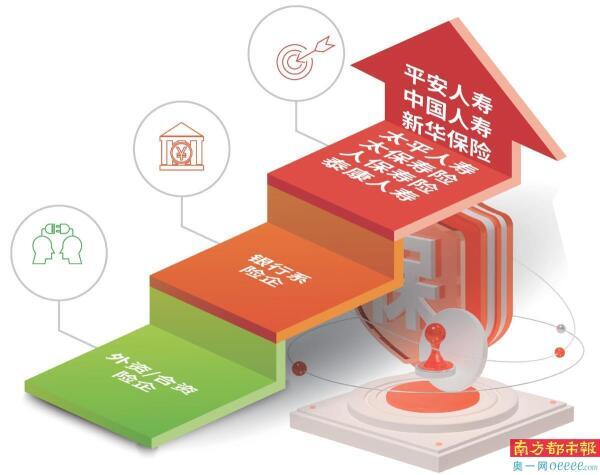
Core Insights - The article discusses the increasing trend of banks promoting insurance products, driven by the ongoing "deposit migration" and the urgent need for banks to boost their intermediary business revenue [2][6] - The insurance industry is witnessing a competitive landscape in the bancassurance channel, with significant growth in premium income, particularly among leading insurance companies [3][6] Group 1: Industry Trends - In 2025, the bancassurance channel for life insurance is expected to see an overall premium growth rate of approximately 10%, with leading insurers outperforming the industry average [3] - The "old seven" life insurance companies (including Ping An Life and China Life) achieved over 40% growth in bancassurance premiums, with Ping An Life leading at a remarkable 163% year-on-year increase [3][6] - The total premium income of the insurance industry surpassed 6 trillion yuan in 2025, marking a 7.4% year-on-year growth, with life insurance companies contributing significantly [6] Group 2: Competitive Landscape - There is a clear division among bank-affiliated insurance companies, with some experiencing significant growth while others face declines; for instance, Everbright Life Insurance saw a 111% increase, while others like China Merchants Life faced negative growth [4][5] - Foreign and joint venture insurers, although smaller in size, are achieving impressive growth rates by focusing on high-net-worth clients and long-term value services [5] Group 3: Strategic Developments - The removal of restrictions on the number of insurance companies a single bank branch can partner with has expanded product selection and improved matching with customer needs [7] - Insurers are actively enhancing their bancassurance channel strategies, with predictions indicating that new business value growth will be primarily driven by this channel in 2026 [8][11] - Major insurers are establishing extensive partnerships with banks, with China Life collaborating with over 100 banks and other companies also expanding their banking partnerships [9][11]

啥是寿险?来自西藏高原的一线回答
Xin Lang Cai Jing· 2026-01-16 13:38
Core Viewpoint - The documentary "What is Life Insurance" by China Life Insurance Company aims to illustrate the importance of insurance in rural areas, particularly in Tibet, and how it can be integrated into the daily lives of the people [1][5][11] Group 1: Insurance Education and Community Engagement - The documentary showcases the daily work of a village cadre, highlighting the challenges of educating villagers about insurance, particularly distinguishing between life and property insurance [2][8] - The cadre, Danzen Duntu, emphasizes the need to explain insurance concepts clearly to villagers, who often prioritize insuring livestock over themselves [2][8] - Efforts include assisting villagers with claims, explaining policy terms, and fostering a better understanding of risk awareness [2][8] Group 2: Long-term Support and Community Development - Since its establishment in 2007, China Life's Tibet branch has sent over a hundred cadres to remote villages, integrating corporate development with local welfare [3][9] - The company has completed nearly 2.4 million yuan in consumer assistance tasks, focusing on infrastructure projects like road construction and water supply improvements [9][10] - Specific projects include purchasing equipment for cooperatives and renovating local facilities, which have significantly improved living conditions for villagers [9][10] Group 3: Commitment to Social Responsibility - China Life believes that the value of insurance extends beyond sales and claims, aiming to embed the concept of protection into everyday life for the public [6][11] - The company actively participates in national insurance awareness campaigns, reinforcing its mission to educate the public about insurance benefits and functions [11] - Future plans include continuing grassroots efforts to support the goal of common prosperity in western regions of China [11]

2025年中国保险业回顾与展望——在政策护航下探索高质量发展新路径
13个精算师· 2026-01-13 10:08
Core Insights - The article emphasizes that 2025 is a pivotal year for the Chinese insurance industry, marking a transition from scale expansion to value creation, aligning with the strategic goals of the 14th and 15th Five-Year Plans [2][4]. Group 1: Industry Growth and Transformation - In 2025, the insurance industry is expected to achieve approximately 57.6 trillion yuan in original premium income from January to November, reflecting a year-on-year growth of 7.6%, indicating a resilient recovery and stabilization at healthier growth levels [4][5]. - The growth rate of premium income is projected to show a downward trend overall, transitioning from a focus on scale to quality, confirming the industry's shift towards value creation [5][6]. - The insurance sector is entering a new cycle characterized by more stable growth, improved structure, and stronger sustainability, driven by regulatory policies aimed at risk prevention and structural adjustment [7][9]. Group 2: Regulatory Policies and Their Impact - The regulatory framework for 2025 is driven by both guiding and normative policies, addressing market pain points while aligning with the strategic goals of the 15th Five-Year Plan [18][19]. - The guiding policies aim to channel insurance funds into national strategic areas, enhancing the industry's capacity to serve the real economy and creating new business growth points [18][19]. - Normative policies focus on rectifying market anomalies and ensuring the industry returns to its core function of risk protection, thereby promoting sustainable development [25][26]. Group 3: Market Dynamics and Competitive Landscape - The health insurance market is experiencing rapid growth, with property insurance companies leading the charge, while life insurance companies face challenges in growth and profitability [11][24]. - The "Matthew Effect" is evident, with market resources increasingly concentrating among top-tier institutions, as evidenced by the profitability of leading companies in both life and property insurance sectors [12][13]. - The solvency adequacy ratio for the insurance industry stands at 186.3%, with significant structural differentiation between property and life insurance companies, highlighting the challenges faced by smaller firms [13][15]. Group 4: Future Outlook and Strategic Alignment - The regulatory practices of 2025 are not isolated but are part of a broader strategy that aligns with the 15th Five-Year Plan's requirements for the financial and insurance sectors [31][32]. - The focus on enhancing the insurance industry's role in supporting social security and addressing demographic challenges is evident, with policies aimed at deepening pension finance reform and promoting health insurance development [31][32]. - The future competitive landscape will require companies to integrate regulatory compliance into their risk management and product innovation capabilities, ensuring alignment with national strategic directions [34].
大额存单利率进入0字头,存款到期钱该放哪
阿尔法工场研究院· 2026-01-12 00:06
Core Viewpoint - The article discusses the ongoing decline in deposit interest rates in China, highlighting the challenges faced by banks in attracting deposits amid a significant wave of maturing deposits in 2026, estimated at 50 trillion yuan [4][17]. Group 1: Deposit Trends - Large-denomination certificates of deposit (CDs) are still attracting attention from savers despite declining interest rates, with some banks offering rates as low as 1.55% for three-year deposits [5]. - As of January 7, over 30 banks have announced the issuance of large-denomination CDs for 2026, with promotional activities aimed at attracting depositors [5]. - The trend shows a shift towards shorter-term large-denomination CDs, with many banks focusing on one-year or shorter products, while five-year CDs are nearly extinct [8][16]. Group 2: Interest Rate Changes - Interest rates for three-month large-denomination CDs have dropped below 1%, with some banks offering rates as low as 0.95% [6][9]. - Most banks are offering three-year large-denomination CDs with rates not exceeding 2%, and one-year rates are often below 1.5% [9]. - Several private banks have accelerated their rate cuts, with notable reductions in rates for various terms, including a drop from 1.90% to 1.80% for three-year deposits at certain banks [12][14]. Group 3: Maturing Deposits and Investor Behavior - A significant amount of deposits, particularly those with terms of one year or more, will mature in 2026, with estimates indicating over 20 trillion yuan for two-year and three-year deposits [17]. - Investors are showing varied responses to maturing deposits, with some seeking higher returns through alternative investments like stocks or structured deposits, while others remain cautious and consider traditional savings options [18]. - The article notes that banks are adjusting their deposit strategies, promoting structured deposits and low-risk investment products to attract depositors facing maturing funds [18]. Group 4: Future Outlook - The prevailing market sentiment suggests that monetary policy will remain accommodative, with potential for further interest rate cuts in the near future [20][19]. - Analysts predict that the central bank may implement a new round of interest rate cuts in the first quarter of 2026, possibly before the Spring Festival [19].

中荷人寿荣获“杰出寿险公司”奖
Jin Rong Jie· 2025-12-30 03:56
Core Viewpoint - Zhonghe Life Insurance Co., Ltd. has been awarded the "Outstanding Life Insurance Company" at the "Qihang • 2025 Financial Annual Conference" for its excellent management capabilities, solid corporate social responsibility practices, and outstanding performance in industry transformation [1] Group 1: High-Quality Development - The company adheres to the leadership of the Party as a fundamental principle, integrating Party building into corporate governance and strategic practices to ensure stable and sustainable development [4] - Zhonghe Life achieved a comprehensive investment return rate of 14.42% in 2024, with an average return rate of 7.42% over the past three years [4] - The company has maintained a rigorous risk control system, achieving a risk comprehensive rating of AA or above for nine consecutive quarters, supporting its mission of "finance for the people" [4] Group 2: Core Competitiveness through Innovation - Zhonghe Life focuses on market dynamics and deep customer needs to innovate, creating a differentiated product supply system covering the entire life cycle [5] - The company has developed a diverse product matrix in the dividend insurance sector, including annuity insurance, whole life insurance, and pension annuity insurance, establishing a solid competitive barrier [5] Group 3: Service Experience through Digital Technology - The company is integrating insurance with technology, aiming to create a more convenient, intelligent, personalized, and warm service ecosystem [6] - Zhonghe Life has built the "Hehu Health" comprehensive service platform, providing over 40 services related to health management and elder care, serving more than 152,000 customers [6] - The company has optimized its online service processes, achieving an 84.75% automatic approval rate for underwriting and usage rates of 91.3% and 87% for online policy maintenance and claims, respectively [6] Group 4: Social Responsibility - Zhonghe Life believes that long-term corporate value comes from balancing economic performance and social responsibility [7] - The company actively participates in public welfare activities, conducting nearly 4,000 financial education events that reached approximately 11.6 million people [7] - Zhonghe Life integrates green finance concepts into its operations, demonstrating its commitment to environmental and social responsibilities [7]

2025三季度71家寿险公司退保率排行榜:2家超8%,5款产品退保超50亿!
13个精算师· 2025-12-18 10:28
Core Insights - The article highlights that over 80% of insurance companies have a surrender rate below 2%, indicating a positive trend in policy retention [7][12][20] - The total surrender scale exceeds 1.3 trillion, with lifetime insurance accounting for over 670 billion, reflecting significant market activity [11][9] - The average surrender rate has seen a continuous decline, with the median surrender rate for Q3 2025 recorded at 1.27% [12][14] Summary by Sections Surrender Rates and Trends - In Q3 2025, 71 life insurance companies reported a surrender rate, with 2 companies exceeding 8% and 3 exceeding 4% [7][22] - The average surrender rate for these companies is 1.73%, a decrease of 1.48 percentage points compared to three years ago [14][16] - A total of 58 companies have a surrender rate below 2%, which is approximately 82% of the surveyed companies, marking an increase of about 1.6 percentage points from the previous year [20][22] Surrender Scale and Product Types - The cumulative surrender scale for over 740 products reached more than 1.3 trillion, with 4 companies reporting over 100 billion in surrenders [11][9] - The increase in surrender scale is primarily attributed to lifetime insurance, which has surpassed 670 billion, while the share of annuity insurance in surrenders has significantly decreased [11][30] - The surrender rates for investment-linked and universal life products are notably high, indicating a shift in consumer preferences [26][28] Company Performance and Market Outlook - The article notes that the life insurance sector is expected to enter a golden development period by 2026, driven by improved liability quality and investment returns [7][8] - The net profit for 72 life insurance companies in the first three quarters of 2025 reached 461.96 billion, surpassing the total for the entire year of 2024 and setting a historical high for the industry [7][8] - The decline in surrender rates is attributed to the maturation of previously popular products and a shift towards more stable lifetime insurance offerings [16][31]


张迎宾:保险业创新的窘境与对策
Xin Lang Cai Jing· 2025-12-17 05:21
Core Viewpoint - The future winners in the insurance industry will not be those who sell the most policies, but those who understand their customers best, manage risks effectively, and integrate ecosystems as "life service partners" [1][29]. Group 1: Innovation Challenges - The insurance industry is at a crossroads, facing the dual pressures of emerging technologies like AI, big data, and IoT, and the traditional "stable gene" that emphasizes risk management and process rigor [5][33]. - The first dilemma is the "creative destruction" described by Joseph Schumpeter, where traditional insurance models are being disrupted by new technologies and customer demands for simpler, more flexible products [13][41]. - The second dilemma involves the difficulty of "organized innovation" as outlined by Peter Drucker, where many insurance companies react to changes rather than proactively manage innovation systematically [15][43]. - The third dilemma is the "disruptive innovation" challenge highlighted by Clayton Christensen, where established companies may overlook emerging competitors targeting lower-end markets, leading to their eventual decline [17][45]. Group 2: Strategies for Overcoming Challenges - The first strategy is to embrace Schumpeter's idea of proactive self-revolution, encouraging companies to invest in digital platforms and integrate insurance with health and wellness services [19][47]. - The second strategy involves implementing Drucker's principles by establishing dedicated innovation departments, creating incubators for promising projects, and reforming performance metrics to focus on long-term customer value [21][49]. - The third strategy is to adopt a "dual-track innovation" approach, where one track focuses on optimizing existing products for mainstream customers, while the other track explores disruptive opportunities in new markets [25][52].