
精准治疗

Search documents
美中嘉和科研实力再获背书 钱朝南院长六度蝉联全球顶尖科学家榜单
Zheng Quan Ri Bao Wang· 2025-09-28 13:48
Core Insights - The company, Meizhong Jiahe Medical Technology Development Group, has received academic recognition with its director, Professor Qian Zhaonan, being listed in the "Top 2% of Scientists Worldwide (2025)" by Stanford University and Elsevier, highlighting its research and clinical capabilities in the field of head and neck tumors, particularly nasopharyngeal carcinoma [1][2] Group 1: Academic Recognition - Professor Qian Zhaonan has been included in the prestigious list for six consecutive years, indicating his sustained academic influence and contributions to the field of oncology [1][2] - The list is recognized globally for its rigorous selection criteria, which focus on genuine academic contributions, thus enhancing the credibility of the recognition [1] Group 2: Clinical Impact - The recognition signifies that the company's research outcomes are being effectively translated into clinical practices, establishing a competitive edge in the market [2] - The hospital has developed a unique treatment system focusing on nasopharyngeal carcinoma while also covering multiple diseases, showcasing its innovative approaches in proton therapy [2] Group 3: Strategic Direction - The company emphasizes a strategy of "research-driven + international collaboration," which has been pivotal in attracting top talent and enhancing its research capabilities [3] - Future plans include increasing investment in research, particularly in proton therapy, immunotherapy, and artificial intelligence applications in treating nasopharyngeal carcinoma and other prevalent tumors [3]
定价过百万的抗癌药,何时能进医保?
Sou Hu Cai Jing· 2025-09-01 12:03
Core Viewpoint - The CAR-T therapy market in China is facing challenges with high costs and limited market penetration, but there is potential for price reductions and increased insurance coverage in the future [2][16]. Group 1: Company Performance - WuXi AppTec reported a revenue of 106.3 million yuan in the first half of 2025, with sales of its CAR-T drug, Regiokyron, amounting to 81 million yuan [2]. - Legend Biotech's CAR-T drug achieved global sales of 439 million USD (approximately 3.1 billion yuan) in Q2 2025, with total sales for the first half reaching 808 million USD (approximately 5.7 billion yuan), marking a year-on-year growth of 100% [3][10]. - CStone Pharmaceuticals reported a revenue of approximately 51 million yuan in the first half of 2025, a year-on-year increase of about 703.8%, primarily driven by CAR-T products [6]. Group 2: Market Challenges - Legend Biotech has reportedly canceled its sales and marketing team in China, focusing instead on more profitable overseas markets due to underwhelming domestic sales [4]. - The high cost of CAR-T treatments remains a significant barrier to market penetration, with prices exceeding 1 million yuan per treatment, making it unaffordable for most patients in China [15][16]. - The lack of a clear commercial path for CAR-T products in China is a common challenge faced by companies in this sector [4]. Group 3: Pricing and Insurance - The pricing of CAR-T products varies, with WuXi AppTec's Regiokyron priced at 1.29 million yuan, while the lowest-priced product, CStone's Nakiokyron, is priced at 999,000 yuan [8][15]. - Efforts are being made to improve insurance coverage for CAR-T therapies, with several companies submitting applications for inclusion in basic medical insurance and commercial insurance directories [16]. - The development of commercial insurance in China is seen as a key factor in enhancing payment capabilities for CAR-T treatments, which could lead to price reductions in the next five years [16][17]. Group 4: Technological Innovations - Recent advancements in CAR-T technology, such as in vivo production methods, are gaining attention and may offer solutions to the high costs associated with traditional CAR-T therapies [18]. - The production cost of CAR-T therapies is significant, with estimates indicating that the material cost for each treatment is around 43,000 USD, highlighting the need for cost-effective production methods [17][18].



第八届健博会将于今年12月底在三亚举办
Hai Nan Ri Bao· 2025-08-23 01:12
Core Insights - The 2025 8th Hainan International Health Industry Expo will be held from December 26 to 29 in Sanya, Hainan, focusing on the theme "Smart Leadership, New Future of Health" [1] - This expo is the only health exhibition project in Hainan approved for government agency participation and is a high-end exhibition project following the launch of Hainan Free Trade Port [1] Exhibition Details - The planned exhibition area is 20,000 square meters, with an interactive experience area of 10,000 square meters [1] - There will be six core exhibition areas: smart healthcare, innovative medical devices, high-end health maintenance and rehabilitation, traditional Chinese medicine, tourism and health services, and health and beauty [1] - The event will also feature over 10 high-level forums, including a forum on medical artificial intelligence and precision treatment [1] Participation and Audience - The organizers expect to invite over 4,000 professional buyers and attendees, along with more than 30,000 general public visitors [1] - The expo is organized by eight entities, including the Hainan Provincial Health Commission and the Hainan Provincial Department of Science and Technology [1]
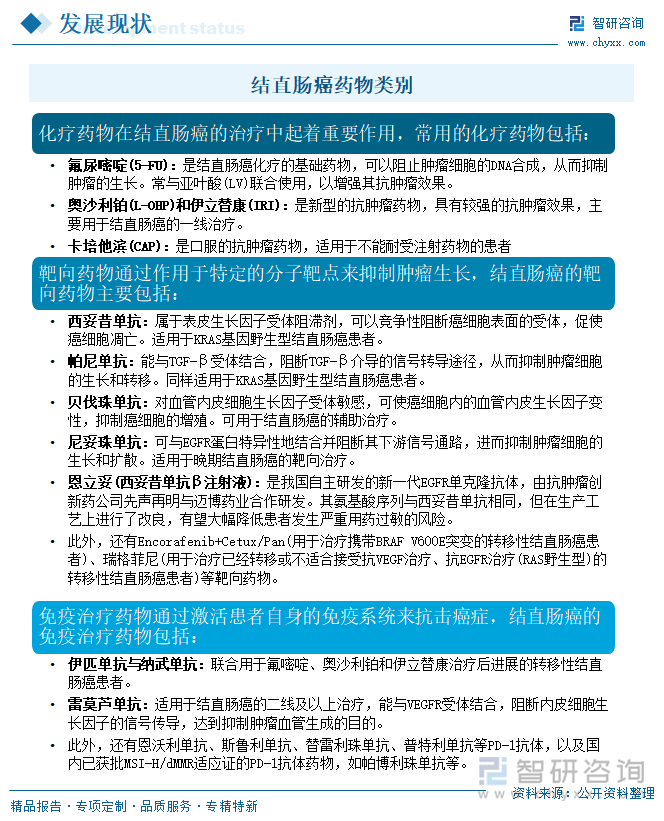
研判2025!中国结直肠癌(CRC)药物行业发展背景、市场现状及未来趋势分析:结直肠癌患者数量庞大,对相关药物需求旺盛,带动市场规模迅速增长[图]
Chan Ye Xin Xi Wang· 2025-08-20 01:19
Core Insights - Colorectal cancer (CRC) is the second most common malignant tumor in China, with 517,100 new cases in 2022, accounting for 10.7% of all cancer cases, and 240,000 deaths, representing 9.3% of all cancer deaths [1][12] - The global colorectal cancer drug market is projected to grow from $16.9 billion in 2019 to $25.4 billion by 2024, indicating significant market potential [1][13] - The Chinese colorectal cancer drug market is expected to reach 24.21 billion yuan by 2024, with an 18.5% year-on-year growth [1][16] - The market is characterized by a competitive landscape with multiple companies across different tiers, including leading firms like Junshi Biosciences and others [1][18] Industry Overview - Colorectal cancer drugs include traditional chemotherapy, targeted therapies, and immunotherapies, which are crucial for extending patient survival [2] - The burden of colorectal cancer in China is significant, with over 80% of patients diagnosed at advanced stages, leading to high treatment demands [1][16] - The market is expected to continue growing, with projections of 37.3 billion yuan by 2027 and nearly 60 billion yuan by 2031 [1][20] Competitive Landscape - The colorectal cancer drug industry features a tiered structure: - First tier: Junshi Biosciences - Second tier: Maibao Pharmaceutical, Hutchison China MediTech - Third tier: JAKS Pharmaceuticals, Jinfang Pharmaceutical [1][18] - Over 10 innovative therapies have been approved globally for colorectal cancer treatment, with more in clinical trials [1][18] Future Trends - The market is expected to see a shift towards precision medicine, with targeted and immunotherapies becoming mainstream [1][22] - Domestic innovative pharmaceutical companies are rapidly emerging, enhancing their product lines through independent research and global collaborations [1][23] - Upgraded patient needs will drive innovations in service models, focusing on unmet clinical demands and improving treatment experiences [1][25]

精准诊断与治疗,助力高危基因突变乳腺癌患者降低复发风险
Xin Jing Bao· 2025-08-18 08:48
Core Viewpoint - Breast cancer is a significant health threat to women in China, but advancements in medical treatment have improved the 5-year survival rate to 83.2% [1] Group 1: Current Situation and Statistics - Approximately 72% of breast cancer patients in China are diagnosed at an early stage, yet 30% of high-risk patients may experience recurrence within the first few years [1] - The 5-year survival rate for late-stage breast cancer is only 20%, with a median survival time of 2-3 years [1] Group 2: Genetic Factors and Risk Assessment - 5%-10% of breast cancer patients have hereditary breast cancer due to genetic mutations, with BRCA1/2 being the most critical susceptibility genes [2] - 5%-20% of breast cancer patients in China carry BRCA mutations, which are more common in HER2-negative breast cancer, particularly in triple-negative breast cancer (TNBC) [2] Group 3: Importance of Genetic Testing - Genetic testing for BRCA1/2 is recommended for patients with a family history of breast cancer and those diagnosed with invasive TNBC, especially with lymph node involvement [3] - Accurate diagnosis through genetic testing is essential for developing personalized treatment plans and improving treatment efficacy [3] Group 4: Treatment and Prevention Strategies - New treatment options based on genetic mutations require clear identification of the mutation-carrying population for effective outcomes [4] - Regular breast cancer screenings are advised for women aged 35 to 70, along with self-examinations to facilitate early detection and treatment [4]
胃癌治疗新革命进行时
Ge Long Hui· 2025-08-13 03:16
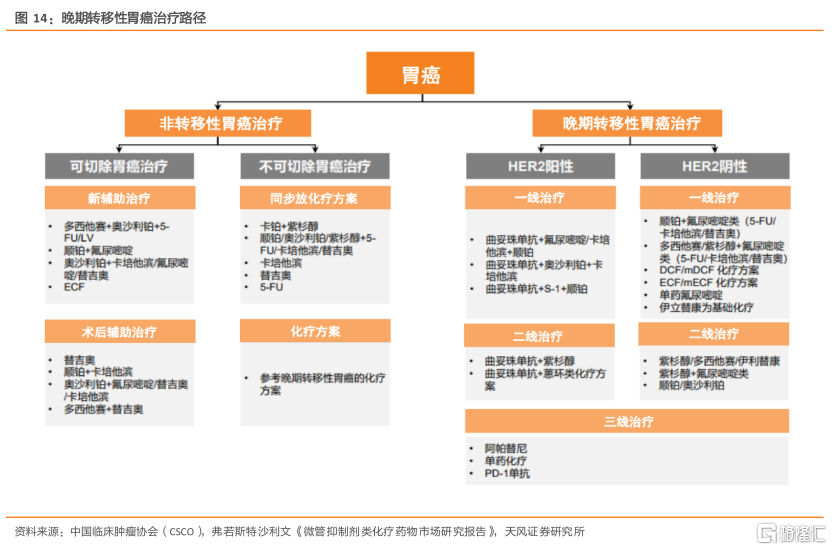
Core Insights - Amgen/Zai Lab announced the success of the Phase III clinical trial for Bemarituzumab, the first and only FGFR2b inhibitor demonstrating overall survival (OS) benefits in first-line treatment for gastric cancer, marking a significant breakthrough in the field [1][13]. Group 1: Development History of Gastric Cancer Drugs - Gastric cancer (GC) is a common and aggressive malignancy with high heterogeneity, ranking third in incidence and mortality among various cancers [1]. - The development of gastric cancer treatments has evolved through four stages: chemotherapy, targeted therapy, immunotherapy, and precision medicine [1][2][5]. - Early chemotherapy relied on 5-FU and platinum-based drugs, which had limitations such as limited efficacy and significant side effects [1]. Group 2: Targeted Therapies and Innovations - The targeted therapy era saw the emergence of several drugs, including Trastuzumab and Ramucirumab, which have changed treatment paradigms for HER2-positive gastric cancer [2][3]. - Despite advancements, targeted therapies face challenges such as limited patient populations and resistance issues [3]. - The immunotherapy era introduced PD-1/PD-L1 inhibitors, significantly impacting treatment options for advanced gastric cancer [5]. Group 3: Emerging Targets and Clinical Trials - Current innovative therapies target multiple biomarkers, including HER2, Claudin18.2, and FGFR2b, with ongoing clinical trials exploring their efficacy [7][12][13]. - The ADC drug targeting HER2, Trastuzumab Deruxtecan, has shown promising results, extending median OS by 3.3 months compared to standard therapies [10]. - Claudin18.2 is emerging as a promising target, with Zolbetuximab recently approved for use in combination with chemotherapy [12]. Group 4: Domestic Market Dynamics - China accounts for approximately 40% of the global gastric cancer cases, creating a significant market opportunity for domestic pharmaceutical companies [15]. - Companies like Hengrui and Rongchang Biopharma are actively developing innovative therapies targeting HER2 and Claudin18.2, with ongoing clinical trials showing encouraging results [16][19]. - The competitive landscape is intensifying as domestic firms explore new targets such as MET and FGFR2b, aiming to address unmet medical needs in gastric cancer treatment [20][21].
Pulmonx (LUNG) FY Conference Transcript
2025-08-12 15:00
Summary of Pulmonx (LUNG) FY Conference Call - August 12, 2025 Company Overview - **Company**: Pulmonx Corporation (LUNG) - **Industry**: Medical Technology, specifically focused on treatments for severe emphysema and COPD - **Market Size**: Total Addressable Market (TAM) is $12 billion, with $5 billion in the United States and $7 billion internationally [3][4] Core Points and Arguments - **Clinical Validation**: Pulmonx is recognized in the gold COPD guidelines as the standard of care for patients with severe emphysema, supported by four randomized controlled trials and over 150 published data pieces [5][6] - **Product Offering**: The Zephyr valves are a minimally invasive treatment option for emphysema, allowing trapped air to escape from hyperinflated lobes of the lungs, thus improving patients' breathing capacity [7][19] - **Patient Demographics**: There are approximately 3.8 million diagnosed emphysema patients in the U.S., with 1.5 million suffering from severe emphysema. Of these, 1.2 million have hyperinflation, and 500,000 are candidates for the Zephyr valve treatment [14][15] - **Revenue Model**: The average cost per procedure is estimated at $10,000, with an average selling price (ASP) of $2,500 per valve [15][16] Financial Performance - **Recent Growth**: The company reported a 22% revenue growth year-over-year, with Q2 revenue at $23.9 million, comprising $14.7 million from the U.S. and $9.1 million from outside the U.S. [33] - **Gross Margins**: Gross margins were reported at 72% for Q2, with guidance for the year set at 74% [34] - **Cash Position**: The company holds $84.2 million in cash, cash equivalents, and marketable securities [34] Strategic Initiatives - **Market Growth Strategy**: The company aims to grow through three main strategies: acquire, test, and treat. This includes direct-to-patient advertising, peer-to-peer education, and the introduction of the LungTrax Detect product to identify potential patients [20][22][25] - **Geographic Expansion**: Pulmonx is expanding into Japan and China, with ongoing studies and partnerships to enhance market presence [29] - **New Product Development**: The Aeroseal product is expected to launch in 2027, which will allow treatment for patients with collateral ventilation, potentially expanding the TAM significantly [30][31] Challenges and Delays - **U.S. Market Delays**: The company has faced delays in the implementation of initiatives, which has affected revenue guidance, now projected at $90 million to $92 million for the year, reflecting a growth of 7% to 10% [35] - **Patient Acquisition Cycle**: Patients identified through direct-to-patient advertising take longer to navigate the treatment funnel compared to those referred directly by pulmonologists [38][39] - **Operational Efficiency**: The company is implementing various operational efficiencies, including automation and zero-based budgeting, to manage costs amid changing revenue expectations [62][63] Additional Insights - **Sales Force Dynamics**: The U.S. sales force is experiencing some challenges, with a need for representatives who can engage deeply with the market rather than just opening accounts [57][58] - **Therapy Awareness Specialists**: The introduction of therapy awareness specialists has led to a 19% increase in patient identification in regions where they are deployed [49] This summary encapsulates the key points discussed during the Pulmonx FY Conference Call, highlighting the company's market position, financial performance, strategic initiatives, and challenges faced in the current business environment.

来凯医药(02105) - 自愿公告LAE103的新药临床试验(IND)已获得美国食品药品监督管理局...
2025-07-31 04:01
香 港 交 易 及 結 算 所 有 限 公 司 及 香 港 聯 合 交 易 所 有 限 公 司 對 本 公 告 的 內 容 概 不 負 責,對其準確性或完整性亦不發表任何聲明,並明確表示,概不對因本公告全部 或任何部份內容而產生或因倚賴該等內容而引致的任何損失承擔任何責任。 Laekna, Inc. 來凱醫藥有限公司 風險提示 LAE103最終不一定能夠成功開發及商業化。本公司股東及潛在投資者於買賣本公 司證券時務請審慎行事。 自願公告 LAE103的新藥臨床試驗(IND) 已獲得美國食品藥品監督管理局(FDA)批准 本 公 告 由 來 凱 醫 藥 有 限 公 司(「 本 公 司 」, 連 同 其 附 屬 公 司 統 稱「 本 集 團 」)自 願 作 出,以告知本公司股東及潛在投資者本集團最新業務進展。 謹參照本公司於2025年6月30日就LAE103向美國食品藥品管理局(「美國FDA」)提 交新藥臨床試驗「( IND」)申請所發佈之公告。LAE103( 一種針對Act RIIB的單克隆 抗體 )為本公司自主研發、潛在用於治療肌少性肥胖症及其他肌肉相關疾病。 公司董事(「董事」)會(「董事會」)欣然宣佈,LA ...
【私募调研记录】睿亿投资调研之江生物
Zheng Quan Zhi Xing· 2025-07-18 00:10
Group 1 - The core viewpoint of the news is that Ruiyi Investment has conducted research on a listed company, Zhijiang Biology, focusing on its future development plans and ongoing projects in the field of molecular diagnostics and cancer screening [1] - Zhijiang Biology plans to invest approximately 60 million yuan in R&D for 2024, with expected growth in 2025, emphasizing innovation in tumor early screening, companion diagnostics, and precision treatment [1] - The company is collaborating with Sanyou Biology on four ongoing projects, with one project entering the invention patent application stage [1] Group 2 - Zhijiang Biology offers organoid services to research and medical institutions, providing customized models and one-stop solutions [1] - Future capital increases in Sanyou Biology will consider strategic layout, shareholder interests, and market conditions [1] - The company has completed three rounds of share purchases and is currently conducting the second purchase for 2025, with future plans depending on circumstances [1] Group 3 - The investment projects are focused on high technical barriers and strong core competitiveness, aiming to promote the transformation of innovative achievements [1] - The future development plan is driven by technological innovation, aiming to expand the product line and achieve a full industry chain layout while exploring international markets [1] - Overseas business plans include increasing global presence, establishing new smart manufacturing plants, and enhancing localized team building to improve customer management [1]

共探临床研究新路径,粤港澳大湾区国际临床试验大会在深举办
Nan Fang Du Shi Bao· 2025-07-13 01:44
Core Insights - The conference aims to accelerate the transformation of medical research findings into practical treatments for patients, benefiting the general public [1][5] - The Guangdong-Hong Kong-Macao Greater Bay Area is highlighted for its unique advantages in enhancing collaboration and optimizing processes in clinical trials [2][3] Group 1: Conference Objectives and Structure - The conference, titled "International Clinical Trials Conference of the Guangdong-Hong Kong-Macao Greater Bay Area," focuses on improving the efficiency of clinical trials and the application of new therapies [1][3] - It emphasizes the importance of collaboration among regional medical resources to create a comprehensive innovation loop from basic research to technology breakthroughs and results transformation [3][4] Group 2: Expert Contributions and Discussions - Renowned experts, including editors from top medical journals and academicians, shared insights on clinical trial design and breakthroughs in gene therapy for rare diseases [2][4] - The conference featured discussions on optimizing treatment processes for critical conditions like cancer and cardiovascular emergencies, aiming to enhance patient outcomes [4][5] Group 3: Research and Development Focus - The conference underscored the need for research to be driven by clinical challenges, with a commitment to translating laboratory discoveries into effective clinical applications [4][5] - The Zhongshan Hospital, a key organizer, is recognized for its robust research capabilities and commitment to addressing major health issues through innovative solutions [5]
