边境贸易

Search documents
“三年多来首次”,中国外长今起访问印度
Huan Qiu Shi Bao· 2025-08-17 22:50
Group 1 - The core point of the news is that Chinese Foreign Minister Wang Yi will visit India from August 18 to 20, marking the first visit by a Chinese foreign minister to India in over three years, which is seen as a significant step in maintaining diplomatic contact between the two countries [1][2] - During the visit, Wang Yi is expected to meet with Indian Foreign Minister S. Jaishankar and National Security Advisor Ajit Doval to discuss measures to increase mutual trust and to explore the resumption of border trade and a mutually acceptable framework for resolving border issues [1][2] - The backdrop of this visit includes previous meetings between Doval and Wang Yi, where they reached six points of consensus regarding the border issue, indicating ongoing constructive dialogue [2] Group 2 - The news highlights the current tensions in India-US relations due to the US imposing a 25% tariff on Indian goods and threatening further penalties, prompting India to seek stronger ties with China [3] - Following Wang Yi's visit, S. Jaishankar is scheduled to visit Russia, indicating the importance of India's relationships with both China and Russia amid the strained India-US relations [3] - Despite bilateral tensions, India and China are actively participating in multilateral forums such as BRICS, SCO, and G20, demonstrating a commitment to cooperation on a global platform [3][4]
从码头扛货到直播带货 黑龙江边民书写跨境贸易新传奇
Huan Qiu Wang Zi Xun· 2025-07-19 05:50
Core Insights - The article highlights the transformation of Suifenhe, a border city in Heilongjiang Province, from traditional barter trade to modern e-commerce and live-streaming sales, marking a significant evolution in cross-border trade practices [1][3]. Group 1: Historical Context - Suifenhe, established as a city in 2025, is one of China's earliest border ports, witnessing major changes in border trade since the 1980s [1]. - The city transitioned from barter trade, known as "欠欠" (qiàn qiàn), to diverse trade methods, including e-commerce and live-streaming sales [1][3]. Group 2: Economic Development - Suifenhe has become a hub for Russian goods, with 1,340 physical stores and over 7,000 e-commerce businesses operating online, achieving an online sales figure of over 1.5 billion yuan in 2024 [3][5]. - The establishment of the China (Heilongjiang) Free Trade Pilot Zone in 2019 and the Cross-Border E-Commerce Comprehensive Pilot Zone in 2020 has facilitated this growth [3]. Group 3: Trade Statistics - In the first half of 2025, the cross-border e-commerce "9610" model in Heihe saw a remarkable increase, with 29.6 million export packages, a year-on-year growth of 4,824.3%, and a total weight of 4,302 tons, up 482% [5]. - The export value reached 2.38 billion yuan, reflecting a year-on-year increase of 1,552.8% [5]. Group 4: Consumer Behavior - Consumers are increasingly valuing experiential shopping, with a blend of online and offline interactions becoming the norm, as demonstrated by local entrepreneurs who leverage language skills and technology [5][7]. - The resilience and adaptability of border residents are emphasized as they navigate the evolving landscape of cross-border commerce [7].


友谊之桥,双向奔赴(边城见闻)
Ren Min Ri Bao· 2025-06-11 22:11
Core Viewpoint - The article highlights the increasing trade and cultural exchanges between China and Nepal through key border ports, particularly focusing on the significance of the Zhangmu and Jilong ports in facilitating these interactions. Group 1: Trade and Economic Activities - Zhangmu port has become a vital trade hub, handling over 80% of the trade volume between China and Nepal at its peak, with significant exports of Chinese products like electric vehicles and solar products to Nepal [11][12]. - As of May 2024, the export of electric vehicles through the Zhangmu and Jilong ports is projected to reach 11,000 units, indicating a strong demand for Chinese products in the South Asian market [12]. - The first export of Nepali fodder to China occurred in July 2023 via the Jilong port, marking a new chapter in agricultural trade between the two countries [14]. Group 2: Cultural Exchange and Tourism - The article describes the cultural integration and exchanges occurring at the border, with local businesses in Nepal benefiting from the influx of Chinese tourists and traders [15]. - The Jilong area is noted for its historical significance and natural beauty, attracting tourists and promoting cross-border tourism, with local businesses adapting to cater to this growing market [14][15]. - The establishment of a travel agency by a local entrepreneur reflects the increasing interest in promoting cross-border tourism, with plans to attract more international visitors to the region [15]. Group 3: Infrastructure and Development - The opening of the new Lizhi-Naiqiong port in November 2023 enhances the connectivity between China and South Asia, facilitating smoother trade routes [16]. - Ongoing infrastructure improvements and the establishment of border economic cooperation zones are part of the strategic plans to boost trade and economic activities in the region [16]. - The article mentions the implementation of advanced customs procedures, such as facial recognition for border crossings, which streamline the process and enhance the efficiency of trade [17]. Group 4: Economic Performance - In the first quarter of 2023, the total import and export value of Shigatse reached 907 million yuan, a year-on-year increase of 22.2%, with significant trade with South Asian countries [17]. - The article emphasizes the growing economic significance of Shigatse as a center for trade with South Asia, with plans for further development outlined in the 2025 government work report [16][18].

二连口岸出入境人员今年突破100万人次 较同期提前29天
news flash· 2025-05-19 08:48
Group 1 - The core point of the article highlights that as of May 18, the number of inbound and outbound personnel at the Erliang Port has exceeded 1 million, which is 29 days earlier than last year [1] - There is a continuous increase in border trade, cross-border tourism, and personnel exchanges between China and Mongolia this year [1] - Various customs clearance data at the port show impressive performance, with a single-day peak of 13,071 passengers being processed and over 1,300 small vehicles crossing daily [1]
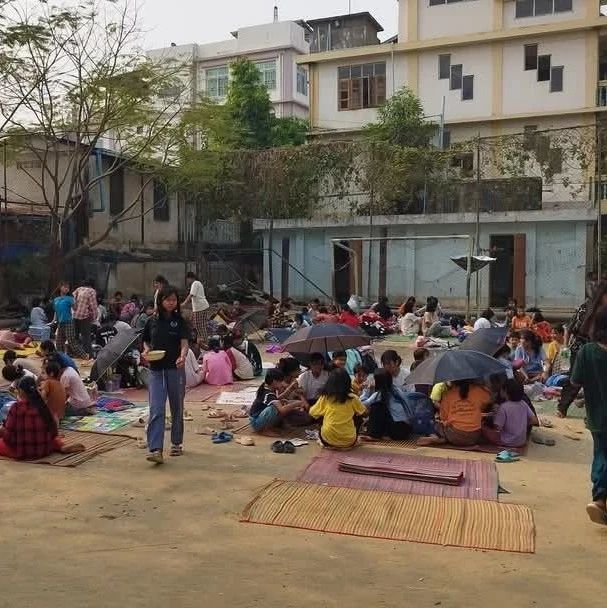
已致超3000人死亡!边贸商人亲述缅甸地震后经济余震
21世纪经济报道· 2025-04-02 15:31
Core Viewpoint - The recent 7.9 magnitude earthquake in Myanmar has caused significant destruction, with over 3,000 reported deaths and extensive damage to infrastructure, highlighting the country's vulnerability to seismic activity and the need for international aid and long-term capacity building for disaster response [1][2][13][14]. Group 1: Impact on Trade and Economy - The earthquake has disrupted trade between China and Myanmar, particularly affecting the import of timber, agricultural products, and minerals due to damaged infrastructure [3][22]. - Despite the immediate impact, bilateral trade is expected to stabilize over time due to the strategic cooperation between the two countries [3][22]. - The earthquake's aftermath poses significant challenges for Myanmar's economic recovery, particularly in agricultural regions crucial for rice and bean production, with potential delays in exports [22][23]. Group 2: International Aid and Response - China has rapidly mobilized rescue teams, with approximately 400 personnel involved in relief efforts, successfully rescuing survivors within the critical 72-hour window post-earthquake [16][18]. - The involvement of various Chinese rescue teams and organizations demonstrates a coordinated international response to the disaster, addressing immediate humanitarian needs [16][18]. - The challenges faced in the rescue operations are compounded by Myanmar's limited infrastructure and ongoing political instability, which hinder effective disaster management [14][15]. Group 3: Infrastructure and Recovery Challenges - The earthquake has caused extensive damage to roads, communication networks, and medical facilities, complicating rescue and recovery efforts [15][21]. - The need for substantial reconstruction funding may exacerbate the already fragile economic situation in Myanmar, deterring foreign investment due to increased risks [22][21]. - Companies operating in Myanmar, such as New Hope Group, have reported minimal impact on their overall quarterly performance, indicating resilience in their operations despite localized disruptions [17][18].