运气

Search documents
你能走多远,取决于什么?
伍治坚证据主义· 2025-04-24 03:27
Core Viewpoint - The article discusses how far an individual can go in their career depends on persistence, effort, and the ability to seize opportunities, rather than solely on educational background or initial circumstances [1]. Group 1: Case Studies - Case A: A, a managing director at a London-based firm, overcame a challenging background, including dyslexia and a lack of initial academic success, to rise through the ranks in the automotive sales industry before transitioning to finance and eventually becoming a managing director responsible for multi-million dollar investment decisions [2]. - Case B: B, a Singaporean intern, started from a modest educational background but worked diligently to secure an internship, which led to a position at a fund company and eventually a role in Deutsche Bank's investment banking division, demonstrating that hard work can lead to significant career advancements despite initial disadvantages [3][4]. - Case C: The author, with a higher starting point due to strong academic performance, leveraged educational opportunities to enter a global talent program, which facilitated international experience and career growth, ultimately founding a capital firm in Singapore [5]. Group 2: Common Themes - The commonality among the three cases is the emphasis on long-term persistence and continuous effort, highlighting that success is not solely defined by wealth or fame but by the ability to progress from humble beginnings through hard work and determination [6]. - Each individual's journey illustrates that every step taken, whether it be pursuing further education or gaining relevant work experience, plays a crucial role in achieving career goals, reinforcing the idea that low starting points do not equate to low achievements [7]. Group 3: The Role of Education - The article argues that while education is important, it should not be viewed as the only path to success. The experiences of A and B show that high academic qualifications are not the sole determinants of career success, especially as practical experience and skills become more significant over time [8][9]. - The author emphasizes that a strong educational background can provide more opportunities, but it is the combination of effort, experience, and timing that ultimately shapes career trajectories [10]. Group 4: The Importance of Timing and Luck - The article acknowledges that timing and luck also play critical roles in career success, as seen in the favorable economic conditions during the author's and A's career advancements, which provided them with opportunities that may not be available in different circumstances [11]. - The conclusion suggests that success is a product of sustained effort over time, combined with a bit of luck, reinforcing the idea that gradual progress can lead to significant achievements [12].


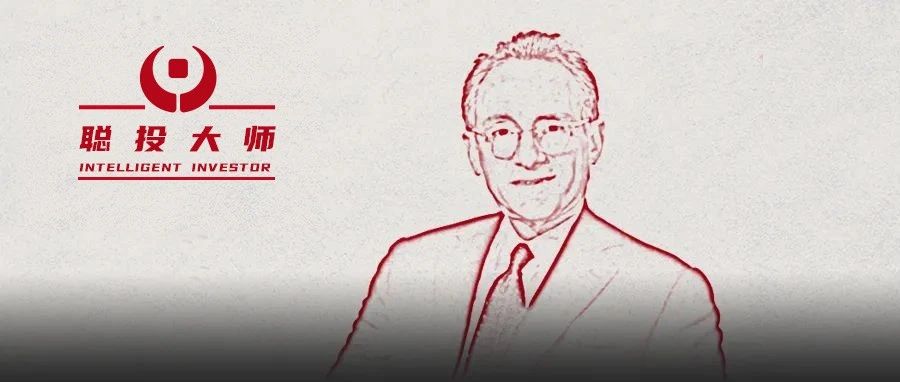
霍华德·马克斯最新对话谈运气的重要,以及如何让自己更走运 | 大家谈
高毅资产管理· 2025-04-03 02:01
以下文章来源于聪明投资者 ,作者聪明投资者 聪明投资者 . 聚焦优秀投资人和企业家,甄选高质量的内容,追求可累进的成长。更多内容可下载"聪明投资 者"APP,官网:www.cmtzz.cn 来源 | 聪明投资者 预计阅读时间:21分钟 " 运 气 , 就 是 当 机 会 来 了 , 你 刚 好 已 经 准 备 好 了 。 " 这是橡树资本联合创始人霍华德·马克斯(Howard Marks)在最近的《Money Ma》访谈中,引人 深思的一句话。 他并不回避运气在投资中的作用,甚至直言自己是"世界上最幸运的人"。但他强调,运气并不是毫 无缘由的,而是建立在持续准备的基础上。 霍华德回顾了自己的职业生涯:从1969年进入花旗银行,到意外被调入债券部门,再到最终创立橡 树资本,都是非常幸运的过程。 他认为,市场中的机会并不会主动降临到你身上,而是你要让自己站在正确的位置,做好准备,等 机会到来时能够抓住它。 "你不能预测未来,但你可以为不同的可能性做好准备。" 这就是他对投资的理解:市场是不可预测,而投资者可以通过纪律、研究和思维框架,为各种情境 构建一个稳健的投资策略。 霍华德多次强调,投资并不是寻找绝对确定性的 ...

霍华德·马克斯最新对话谈运气的重要,以及如何让自己更走运
聪明投资者· 2025-03-19 06:31
Group 1 - The core idea of the article emphasizes the importance of being prepared to seize opportunities when they arise, as luck plays a significant role in investment success [1][81]. - Howard Marks reflects on his career journey, highlighting that his unexpected transitions, such as moving from the stock department to the bond department, were pivotal moments that shaped his investment approach [11][84]. - The article discusses the unpredictability of markets and the necessity for investors to develop robust strategies that account for various potential scenarios rather than seeking absolute certainty [2][46]. Group 2 - Marks shares insights from Warren Buffett's investment philosophy, stressing the importance of focusing on a few critical factors rather than trying to know everything [3][96]. - The discussion includes the challenges of determining when to sell investments, with Marks noting that the real difficulty lies in maintaining conviction during periods of underperformance [15][22]. - The article highlights the cyclical nature of markets, driven by human emotions such as greed and fear, which create opportunities for astute investors [30][32]. Group 3 - Marks emphasizes the need for "intellectual humility," advocating for an acknowledgment of uncertainty in investment decisions and the importance of being open to differing viewpoints [34][42]. - The article critiques the notion of a "silver bullet" investment strategy, particularly in the context of private equity, suggesting that past successes may not be replicable in changing market conditions [49][60]. - Marks identifies three key factors for successful investing: the ability to interpret information at a higher level, understanding qualitative factors, and having foresight about future developments [63][71]. Group 4 - The article discusses the significant fiscal challenges facing the U.S., particularly the persistent budget deficits and the implications for future economic stability [98][104]. - Marks expresses skepticism about the sustainability of America's exceptionalism in the global economic landscape, suggesting that while the U.S. has advantages, the likelihood of maintaining its leading position is uncertain [76][80]. - The discussion concludes with advice for young professionals entering the finance industry, emphasizing the importance of pursuing a fulfilling career rather than merely chasing financial gain [114].