
进出口平衡发展

Search documents
学习规划建议每日问答|为什么要推动进出口平衡发展
Sou Hu Cai Jing· 2025-12-24 03:27
Core Viewpoint - The article emphasizes the importance of promoting balanced development of imports and exports in China, highlighting the achievements and challenges faced in foreign trade during the 14th Five-Year Plan period, and outlines strategies for future growth and cooperation in international trade [1][2][3][4][5]. Group 1: Trade Achievements - China's foreign trade has shown resilience, with merchandise trade surpassing $6 trillion in 2024, marking a 32.4% increase from 2020, maintaining its position as the world's largest trader for eight consecutive years [1]. - The export market share has stabilized at over 14%, while imports remain above 10% [1]. - Service trade is projected to exceed $1 trillion for the first time in 2024, placing China among the top in the world [1]. Group 2: High-Level Opening - The trade surplus is expected to reach $99.22 billion in 2024, increasing pressure for China to expand high-level openness and cooperation [2]. - Policies have been implemented to stabilize foreign trade and optimize its structure, including reducing the overall tariff level to 7.3% and enhancing import facilitation [2]. - China is actively expanding imports and has granted zero-tariff treatment on 100% of product categories to least developed countries with which it has diplomatic relations [2]. Group 3: High-Quality Development - In 2024, net exports of goods and services are projected to contribute 1.5 percentage points to economic growth, accounting for 30.3% of the total growth [3]. - The export of high-tech products has reached 18.2%, reflecting a shift towards digital and green transformation in trade [3]. - The import of advanced technologies and key components supports industrial upgrading and enhances the stability and competitiveness of China's supply chain [3]. Group 4: Meeting People's Needs - Foreign trade has significantly contributed to economic stability, employment, and improved living standards, directly and indirectly supporting 190 million jobs, which is about 25% of total employment in China [4]. - The import of quality products and services is being expanded, with over $250 billion in consumer goods expected to be imported in 2024, enhancing consumer choice [4]. - Promoting balanced trade development is seen as beneficial for improving the well-being of the population and meeting diverse consumer needs [4]. Group 5: Global Cooperation - China has become a major trading partner for over 150 countries and regions, contributing to global supply chain stability [5]. - In 2024, China is expected to account for 10.5% of global imports, reinforcing its role as a significant player in the global market [5]. - The China International Import Expo has facilitated over $500 billion in intended transactions, promoting global economic cooperation and shared opportunities [5].
商务部:我国外贸逆势而上 实现量稳质升
Yang Shi Xin Wen· 2025-12-11 10:01
Core Insights - China's foreign trade has shown resilience this year, with a total import and export value increasing by 3.6% year-on-year in the first 11 months, indicating stable volume and improved quality [1] Group 1: Trade Performance - The total value of China's goods import and export reached a year-on-year growth of 3.6% in the first 11 months [1] - The current global economic and trade environment is characterized by significant uncertainty and instability, affecting all countries, including China [1] Group 2: Future Strategies - The Ministry of Commerce plans to implement various policies to stabilize foreign trade, focusing on market diversification and enhancing services for enterprises [1] - There will be an emphasis on expanding trade in intermediate goods and green trade, as well as promoting innovative trade development [1] - Efforts will be made to balance import and export development, continuously building the "Export China" brand [1] - The functionality of trade promotion platforms will be enhanced to support new business models such as cross-border e-commerce and overseas warehouses, aiming to improve the quality and efficiency of foreign trade [1]
新华鲜报·规划建议新看点|进出口平衡发展:“双轮”并进壮贸易强国“筋骨”
Xin Hua She· 2025-11-23 14:38
Core Viewpoint - The "14th Five-Year Plan" emphasizes the need to promote balanced development of imports and exports, responding to the rapid growth of trade surplus and signaling a commitment to enhancing foreign trade quality and efficiency [1][2]. Group 1: Trade Balance and Economic Growth - Foreign trade is one of the three main drivers of economic growth, with exports and imports functioning as two wheels of a vehicle [1]. - In 2024, China's total goods trade is projected to exceed 43 trillion yuan, with exports reaching 25.45 trillion yuan, marking eight consecutive years of growth, and imports at 18.39 trillion yuan, resulting in a trade surplus of over 7 trillion yuan [1]. Group 2: Understanding Trade Surplus - A trade surplus occurs when export values exceed import values, and it is influenced by international supply and demand, industrial division, and market competition [2]. - The emphasis on balanced import and export development aims to drive domestic consumption upgrades and industrial transformation while sharing development opportunities with trade partners [2]. Group 3: Strategies for Balanced Development - During the "14th Five-Year Plan" period, strategies for achieving balanced import and export development include stabilizing exports while expanding imports [3]. - Key measures include promoting market diversification, integrating domestic and foreign trade, expanding trade in intermediate goods and green trade, developing service trade, and enhancing the management of cross-border service trade negative lists [3]. - These initiatives aim to stabilize exports and strengthen the import of high-quality goods and services, ensuring a structure that supports "stable exports, expanding imports, and optimized structure" [3].
新华鲜报·规划建议新看点丨进出口平衡发展:“双轮”并进壮贸易强国“筋骨”
Xin Hua Wang· 2025-11-23 09:52
Group 1 - The core viewpoint emphasizes the need for "balanced development of imports and exports" as part of China's 14th Five-Year Plan, responding to the rapid growth of trade surplus and signaling a commitment to enhancing foreign trade quality and efficiency [1][3]. - In 2024, China's total goods trade is projected to exceed 43 trillion yuan, with exports reaching 25.45 trillion yuan and imports at 18.39 trillion yuan, resulting in a trade surplus of over 7 trillion yuan [3]. - The concept of trade surplus is defined as the situation where export values exceed import values, and it is noted that China does not pursue trade surplus as a goal, but rather views it as a result of various economic factors [3][5]. Group 2 - The emphasis on "balanced development of imports and exports" aims to drive domestic consumption upgrades and industrial transformation while sharing development opportunities with trade partners, thereby alleviating trade imbalance issues [3][5]. - Key strategies for achieving "balanced development" include stabilizing exports while expanding imports, enhancing brand value and bargaining power, and transforming trade surplus into a strong driver for national development and citizen welfare [5]. - Specific measures outlined in the planning suggestions include promoting market diversification, integrating domestic and foreign trade, expanding trade in intermediate goods and green trade, developing service trade, and gradually opening up the digital sector [5].

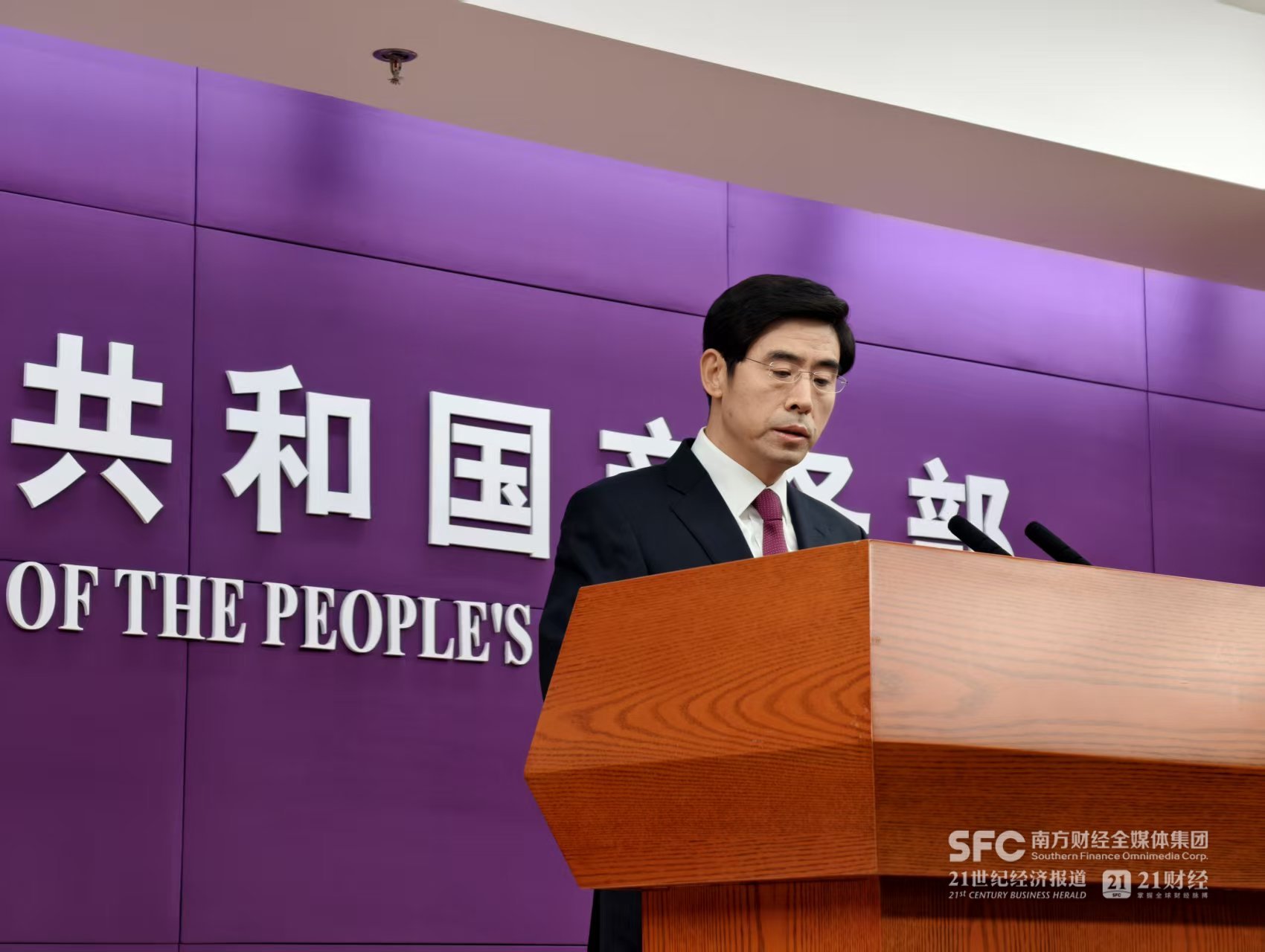
商务部:进博会八年累计成交超五千亿美元,中国与全球共享大市场
2 1 Shi Ji Jing Ji Bao Dao· 2025-11-06 10:48
Core Viewpoint - The "Shared Market · Export China" initiative launched by the Ministry of Commerce aims to expand China's openness and promote balanced import-export development, showcasing China's commitment to global economic cooperation and multilateral trade [1][4]. Group 1: Initiative Overview - The Ministry of Commerce will host ten themed activities under the "Shared Market · Export China" initiative, focusing on expanding international partnerships and enhancing the export of quality goods [1]. - The initiative emphasizes creating consumption scenarios to ensure that high-quality products perform well in the market and aims to establish China as a preferred export destination for more countries [1]. Group 2: Import Market Insights - China has been the world's second-largest import market for 16 consecutive years, with the China International Import Expo generating over $500 billion in transactions since its inception eight years ago [3][4]. - In the first three quarters of this year, China's imports have steadily increased, with agricultural product imports reaching $57.1 billion, a year-on-year growth of 2.6%, and imports of machinery and high-tech products growing by 5% and 8.6%, respectively [4]. Group 3: Trade Relations and Policies - The Ministry of Commerce is actively implementing zero-tariff measures on 100% of product categories for 53 African countries, resulting in a 10.8% increase in imports from Africa in the first three quarters [4]. - The overall import trade channels have become more diversified and smoother, aligning with domestic demand and enhancing global development opportunities [5].
“共享大市场·出口中国”系列活动启动仪式在上海成功举办
Xin Hua Cai Jing· 2025-11-05 07:23
Core Viewpoint - The "Shared Big Market · Export China" initiative is a strategic move by China to expand its openness and promote balanced trade development, signaling its commitment to global economic cooperation and multilateral trade systems [1][2]. Group 1: Event Overview - The "Shared Big Market · Export China" series was launched on November 4, 2025, in Shanghai, with the participation of key government officials including Premier Li Qiang and Minister of Commerce Wang Wentao [1]. - Approximately 300 attendees included representatives from government departments, international organizations, trade promotion agencies, and foreign diplomats [2]. Group 2: Objectives and Activities - The initiative aims to enhance China's global market presence by organizing ten thematic activities focused on expanding international partnerships and ensuring that Chinese opportunities benefit the world [1]. - Key goals include facilitating the entry of more goods into China, creating favorable consumption scenarios for quality products, and evaluating the effectiveness of the "Export China" brand to establish China as a preferred export destination [1].
“共享大市场·出口中国”系列活动正式启动
Zheng Quan Shi Bao· 2025-11-04 17:37
Core Viewpoint - The "Shared Big Market. Export to China" initiative aims to expand China's openness and promote balanced trade development, showcasing China's commitment to economic globalization and multilateral trade systems [1][2] Group 1: Initiative Overview - The initiative includes ten thematic activities designed to enrich the "Export to China" brand and position China as a prime export destination for various countries [1] - The activities will focus on expanding imports, with over 100 events planned annually [1] Group 2: Market Potential - China is the world's second-largest consumer and import market, with a projected import value of 18.4 trillion yuan for goods and 4.3 trillion yuan for services in 2024, reflecting over a 60% increase compared to a decade ago [1] - The initiative is expected to enhance wealth generation, job creation, and rapid development for countries exporting to China [1] Group 3: Thematic Activities - The ten thematic activities include annual country-specific engagements, regional and industry-specific matching events, international product promotion weeks, and consumer experience activities [2] - The initiative aims to reduce intermediaries, allowing producers from various countries to connect directly with Chinese consumers [2] - Collaboration with existing initiatives like "Buy in China" will create unique consumption scenarios, ensuring global quality products can enter and sell well in the Chinese market [2]