
长江禁渔

Search documents
上岸记:坚守吧,瀛洲阁丨长江禁渔五周年行走报道
Xin Lang Cai Jing· 2026-01-11 15:10
Core Viewpoint - The Yangtze River's ten-year fishing ban is a significant decision made by the central government for the long-term benefit of the Chinese nation, marking a historic and exemplary project for ecological protection [2] Group 1: Fishing Ban Impact - The fishing ban has led to the complete withdrawal of fishermen from the island of Yingzhou, with all fishing boats now resting on the shore [4] - The number of the nationally protected plant, Sparganium angustifolium, has increased from fewer than 10 to over 1,000 in the past five years on Yingzhou Island [5] - The fishing ban has resulted in a significant increase in the population of common fish species in the Yangtze River, with notable growth in the weight and size of adult fish compared to pre-ban levels [23] Group 2: Community Transformation - The population of Yingzhou Island has drastically decreased from over 140 residents to just 13 elderly individuals remaining, with many relocating for better opportunities [12] - The remaining residents have shifted to agriculture, growing crops like corn and rapeseed, while some have successfully transitioned to other professions, such as operating excavators [12][16] - The local government is exploring new business models to revitalize the island, leveraging its unique natural scenery and fishing village landscape, although commercial activities are limited due to its status as a core protection area [16] Group 3: Ecological Restoration - The Yangtze River's ecosystem is showing signs of recovery, with the return of rare fish species like the Yangtze sturgeon being a key indicator of ecological health [23][24] - There is a plan to establish an artificial spawning ground for the Yangtze sturgeon in the region to facilitate natural reproduction, as no natural spawning grounds have been found [23] - Continuous improvement in water ecology and environment is essential for the return of rare fish species, with optimism expressed by local researchers regarding the future of the ecosystem [24]


长江禁渔后,隐蔽捕捞如何破解?
Xin Lang Cai Jing· 2025-12-24 17:46
Core Viewpoint - The implementation of a 10-year fishing ban on the Yangtze River has led to a significant reduction in illegal fishing activities, but new methods and technologies are being employed by offenders, posing challenges for enforcement [1][3][4]. Group 1: Policy Impact - Since the fishing ban began on January 1, 2021, illegal fishing cases have decreased significantly, with the number of fish species monitored in the Yangtze River increasing from 46 to 104 [3]. - The enforcement of the fishing ban has resulted in a drop in the illegal fishing crime rate in Chongqing from 53% in 2022 to 9.7% by September 2025 [3]. Group 2: New Illegal Fishing Methods - Offenders are using advanced equipment such as drones with night vision, electric fishing tools, and even diving suits to conduct illegal fishing, particularly in areas where administrative oversight is weak [3][4]. - Criminal groups are increasingly operating in cross-border river sections during late-night hours or in foggy conditions to evade detection [3][4]. Group 3: Economic Incentives - The high market price for wild Yangtze fish, with common species priced between 40 to 60 yuan per kilogram and rare species like the Yangtze sturgeon fetching much higher prices, drives illegal fishing activities [4]. - The recovery of fish populations has made illegal fishing more lucrative, allowing offenders to potentially catch hundreds of kilograms in just a few hours [4]. Group 4: Enforcement Challenges - Despite a decrease in overall illegal fishing cases, significant incidents still occur, and offenders are becoming more technologically sophisticated, complicating enforcement efforts [6]. - The rapid withdrawal of offenders after committing illegal acts presents substantial challenges for evidence collection and prosecution [4][6]. Group 5: Recommendations for Improvement - Experts suggest enhancing cross-regional law enforcement collaboration and improving monitoring capabilities in weak oversight areas using AI and advanced surveillance technologies [7][8]. - Encouraging community involvement in fish protection and establishing reward systems for reporting illegal activities can help supplement regulatory efforts [8].
央媒:长江禁渔后,有不法分子在上游跨界江段用新设备“夜捕”
Xin Lang Cai Jing· 2025-12-21 00:07
Core Viewpoint - The implementation of a 10-year fishing ban on the Yangtze River has led to a significant reduction in illegal fishing activities, but new challenges have emerged as criminals adapt their methods to exploit economic incentives and improved fish populations [1][2]. Group 1: Policy Impact - Since the fishing ban began on January 1, 2021, illegal fishing cases have decreased significantly due to enhanced policy enforcement and public awareness campaigns [1]. - From 2022 to September 2025, Chongqing reported 1,939 illegal fishing cases, with the incidence rate in the Yangtze River segment dropping from 53% in 2022 to 9.7% [2]. Group 2: New Illegal Fishing Tactics - Criminals are now using advanced technology such as drones, night vision devices, and diving suits to conduct illegal fishing, making their activities more covert [1][2]. - Reports indicate that illegal fishing operations are increasingly organized, with clear divisions of labor among members for tasks such as lookout, fishing, and sales [2][4]. Group 3: Economic Incentives - The high market price for wild Yangtze fish, with common species priced between 40-60 yuan per kilogram and rare species like the Yangtze sturgeon fetching much higher prices, continues to drive illegal fishing activities [4]. - The recovery of fish populations has made illegal fishing more lucrative, with criminals able to catch large quantities in a short time [4]. Group 4: Enforcement Challenges - Despite a decrease in overall illegal fishing cases, the emergence of high-tech methods poses new challenges for law enforcement [6]. - Regulatory efforts are hampered in areas where jurisdictional boundaries overlap, leading to weaker enforcement in those regions [4][6]. Group 5: Recommendations for Improvement - Experts suggest enhancing cross-regional law enforcement collaboration and improving the integration of administrative and legal actions to address illegal fishing effectively [7]. - The establishment of a comprehensive monitoring network utilizing AI and advanced surveillance technology is recommended to improve oversight in vulnerable areas [7][8].
长江安徽段土著鱼类物种数比禁渔前增长近五成
Xin Hua She· 2025-09-26 23:33
Core Points - The number of indigenous fish species in the Yangtze River section of Anhui has reached 78, representing a 47% increase compared to the period before the fishing ban was implemented [1] - The water quality of the Yangtze River in Anhui has consistently maintained a Class II standard, with 93.8% of national monitoring sections showing good water quality in 2024, and Ma'anshan City achieving 100% good quality [1] - The Yangtze River sections in Ma'anshan and Tongling have been recognized as excellent cases for beautiful rivers and lakes nationwide [1] Environmental Protection Initiatives - Ma'anshan City has implemented comprehensive management and ecological restoration along a 79-kilometer stretch of the Yangtze River, being the first in the country to achieve a fishing ban and transition for fishermen [1] - Collaborative legislative efforts for the protection of the Yangtze River dolphin have been established between Ma'anshan and neighboring cities Nanjing and Zhenjiang, marking the first cross-regional legislative protection for a single species in the country [1] - The fish population and resource density in the Ma'anshan section of the Yangtze River have increased by 1.5 times and 2 times, respectively, compared to the period before the fishing ban [1]
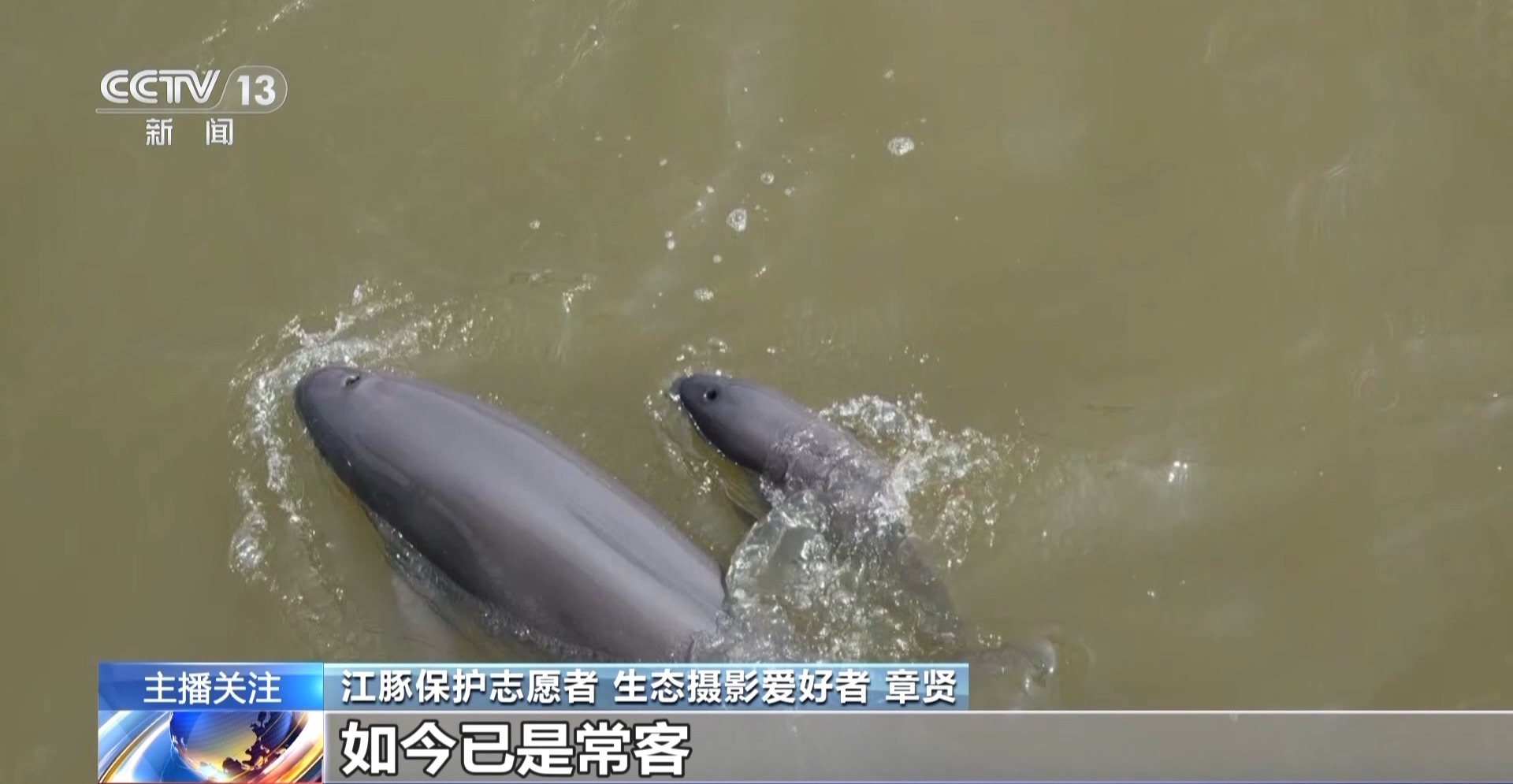
从难觅踪影到频频现身 “微笑天使”江豚见证母亲河生态复苏
Yang Shi Xin Wen· 2025-08-29 22:54
Core Insights - The population of the Yangtze River dolphin, a flagship species of the Yangtze River, is showing a stable growth trend, indicating improvements in the ecological health of the river [1][8][18] Group 1: Ecological Recovery - The Yangtze River dolphin, once elusive, is now frequently spotted, reflecting the ecological recovery of the river [2][4] - The number of dolphins has reportedly increased by two to three times, with sightings of mother-calf pairs becoming more common [8][10] - The implementation of a ten-year fishing ban since 2021 has led to improved water quality and increased food availability for the dolphins [11][18] Group 2: Monitoring and Protection Efforts - Advanced monitoring systems, such as the "listening dolphin" technology, have been installed to track dolphin movements and minimize disturbances from construction activities [12][14][16] - The establishment of a comprehensive monitoring network has enabled real-time tracking of dolphin activities, contributing to their protection [18][19] - The Yangtze River dolphin population in the Tongling area has grown from 40 in 2006 to 60 currently, marking a 50% increase [18] Group 3: Ecotourism Development - The ecological improvements have sparked a rise in ecotourism, with areas like the Yangtze River dolphin protection zone becoming popular destinations for photographers and tourists [26][29] - Local economies are benefiting from increased tourism, with restaurants and businesses thriving due to the influx of visitors [31][35] - The transformation of former fishing communities into ecotourism hotspots is evident, as local residents adapt to new employment opportunities [35]
农业农村部:长江禁渔逐渐见效,但多样性水平仍存在不足
Nan Fang Du Shi Bao· 2025-08-08 04:01
Core Viewpoint - The Yangtze River fishing ban, initiated in 2021 for a ten-year period, has led to a gradual recovery of fish resources and biodiversity, although concerns about community structure imbalance persist [1][3]. Group 1: Fishing Ban Impact - The fishing ban has resulted in increased fish populations in certain areas, attributed to three main factors: limited natural reproduction in closed lakes, seasonal fish aggregation in open waters, and long-term feeding leading to habituation [2][3]. - The Ministry of Agriculture and Rural Affairs indicates that fish resources will remain within the carrying capacity for the foreseeable future, despite the ongoing recovery of biodiversity [3][5]. Group 2: Biodiversity and Monitoring - The 2024 report on aquatic biological resources shows a slow recovery of fish species and diversity, with the integrity index still rated as "poor" [3][5]. - Since the ban, 344 native fish species have been monitored, an increase of 36 species compared to the pre-ban period, with significant recovery noted in key economic fish species [5]. Group 3: Future Measures and Concerns - The government plans to implement targeted measures and emergency policies to address potential imbalances in fish populations, including expert assessments and tailored management strategies for specific water bodies [4][5]. - The long-term recovery of fish resources is emphasized, with comparisons drawn to the Qinghai Lake fishing ban, which has shown slow progress over 24 years [4].
长江流域水生生物资源恢复态势总体向好
Ren Min Ri Bao· 2025-08-05 00:05
Core Insights - The overall recovery of aquatic biological resources in the Yangtze River Basin is positive, with a continuous improvement in integrity index and a need for enhanced protection of rare and endangered species [2][7] Group 1: Aquatic Biological Resources Recovery - In 2024, the unit resource amount in the main stream of the Yangtze River is 2.3 kg, an increase of 9.5% compared to 2023 [2] - From 2021 to 2024, a total of 344 indigenous fish species have been monitored, an increase of 36 species compared to the pre-fishing ban period (2017-2020) [2] - The overall water quality evaluation in the Yangtze River is rated as excellent, with 98.6% of monitoring sections classified as grade I-III, up 0.1 percentage points from 2023 [2] Group 2: Key Protected Species - The distribution range of the Yangtze River dolphin is expanding, and the number of certain key protected species is increasing, including the first natural reproduction of the lipstick loach in 30 years [3] - The resource amount of the four major economic fish species in the middle reaches of the Yangtze River is 6.2 times that of 2020 [3] - The implementation of a comprehensive fishing ban since 2017 has led to a steady increase in biodiversity in the upper reaches of the Yangtze River [3] Group 3: Conservation Efforts - The Ministry of Agriculture and Rural Affairs has guided the establishment of indigenous fish breeding farms in Guizhou, Sichuan, and Yunnan, releasing 6.63 million rare indigenous fish into the wild during the 14th Five-Year Plan period [4] - Successful monitoring of artificial breeding and spawning behavior of the Yangtze sturgeon has been achieved through habitat restoration efforts [4] - Restoration projects have improved the natural connectivity of tributaries, allowing rare fish species to re-enter and thrive in these areas [4] Group 4: Challenges in Biodiversity Recovery - Despite reports of increased fish populations in certain areas, the overall recovery of fish resources and biodiversity in the Yangtze River is still slow [5] - The slow recovery of flagship species such as the Chinese sturgeon and Yangtze sturgeon indicates ongoing survival crises for these species [7] - Historical data shows that 99 out of 443 fish species previously distributed in the Yangtze River have not been monitored since the fishing ban [5] Group 5: Future Conservation Strategies - There is a need to optimize and upgrade the rescue action plan for rare and endangered species, including expanding artificial breeding and release efforts for the Chinese sturgeon [8] - Continuous monitoring and removal of potential threats such as underwater nets and fishing lines are essential for species protection [8] - Further efforts are required to restore spawning grounds and promote natural reproduction of the Yangtze sturgeon to enhance self-sustaining populations [8]
万里长江第一城宜宾生态之变:长江鱼类种群近5年翻了近一倍
Xin Jing Bao· 2025-07-21 23:15
Core Insights - The article highlights the significant ecological improvements in the Yangtze River upstream region, particularly in Yibin, Sichuan, due to the implementation of a ten-year fishing ban and various environmental protection measures [1][3][9] Group 1: Ecological Restoration - The Yangtze River fishing ban has led to a notable increase in fish species, with the number of species in the Yibin section rising from 48 in 2019 to 92 in 2024 [3][9] - The water quality in the Yibin section has consistently maintained a level of Class II or above, indicating improved ecological health [1][9] Group 2: Community Involvement - Former fishermen, such as Tang Shengrong, have transitioned to roles as fishery patrol officers, contributing to the monitoring and protection of aquatic life [2][3] - The local community has witnessed a resurgence of wildlife, including various fish species and previously unseen birds, enhancing the area's biodiversity [2][3] Group 3: Economic Transformation - The ancient town of Lizhuang has shifted from a fishing-based economy to one focused on ecological tourism, with visitor numbers projected to increase from 350,000 in 2023 to over 600,000 by 2025 [5][6] - The local government has implemented policies to support fishermen transitioning to alternative livelihoods, resulting in successful employment for all former fishermen involved [4][5] Group 4: Sustainable Development Initiatives - Yibin is promoting the "bamboo instead of plastic" initiative, aiming to develop 2,000 application scenarios by 2027, leveraging its rich bamboo resources [6][7] - The city has established a comprehensive digital monitoring system for environmental protection, integrating over 400 data indicators to enhance real-time monitoring and management of water quality [8][9]
禁渔执法不能松劲
Jing Ji Ri Bao· 2025-06-17 22:13
Core Viewpoint - The ongoing efforts to enforce a ten-year fishing ban in the Yangtze River face challenges due to the evolving tactics of illegal fishing groups, necessitating continuous and strengthened regulatory measures [1][2]. Group 1: Regulatory Challenges - Illegal fishing groups are adapting by using advanced tools and engaging in counter-surveillance tactics, making enforcement increasingly difficult [1]. - There is a need for local authorities to take responsibility for regulatory enforcement, as some areas exhibit complacency due to perceived improvements in the ecological environment [1]. - The current state of the Yangtze River's ecology is described as "initial recovery," indicating that ongoing vigilance is required to maintain progress [1]. Group 2: Enforcement Capacity - Research indicates that some local fisheries enforcement agencies lack the necessary personnel and resources to sustain long-term enforcement efforts [2]. - Issues such as aging personnel and varying levels of enforcement capability hinder effective regulatory actions [1][2]. - Enhancing training and improving the qualifications of fisheries enforcement personnel are critical areas that require attention [1]. Group 3: Funding and Resource Allocation - The establishment of a combined "human defense + technical defense + intelligent defense" regulatory mechanism is essential for the long-term success of the fishing ban [2]. - Limited financial resources in certain regions restrict the ability to maintain and upgrade enforcement equipment, which is vital for effective operations [2]. - There is a call for diversified funding sources to enhance fisheries enforcement capabilities, particularly in challenging areas [2]. Group 4: Focus Areas for Enforcement - Key water areas and critical time periods, such as holidays, should be prioritized to prevent illegal fishing activities [2]. - Special attention is needed for specific locations like the Yangtze River estuary and cross-province boundaries, where illegal fishing is more likely to occur [2]. - A proactive approach is required to address the sale of banned fishing gear online, necessitating targeted enforcement actions [2].