集体自卫权

Search documents
专访|“高市错误言论是在喊大家一起闯红灯”——访日本庆应义塾大学特聘副教授有野洋辅
Xin Hua She· 2026-01-17 04:55
Core Viewpoint - The statements made by Japanese Prime Minister Kishi Sanae regarding Taiwan are criticized for being misleading and potentially dangerous, as they suggest military intervention in Taiwan, which contradicts Japan's constitutional commitments [1][2]. Group 1: Historical Context - There is a lack of understanding among the Japanese public regarding the historical context of Japan-China relations and the implications of Kishi's statements [1]. - The four political documents between Japan and China, particularly the 1972 Japan-China Joint Communiqué and the 1978 Treaty of Peace and Friendship, emphasize Japan's commitment to the One China policy [1]. Group 2: Legal and Constitutional Issues - Kishi's remarks about military intervention in Taiwan conflict with Article 9 of the Japanese Constitution, which renounces war and prohibits the use of force to resolve international disputes [2]. - The concept of collective self-defense, as proposed by Kishi, is fundamentally at odds with Japan's constitutional framework [2]. Group 3: Emotional and Social Impact - Kishi's statements are seen as deeply hurtful to the sentiments of the Chinese people, given Japan's historical aggression and colonial rule over Taiwan [2]. - The call for collective action in response to Kishi's statements is viewed as a dangerous precedent that should not be supported [2].
世局2026|煽动民粹“消费中国”的高市早苗政权或遭反噬
Xin Lang Cai Jing· 2026-01-10 13:16
Group 1 - The core viewpoint of the report indicates that under the impact of "Trump 2.0," the pace of multipolarity is accelerating, leading to a decline in the influence of the U.S. and the West, while the Global South is rising [1] - The report highlights the significant political changes in Japan, particularly the loss of majority seats by the ruling coalition in the House of Councillors elections in July 2025, and the election of Sanae Takaichi as the first female president of the Liberal Democratic Party (LDP) [1][3] - Takaichi's leadership is characterized by a shift towards a more right-leaning political stance in Japan, with the LDP forming a coalition with the Japan Innovation Party after the Komeito party exited the ruling alliance [3][4] Group 2 - The report discusses the structural factors supporting Takaichi's rise, including the fragmentation of opposition parties and the rightward shift in Japanese politics, which has allowed the LDP to maintain its core position despite losing seats [4][6] - It notes that the political rightward shift in Japan is gradual and low-profile, with voters increasingly supporting stronger, security-focused political forces while still identifying as centrists [6][7] - The report emphasizes the role of populism in Takaichi's political strategy, utilizing emotionally charged issues to mobilize support, which has contributed to her high approval ratings despite mixed evaluations of her policies [8][9] Group 3 - Takaichi's controversial remarks regarding Taiwan have strained Japan-China relations, highlighting the risks associated with her assertive political style [10][12] - The report points out that Takaichi's statements on Taiwan reflect a long-standing political stance and are part of a broader trend of increasing militarization and defense spending in Japan [12][13] - It concludes that while Takaichi's government enjoys high approval ratings, its long-term stability will depend on its ability to address economic challenges and manage international relations effectively [16][17]

“战败国”日本的三重背叛
Xin Lang Cai Jing· 2025-12-26 06:43
Core Viewpoint - Japan's recent policy shifts are seen as a "triple betrayal" of its post-World War II commitments, challenging the legal framework that defines its status as a defeated nation [1][2]. Legal Foundations - The post-war international order for Japan is based on legal documents such as the Cairo Declaration, Potsdam Declaration, and its own "Peace Constitution," which Japan has increasingly deviated from [2][3]. - The "Peace Constitution" prohibits Japan from maintaining military forces or engaging in war, reflecting the international community's intent to limit Japan's military capabilities post-war [2]. Territorial Claims - Japan's actions regarding territorial sovereignty, particularly in the Diaoyu Islands and the Okinotorishima, demonstrate a systematic challenge to the legal constraints established by the Potsdam Declaration [3][4]. - The "gray zone strategy" employed by Japan aims to redefine territorial boundaries and assert claims that contradict international law [3]. Military Policy Changes - Japan's military policy has shifted from a defensive posture to one that includes collective self-defense and offensive capabilities, undermining the principles of its "Peace Constitution" [4][10]. - The 2014 reinterpretation of the constitution to allow collective self-defense and the 2022 National Security Strategy signify a departure from Japan's post-war military restrictions [4][10]. Historical Responsibility - Japan's historical narrative has become increasingly ambiguous, undermining its post-war peace responsibilities, which include acknowledging its wartime actions and fostering regional cooperation [11][12]. - The trend of downplaying historical aggression and revising educational materials reflects a broader shift away from Japan's commitment to peace and reconciliation [13][16]. Regional Cooperation - Japan's reliance on exclusive security frameworks, such as the Quad, raises concerns about regional cooperation and the potential for increased tensions [14][16]. - The shift towards militarization and away from cooperative security mechanisms threatens the stability of the post-war order in East Asia [16]. Arms Export Policy - Japan's historical restrictions on arms exports are being eroded, with recent policy changes indicating a move towards a more aggressive military export stance [15][16]. - The potential for Japan to expand its military capabilities, including nuclear options, poses significant risks to regional security dynamics [10][15].
所谓“存亡危机事态”是日本对国际法的非法僭越
Xin Lang Cai Jing· 2025-12-21 20:41
Core Viewpoint - Japanese Prime Minister Kishi Nobuo's remarks regarding Taiwan have drawn international attention, as they are seen as interference in China's internal affairs and a challenge to the post-war international order [1][2][3] Group 1: Legal Basis of Taiwan's Status - Taiwan is an inseparable part of China's territory, supported by international law, with historical claims dating back to China's discovery and administrative control [2] - The Cairo Declaration of 1943 and the Potsdam Declaration of 1945 reaffirm that Taiwan must be returned to China, establishing a legal framework for Taiwan's status [2] - The UN Resolution 2758 in 1971 recognized the People's Republic of China as the sole legitimate representative of China, further solidifying the international consensus on Taiwan's status [2] Group 2: Violations of International Law - Kishi's comments classify Taiwan as a "foreign country," which violates the UN Charter's principles of non-interference and prohibition of the threat of force [3][4] - The remarks contradict Japan's commitments under the 1972 Sino-Japanese Joint Statement, which acknowledges the PRC as the only legitimate government of China and respects its stance on Taiwan [3] - Kishi's interpretation of Taiwan as a "foreign country" undermines the post-war international order and Japan's obligations under international law [3][4] Group 3: China's Legal Response - China has sufficient legal grounds to defend its sovereignty and can take multiple measures against Japan, including demanding a retraction of Kishi's statements and public apology [4] - If Japan continues military expansion or attempts to intervene in the Taiwan Strait, China may invoke the UN Charter to take necessary actions without prior UN Security Council authorization [4] - China can implement countermeasures against Japanese companies involved in Taiwan-related issues, including export controls and restrictions on military exchanges [4]

警惕日本“欺骗式外交”故伎重施
Ren Min Ri Bao· 2025-12-20 09:30
Group 1 - Japan's recent diplomatic actions, particularly regarding Taiwan, reveal a pattern of deception and manipulation, as evidenced by the Defense Minister's contradictory statements about radar incidents and the subsequent backlash from China [1][3] - Historical context shows that Japan has a history of using deceitful diplomacy, as highlighted by former U.S. Secretary of State Hull's remarks on Japan's dishonesty leading up to the Pearl Harbor attack [2][3] - The current Japanese government's narrative, which includes promoting the "China threat" theory, is seen as a strategy to escape post-war international constraints and pursue military expansion [3][4] Group 2 - The Japanese right-wing's tendency to fabricate narratives and engage in strategic opportunism poses a significant concern for the international community, especially given Japan's unresolved war crimes and historical denial [4] - Recent actions by Japanese politicians, such as commemorating the Pearl Harbor attack while claiming victimhood, indicate a troubling regression in historical understanding and a willingness to provoke tensions [4] - The international community is urged to remain vigilant against the resurgence of Japanese militarism, which could threaten global order and stability [4]
日本律师:日本政府扩军举动违背宪法
Yang Shi Xin Wen Ke Hu Duan· 2025-12-18 02:21
Group 1 - The Japanese government is advancing military expansion measures, raising concerns among various sectors and citizen groups regarding the contradiction with Article 9 of the Japanese Constitution, which emphasizes peace principles [1] - Legal experts argue that the current security laws, including the "Collective Self-Defense" provisions, violate the constitutional framework and have led to the establishment of the so-called "Security Three Documents" [1] - There is a call to take action to prevent the ongoing trend of military policy advancement in Japan [1] Group 2 - Comments made by Prime Minister Suga Yoshihide in the Diet are viewed as crossing legal boundaries and deviating from Japan's longstanding stance on China, necessitating a retraction [3] - Legal experts assert that Suga's remarks regarding Taiwan are illegal and significantly impact Japan-China relations, urging for an immediate retraction and acknowledgment of the error [5]

日本政治经济学者:高市言论偏离和平路线 应当警惕
Yang Shi Xin Wen Ke Hu Duan· 2025-12-07 08:57
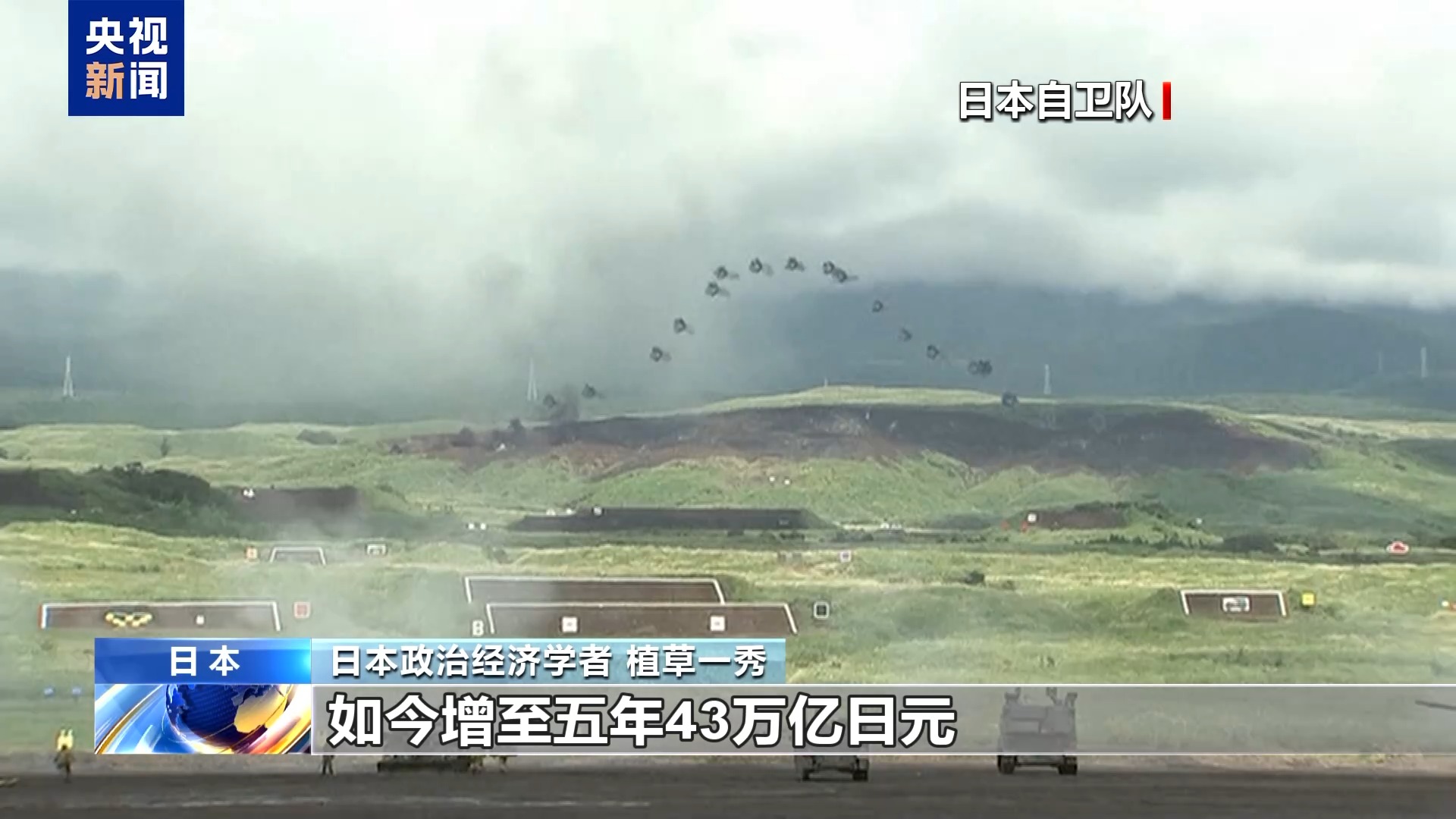
Group 1 - Recent remarks by Japanese Prime Minister Sanae Takaichi have sparked ongoing criticism domestically and internationally, as they contradict existing diplomatic agreements between Japan and China and deviate from Japan's long-standing peace-oriented policy [1] - Political scholars in Japan argue that Takaichi's statements undermine the principle of resolving issues peacefully and violate the agreements outlined in the Japan-China Joint Statement, which recognizes the People's Republic of China as the sole legitimate government of China and respects Taiwan as an inseparable part of its territory [1] - The Japanese government has been increasing its defense budget and pushing for constitutional amendments, which alters the post-war security framework and raises tensions in the region [1] Group 2 - Takaichi's cabinet is interpreted as promoting military expansion and constitutional amendments, including changes to Article 9 of the constitution, with defense-related expenditures rising from 27 trillion yen to 43 trillion yen over five years, aiming to increase defense spending to 2% of GDP, indicating a shift towards a "military power" strategy [3] - The Japanese Ministry of Defense has been intensifying outreach to youth and children, distributing a children's version of the Defense White Paper to elementary schools, which challenges the principle of educational neutrality and may significantly influence the next generation's understanding of history and neighboring countries [4] - Materials distributed by the Ministry of Defense in schools highlight issues such as the shortage of Self-Defense Forces personnel and include language encouraging military enlistment, naming countries like Russia, North Korea, and China as hypothetical adversaries, potentially fostering unnecessary negative sentiments towards China among children [6]
所谓“存亡危机事态”,是日本对国际法的非法僭越|国际识局
Zhong Guo Xin Wen Wang· 2025-12-05 08:08
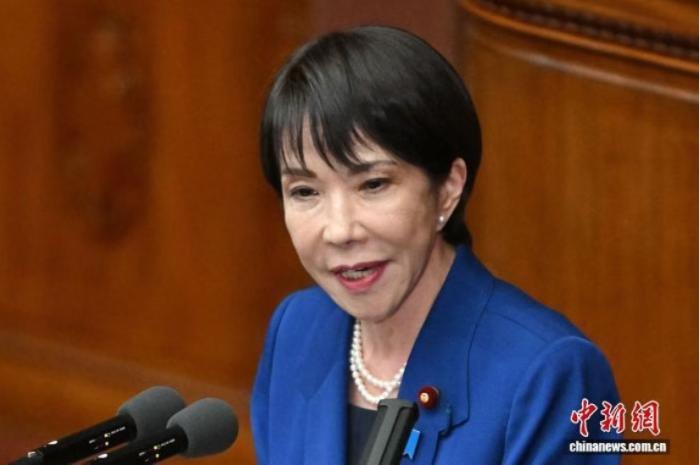
Core Viewpoint - Japanese Prime Minister Sanae Takaichi's provocative statement on November 7, suggesting that "Taiwan's situation" could constitute a "survival crisis" for Japan, implies a potential justification for Japan to exercise collective self-defense or intervene in Taiwan affairs, indicating a willingness for military involvement in the Taiwan issue [1] Group 1: Legal and International Relations Implications - Takaichi's attempt to categorize "Taiwan's situation" as a "survival crisis" reflects a disregard for Japan's obligations under international law, challenging the post-World War II international order and undermining fundamental principles of international law [2][5] - The legal basis for Taiwan's status is firmly established in international law, with documents such as the Cairo Declaration and the Potsdam Proclamation affirming Taiwan's return to China, thus making Taiwan's issue a matter of China's internal affairs [3] - Japan's invocation of domestic law to justify interference in a sovereign nation's internal matters is a blatant challenge to the principles of sovereignty and non-interference that are foundational to modern international law [5] Group 2: Collective Self-Defense and Military Actions - Japan's linkage of the "survival crisis" concept to collective self-defense represents a significant legal overreach, as collective self-defense is strictly limited to situations of actual armed attack, as outlined in the UN Charter [6] - The vague definition of "survival crisis" expands the interpretation of self-defense beyond the strict confines of international law, potentially allowing Japan to justify military actions without direct provocation [6] - Recent military deployments, such as missile installations on Yonaguni Island, are seen as provocative actions that threaten China's sovereignty and escalate regional tensions, undermining peace and stability [7] Group 3: Domestic Law vs. International Obligations - The fundamental flaw in Japan's "survival crisis" concept lies in its attempt to prioritize domestic law over international obligations, which is explicitly prohibited by the Vienna Convention on the Law of Treaties [8] - Japan's domestic legal interpretations cannot serve as a valid excuse for violating established international law principles, including non-interference and the prohibition of the use of force [8] - The attempt to elevate domestic law above international law represents a serious challenge to the international legal system and the spirit of international law [8] Group 4: Historical Context and Commitments - Japan's application of the "survival crisis" concept to the Taiwan issue not only violates specific international law principles but also constitutes a fundamental departure from its post-war obligations as a defeated nation [9] - Japan has previously accepted and fulfilled its obligations under the Potsdam Proclamation and the Japanese surrender document, acknowledging Taiwan's return to China, making Takaichi's claims a distortion of historical documents and international law [9]
国际论坛:日方倒行逆施危及地区和平稳定
Ren Min Ri Bao· 2025-12-05 00:11
Core Viewpoint - The statements made by Japanese Prime Minister Fumio Kishida regarding Taiwan and the so-called "existential crisis" are seen as a dangerous attempt to revive militarism and historical revisionism, which could threaten both Japan's stability and regional peace [1][4]. Group 1: Japan's Military Intentions - Kishida's remarks linking Taiwan issues to Japan's survival indicate a desire for military intervention, undermining regional stability [1][2]. - The rhetoric suggests Japan is seeking to break free from its "peace constitution" constraints and justify collective self-defense, which could escalate tensions in the region [2][3]. Group 2: Historical Context and Legal Obligations - Japan's post-war commitments, including the renunciation of war and military threats, are being challenged by Kishida's government, which risks violating international agreements that restrict Japan's military actions [2][3]. - The historical context of Japan's militarism, including past invasions under the guise of "self-defense," raises concerns about a potential repeat of such actions [4]. Group 3: Regional Security Implications - Japan's actions could disrupt the established post-war international order and exacerbate security dilemmas in East Asia, leading to increased regional conflict [3][4]. - The potential for Japan to reinterpret its self-defense policies poses a significant risk to regional peace and stability, as it may provoke neighboring countries [3][4].
日本学者:高市错误言论给日本各行业带来危机
Yang Shi Xin Wen Ke Hu Duan· 2025-12-03 12:39
Group 1 - Recent remarks by Japanese Prime Minister Sanae Takaichi regarding Taiwan have damaged the political foundation of Japan-China relations, severely worsening the atmosphere for personnel exchanges between the two countries [1][3] - Japan's economy is facing a crisis across various industries due to the potential fallout from Takaichi's statements, as highlighted by Japanese economist Hidetoshi Tashiro [1][3] - The tourism sector in Japan, heavily reliant on Chinese visitors, is at risk of significant contraction if the number of Chinese tourists declines sharply, which could lead to a broader economic impact on related industries such as dining, retail, and education [3][5] Group 2 - In 2024, the total trade volume between Japan and China is projected to reach $308.3 billion, with Japan exporting $152.01 billion and importing $156.25 billion from China, underscoring the importance of stable relations for economic health [3] - Tashiro warns that a deterioration in Japan-China relations could lead to a drastic reduction in Chinese tourists, which would pose an existential threat to Japan's tourism, dining, retail, and educational sectors, particularly universities [5]