
非洲大陆自由贸易区

Search documents
南非经济呈温和增长态势
Ren Min Ri Bao· 2025-10-23 22:29
Economic Growth - South Africa's GDP grew by 0.8% in Q2 2023, an increase from 0.1% in Q1, marking the strongest growth quarter in nearly two years [1] - The South African Reserve Bank forecasts economic growth of 0.9% in 2025 and 1.3% in 2026 [1] Sector Performance - Eight out of ten industries in South Africa experienced growth in Q2, significantly up from four in Q1 [1] - The mining sector saw a growth of 3.7%, the fastest since Q1 2021, driven by increased production of platinum group metals, gold, and chrome [1] - Manufacturing grew by 1.8%, contributing 0.2 percentage points to GDP growth, with seven industries, including petroleum and chemicals, showing positive growth [1] - Agriculture continued its positive trend with a growth rate of 2.5%, marking the third consecutive quarter of growth [1] Consumer Spending - Household consumption remained active, with a growth rate of 0.8% in Q2, marking the fifth consecutive quarter of growth [2] - The trade, restaurant, and accommodation sectors grew by 1.7%, the highest level since Q1 2022, supported by increased spending in restaurants, hotels, clothing, and insurance [2] Challenges and Trade - South Africa's economic growth faces challenges such as unstable domestic electricity supply and heavy debt burdens [2] - The U.S. has imposed a 30% tariff on South African exports, particularly affecting the automotive and agricultural sectors, adding uncertainty to economic trends [2] - South Africa's total exports and fixed capital investment saw a decline in Q2 [2] - The government and business sectors are actively working to diversify foreign trade, with notable growth in citrus exports to Vietnam and avocado exports to China [2] Trade Agreements and Cooperation - South Africa is committed to advancing the African Continental Free Trade Area and expanding trade cooperation with BRICS and other emerging market countries [3] - The resilience of the South African economy is highlighted despite various adverse factors, indicating a promising outlook for multilateral trade cooperation with other global southern countries [3]
采矿业增速明显 外贸加快多元化 南非经济呈温和增长态势
Ren Min Ri Bao· 2025-10-23 22:06
Economic Growth - South Africa's GDP grew by 0.8% in Q2 2023, an increase from 0.1% in Q1, marking the strongest growth quarter in nearly two years [1] - The South African Reserve Bank forecasts economic growth of 0.9% in 2025 and 1.3% in 2026 [1] Sector Performance - Eight out of ten industries in South Africa experienced growth in Q2, significantly up from four in Q1 [1] - The mining sector saw a growth of 3.7%, the fastest since Q1 2021, driven by increased production of platinum group metals, gold, and chrome [1] - Manufacturing grew by 1.8%, contributing 0.2 percentage points to GDP growth, with seven industries, including petroleum and chemicals, showing positive growth [1] - Agriculture continued its positive trend with a growth rate of 2.5%, marking the third consecutive quarter of growth [1] Consumer Spending - Household consumption increased by 0.8% in Q2, marking the fifth consecutive quarter of growth, with notable increases in trade, accommodation, and restaurant sectors [2] - Government public spending also contributed positively to economic development during the quarter [2] Challenges and Trade - South Africa's economic growth faces challenges such as unstable domestic electricity supply and heavy debt burdens [2] - The imposition of a 30% tariff on South African exports to the US has severely impacted exports, particularly in the automotive and agricultural sectors [2] - There has been a decline in both total exports and fixed capital investment in Q2 [2] - The government and business sectors are actively working to diversify foreign trade, with increasing exports of citrus to Vietnam and avocados to China [2] Trade Agreements - South Africa is committed to advancing the African Continental Free Trade Area and expanding trade cooperation with BRICS and other emerging markets [3] - The resilience of the South African economy amidst various challenges highlights the potential for broad multilateral trade cooperation with other global southern countries [3]
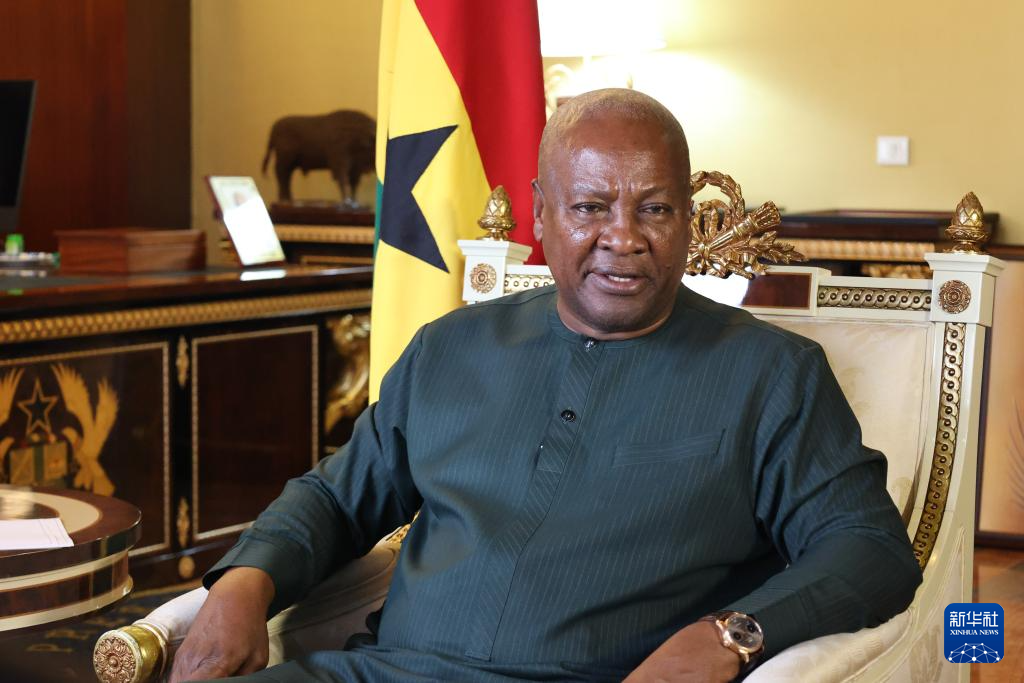
高端访谈丨北京世妇会对全球议程产生重要影响——访加纳总统马哈马
Xin Hua Wang· 2025-10-13 13:17
Group 1 - The Global Women's Conference in Beijing is viewed as a significant event that has placed women's issues at the forefront of the global agenda, leading to positive impacts over the past 30 years [2] - Ghana has made notable progress in women's empowerment, including legislative measures to ensure women's representation in government and public life, the establishment of support departments for victims of domestic violence, and initiatives for girls' education [2][3] - Ghana has achieved gender parity in school enrollment, with the number of girls attending school now equal to that of boys, a significant shift from previous practices that prioritized boys' education [2] Group 2 - Ghana considers China an important partner, with 65 years of diplomatic relations leading to successful cooperation in agriculture and infrastructure, enhancing Ghana's productivity [3][4] - The bilateral trade between Ghana and China is projected to reach a historical high of $11.8 billion in 2024, with increasing trade volumes encouraging further collaboration [4] - Ghana is focusing on five strategic areas for cooperation with China: infrastructure development, agriculture and food processing, textile and apparel industry, digitalization and innovation, and energy [4] Group 3 - Ghana's strategic location in West Africa positions it as a key hub for trade and cooperation, particularly in the context of the Belt and Road Initiative and the African Continental Free Trade Area [4] - The "Accra Reset" initiative announced by Ghana at the UN General Assembly aims to address global governance, finance, health, and trade systems, aligning with China's global governance proposals [4][6] - The African continent is poised to leverage partnerships with countries like China to avoid missing opportunities in the new industrial revolution driven by digitalization and innovation [5][6]

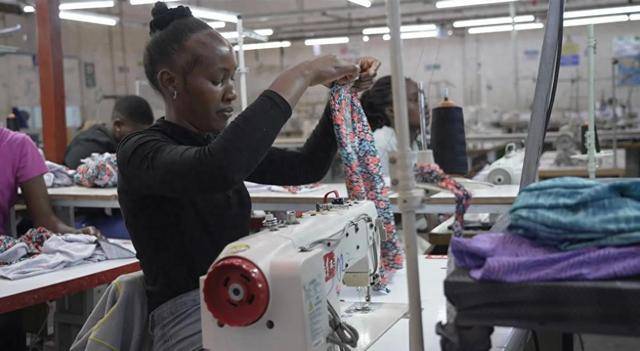
25 年美国免关税红利要停,非洲服装厂订单减 2/3,工人慌了
Sou Hu Cai Jing· 2025-10-06 09:22
Core Points - The impending expiration of the African Growth and Opportunity Act (AGOA) poses a significant threat to the livelihoods of workers in Kenya's garment industry, particularly for women like Joan Wambui, who rely on these jobs for their families' survival [2][4][5] - The AGOA has allowed over 30 African countries to export goods to the U.S. duty-free since 1998, with Kenya's garment sector alone exporting $470 million worth of clothing last year, creating 66,000 jobs, predominantly for women [4][11] - The factory manager, Isaac Maluki, reports a drastic reduction in long-term orders, down by two-thirds compared to last year, which could lead to significant job losses and financial losses for the factory [5][11] Industry Impact - The potential termination of AGOA could severely impact not only Kenya but also over 30 African nations that depend on this policy for trade, affecting a wide range of products and hindering the development of local manufacturing industries [9][11] - The uncertainty surrounding U.S. policy, including the possibility of renewed tariffs, creates a challenging environment for African exporters, with diplomatic efforts underway to secure a renewal of AGOA [11][13] - Trade experts suggest that African countries should focus on enhancing internal trade cooperation to reduce reliance on the U.S. market, especially with the establishment of the African Continental Free Trade Area [13][15]
国际观察|关税风暴下非洲贸易的突围与新生
Xin Hua Wang· 2025-09-08 02:31
Core Insights - The article discusses how African countries are adapting to the pressures of new U.S. tariffs, showcasing their resilience and ability to diversify trade partnerships [1][2]. Group 1: Impact of U.S. Tariffs - The U.S. has implemented "reciprocal tariffs" affecting numerous trade partners, with many African economies facing tariffs of up to 30% on South African goods [1]. - Despite the tariffs, the overall impact on Africa is manageable due to a declining share of U.S. trade in Africa's overall trade framework [2]. Group 2: Trade Diversification - The share of North America in Africa's imports has decreased from 7% in 2010 to 5% in 2023, while exports dropped from 17% to 7% [2]. - In 2024, Africa's trade with the U.S. is projected to be approximately $67.4 billion, accounting for only 5% of Africa's total external trade [2]. - China remains Africa's largest trading partner, with bilateral trade reaching $295.6 billion in 2024, marking a historical high for four consecutive years [2]. Group 3: African Continental Free Trade Area (AfCFTA) - The AfCFTA is emerging as a crucial buffer against external market fluctuations, with African trade expected to rebound by 13.9% in 2024, reaching $1.5 trillion [4]. - Internal trade within Africa is projected to grow by 12.4%, totaling $220.3 billion [4]. - As of February 2023, 48 African countries have ratified the AfCFTA, with 19 countries already engaging in trade under its framework [4]. Group 4: Traditional and Emerging Partnerships - Europe continues to play a stabilizing role as a traditional partner, with Euro-African trade accounting for 34.3% of Africa's external trade in 2024 [5]. - Trade with India has been on the rise, reaching approximately $103 billion in 2023, while non-energy trade with Gulf countries has also seen significant growth, with $60 billion in trade with the UAE in 2022 [6]. - Africa is demonstrating its capability to secure a more favorable position in the new global trade order through integration and diversification of partnerships [6].
专访丨非洲应推动贸易多元化应对美关税冲击——访喀麦隆经济学家塔韦
Xin Hua Wang· 2025-09-05 12:52
Core Viewpoint - The recent U.S. tariff policies are disrupting existing trade relations in Africa, prompting the need for African nations to diversify trade partnerships and enhance cooperation through the African Continental Free Trade Area (AfCFTA) to mitigate the impact of these tariffs [1][2]. Group 1: Impact of U.S. Tariffs - The changes in U.S. tariff rates may lead to economic instability for African economies that heavily rely on external markets [1]. - The new tariff policies are expected to significantly affect non-U.S. relations and accelerate the shift of Africa's strategic focus away from a U.S.-centric trade system [2]. Group 2: Recommendations for African Economies - African countries should leverage the AfCFTA platform to build more resilient regional value chains and strengthen internal trade [2]. - There is a need for African decision-makers to reassess trade strategies, reduce dependency on single markets, and enhance economic resilience to cope with the dual impact of increased tariffs and reduced foreign aid [2]. Group 3: Diversification of Trade Partnerships - Emphasis should be placed on diversifying trade partnerships, particularly towards Asia, with a focus on China, which has announced zero tariffs on 100% of products for 53 African countries [2]. - The strengthening of trade relations with China presents significant opportunities for African businesses to effectively respond to the disruptions caused by U.S. trade policies [2].
第四届非洲贸易博览会在阿尔及尔举行
Shang Wu Bu Wang Zhan· 2025-09-05 06:29
Core Points - The fourth African Trade Fair (IATF 2025) was inaugurated by Algerian President Tebboune, with participation from multiple African heads of state and government delegations [1] - The fair aims to promote intra-African trade and is expected to sign trade and investment agreements totaling $44 billion [1] - Algeria is the third-largest economy in Africa and has been actively preparing for this event to strengthen internal trade [2] Group 1 - The African Trade Fair is a collaborative initiative involving the African Export-Import Bank, the African Union Commission, and the Secretariat of the African Continental Free Trade Area [1] - The theme of the fair is "A Bridge to New Opportunities," with representation from 140 countries and over 2,000 companies, including nearly 200 Algerian firms [1] - The event is expected to attract 35,000 professional visitors from 80 countries [1] Group 2 - Africa has 1.4 billion consumers and a GDP of $3.5 trillion, but intra-African trade accounts for only 15% of total trade [2] - The African Continental Free Trade Area was established in 2018 to enhance internal trade, but faces challenges such as political instability, economic disparities, and weak infrastructure [2] - Algeria is playing a key role in promoting African economic integration and is accelerating infrastructure projects to enhance connectivity with neighboring countries [2]
2024年非洲内部贸易增长高达12.4%
Shang Wu Bu Wang Zhan· 2025-08-09 17:40
Core Insights - The African Export-Import Bank (Afreximbank) reported that intra-African trade is projected to reach $220.3 billion in 2024, reflecting a 12.4% increase from the previous year [1] Group 1: Trade Contributions - South Africa remains the largest contributor to intra-African trade, with trade volume amounting to $42.1 billion, accounting for approximately 20% of the total intra-African trade [1] - Despite a slight decline compared to last year, South Africa continues to play a central role in regional groups such as the Southern African Customs Union and the Southern African Development Community [1] - West African countries, particularly Nigeria and Côte d'Ivoire, have also shown significant growth, with Côte d'Ivoire's trade with African nations reaching $10.6 billion, representing 4.8% of total intra-African trade [1] - Nigeria's trade with African countries has improved significantly, amounting to $18.4 billion [1] Group 2: Trade Growth Challenges - The report highlights that trade growth across African regions is uneven, with slow growth in Central African countries due to poor infrastructure and weak management mechanisms [2] - Structural barriers among African nations continue to limit the full potential of the African Continental Free Trade Area [2] - The report recommends targeted policy interventions, significant investments in transportation, energy, and digital infrastructure to reduce trade costs [2] - It also suggests that Africa should integrate and innovate financing mechanisms, including blended finance and public-private partnerships, to support necessary infrastructure and capacity-building projects for sustainable growth across the continent [2]
【环球财经】非洲大陆自由贸易区(AfCFTA)第16次部长级会议在刚果(金)召开
Xin Hua Cai Jing· 2025-04-15 23:21
Core Points - The 16th Ministerial Meeting of the African Continental Free Trade Area (AfCFTA) commenced in Kinshasa, Democratic Republic of the Congo, emphasizing the need for deeper regional cooperation and faster implementation of the free trade area mechanisms [1] - The AfCFTA aims to create a unified market covering 1.3 billion people with a total GDP of approximately $3.4 trillion, recognized as a key pillar for Africa's economic transformation and regional integration [1] Group 1 - The President of the Democratic Republic of the Congo, Félix Tshisekedi, called for enhanced collaboration among African nations to unlock the continent's potential through unity and shared development [1] - Tshisekedi proposed Kinshasa as a candidate location for future AfCFTA-related institutions or regional platforms, showcasing the country's commitment to regional integration [1] Group 2 - The Minister of Foreign Trade of the Democratic Republic of the Congo, Julien Paluku, highlighted the country's active pursuit of industrialization and agricultural transformation strategies within the AfCFTA framework [2] - The meeting discussed key topics such as tariff reduction mechanisms, rules of origin, and digital trade policies to enhance policy coordination and institutional alignment among member countries [2]