餐酒融合

Search documents
外卖大战正酣,酒业影响几何?
Sou Hu Cai Jing· 2025-07-26 13:18
Group 1 - The core viewpoint of the articles revolves around the ongoing competition among food delivery platforms like Ele.me, Meituan, and JD.com, which has intensified as they offer substantial subsidies to attract new users, leading to a significant increase in delivery volumes during the summer months [1][10] - The market regulatory authority has intervened by urging these platforms to engage in rational competition, indicating a need for a balance between aggressive marketing strategies and sustainable business practices [1][10] - The rise in food delivery is closely linked to changing consumer habits, particularly among younger demographics, who are increasingly relying on delivery services for convenience [6][10] Group 2 - The integration of alcohol sales with food delivery services is being examined, with experts suggesting that the rise in food delivery may not significantly impact traditional alcohol consumption patterns, particularly for white spirits, which are typically consumed in more formal social settings [3][5] - The primary consumers of food delivery services are younger individuals, urban professionals, and single people, while traditional alcohol consumers tend to be older males and business professionals, indicating a demographic mismatch [5][9] - The food delivery market is projected to reach a scale of 500 billion yuan by 2025, with a user base exceeding 553 million, reflecting a broadening acceptance of delivery services across various age groups [10][12] Group 3 - The articles highlight the need for the alcohol industry to adapt to new consumption scenarios created by the food delivery boom, suggesting that innovative product offerings and marketing strategies are essential for capturing this evolving market [12] - The trend of online food ordering is becoming a significant channel for restaurant consumption, with over 90% of consumers expressing greater acceptance of food delivery compared to two years ago [10][12] - The expansion of food delivery services into diverse product categories beyond traditional food items, such as clothing and cosmetics, indicates a shift in consumer behavior towards instant gratification and convenience [5][10]


“外卖大战”的风吹向白酒 1919等传统酒商如何接招?
Sou Hu Cai Jing· 2025-07-17 06:03
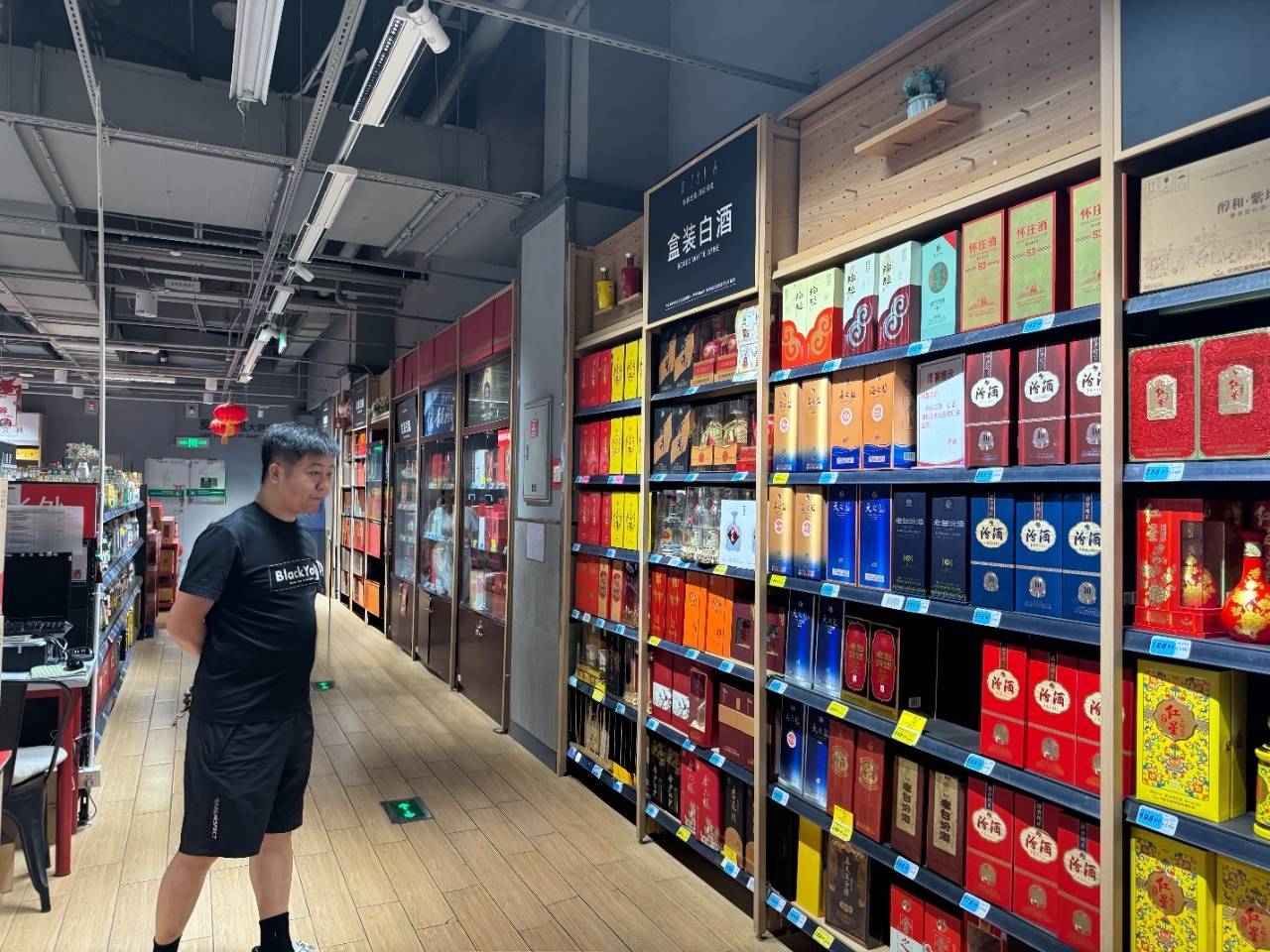
Core Viewpoint - The rise of instant retail in the liquor industry is being driven by e-commerce platforms, leading to significant changes in consumer purchasing behavior and traditional liquor distribution models [1][9]. Group 1: Market Dynamics - The instant retail market for liquor has seen a 65% year-on-year growth in transaction volume in the first half of the year, indicating a shift towards immediate consumption [1]. - E-commerce platforms have significantly impacted liquor pricing, with some products, like ordinary Wuliangye, dropping below 800 yuan per bottle during promotional events [3]. - Instant retail penetration in the liquor market is currently around 1%, with a market size of nearly 200 billion yuan, expected to reach 6% penetration and over 1 trillion yuan by 2027 [9]. Group 2: Traditional Liquor Distribution Challenges - Traditional liquor distributors like 1919 and Jiu Bian Li have struggled to make a significant impact in instant retail, facing declining performance and limited user engagement [8]. - Financial data shows that 1919 has experienced continuous net losses from 2016 to 2022, with a total loss of over 600 million yuan during this period [8]. - Jiu Bian Li's financial performance has also been underwhelming, with two out of three years from 2022 to 2024 reporting losses [8]. Group 3: Strategic Responses - Traditional liquor distributors are urged to adapt by enhancing their business models and embracing instant retail, as the market dynamics shift [12]. - 1919 is actively pursuing a new business model that integrates dining experiences with liquor sales, aiming to create a new ecosystem for liquor consumption [13]. - Companies like Huazhi Liquor are planning to leverage online and offline integration to expand their instant retail offerings, focusing on cost-effectiveness and market trends [16].
逆势破局!1919推出“酒饮生活”新战略 联合刘仪伟押注餐酒融合
Zheng Quan Ri Bao Wang· 2025-07-11 10:58
Core Insights - 1919 has launched a new business model upgrade plan focusing on "star IP + matrix store types + selected franchising" to enter the "wine and food integration" market, aiming to create a new ecosystem for beverage consumption [1] - The company has undergone multiple strategic transformations over its 20-year history, positioning itself as a competitive player in the current challenging market environment [2] - The shift from traditional B2C/O2O to F2B2C model emphasizes strategic branding and combines instant retail with experiential sales [4] Business Model Upgrade - 1919 is transitioning to a matrix store system with six-star to satellite point store types, enhancing the retail experience by integrating coffee, bars, and dining options [4][5] - The company has reported significant revenue growth in remodeled stores, achieving approximately three times the profit compared to non-remodeled locations [4] - The focus on community and high-frequency consumption scenarios aims to upgrade traditional liquor stores to reach a broader customer base [4] Strategic Partnerships and Collaborations - The appointment of a well-known host and food expert as the "1919 Good Life Officer" is part of the strategy to enhance the "wine and food" ecosystem [3] - Collaborations with restaurants to integrate wine and food offerings are underway, with over 30 fusion stores opened in Chengdu [5][6] - 1919 is committed to directly investing in six-star liquor lifestyle stores, taking on all associated risks to showcase its brand [5][6] Market Trends and Future Outlook - The company acknowledges the end of the era where liquor retailers relied on high margins from premium products, advocating for a "thin profit, high volume" approach [3] - 1919's strategic initiatives are seen as a response to the restructuring of consumer scenarios and the prevailing trend of low-margin sales [6] - The company plans to expand its remodeled lifestyle stores to major cities nationwide, reinforcing its F2B2C ecosystem strategy [6]
家乐:专业致敬酱香传承,匠心共酿中餐“味”来
Qi Lu Wan Bao· 2025-06-06 02:58
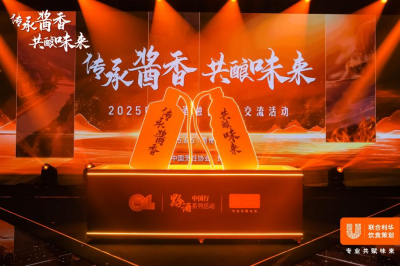
Core Insights - The event "Inheritance of Sauce Aroma and Co-brewing Flavor" aims to explore the integration of sauce aroma culture and dining, highlighting the collaboration between traditional brewing techniques and modern culinary practices [1][3][4] - The event gathered industry authorities and representatives from over a hundred Chinese dining brands to discuss the synergy between sauce aroma and dining experiences [1][3] Group 1: Event Overview - The event featured multiple formats including exchanges, visits, and tastings, focusing on three core themes: tracing the origins of sauce aroma, deep industry decoding, and empowering innovation in Chinese cuisine [3] - The collaboration between Unilever and renowned dining enterprises in Guizhou Maotai Town aimed to create a "sauce aroma" ecosystem that integrates dining and beverage experiences [3][4] Group 2: Industry Insights - The first "China Sauce Aroma Flavor White Paper" was previewed, providing a systematic analysis of sauce aroma as a complex flavor system in Chinese cuisine, covering fermentation, cooking, emotional, and sensory systems [6][8] - Insights from the white paper indicate that sauce aroma is a significant growth segment in the dining industry, driven by consumer demand for memorable flavor experiences [6][8] Group 3: Culinary Innovations - The event showcased innovative dishes that highlight the integration of sauce aroma in modern Chinese cuisine, featuring collaborations with culinary masters to create unique flavor profiles [12][14] - Dishes such as sauce aroma beef short ribs and sauce aroma chicken demonstrate the potential of sauce aroma to enhance traditional flavors while appealing to contemporary dining preferences [12][14] Group 4: Future Directions - The event emphasized the importance of balancing traditional brewing techniques with modern consumer needs to ensure the longevity and relevance of sauce aroma in the dining industry [14] - Unilever aims to continue its commitment to innovation in the fermentation field, collaborating with dining professionals to preserve classic flavors while embracing new culinary trends [14]