马文化

Search documents
我们的春节·文韵启新
Ren Min Ri Bao· 2026-02-21 22:43
Core Viewpoint - The article discusses the cultural significance of the Year of the Horse in China, emphasizing the transformation of traditional agricultural practices into modern cultural expressions, particularly through creative cultural products that resonate with contemporary society [1][2][5]. Group 1: Cultural Significance of the Horse - The Horse is not merely a livestock or a means of transportation in Chinese culture but serves as a spiritual totem, symbolizing progress and aspiration [2][3]. - The Year of the Horse, particularly the "Double Fire" year, is associated with cultural expectations of vitality and advancement, rooted in a collective memory that spans thousands of years [2][3]. Group 2: Creative Cultural Products - The popularity of cultural products related to the Year of the Horse reflects a deepening understanding of "New Year culture," where people seek spiritual fulfillment and emotional connection during the Spring Festival [3][12]. - Contemporary cultural designs, such as the "Horse Toy" and "Horse Bookmark," transform traditional symbols into usable items that enhance personal rituals and cultural identity [3][4]. Group 3: Integration of Tradition and Modernity - The article highlights the importance of creatively transforming traditional elements to make them relevant in modern contexts, bridging the gap between historical significance and contemporary appeal [2][3]. - Museums and cultural institutions are increasingly playing a vital role in revitalizing traditional customs and making them accessible to the public through innovative exhibitions and events [11][12]. Group 4: Global Cultural Exchange - The Horse, as a symbol of cultural exchange, is positioned to play a significant role in international cultural events, promoting Eastern wisdom and shared human emotions through design [4][5]. - The article emphasizes the potential of cultural products to serve as ambassadors of Chinese culture on the global stage, fostering understanding and appreciation across different cultures [4][5].
戏说滨州人的马文化⑤好吃的“马”知多少?
Xin Lang Cai Jing· 2026-02-21 06:55
Group 1: Cultural Significance of "Horse" in Binzhou - The "Horse Culture" in Binzhou is a blend of traditional and modern elements, including folk dance, martial arts, and equestrian sports, which have become a lifestyle [1] - The "Horse Hoof Fire Cake" is a local delicacy that has gained recognition, being featured in documentaries and praised historically as a tribute to the emperor [2][1] Group 2: Development of the Sea Horse Industry - Binzhou's North Sea is emerging as a significant area for sea horse production, with a notable market value that could exceed 30 billion [5] - The region has favorable conditions for sea horse farming, including a rich supply of natural feed and a suitable coastal environment [7] - A research and innovation center has been established to enhance sea horse farming techniques, improving survival rates and overall efficiency by over 50% [8] Group 3: Culinary Diversity in Binzhou - The "Horse Family Alley" is a vibrant food street in Binzhou, offering a variety of cuisines and experiences, from traditional dishes to modern dining concepts [9] - Other local delicacies related to "horse" include "Horse Family Fire Cake," "Horse Family Roast Chicken," and "Horse Family Honey Three Slices," showcasing the region's rich culinary heritage [10]
马相关字词典故好多
Xin Lang Cai Jing· 2026-02-21 05:57
Group 1 - The article highlights the historical significance of horses as companions to humans for thousands of years, emphasizing their beauty, strength, and ease of domestication [1] - It notes that horses have played a deep role in the progress of human civilization and have been widely loved by people [1] - The article mentions the presence of numerous idioms related to horses in the Chinese language, indicating their cultural importance [1]
马影千年,藏在亳州古迹里的马文化密码
Xin Lang Cai Jing· 2026-02-21 02:48
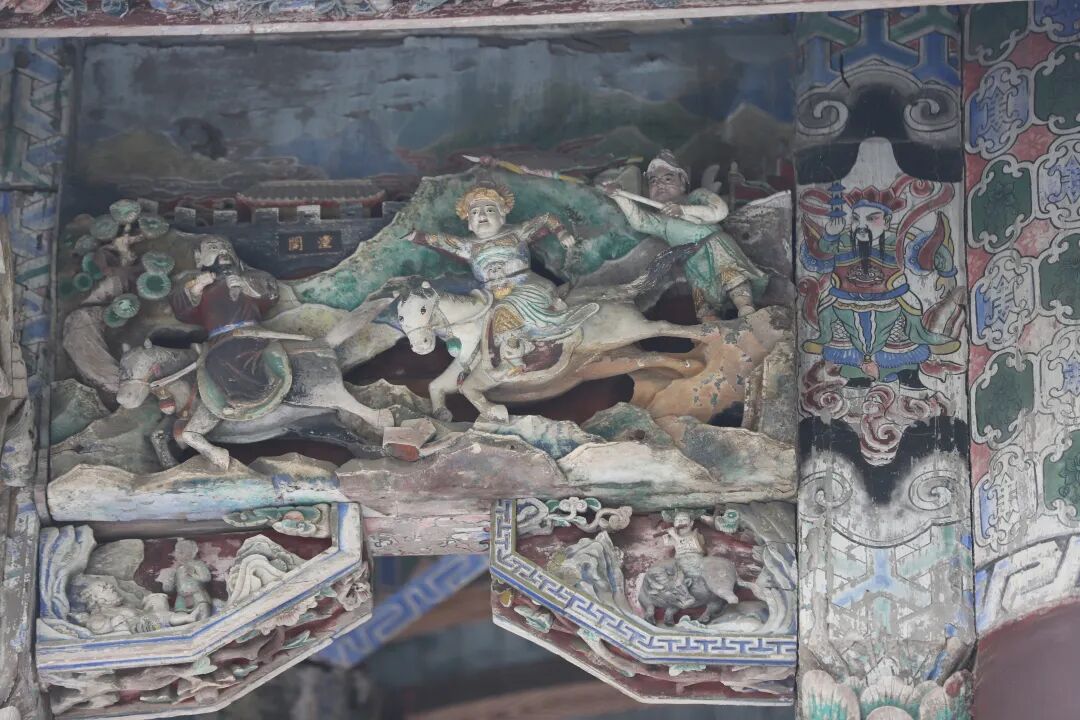
Core Viewpoint - The article highlights the rich cultural heritage of horse-related art in Bozhou, China, emphasizing the historical significance and artistic expressions found in various forms, including sculptures and carvings [1]. Group 1: Historical Significance - Bozhou is recognized as a national historical and cultural city with a deep historical background and numerous cultural relics, many of which are related to horse culture [1]. - The Huaxi Building, a prominent ancient structure over 300 years old, features intricate brick and wood carvings that tell stories involving horses [3]. Group 2: Artistic Representations - The brick carvings at Huaxi Building include 115 figures, 33 birds, and 67 animals, among which are horse images that contribute to grand narrative scenes depicting historical tales or myths [3]. - Notable carvings include scenes from the "Wu-Yue War" and "Guo Ziyi's Birthday," showcasing dynamic horse figures that enhance the storytelling [5]. Group 3: Cultural Artifacts - The Bozhou Museum houses ancient artifacts, including a brick from the Eastern Han Dynasty depicting a galloping horse, reflecting the artistic skills and cultural expressions of that era [8]. - The preservation of horse-related artifacts from the Eastern Han to the Qing Dynasty illustrates the enduring significance of horse culture throughout Chinese history [8].

新春打卡文博院
Xin Lang Cai Jing· 2026-02-20 18:38
Group 1 - The article highlights the success of the Tongliao Cultural Museum as a new cultural landmark during the Spring Festival, attracting local citizens with over 50,000 artifacts on display [1][2] - The museum offers various public educational activities, allowing visitors to engage in traditional crafts such as Khorchin embroidery and leather carving, enhancing their cultural experience [1][2] - The museum's exhibitions, including the "From Xiliao River to Greater China" and the New Year Horse Culture exhibition, showcase the rich history and cultural significance of artifacts, drawing significant visitor interest [2][3] Group 2 - The integration of traditional culture with modern festivities has revitalized the museum's appeal, with an average of over 500 visitors daily during the Spring Festival [2] - The hands-on experience of creating cultural items serves as a living testament to cultural exchange and heritage, making the museum a vibrant space for cultural interaction [3] - The unique approach of combining artifacts with New Year customs has created a dynamic environment where ancient civilization meets contemporary celebrations, enriching the cultural landscape [3]
角楼图书馆双展齐发!让“年味”慢下来→
Xin Lang Cai Jing· 2026-02-20 07:16
Group 1 - The article highlights two new exhibitions at the Qiaolou Library, focusing on traditional Chinese culture and the festive atmosphere of the Spring Festival [1][28] - The first exhibition, "Cutting the Ribbon in Spring: Yang Ye's New Year Paper-Cutting Exhibition," features vibrant paper-cutting art that embodies the spirit of the Chinese New Year [5][10] - The second exhibition showcases the poetic world of kite-making, integrating the 24 solar terms into the designs and colors of the kites, reflecting ancient wisdom [16][18] Group 2 - The exhibitions aim to evoke nostalgia and cultural appreciation, emphasizing that the best aesthetic experiences come from everyday life and traditions [26] - The exhibitions are open from February 1 to March 3, 2026, at the Qiaolou Library, with free admission and no reservation required [24][28] - Additional cultural events and exhibitions are available in the Dongcheng District, including the Palace Museum's digital art exhibition and the National Museum's horse culture exhibition, enhancing the festive experience [29]
快马扬鞭踏春行
Xin Lang Cai Jing· 2026-02-19 21:59
Group 1: Industry Overview - The horse industry in Inner Mongolia is experiencing diversification, moving beyond traditional breeding and trading to include biotechnology applications such as the use of pregnant mare urine and serum in pharmaceuticals and cosmetics [5][6][7] - The total livestock population in the Damao Banner is stable at over 1.2 million, with approximately 60,000 horses, including 45,000 breeding mares [5] Group 2: Economic Impact - The pregnant mare serum project has signed contracts with 17 herders, covering 1,500 pregnant mares, with each mare potentially increasing herder income by 4,000 yuan annually [6] - The hybrid breeding project has successfully bred 560 Mongolian horses for 30 herders, indicating a profitable venture for the local economy [6] Group 3: Cultural Integration - The integration of horse culture with tourism is evident, as events like horse racing attract over 180,000 visitors, enhancing the cultural and economic vitality of the region [7] - The establishment of eco-friendly family ranches in Urat Middle Banner showcases the blending of traditional livestock farming with modern tourism, contributing to local economic growth [9][10] Group 4: Heritage and Craftsmanship - The Mongolian horse gear-making technique is recognized as a national intangible cultural heritage, reflecting the deep-rooted horse culture in the region [15][16] - The production of traditional horse gear combines various crafts, ensuring the preservation and promotion of cultural heritage while adapting to modern market demands [15][16] Group 5: Innovative Products - The production of fermented mare's milk (sour mare's milk) is gaining popularity, with a focus on health benefits and traditional Mongolian dietary practices, leading to the establishment of a specialized industry [17][18] - The sour mare's milk industry has expanded to include partnerships with local hospitals for health-related applications, showcasing the potential for traditional products in modern health markets [18]

马年寻“贵马”丨到世界第一高桥旁,探寻悬壁骏马的未解之谜
Xin Lang Cai Jing· 2026-02-19 13:47
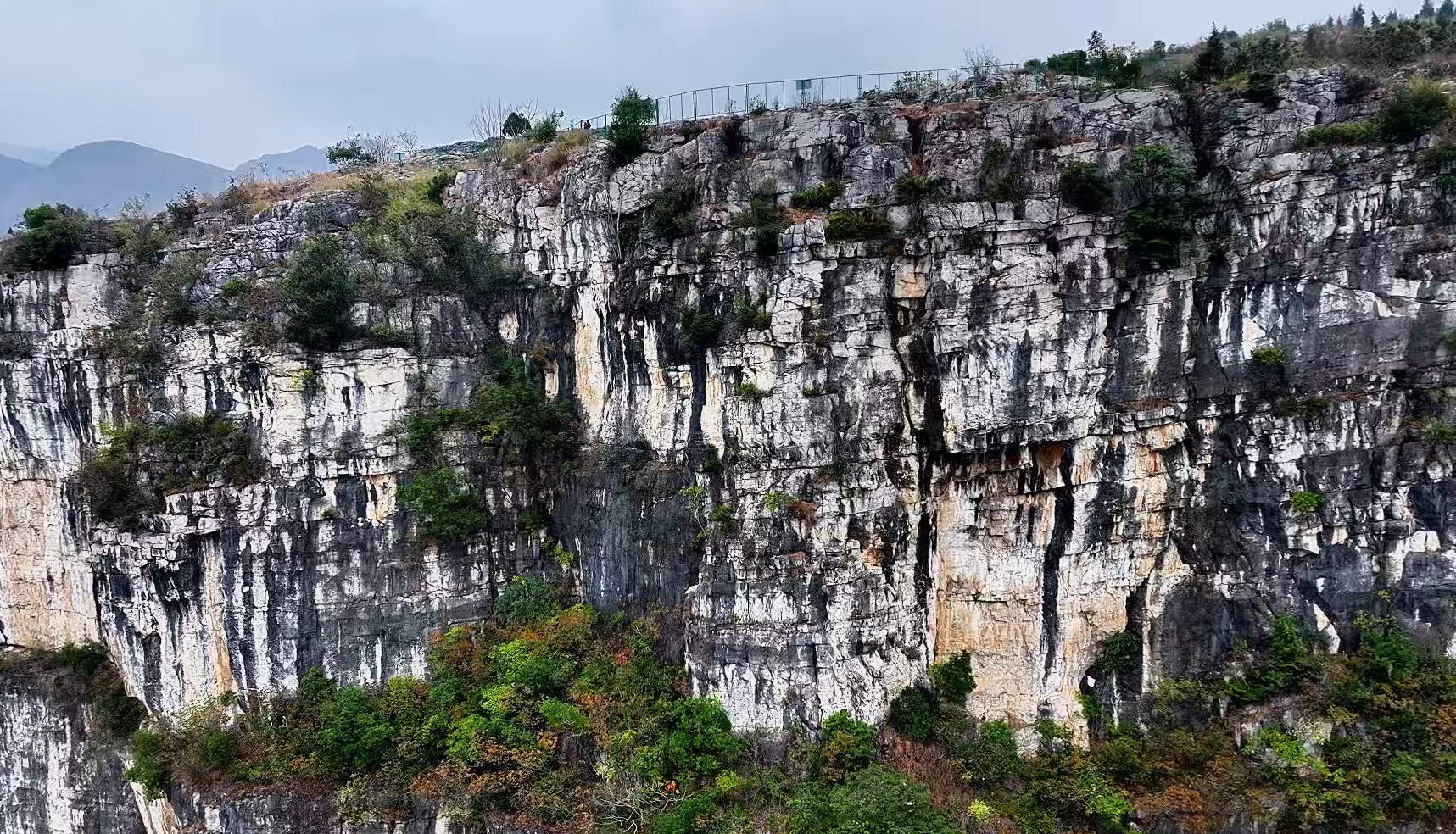
Core Viewpoint - The article highlights the cultural significance of horses in Chinese culture, particularly in Guizhou, and focuses on the Ma Ma Rock Paintings, which depict various horse-related images and are a symbol of local heritage and history [1][4]. Group 1: Ma Ma Rock Paintings - The Ma Ma Rock Paintings are located in Ma Ma Ya Village, Guizhou, featuring over ten horse images in various poses, including a warrior figure [1][3]. - The paintings are 2.5 meters above ground, measuring 3 meters in length and 2 meters in width, with a total area of 6 square meters [3]. - The largest image measures 0.4 meters in height and 0.49 meters in width, while the smallest is merely a dot [3]. Group 2: Historical Context - Discovered in 1965, the Ma Ma Rock Paintings were designated as a provincial cultural heritage site in 1982, yet their origins remain a mystery [4]. - Ma Ma Ya Village was established during the Ming Dynasty and retains historical structures such as slate buildings and ancient wells [4]. Group 3: Recent Developments - The completion of the world's highest bridge, the Huajiang Grand Canyon Bridge, has revitalized Ma Ma Ya Village, increasing visibility for the Ma Ma Rock Paintings [6].
来内蒙古过大年|博物馆里“马”上过年
Xin Lang Cai Jing· 2026-02-19 13:46
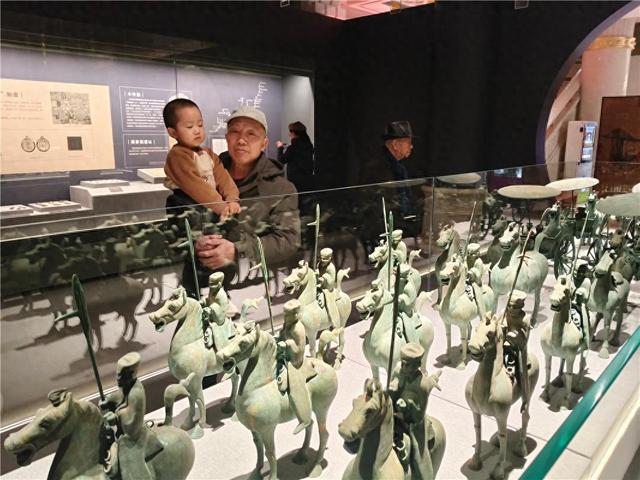
Core Viewpoint - The "Spring Breeze and Galloping Hooves - Horse Culture Special Exhibition" at the Hohhot Museum has become a popular destination during the Spring Festival, showcasing the rich horse culture of Inner Mongolia and attracting visitors seeking cultural experiences [1][5]. Group 1: Exhibition Highlights - The exhibition features 145 precious cultural relics from nine cultural institutions in the region, including bronze horse ornaments from the Spring and Autumn period, Han dynasty horse-shaped bronze decorations, and Qing dynasty jade carvings [3]. - The exhibition is divided into four thematic units: "Heavenly Steed," "The Art of Riding," "Shared Journey," and "Timeless Steeds," illustrating the deep historical connection between horses and Chinese civilization [3][5]. Group 2: Visitor Experience - Visitors are encouraged to engage in hands-on activities, such as making horse-shaped paper cuts and experiencing traditional crafts, which enhance the cultural atmosphere of the festival [3][5]. - The museum aims to provide a culturally rich experience during the New Year, blending traditional customs with modern artistic expressions, thereby fostering a deeper appreciation for history and culture [5][6]. Group 3: Cultural Significance - The exhibition emphasizes the spirit of the Mongolian horse, symbolizing perseverance and loyalty, which resonates with the collective cultural identity of the Chinese people [5][6]. - The integration of cultural activities within the museum setting transforms the New Year celebration into a meaningful cultural practice, reinforcing cultural confidence and heritage [6].
这是一份「含马量」极高的书单,赞美伟大的马
36氪· 2026-02-19 13:05
Group 1 - The article presents a thematic book list centered around the concept of "horse," exploring its cultural significance and historical impact [4][5][6] - The selected books cover various genres, including history, literature, and psychology, all linked to the theme of horses [5][6] - The list aims to provide readers with a diverse range of perspectives on the role of horses in civilization and their symbolic meanings [5][10][11] Group 2 - "Horses and the Creation of Civilization" by David Chaffetz discusses the relationship between humans and horses throughout history, emphasizing their role in trade, warfare, and power dynamics [10] - "Longxi to the West, Rome to the East" by Edward Berman highlights the importance of horses in the Silk Road trade, particularly from the perspective of the Tang Dynasty [11] - "The Lychee of Chang'an" narrates a dramatic story involving the transportation of lychees to Chang'an, showcasing the challenges faced by horses in this endeavor [13] Group 3 - "No Way Out" by Dick Francis combines elements of mystery and the horse racing industry, reflecting the author's background as a champion jockey [14] - "Chinese Monsters" provides insights into mythical creatures in Chinese folklore, including representations of horses, linking cultural narratives to the theme [19] - "Little Silver and Me" by Juan Ramón Jiménez is a poignant reflection on companionship, using a donkey as a metaphor for loss and memory [22] Group 4 - "Why Zebras Don't Get Ulcers" by Sapolsky offers psychological insights into stress management, using animal behavior, including that of horses, as a framework for understanding human emotions [24] - "The End of the World and the Cool Fairyland" by Haruki Murakami features unicorns as a central motif, exploring themes of reality and fantasy [28] - "The Story of Chess" by Stefan Zweig uses the chess piece of the knight, which resembles a horse, as a metaphor for navigating mental challenges [29] Group 5 - "Sophie’s World" by Jostein Gaarder introduces philosophical concepts through the lens of horses, discussing their representation in Western philosophy [33] - "Harry Potter" series features characters associated with horses, particularly Draco Malfoy, linking the narrative to the theme of horses in a modern context [38] - "One Hundred Years of Solitude" by Gabriel García Márquez weaves the story of the Buendía family, with horses symbolizing various themes of solitude and fate [39] Group 6 - "The Count of Monte Cristo" by Alexandre Dumas tells the story of a sailor from Marseille, incorporating themes of betrayal and revenge, with horses symbolizing freedom and power [43] - "Matisse's Matisse" showcases the works of the artist known for his vibrant use of color, indirectly connecting to the theme of horses through artistic expression [46] - "Southeast Asian Culinary Spices" by Chen Ailing explores the flavors of Southeast Asia, with a focus on culinary traditions that may include horse meat in certain cultures [49] Group 7 - "A Horse Walks into a Bar" by David Grossman presents a narrative intertwining humor and personal pain, using the metaphor of a horse to explore deeper emotional themes [50] - "Let the Horses Come" by Tsai Lan reflects on life's challenges and the wisdom of embracing experiences, resonating with the theme of horses as symbols of resilience [52] - "The Great Failures" by Wu Xiaobo chronicles the stories of once-successful companies that faced downfall, using the metaphor of "falling horses" to illustrate business risks [53]