高端零食

Search documents
高端零食第一股”易主生变,良品铺子回应“一股两卖
2 1 Shi Ji Jing Ji Bao Dao· 2025-10-17 04:28
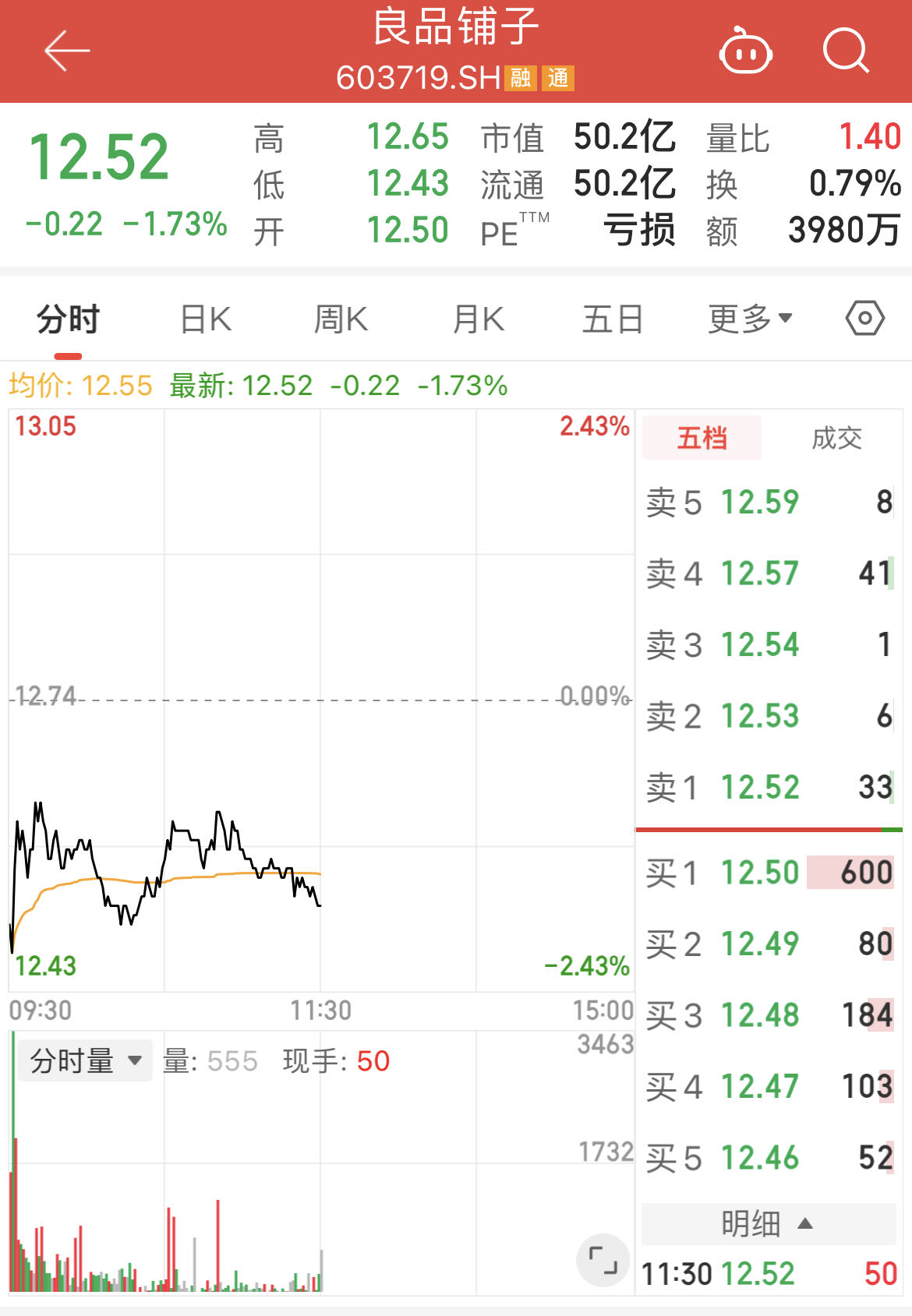
Core Viewpoint - The control transfer of the high-end snack company, Liangpin Shop, has been halted as the share transfer agreement with Changjiang International Trade Group was terminated due to unmet conditions, leaving the current controlling shareholder, Ningbo Hanyi, unchanged [1]. Group 1: Control Transfer and Shareholder Changes - The agreement for the transfer of 72.24 million shares (18.01% of total shares) from Ningbo Hanyi to Changjiang International was intended to change the controlling shareholder to Changjiang International, effectively placing control under the Wuhan State-owned Assets Supervision and Administration Commission [2]. - The failed transfer is linked to a previous "dual sale" incident where Ningbo Hanyi had agreed to sell shares to Guangzhou Light Industry Group to resolve debt issues, but did not finalize the agreement by the stipulated date [2][3]. - Guangzhou Light Industry initiated legal action against Ningbo Hanyi over the share transfer dispute, leading to the freezing of approximately 79.76 million shares (19.89% of total shares) held by Ningbo Hanyi [3]. Group 2: Stock Performance and Market Reactions - Prior to the control change announcement, Liangpin Shop's stock experienced a suspicious pre-announcement surge, leading to regulatory scrutiny from the Shanghai Stock Exchange [4][5]. - Liangpin Shop's stock has underperformed in the market, with a year-to-date decline of 8.63%, and as of October 17, the stock price was reported at 12.52 CNY, down 1.73% for the day [7]. Group 3: Financial Performance - Liangpin Shop reported a revenue of 7.159 billion CNY for 2024, a year-on-year decline of 11.02%, and a net loss of 46 million CNY, a significant drop of 125.57% compared to the previous year [6]. - For the first half of 2025, the company continued to face challenges, with revenue of 2.829 billion CNY, down 27.21%, and a net loss of 94 million CNY, a staggering decline of 491.59% year-on-year [6]. - The number of stores decreased from 3,293 at the beginning of 2024 to 2,445 by mid-2025, indicating a closure of approximately 848 stores, averaging 11 closures per week [7].


亏损留给别人,良品铺子要“卖身”了?
Sou Hu Cai Jing· 2025-07-21 07:44
Core Viewpoint - The company "Liangpinpuzi," known as the "first high-end snack stock," is facing significant financial difficulties, with a projected loss of up to 100 million yuan for the first half of 2025, alongside a drastic decline in market value from a peak of 30 billion yuan to under 5.5 billion yuan, representing an 80% decrease [2][3]. Financial Performance - In 2023, the company's net profit decreased by nearly 50%, and it is expected to report a loss of 46 million yuan in 2024, contributing to the founder's disillusionment [2]. - The company's stock price has fallen significantly, with the current price around 13 yuan, far below the pledge price of the founder's shares [3]. Shareholder Actions - The controlling shareholder, "Ningbo Hanyi," which is controlled by the founder Yang Hongchun, is preparing to sell its stake, indicating a potential exit from the company [2]. - In 2023, Ningbo Hanyi reduced its stake by 2% through the secondary market and cashed out 7.36 million yuan in June of the previous year [2]. - Major investors, including Xu Xin's Today Capital and Hillhouse Capital, have also been selling off their shares, with Today Capital executing 15 sell-offs [2]. Market Context - The company initially positioned itself as a high-end brand after its establishment in 2006, achieving rapid growth and a peak market value of 30 billion yuan post-IPO in 2020 [2]. - Despite the downturn, the snack market remains viable, with other brands like "Luxiaochan" and "Haoxianglai" emerging successfully, and companies like Wancheng Group seeing stock prices increase nearly tenfold in 2024 [3].
良品铺子卖身,一个零食时代结束了
Hu Xiu· 2025-07-18 14:16
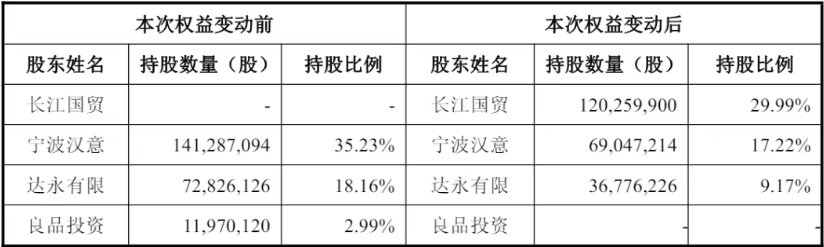
Core Viewpoint - The acquisition of Liangpinpuzi by Changjiang International Trade Group marks a significant shift in the company's ownership structure, transitioning from a founder-led model to a state-owned enterprise, amidst ongoing financial struggles and a challenging market environment [1][4][10]. Group 1: Transaction Details - The total transaction price for the share transfer agreements is 1.046 billion yuan, with Changjiang Guomao set to hold 21% of Liangpinpuzi's shares post-transfer [2][3]. - If both agreements are executed successfully, Changjiang Guomao will directly hold 120,259,900 shares, representing 29.99% of the total share capital, for a total price of 1.485 billion yuan [4]. - Prior to the transaction, the shareholding structure included Ningbo Hanyi with 35.23% and Dayong with 18.16%, which will change significantly post-acquisition [5]. Group 2: Financial Performance - Liangpinpuzi's stock price was 13.71 yuan before suspension, with a market capitalization of 5.5 billion yuan. After resuming trading, the stock price slightly decreased to 13.69 yuan, with a market cap of 5.49 billion yuan [6]. - The company is expected to report a net loss of 75 million to 105 million yuan for the first half of 2025, marking its worst performance since going public [9]. Group 3: Market Context and Challenges - Liangpinpuzi has faced significant operational challenges, transitioning from a leading snack brand to a company seeking survival, with questions about the value of the acquisition [7][10]. - The acquisition by a state-owned entity is seen as a potential lifeline, given the financial backing and logistical support from Changjiang Guomao, which operates in various financial and logistics sectors [12][13]. - The company has struggled with strategic direction, experiencing a decline in revenue for the first time in a decade, with 2023 revenue dropping to 8.046 billion yuan, a nearly 15% decrease year-on-year [28]. Group 4: Historical Performance and Strategic Shifts - Liangpinpuzi's history can be divided into three phases: rapid growth from 2006 to 2016, a high-end positioning strategy from 2017 to 2022, and a recent phase of strategic ambiguity and performance decline since 2023 [22][24][26]. - The company has attempted to pivot from high-end snacks to a focus on natural and healthy snacks, launching new products under the "natural health new snacks" concept [53][55]. - Despite these efforts, the company has faced criticism for lacking innovation and failing to effectively compete with emerging low-cost snack brands [38][40].
“高端零食第一股”或易主,股价提前涨停
21世纪经济报道· 2025-07-11 00:18
Group 1 - The core viewpoint of the article highlights the significant changes in the control and management of the company, Liangpinpuzi, which is facing operational challenges and a potential change in ownership [1][2]. Group 2 - Liangpinpuzi's major shareholder, Ningbo Hanyi, is planning a significant matter that may lead to a change in the company's control, with the stock being suspended for trading for up to two days starting July 11 [1]. - The company has experienced a decline in performance, with a revenue of 7.159 billion yuan in 2024, down 11.02% year-on-year, and a net loss of 46 million yuan, a drop of 125.57% [2]. - In the first quarter of 2025, the company continued to face difficulties, reporting a revenue of 1.732 billion yuan, down 29.34% year-on-year, and a net loss of 36 million yuan, a decline of 157.85% [2]. - The company is undergoing a strategic adjustment, which has impacted its gross margin and led to increased asset impairment and inventory write-downs, contributing to the decline in net profit [2]. - The management has seen significant changes, with the resignation of co-founder Yang Yinfen from the positions of chairman and general manager, and the current chairman is Cheng Hong [1].
突发!“高端零食第一股”或易主,股价已提前涨停
2 1 Shi Ji Jing Ji Bao Dao· 2025-07-10 15:02
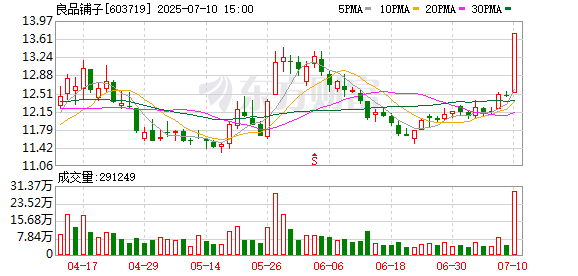
Group 1 - The core point of the article is that the major shareholder of the company, Ningbo Hanyi, is planning a significant matter that may lead to a change in the company's control, resulting in a temporary suspension of the company's stock trading [2][4]. - After the announcement, the stock of the company surged to a limit-up price of 13.71 CNY per share, while the snack index closed down by 0.98% [4]. - The company was founded in 2006 and became the "first high-end snack stock" in A-shares in February 2020, integrating digital technology with supply chain management and multi-channel sales [6]. Group 2 - As of June 4, 2025, Ningbo Hanyi holds 141 million shares of the company, accounting for 35.23% of the total share capital, with a market value of 1.872 billion CNY [7]. - The company has faced significant operational challenges, with a revenue of 7.159 billion CNY in 2024, down 11.02% year-on-year, and a net profit loss of 46 million CNY, a decline of 125.57% [7]. - In the first quarter of 2025, the company continued to struggle, reporting a revenue of 1.732 billion CNY, down 29.34% year-on-year, and a net profit loss of 36 million CNY, a drop of 157.85% [7].
零食三巨头,被后浪掀翻
3 6 Ke· 2025-07-10 04:32
Core Viewpoint - The traditional snack giants are facing a survival crisis as they struggle against the rise of low-cost snack brands, leading to significant declines in revenue and profit margins [1][2][20]. Group 1: Performance of Traditional Snack Giants - Laiyifen reported a double-digit decline in both revenue and net profit in its 2024 annual report, marking the largest loss since its IPO [1] - Good Products also experienced its first annual loss since its listing in 2020 [1] - Three squirrels terminated the acquisition of Ailingshi and announced a strategic partnership with Snack Selection, while facing legal challenges from Ailingshi [1][2] Group 2: Rise of Low-Cost Snack Brands - Low-cost snack brands are rapidly gaining market share through a "low-margin, high-volume" model, posing unprecedented challenges to traditional snack companies [2] - Brands like "Very Busy" and "Snack Revolution" have emerged, focusing on price competitiveness and direct factory connections, undermining the brand premium of traditional players [3][4] Group 3: Changing Consumer Behavior - Young consumers are becoming more rational, with a decreasing willingness to pay a premium for brands [4] - The perception of high prices and product homogeneity among traditional brands is leading to a loss of consumer loyalty [3][4] Group 4: Challenges Faced by Traditional Giants - Three Squirrels heavily relies on online channels, with 70% of its revenue still coming from third-party e-commerce platforms in 2024 [5] - The company aimed for a "ten-thousand store plan" by 2024 but only managed to open 333 stores, closing 549 in 2022 alone [6] - Laiyifen's store count decreased by 16.28% from 2023 to 2024, highlighting the struggles of traditional retail models [6] Group 5: Profitability Issues in the Low-Cost Segment - Leading low-cost brands like "Wancheng" and "Mingming Very Busy" have achieved rapid growth but maintain low profit margins of 0.91% and 2.1% respectively [7][8] - The franchise model prevalent in low-cost brands raises concerns about sustainability, as profitability for franchisees is crucial for continued expansion [8] Group 6: Future Directions for Traditional Giants - Traditional snack companies are exploring new product lines and pricing strategies to combat the low-cost competition, with Good Products initiating a significant price reduction across 300 products [14] - However, this price-cutting strategy risks damaging brand value and consumer trust [14] - The need for operational upgrades and a complete supply chain overhaul is emphasized as essential for survival in the evolving market [17][20] Group 7: New Business Models - Three Squirrels has opened its first lifestyle store, expanding beyond snacks to include a variety of products, indicating a shift towards a more comprehensive retail approach [18] - The company is also developing a convenience store model, focusing on a low-margin strategy with a diverse product mix [18] Group 8: Conclusion - The snack industry is undergoing a transformation where traditional high-end branding is losing relevance, and the focus is shifting towards affordability and value [20] - The future of the snack market will favor brands that can deliver genuine value to consumers, necessitating a reevaluation of cost structures and value propositions by traditional giants [20]