CapEx

Search documents
Rick Rieder
Bloomberg Television· 2025-11-07 15:50
Economic Overview - The economy's condition is debatable, with arguments for both strength and weakness depending on the data analyzed [1] - The industry is overly focused on individual data points like the CPI report [1] - The economy is structurally sound, although not all sectors are performing optimally, with CapEx and high-income segments doing well [3] Labor Market - The labor market is softening significantly, as indicated by the Challenger jobs report and corporate earnings reports [4] - Corporate earnings reports reflect a softening labor market [2][4] Market Sentiment - Market behavior is characterized by paranoia and uncertainty, possibly due to information asymmetry [3] - The market's become hamstrung [2] Data Analysis - There is an abundance of information available, including corporate earnings reports, which provide insights into hiring, inventory management, and receivables [2] - Access to data is preferable for understanding the economic situation [2]


BlackRock CEO Fink Says US Is Place to Be Overweight for Next 18 Months
Bloomberg Television· 2025-10-28 09:22
Capital Flow - Initially, there was a modest shift of capital out of the US dollar into Europe, driven by a significant overweight in dollar-based assets [1] - In the last two months, capital has been returning to the United States [1] - Most global investors maintain a substantial overweight in US assets [4] - The US is considered the most favorable location for overweighting investments for at least the next 18 months [4] Economic Growth - Over 40% of the US economic growth in the second quarter was attributed to CapEx for technology [2] - CapEx investments, including data centers, power gas exploration, and gas turbine construction, are more prevalent in the US than in Europe [3] - The significant disparity between US and European GDP is partly due to these factors [4]


X @Investopedia
Investopedia· 2025-10-14 12:00
Operating Expenses Overview - Operating expenses are explained with examples and effective management strategies [1] - Tax implications related to operating expenses are discussed [1] Expense Classification - The document highlights the differences between OpEx (operating expenses), CapEx (capital expenditures), and non-operating expenses [1]
Most stock risk is tied up with the large capex spenders, says KAR's Julie Biel
CNBC Television· 2025-10-09 18:25
Investment Strategy & Focus - Kayne Anderson Rudnick sees customer concentration risk in companies heavily reliant on CapEx spending by a few major players, questioning the return on investment [2][3] - The firm favors small-cap software companies already using generative AI in their operations, viewing AI as a leveler enabling smaller businesses to compete with larger ones [4] - The firm highlights profitable, niche small-cap software businesses that haven't benefited from the high beta rally [5] Specific Company Examples - Descartes is mentioned as a company with a real information advantage, handling approximately two-thirds of shipped packages through its network [5] - Encino is enabling small banks to compete with larger banks and has continued to grow despite a tough mortgage market [6] AI Market Perspective - There are concerns about a potential bubble inflating in the AI sector, with possible overinvestment and challenges in recouping investments [7][10] - The AI transformation is considered existential and impactful for the next decade, but not necessarily linear, drawing parallels to the aviation industry where returns took decades [8][9][10] Market Outlook - Expectations are optimistic heading into Q3 earnings season [11] - Companies have demonstrated an ability to manage uncertainty, particularly in supply chains, due to lessons learned during the pandemic and tariff implementations [12] - Companies are currently shouldering the burden of tariffs, with the potential for these costs to shift to consumers in the coming quarters [13]

Skeptical About AI Rally: GQG Partners' Kersmanc
Bloomberg Technology· 2025-10-02 19:20
AI 行业投资风险与回报 - GS Commodities 显著减持科技股,原因是担心基本面恶化,以及云服务不体现在资产负债表中的资本支出问题 [1] - 行业普遍存在资本支出过高的问题,6000 亿美元的资本支出仅带来约 300 亿美元的收入,回报不足 [4] - 市场对 AI 领域存在过度乐观情绪,忽略了收入不足等令人担忧的基本面 [5][6] - OpenAI 的付费用户转化率仅为 2%,即 98% 的用户不付费,且新兴市场用户难以支撑高订阅费用 [7][9][11][12] - 企业侧 AI 项目效果不佳,大型咨询公司报告显示,85% 的 AI 项目未能产生效益 [15] - 大语言模型的能力可能达到瓶颈,单纯增加计算量无法有效提升模型性能 [17][18] 云服务市场竞争与盈利 - 云服务定价面临压力,Oracle 等公司大幅降价,导致整个云服务市场的盈利能力下降 [21] - 云服务日益商品化,切换成本降低,经济效益不如以往,类似于互联网泡沫时期的光纤建设 [22] - 行业内存在通过特殊目的实体 (SPV) 和合资企业 (JV) 等方式为客户提供融资,并将资产转移至表外以进行折旧等激进会计行为 [24][25][26]

X @Investopedia
Investopedia· 2025-09-14 17:00
CapEx = long-term investments (buildings, equipment). Revenue expenditures = daily operating costs (rent, utilities). https://t.co/TnamCfhIth https://t.co/IZsmkKAHO9 ...
A 'Drop the Mic' Moment for Oracle, Dan Ives
Bloomberg Television· 2025-09-10 19:50
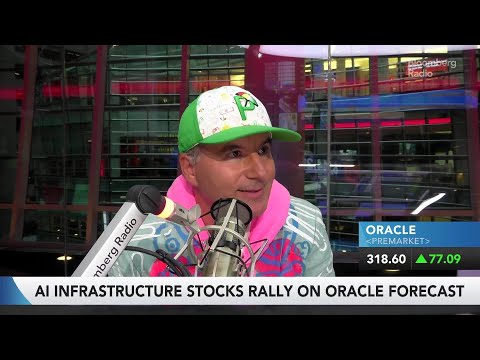
That's going to be a historic quarter when you look at the work and it shows the type of CapEx we're seeing in the use cases are exploding. We've talked about so much here in the change my life. I mean, as simple as that.Look, and the reality is anyone that thinks hype not real, right. That Oracle number is a validation. That's a drop the mike from Safra and Alison. That shows to me, okay, what's going to happen the rest attacking the A Brahmin.Did we have a drop the mike moment with Mr. . Cook yesterday I ...

Chinese Tech Giants Outpace Nasdaq 100
Bloomberg Television· 2025-09-01 13:18
Always good to have you in the lions city. So when you take a look at the air play, given that China's air is a much cheaper valuation, subway cheaper than the U.S., why wouldn't you be buying to China than try to keep on, you know, racking up gains in the U.S.. I think I think the rally certainly started in the US, but it has brought it out to areas like China because the applications around air are really start to expand.But let's not forget what's happening at the US markets as well. The US markets histo ...


We are seeing a slowing of the economy from the data, says Natixis' Jack Janasiewicz
CNBC Television· 2025-08-08 22:02
Inflation & Tariffs - Recent data suggests inflation is emerging, particularly in goods prices due to tariffs, but services inflation continues [2] - The spread between goods and services inflation is key; a widening spread favoring goods inflation could be concerning [3] Labor Market & Consumption - Data indicates a slowing economy, with the labor market being a focal point due to its impact on consumption [4][5] - Weaknesses are apparent in the jobs report, including the employment-to-population ratio, labor force participation rate, and jobs diffusion index [5] - It remains uncertain whether the weakness in the labor market will accelerate in the near term [5] GDP & Capital Expenditure - Capital expenditure (CapEx) is a significant driver of GDP, outpacing consumption in the second quarter [6][7] - AI is currently the main factor driving CapEx spend [7] - A potential rollover in CapEx spend, particularly related to AI, could have significant implications [7]

Utz Brands(UTZ) - 2025 Q2 - Earnings Call Transcript
2025-07-31 14:30
Financial Data and Key Metrics Changes - EBITDA was roughly flat in the first half of the year, with a projected growth of 8.5% for the full year, implying high teens growth in the second half [6][19] - EPS guidance was revised from 10-15% growth to 7-10% growth, with a midpoint impact of about 3 cents due to increased interest expense and accelerated depreciation [19][20] Business Line Data and Key Metrics Changes - Significant growth was observed in potato chips, while tortilla chips and pretzels were below trend, with specific brands performing variably [23][26] - Boulder Canyon brand is expected to continue strong growth, with distribution gains across both core and expansion markets [71][72] Market Data and Key Metrics Changes - Distribution gains were noted across all 30 expansion geographies, with strong retailer support from national chains [33][34] - The convenience store channel is showing improvement, with expectations to reach flattish performance by year-end [65] Company Strategy and Development Direction - The company is focused on westward expansion and infrastructure investments to support distribution gains [11][35] - Marketing strategies include increased spending in retail media and social media to support geographic expansion and brand introduction [91][92] Management's Comments on Operating Environment and Future Outlook - Management remains confident in achieving productivity savings and margin expansion, with a positive outlook for the second half of the year [9][56] - The company believes the category will continue to grow, driven by household penetration and repeat purchases [107][109] Other Important Information - The company is nearing the end of its manufacturing optimization efforts, with significant productivity improvements already realized [85][87] - CapEx spending is expected to peak in 2025, with a focus on automation and efficiency improvements [21][88] Q&A Session Summary Question: What gives confidence in the EBITDA growth outlook despite flat performance in the first half? - Management cited investments in infrastructure and productivity savings as key drivers for expected growth in the second half [7][9] Question: Can you clarify the changes in EPS guidance? - EPS growth was revised down due to increased interest expenses and accelerated depreciation from higher CapEx spending [19][20] Question: What is driving the strong top-line results? - The company attributed growth to distribution gains, improved volume and value share in core markets, and investments in westward expansion [10][11] Question: How is the company addressing the performance of tortilla chips and pretzels? - Management noted that tortilla chips faced promotional overlaps, while pretzel performance varied by brand, with some brands performing well [26][27] Question: What is the outlook for the convenience store channel? - The company expects the convenience store channel to improve and reach flattish performance by year-end, supported by better product assortment [65] Question: How is the company managing supply chain and manufacturing efficiency? - The company has made significant strides in optimizing manufacturing and is now focusing on automation and efficiency improvements [85][87] Question: What is the long-term outlook for category growth? - Management remains bullish on long-term category growth, citing strong household penetration and repeat purchases as positive indicators [107][109] Question: How is the company addressing consumer interest in protein products? - The company is exploring opportunities in the protein segment while ensuring that products meet consumer taste preferences [111][112]