
险资举牌

Search documents
招商银行被三度举牌 年内险资举牌升至17次
2 1 Shi Ji Jing Ji Bao Dao· 2025-06-23 09:17
Group 1 - Insurance companies are increasingly engaging in shareholding activities, with Ping An Life having raised its stake in China Merchants Bank's H-shares to 15%, triggering Hong Kong's shareholding disclosure requirements [2][3][4] - This marks the third time within six months that Ping An Life has increased its holdings in China Merchants Bank, indicating a strong belief in the bank's long-term investment value [2][4] - As of now, 14 listed companies have been targeted by insurance companies for shareholding activities in 2025, with China Merchants Bank being the only bank to have been targeted three times [2][3] Group 2 - Ping An Life's total investment in China Merchants Bank's H-shares from January 10 to June 17 amounts to approximately 4.61 million shares, costing nearly 21.5 billion HKD [3] - The continuous increase in holdings by Ping An Life is attributed to its recognition of China Merchants Bank's stable operations and long-term growth potential, as the bank leads in profitability, asset quality, and dividend levels within the industry [4] - Analysts suggest that the frequent acquisitions by insurance companies in Hong Kong's state-owned banks are driven by factors such as dividend yield, tax advantages, and regulatory requirements [4] Group 3 - In addition to banks, insurance companies like Great Wall Life are also focusing on public utilities, having recently acquired a 5% stake in Qin Port Co., indicating a broader investment strategy [5][6] - Great Wall Life has also made significant investments in other sectors, including water and energy, reflecting a commitment to infrastructure and essential services [6] - The trend of insurance companies engaging in shareholding activities is driven by the need for stable cash returns and long-term equity investments, particularly in a low-interest-rate environment [7][8]


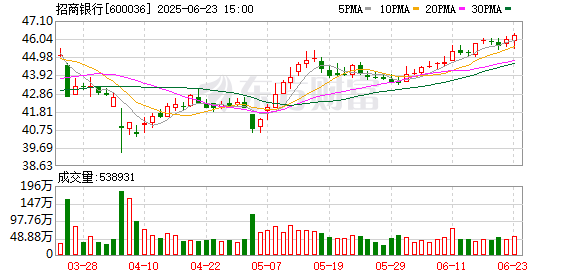
招商银行,遭三度举牌!
证券时报· 2025-06-21 08:40
Core Viewpoint - The article highlights the increasing trend of insurance companies, particularly Ping An Life, acquiring significant stakes in Chinese banks, with Ping An Life making three separate bids for China Merchants Bank's H-shares within six months, indicating a strong confidence in the banking sector's performance and potential returns [1][3][5]. Group 1: Ping An Life's Acquisitions - On January 10, Ping An Life first acquired 5% of China Merchants Bank's H-shares, triggering a bid [3]. - On March 13, it increased its stake to over 10%, spending nearly 300 million HKD [3]. - On June 17, Ping An Life further raised its holdings to 15%, totaling approximately 4.61 billion shares acquired at a cost of nearly 21.5 billion HKD from January to June [3][5]. - As of June 17, Ping An Life held about 689 million shares of China Merchants Bank, valued at nearly 36.6 billion HKD [3]. Group 2: Overall Market Trends - In 2025, 13 listed companies have been targeted by insurance capital, with five banks included, and China Merchants Bank being the only bank with three bids [5]. - Other banks targeted by Ping An Life include Agricultural Bank of China and Postal Savings Bank, with significant increases in their respective stakes [5][6]. - The article notes that the stock prices of China Merchants Bank's A-shares and H-shares have risen approximately 17% and 32.8% year-to-date, respectively, with a 42% increase in H-shares during the period of Ping An Life's acquisitions [3][6]. Group 3: Broader Insurance Sector Activity - Insurance companies have also been increasing their stakes in A-share banks, with China Life Insurance becoming a top shareholder in Suzhou Bank and CITIC Bank [9][10]. - The overall A-share banking sector has seen a cumulative increase of over 15% this year, with Qingdao Bank leading with a 35% rise [11]. - The article suggests that the trend of insurance capital buying into banks is driven by factors such as high dividend yields, tax advantages, and regulatory requirements [6].

重大信号!招商银行,遭三度举牌!
券商中国· 2025-06-21 02:06
险资扫货不歇脚! 港交所披露易最新信息显示,平安人寿于6月17日增持629.55万股招商银行H股股份之后,于当日达到该行H股 股本的15%,根据香港市场规则,触发举牌。 在此之前,平安人寿曾在1月10日、3月13日分别举牌招行H股,所持该行H股数量占其H股总数分别突破5%、 10%。而此番举牌,也是平安人寿半年内第三次举牌招行H股。 截至目前,2025年已有13家上市公司被险资举牌,包括5家银行,招行则是唯一一家被三度举牌的上市银行。 此外,平安人寿还分别两度举牌农业银行H股、邮储银行H股。 三度举牌招商银行 据披露易信息,早在1月10日,平安人寿就首次举牌招行H股,所持该行H股数量当时就达到该行H股股本的 5%。 3月13日,平安人寿又耗资近3亿港元,在场内增持606.75万股招行H股,持股占比突破该行H股总数的10%, 构成二度举牌。 而6月17日再度增持629.55万股招行H股股份之后,平人寿所持该行招行H股总数已达该行H股股本的15%,构 成第三次举牌。 以此计算,1月10日至6月17日,平安人寿合计增持近4.61亿股招行H股。以区间成交均价计,其间合计耗资近 215亿港元。 截至6月17日,平安人寿 ...

年内险资举牌增至16次 举牌标的高股息特征明显
Zheng Quan Ri Bao· 2025-06-20 16:55
Group 1 - Insurance companies have increased their stake acquisitions, with 16 instances reported this year, a significant rise compared to 5 instances in the same period last year [1][2] - The recent acquisition by Great Wall Life Insurance involved purchasing 4.4 million shares of Qinhuangdao Port Co., bringing its total holdings to approximately 279 million shares, which is 5.0005% of the company's total equity [2] - The market value of Great Wall Life's holdings in Qinhuangdao Port is approximately 610 million RMB, representing 0.42% of the insurer's total assets as of the last quarter [2] Group 2 - The increase in stake acquisitions is attributed to new accounting standards that require insurance companies to reflect the market value of stock investments, leading to greater volatility in financial statements [3] - The insurance sector is facing pressure from declining long-term interest rates and the maturity of high-quality non-standard assets, which impacts investment returns [3] - The preference for high-dividend stocks is evident, with 8 out of 16 acquisitions targeting listed banks, which are known for their high dividend yields [4] Group 3 - Future trends indicate that insurance companies are likely to increase their stake acquisitions, focusing on specialized and strategic investments in sectors such as high technology, new energy, and healthcare [5] - The collaboration between banks and insurance companies is seen as beneficial for expanding insurance product sales due to banks' extensive networks [4]
年内15次举牌 险资看上银行股
Jin Rong Shi Bao· 2025-06-16 08:10
对此,太保资产总经理余荣权在中国太保(601601)2024年度业绩发布会上表示,保险业举牌现象越来 越多,主要是基于港股市场的高股息,这对净投资收益的带动是有明显提升的。 "H股的估值较A股呈现出一定的折价,增值空间更大,且通过港股通投资还有一定的税收优惠,因此是 保险资金增配的关注点。"普华永道中国金融行业管理咨询合伙人周瑾在接受《金融时报》记者采访时 表示,保险资金之所以选择银行股是因为上市银行普遍经营稳健,股票流动性好,股息率较高,分红稳 定且还具有升值空间。 从保险资金举牌的交易方式来看,二级市场买入仍是主流,如平安人寿举牌港股银行股均通过旗下平安 资管用竞价交易的方式在港股二级市场买入。除此之外,还有股份转让协议、非公开发行认购、认购增 发股份等交易方式。如新华保险(601336)举牌杭州银行和中邮人寿举牌东航物流均是通过股份转让协 议完成。阳光人寿则通过参与非公开发行认购的方式举牌了中国儒意港股。 在金融管理部门主动为保险资金松绑鼓励入市的大背景下,保险资金举牌潮正在如火如荼进行中。《金 融时报》记者根据中国保险行业协会网站披露的数据以及公开信息整理发现,截至6月13日,今年以来 共有7家保险公 ...
险资,继续“扫货”银行股!
证券时报· 2025-06-12 04:04
中国平安扫货银行股仍在继续。 再度买入6353.4万股后,中国平安近日对农业银行H股的持股比例升至15.15%。 港交所披露易显示,6月6日,中国平安买入6353.4万股农业银行H股,每股均价5.3126港元,耗资约3.38亿港元,此次交易后,中国平安所持农业银行H股股份达到 约46.58亿股。 以农业银行H股6月11日收盘价5.55港元计算,目前中国平安持有农业银行H股的市值达到了258.5亿港元。 中国平安对于银行股的兴趣远不限于此。证券时报·券商中国记者梳理显示,除了农业银行H股,中国平安还重仓持有招商银行H股、邮储银行H股、工商银行H股和 建设银行H股。 平安重仓多家大行H股 披露信息显示,中国平安所持农业银行H股股份由多家子公司持有。其中平安人寿持股39.44亿股,平安财险持股约6.91亿股。这意味着平安人寿在5月12日达到10% 举牌线后,至今一直在持续增持农业银行H股。 梳理中国平安对农业银行H股的买入历程显示,从今年1月开始,中国平安旗下子公司便在持续买入农业银行H股。虽然每股买入均价从1月份的约4.22港元升至最近 一次投资时的5.31港元,但这丝毫没有影响中国平安的买入决心。短短5个月,中 ...


险资,继续“扫货”银行股!
证券时报· 2025-06-12 04:02
Core Viewpoint - China Ping An has significantly increased its stake in Agricultural Bank of China (ABC) H-shares, now holding 15.15% after purchasing 63.534 million shares at an average price of HKD 5.3126 per share, totaling approximately HKD 338 million [1][2]. Group 1: Investment in Agricultural Bank - After the recent purchase, China Ping An's total holdings in ABC H-shares reached approximately 4.658 billion shares [2]. - The shares are held through various subsidiaries, with Ping An Life owning 3.944 billion shares and Ping An Property & Casualty holding about 691 million shares [4]. - Since January, Ping An has consistently increased its holdings in ABC H-shares, adding 3.1 billion shares over five months, with an investment exceeding HKD 10 billion despite rising average purchase prices [4][5]. Group 2: Broader Investment Strategy - China Ping An's interest extends beyond ABC, as it also holds significant stakes in other major banks, including China Merchants Bank, Postal Savings Bank, Industrial and Commercial Bank of China, and China Construction Bank [6]. - Ping An Life's stake in China Merchants Bank exceeded 5% in January, triggering a mandatory disclosure, and has since risen to 14.08% after a recent purchase of 4.058 million shares at an average price of HKD 49.6294 [6]. - The current market value of Ping An's holdings in China Merchants Bank is approximately HKD 33.82 billion [6]. Group 3: Investment Rationale - Ping An's investments in bank stocks are driven by the stable operating fundamentals of state-owned banks, characterized by low volatility, high dividends, and low valuations, with an average dividend yield exceeding 5% [8]. - The insurance sector's investment strategy aligns with the stable performance of large banks, making them attractive targets for long-term investments [9]. Group 4: Insurance Capital Trends - The insurance sector has seen a surge in equity investments, with a notable increase in the number of stake acquisitions, indicating a strong preference for bank stocks due to their large size, relatively low valuations, and high dividend yields [9][12]. - As of May 31, 2023, seven insurance companies executed 15 stake acquisitions, surpassing the total for the entire year of 2023, reflecting a sustained trend in insurance capital seeking stable returns [15][17]. Group 5: Long-term Investment Initiatives - Insurance companies are actively exploring long-term investment reforms, including the establishment of private equity funds focused on the stock market, with Ping An Asset Management recently approved to set up a private fund with an initial scale of HKD 30 billion [18]. - These initiatives aim to enhance the stability of returns and align with the long-term investment strategies of insurance capital [18].

险资,继续“扫货”银行股!
券商中国· 2025-06-11 23:28
Core Viewpoint - China Ping An continues to aggressively acquire bank stocks, particularly increasing its stake in Agricultural Bank of China (ABC) H-shares to 15.15% after purchasing 63.534 million shares at an average price of HKD 5.3126 per share, totaling approximately HKD 338 million [2][3][4]. Group 1: Investment in Agricultural Bank of China - After the recent purchase, China Ping An's total holdings in ABC H-shares reached approximately 4.658 billion shares, with a market value of HKD 25.85 billion as of June 11 [5]. - The investment in ABC H-shares has been ongoing since January, with a total increase of 3.1 billion shares and a 10.1% rise in ownership percentage, costing over HKD 10 billion [4]. Group 2: Broader Bank Stock Investments - In addition to ABC, China Ping An has significant holdings in other major banks, including China Merchants Bank, Postal Savings Bank, Industrial and Commercial Bank of China, and China Construction Bank [6]. - The stake in China Merchants Bank has also increased, with Ping An Life surpassing 10% ownership and reaching 14.08% after purchasing 4.058 million shares at an average price of HKD 49.6294 per share [6]. - Ping An Life's investment in Postal Savings Bank has triggered a stake increase to 11.02%, with holdings valued at over HKD 10 billion as of May 26 [6]. Group 3: Investment Rationale - The management of China Ping An emphasizes the stability and low volatility of state-owned banks, which offer high dividend yields averaging over 5%, making them attractive compared to the 2%-2.5% guaranteed rates of insurance products [7]. - The insurance sector's interest in bank stocks is driven by their large size, relatively low valuations, and high dividend yields, aligning with the investment philosophy of insurance companies [8]. Group 4: Trends in Insurance Capital Investment - The insurance sector is experiencing a third wave of capital injection into bank stocks, with 15 instances of stake increases reported by seven insurance companies by May 31, surpassing the total for the entire year of 2023 [12][15]. - The trend of increasing equity investments is seen as a strategy to enhance investment returns, particularly in a low-interest-rate environment [10][15]. Group 5: Long-term Investment Strategies - Insurance companies are actively exploring long-term investment reforms, including the establishment of private equity funds focused on the stock market, with Ping An Asset Management recently launching a fund with a target size of HKD 30 billion [16].

中国保险业协会:截至5月末 险资举牌次数已接近去年全年
news flash· 2025-06-11 03:36
中国保险业协会:截至5月末 险资举牌次数已接近去年全年 订阅A股市场资讯 +订阅 金十数据6月11日讯,根据保险业协会公告统计,截至5月末,7家保险公司共实施15次举牌,接近2024 年全年举牌数量;其中,银行、公用事业等是重点投资方向。专家表示,举牌的原因,通常是投资者看 好该公司的长期发展前景,此外,也会出于战略投资考虑,比如,希望与被举牌公司达成业务合作、资 源整合等目标。同时,此次险资频频举牌,与国家鼓励中长期资金入市的政策密不可分。专家表示,在 一系列积极政策推动下,预计未来一段时间,险资举牌仍将持续。 (央视新闻) ...
截至5月末 险资举牌次数已接近去年全年
news flash· 2025-06-11 03:31
作为中长期资金的典型代表,保险资金入市步伐在今年持续加快。数据显示,截至5月末,保险资金举 牌次数已接近去年全年,其中,银行、公用事业等是重点投资方向。 根据保险业协会公告统计,截至5月末,7家保险公司共实施15次举牌,接近2024年全年举牌数量。"举 牌",通俗来说,就是当某一投资者购买上市公司股份的数量,每次达到已发行股份的5%时,就需要向 市场发出正式公告。举牌就意味着,已经是这家上市公司的重要股东。 专家表示,举牌的原因,通常是投资者看好该公司的长期发展前景,此外,也会出于战略投资考虑,比 如,希望与被举牌公司达成业务合作、资源整合等目标。 对保险资金举牌情况深入分析,记者发现,从行业分布上看,截至5月底,今年保险资金较为青睐银 行、公用事业、能源等行业。比如,5月19日,平安人寿发布举牌公告,已于日前持有农业银行H股股 本的10%。此外,煤炭、电力、物流等上市公司也受到关注。而且H股市场举牌次数占到了其中的 80%。 专家:本轮举牌高峰与国家政策支持密不可分 专家表示,此次险资频频举牌,与国家鼓励中长期资金入市的政策密不可分。 "持续稳定和活跃资本市场",是国家的重点工作之一。以保险资金为代表的中长 ...