
全球文明倡议

Search documents
第二十二届世界中医药大会在澳大利亚悉尼举行
Xin Hua She· 2025-11-01 11:25
Core Points - The 22nd World Traditional Chinese Medicine Conference was held in Sydney, Australia, from October 31 to November 1, focusing on the theme of "Cultural Dissemination and Technological Innovation of Traditional Chinese Medicine from a Global Perspective" [1] - The conference attracted over 800 representatives from 24 countries and regions, including Australia, Brazil, and Canada [1] - The President of the World Federation of Chinese Medicine Societies emphasized the global spread of Traditional Chinese Medicine (TCM) and its importance in international cooperation [1] - The Chinese Consul General in Sydney conveyed a message from the Chinese Ambassador to Australia, highlighting the collaborative development of traditional and modern medicine [1] - A former New Zealand Prime Minister described TCM as not only a medical system but also a cultural treasure and philosophical framework [1] - The conference included the inauguration of the "International Cooperation Center for Clinical Research of Traditional Chinese Medicine" and the "Chinese Time-Honored Brand Traditional Chinese Medicine Cultural Center (Australia)" [2] Industry Insights - The event signifies the growing global interest and acceptance of Traditional Chinese Medicine, positioning it as a vital area for international collaboration [1] - The emphasis on both cultural and technological aspects indicates a strategic approach to enhance the global footprint of TCM [1] - The establishment of international cooperation centers reflects an institutional commitment to advancing TCM research and cultural exchange [2]
特稿|为开创亚太和世界更加美好的未来汇聚强大合力——习近平主席向亚太经合组织工商领导人峰会发表的书面演讲引发国际社会热烈反响
Xin Hua She· 2025-11-01 10:56
Core Points - Xi Jinping's speech at the APEC Business Leaders Summit emphasizes the importance of open cooperation and multilateralism to address global challenges and promote prosperity [1][2][3] Group 1: Multilateralism and Cooperation - Xi Jinping's assertions highlight that unilateralism and protectionism lead to fragmentation in global trade and investment, while multilateralism is essential for addressing global challenges like climate change and supply chain crises [2][3] - The speech reflects China's commitment to maintaining a multilateral trade system and promoting trade and investment liberalization, particularly benefiting developing countries [2][3] Group 2: Economic Opportunities and Growth - Xi Jinping's speech outlines China's role as a responsible major power, providing a platform for global businesses to grow and share opportunities, emphasizing that "working with China means working with opportunities" [9][10] - The speech indicates that China's ongoing reforms and high-level opening-up will contribute to global economic stability and growth, enhancing the resilience of regional supply chains [8][10] Group 3: APEC's Role in Global Economic Integration - The APEC platform is highlighted as crucial for promoting inclusive and mutually beneficial economic globalization, with Xi Jinping calling for a collective effort to enhance regional cooperation and prosperity [5][6] - The emphasis on "doing big things together" in APEC cooperation aims to ensure that development benefits all member economies, particularly addressing the needs of developing nations [6][7] Group 4: Innovation and Sustainable Development - Xi Jinping's speech underscores the importance of innovation and sustainable development, with a focus on green technology and digital economy as key areas for cooperation among APEC members [10][11] - The speech suggests that China's advancements in green technology and innovation will have positive spillover effects on neighboring economies, enhancing their integration into global value chains [10][11]
韩正访问沙特
Xin Hua Wang· 2025-11-01 10:30
Group 1 - The core message of the visit emphasizes the strengthening of China-Saudi Arabia relations, highlighting the positive developments since the establishment of diplomatic ties 35 years ago and the successful visit of President Xi Jinping in 2022 [1][2] - The Saudi side expresses a strong commitment to the One China policy and seeks to deepen cooperation with China in various sectors including trade, investment, artificial intelligence, renewable energy, and mining [2][3] - The Ninth Future Investment Initiative Conference serves as a platform for discussing global development, with a focus on promoting prosperity and addressing common challenges faced by developing countries [2][3] Group 2 - Four key initiatives proposed by the Chinese side include: enhancing innovation for green development, promoting open cooperation for mutual benefits, advocating for people-centered development, and deepening collaboration through genuine multilateralism [3][4] - The visit aims to foster high-quality cooperation under the Belt and Road Initiative, focusing on energy collaboration, financial investment, and cultural exchanges [3][4] - The Chinese and Saudi business communities are encouraged to act as bridges for mutual development, aiming to elevate the comprehensive strategic partnership between the two nations [4]
共促繁荣 共赢未来(和音)
Ren Min Wang· 2025-10-31 22:29
Group 1 - The core message emphasizes China's commitment to high-quality development and expanding high-level openness, aiming to create new opportunities and drive global economic growth through its new development model [1][3][4] - The Asia-Pacific Economic Cooperation (APEC) was established to promote trade and investment liberalization, and has played a significant role in maintaining strong economic growth in the Asia-Pacific region over the past 30 years [1][2] - Current global challenges necessitate a collective response that emphasizes multilateralism, openness, and cooperation among APEC members to meet the expectations of the Asia-Pacific people [1][2] Group 2 - President Xi Jinping outlined four key proposals for APEC cooperation: maintaining peace and stability, promoting open connectivity, adhering to win-win cooperation, and fostering inclusive development [2][3] - China has been a major contributor to global economic growth, achieving an average growth rate of approximately 5.5% during the 14th Five-Year Plan period, contributing around 30% to global economic growth [3] - China is recognized as a safe and promising investment destination, with the consensus that "working with China means working with opportunities" [3][4] Group 3 - China will host APEC for the third time, reflecting its commitment to regional cooperation and responsibility [4] - The country has actively proposed and implemented various global initiatives, showcasing its role as a defender of the current international order and a practitioner of true multilateralism [4] - China aims to deepen cooperation and achieve development through openness and inclusivity, contributing to global peace and development [4]
习近平向亚太经合组织工商领导人峰会发表书面演讲
中国能源报· 2025-10-31 10:11
Core Viewpoint - The article emphasizes the importance of cooperation, multilateralism, and inclusive development in the Asia-Pacific region to address global challenges and promote prosperity [1][2]. Group 1: Peace and Stability - The article advocates for maintaining peace and stability by ensuring equal participation of all countries in international affairs, regardless of their size or power [2]. - It promotes a security concept that is common, comprehensive, cooperative, and sustainable, emphasizing dialogue and consultation to resolve disputes [2]. Group 2: Open and Integrated Economy - The article stresses the need to uphold a multilateral trade system centered around the World Trade Organization (WTO) and to maintain stable global supply chains [2]. - It calls for advancing regional economic integration and the establishment of an Asia-Pacific Free Trade Area to contribute to global economic growth [2]. Group 3: Cooperation and Inclusivity - The article highlights the importance of a win-win cooperation approach, leveraging the diverse characteristics of Asia-Pacific economies to enhance collaboration [2]. - It emphasizes the need for inclusive development, focusing on the UN's 2030 Sustainable Development Agenda and supporting developing economies to bridge development gaps [2]. Group 4: China's Economic Contribution - The article notes that during the 14th Five-Year Plan period, China's economy is expected to achieve an average growth rate of around 5.5%, contributing approximately 30% to global economic growth [3]. - It mentions that China is the only developing country hosting a national-level international import expo and is committed to opening its market further, reducing the foreign investment negative list to 29 items [3]. Group 5: Investment Opportunities - The article positions China as a safe and ideal investment destination, suggesting that engaging with China equates to seizing opportunities for the future [4]. - It encourages the Asia-Pacific business community to embody entrepreneurial spirit and work together to foster growth and prosperity in the region [4].

习近平向亚太经合组织工商领导人峰会发表书面演讲
证监会发布· 2025-10-31 09:31
Core Views - The article emphasizes the importance of multilateralism and cooperation in addressing global challenges, highlighting China's role as a proponent of these principles [2][3][5] Group 1: APEC's Role and Objectives - APEC was established in response to economic globalization, aiming to promote trade and investment liberalization and support economic growth [3] - The article calls for a return to APEC's foundational goals to enhance cooperation and contribute significantly to global prosperity [3] Group 2: Key Principles for Cooperation - The article outlines four key principles for APEC cooperation: 1. **Maintaining Peace and Stability**: Emphasizing equal participation in international affairs and resolving disputes through dialogue [3] 2. **Promoting Open Connectivity**: Advocating for a multilateral trade system centered around the WTO and ensuring the stability of global supply chains [3] 3. **Fostering Win-Win Cooperation**: Encouraging diverse economic strengths among APEC economies to enhance collaboration and mutual development [3] 4. **Advancing Inclusive Growth**: Focusing on human-centered development and supporting developing economies to bridge the development gap [4] Group 3: China's Economic Contributions - China has been a major contributor to global economic growth, achieving an average growth rate of approximately 5.5% during the 14th Five-Year Plan, contributing around 30% to global economic growth [5] - The country is recognized for its commitment to opening markets, with a significant reduction in the negative list for foreign investment, and aims to provide a favorable business environment [5] - China is actively developing future industries and enhancing traditional sectors, focusing on green, digital, and intelligent advancements [5] Group 4: Entrepreneurial Spirit in APEC - The article encourages the APEC business community to embody the spirit of innovation and resilience to drive growth and prosperity in the region [6]
习近平向亚太经合组织工商领导人峰会发表书面演讲
21世纪经济报道· 2025-10-31 08:55
Core Viewpoint - The article emphasizes the importance of multilateralism and cooperation in addressing global challenges, highlighting China's role as a contributor to world economic growth and stability [1][3]. Group 1: APEC's Role and Objectives - APEC was established to promote trade and investment liberalization and facilitate economic growth and prosperity [2]. - The organization should focus on maintaining peace and stability, ensuring equal participation in international affairs regardless of a country's size or wealth [2]. - APEC should promote open and integrated economies, supporting the stability of global supply chains and advancing regional economic integration [2]. Group 2: China's Economic Contributions - During the 14th Five-Year Plan period, China's economy is expected to achieve an average growth rate of around 5.5%, contributing approximately 30% to global economic growth [3]. - China is recognized as a safe investment destination, with a negative list for foreign investment reduced to 29 items, and the manufacturing sector achieving full openness [3]. - The country is advancing in future industries, enhancing traditional sectors, and developing a comprehensive renewable energy system, providing a conducive environment for global business [3]. Group 3: Call to Action for Business Leaders - Business leaders in the Asia-Pacific region are encouraged to embody the spirit of innovation and resilience to foster growth and prosperity [4].
外媒聚焦APEC:中国展现韧性,为国际合作贡献智慧与力量
Zhong Guo Xin Wen Wang· 2025-10-30 08:15
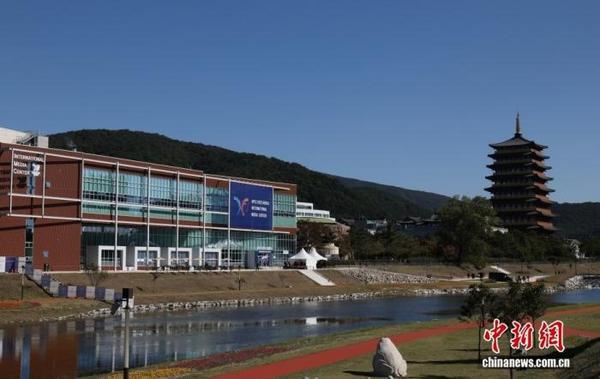
Group 1 - APEC's 32nd informal leaders' meeting will be held in Gyeongju, South Korea from October 31 to November 1, attracting global attention as the Asia-Pacific region is seen as a key engine for global growth [1][2] - APEC has evolved over 30 years into the highest-level and most influential economic cooperation mechanism in the Asia-Pacific region, playing a significant role in promoting regional openness and prosperity [2] - The International Monetary Fund (IMF) projects that the Asia-Pacific region's economic growth rate will be 4.5% in 2025, an increase of 0.6 percentage points from previous forecasts, contributing approximately 60% to global growth over the next two years [2] Group 2 - China's exports have shown remarkable resilience amid the current global economic situation, with a reported GDP growth of 5.2% year-on-year for the first three quarters [3] - The core of current technological competition lies in establishing global industrial standards, with China emerging as a significant "rule-maker" in the manufacturing sector, impacting countries like Thailand [3] - The Asia-Pacific region is not only a crucial engine for global economic growth but also a key force influencing the direction of world development, highlighting the increasing significance of Asia-Pacific cooperation [3][4] Group 3 - China's initiatives, such as the Belt and Road Initiative and various global governance proposals, reflect its growing influence in international cooperation, emphasizing equality, mutual benefit, and win-win outcomes [4] - These initiatives aim to empower developing countries by expanding their growth space through cooperation rather than dominance, showcasing a valuable wisdom in today's world [4]
人民日报整版刊文:以人类前途为怀 以人民福祉为念
Bei Jing Ri Bao Ke Hu Duan· 2025-10-30 00:45
Core Viewpoint - The article emphasizes the significance of Xi Jinping's diplomatic thought, particularly its humanistic appeal, which is rooted in the values of the Chinese civilization and aims to address global challenges through a people-centered approach [1][3][18]. Group 1: Human-Centered Diplomacy - Xi Jinping's diplomatic thought prioritizes the well-being of people and aims to connect the fate of the Chinese people with that of other nations, addressing global challenges from a humanistic perspective [3][4][18]. - The concept of a "community with a shared future for mankind" was introduced to answer fundamental questions about humanity's direction, emphasizing cooperation and mutual benefit [4][5][18]. Group 2: Cultural and Civilizational Values - The article highlights the importance of Chinese traditional culture, which emphasizes harmony, mutual respect, and the interconnectedness of nations, as a foundation for Xi Jinping's diplomatic thought [7][10][18]. - The humanistic spirit embedded in Xi Jinping's diplomatic thought reflects the values of inclusivity and respect for diverse civilizations, promoting dialogue and cooperation over conflict [9][12][18]. Group 3: Global Governance and Cooperation - Xi Jinping's diplomatic thought proposes new principles for international relations, advocating for mutual respect, fairness, and win-win cooperation, which contrasts with traditional power-centric approaches [19][20]. - The Belt and Road Initiative is presented as a platform for enhancing cultural exchanges and fostering mutual understanding among nations, contributing to global peace and development [16][21][22]. Group 4: Practical Implications - The article discusses the practical actions taken under Xi Jinping's diplomatic thought, such as the promotion of the Global Development Initiative and the Global Security Initiative, which aim to address pressing global issues [20][21][22]. - The emphasis on high-quality cooperation in the Belt and Road Initiative has led to tangible benefits for participating countries, reinforcing the humanistic approach of Xi Jinping's diplomatic thought [21][22].
以人类前途为怀 以人民福祉为念(深入学习贯彻习近平新时代中国特色社会主义思想·访谈录)
Ren Min Ri Bao· 2025-10-29 22:41
Core Ideas - The article discusses the significance of Xi Jinping's diplomatic thought, emphasizing its humanistic appeal and its role in addressing global challenges and promoting cooperation among nations [1][3][19]. Group 1: Xi Jinping's Diplomatic Thought - Xi Jinping's diplomatic thought is an integral part of the Xi Jinping Thought on Socialism with Chinese Characteristics for a New Era, rooted in Marxist principles and Chinese civilization [1][3]. - The thought emphasizes a people-centered approach, linking the fate of the Chinese people with that of other nations, and aims to address global challenges through a focus on humanity's overall interests [3][4]. Group 2: Humanistic Appeal - The concept of a community with a shared future for mankind, proposed by Xi Jinping, seeks to answer fundamental questions about humanity's direction and aims to foster cooperation and shared prosperity [4][5]. - This humanistic spirit is reflected in the emphasis on peace, development, and mutual benefit, advocating for a global governance model that transcends traditional power struggles [5][6]. Group 3: Cultural Foundations - Xi Jinping's diplomatic thought is deeply influenced by traditional Chinese culture, which values harmony, mutual respect, and the well-being of all [9][12]. - The principles of inclusivity and respect for cultural diversity are central to this thought, promoting dialogue and cooperation among different civilizations [10][11]. Group 4: Global Initiatives - The article highlights various global initiatives proposed by Xi Jinping, including the Belt and Road Initiative, which aims to enhance cultural exchanges and economic cooperation among participating countries [18][24]. - These initiatives are seen as practical expressions of Xi Jinping's humanistic approach, aiming to create a more equitable and prosperous global environment [22][25].