证券欺诈

Search documents
WPP LAWSUIT ALERT: Levi & Korsinsky Notifies WPP plc Investors of a Class Action Lawsuit and Upcoming Deadline
Prnewswire· 2025-10-17 12:45
Core Viewpoint - A class action securities lawsuit has been filed against WPP plc, alleging securities fraud that negatively impacted investors between February 27, 2025, and July 8, 2025 [1][2]. Group 1: Allegations and Impact - The lawsuit claims that WPP provided overly positive statements while concealing material adverse facts about its media arm's ability to handle macroeconomic challenges, leading to a loss of market share [2]. - On July 9, 2025, WPP reported a deterioration in performance for Q2 2025, attributing this to macroeconomic uncertainty and weaker new business, which resulted in a significant stock price drop from $35.82 to $29.34, a decline of approximately 18.1% in one day [2]. Group 2: Legal Process and Participation - Investors who suffered losses during the specified timeframe have until December 8, 2025, to request appointment as lead plaintiff, although participation in any recovery does not require this role [3]. - Class members may be entitled to compensation without any out-of-pocket costs or fees, indicating no financial obligation to participate in the lawsuit [3]. Group 3: Firm Background - Levi & Korsinsky, LLP has a strong track record in securities litigation, having secured hundreds of millions for shareholders over the past 20 years and consistently ranking among the top securities litigation firms in the U.S. [4].

股价一度涨超6%,蔚来回应被起诉
Xin Lang Cai Jing· 2025-10-17 03:34
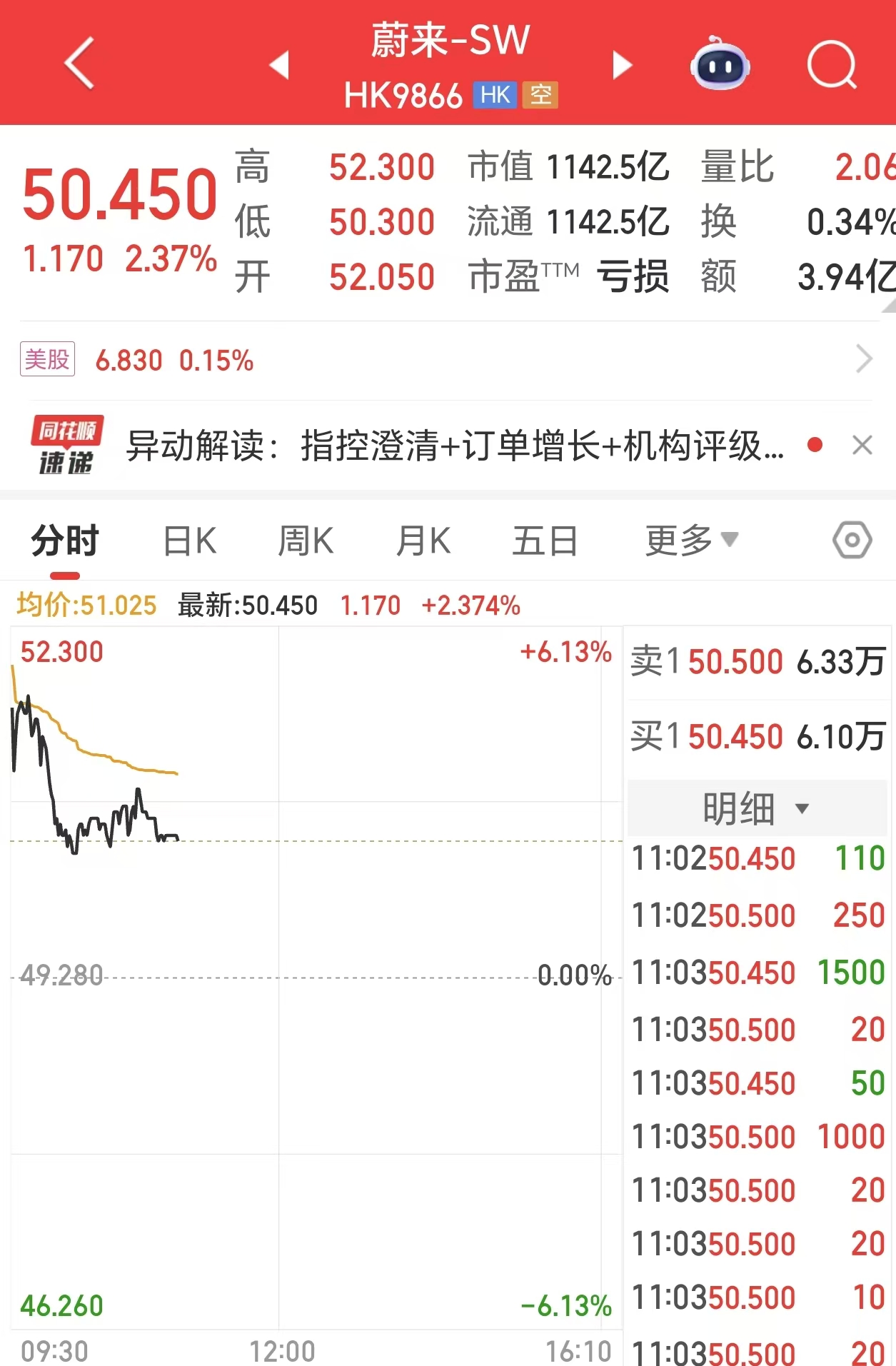
Core Viewpoint - NIO's stock experienced significant volatility following a lawsuit from Singapore's sovereign wealth fund, GIC Private Limited, alleging securities fraud related to inflated revenues and profits through a partnership with Wuhan Weinan Battery Asset Co., Ltd [5][7]. Group 1: Stock Performance - On October 17, NIO's stock opened with a surge, reaching a peak increase of over 6%, before settling at a 2.37% rise, priced at HKD 50.45 per share, with a market capitalization of HKD 114.25 billion [1]. - Following the lawsuit news, NIO's stock dropped by 8.99% to close at HKD 49.28 per share [5]. Group 2: Legal Issues - GIC Private Limited filed a lawsuit against NIO and its executives in a U.S. court, claiming that the company misled investors, resulting in financial losses for GIC [5]. - The lawsuit is linked to allegations made by Grizzly Research LLC in June 2022, which accused NIO of financial manipulation to inflate its earnings [5][7]. Group 3: Financial Performance - NIO reported total revenue of RMB 19.01 billion for Q2 2025, reflecting a year-on-year growth of 9.0%, with a net loss attributable to shareholders of RMB 5.14 billion, a slight decrease of 0.29% year-on-year [8]. - For the first half of the year, NIO's total revenue reached RMB 31.043 billion, up 13.49% year-on-year, while the net loss attributable to shareholders was RMB 12.032 billion, narrowing by 15.87% year-on-year [8].


被新加坡主权财富基金起诉 蔚来回应:严格遵守上市合规要求,诉讼基于不实指控
Mei Ri Jing Ji Xin Wen· 2025-10-17 01:48
Core Points - Singapore's sovereign wealth fund, GIC Private Limited, has filed a lawsuit against NIO Inc. and its executives, alleging securities fraud related to inflated revenue and profits through a partnership with Wuhan Weinan Battery Asset Co., leading to investment losses for GIC [1] - NIO's representatives stated that the lawsuit is not a new event and stems from unfounded allegations made by Grizzly Research LLC in a short-selling report from June 2022, which the company claims lacks factual basis [1] - NIO's board conducted an independent internal investigation with third-party legal and forensic accounting assistance, concluding that the allegations in the short-selling report were baseless [1] Company Compliance and Future Plans - NIO emphasized its commitment to compliance with regulations in the U.S., Hong Kong, and Singapore, as a publicly listed company in these regions [2] - The company highlighted the positive impact of its battery rental service on user experience and plans to continue advancing battery technology and business model innovation to benefit users and promote healthy development in the electric vehicle industry [2]
FTNT INVESTOR ALERT: Robbins Geller Rudman & Dowd LLP Files Class Action Lawsuit Against Fortinet, Inc. and Announces Opportunity for Investors with Substantial Losses to Lead Class Action Lawsuit
Globenewswire· 2025-10-16 21:49
Core Viewpoint - Fortinet, Inc. is facing a class action lawsuit for alleged violations of the Securities Exchange Act of 1934, with claims that the company misled investors regarding its product upgrade cycle and revenue expectations [1][3]. Company Overview - Fortinet is described as a leader in cybersecurity, providing a range of hardware and software products, with its flagship product being the FortiGate firewall [2]. Allegations of the Lawsuit - The lawsuit alleges that Fortinet failed to disclose critical information about the forced upgrade cycle of its FortiGate firewalls, including: - The number of units subject to the upgrade was smaller and included more low-end units than represented [3]. - The age and cost of certain devices in the upgrade cohort would not significantly impact current revenues [3]. - Fortinet lacked necessary data on end users to assess the impact of the end-of-service event in 2026 [3]. - The 2026 forced upgrade cycle had progressed significantly during the second half of 2024 and the first half of 2025 [3]. - Without customer upgrades, Fortinet's reported product sales would have been flat or negative [3]. - The 2026 forced upgrade cycle would not be a meaningful growth driver for the second half of 2025 and 2026 [3]. Impact of the Allegations - On August 6, 2025, Fortinet disclosed that the 2026 forced upgrade cycle was already 40%-50% complete as of June 30, 2025, contradicting prior investor expectations [4]. - Following this revelation, Fortinet's stock price fell by more than 22% [4]. Legal Process - Investors who purchased Fortinet common stock during the class period can seek appointment as lead plaintiff in the lawsuit, which allows them to act on behalf of other class members [6]. Law Firm Background - Robbins Geller Rudman & Dowd LLP is representing the plaintiffs and has a strong track record in prosecuting investor class actions, having recovered over $2.5 billion for investors in 2024 alone [7][8].

蔚来汽车被新加坡主权基金GIC在美起诉浅析:财务争议与法律博弈迷雾后的映射的香橼、恒大与德意志...
Xin Lang Cai Jing· 2025-10-16 18:21
Core Viewpoint - The lawsuit filed by the Government of Singapore Investment Corporation (GIC) against NIO represents a significant compliance challenge for Chinese companies listed in the U.S., highlighting issues of revenue inflation and potential securities fraud [1][2]. Group 1: Event Background - The lawsuit traces back to a report by Grizzly Research in June 2022, which accused NIO of inflating revenue through its affiliate Wuhan Weinan [2]. - GIC filed the lawsuit in August 2025, claiming that NIO misled investors by inflating revenue and profits through related party transactions, specifically alleging over $600 million in battery leasing income [2][3]. Group 2: Core of the Lawsuit - The primary contention revolves around NIO's Battery-as-a-Service (BaaS) model, where revenue recognition practices are disputed [3]. - GIC argues that NIO recognized all revenue from battery sales upfront, while U.S. accounting standards suggest it should be recognized gradually as users make monthly payments [3][4]. - Financial implications are significant, with NIO's revenue reportedly increasing from 2.85 billion yuan to 6.64 billion yuan in Q4 2020, a 133% year-over-year increase, which GIC claims would be substantially lower under compliant revenue recognition [3]. Group 3: Control Dispute - Another key issue is the degree of control NIO has over its affiliate, Weinan, despite holding only 19.84% of its shares [4][6]. - GIC presents evidence that NIO effectively controls Weinan's operations and financial benefits, suggesting it should consolidate Weinan's financials [4][6]. Group 4: Legal Framework - The case highlights the application of U.S. long-arm jurisdiction, allowing U.S. courts to hear cases involving foreign companies listed on U.S. exchanges [7]. - GIC's claims are based on U.S. securities laws, which require accurate financial disclosures and governance practices [7][9]. Group 5: NIO's Response - NIO executives have characterized the lawsuit as a rehash of old allegations, emphasizing that an independent investigation previously cleared the company of wrongdoing [10]. - The company asserts compliance with regulatory requirements across its listings and has responded to inquiries from the SEC without further action from the agency [10]. Group 6: Market and Institutional Perspectives - Despite the lawsuit, several international financial institutions have expressed skepticism about the allegations, with reports from Deutsche Bank and Citigroup supporting NIO's business model [11]. - The contrasting views from financial institutions indicate a divide in market sentiment regarding NIO's operational integrity [11]. Group 7: Industry Implications - The lawsuit has broader implications for the Chinese stock market, signaling a shift in how sovereign wealth funds engage with Chinese companies, moving from passive investment to active litigation [25]. - The outcome of this case could influence how other companies in the electric vehicle sector approach their business models and accounting practices [23][24].
被指控虚增收入、涉嫌证券欺诈,蔚来股价崩盘一度大跌13%
凤凰网财经· 2025-10-16 13:37
Group 1 - NIO's stock experienced a significant drop, with shares falling over 13% in Hong Kong and more than 10% in the US night market, impacting other electric vehicle stocks like XPeng and Li Auto [1][2] - The decline is attributed to a lawsuit filed by Singapore's Government Investment Corporation (GIC) against NIO and its executives, alleging securities fraud related to inflated revenue and profits through premature recognition of battery sales [2] - GIC claims that NIO misled investors by concealing its control over a battery asset company, leading to substantial investment losses [2] Group 2 - Despite the negative news surrounding NIO, the overall automotive sector showed resilience, with a report from the National Development and Reform Commission outlining plans to enhance electric vehicle charging infrastructure, aiming for 28 million charging facilities by 2027 [3] - The automotive industry is expected to see a slight profit decline in Q2 2025 due to intense market competition, but improvements in product structure and new model launches, such as the NIO ES8, are anticipated to boost profitability [4] - Market expectations regarding the phasing out of purchase tax for new energy vehicles by 2026 are already factored in, with hopes for renewed investment confidence in the automotive sector [5]

蔚来高管回应遭证券欺诈指控
财联社· 2025-10-16 12:14
Core Viewpoint - NIO Inc. is facing legal challenges from the Government of Singapore Investment Corporation (GIC), which has accused the company and its executives of securities fraud related to inflated revenue and profits through a partnership with Wuhan WeNeng Battery Asset Co., Ltd. [2][3] Group 1: Legal Issues - GIC's lawsuit claims that NIO misled investors, resulting in significant financial losses for GIC, estimated between $500 million to $2 billion, due to the purchase of 54.45 million NIO American Depositary Shares (ADS) from August 2020 to July 2022 [3]. - The allegations stem from a short-selling report by Grizzly Research in June 2022, which NIO has previously denied, stating that the report contained numerous inaccuracies and misleading conclusions [3][4]. - Following the short-selling report, NIO conducted an independent internal review, which found no wrongdoing, and the U.S. Securities Exchange did not take any action regarding the inquiry into the related transactions [4]. Group 2: Market Reactions - On October 16, NIO's stock price in Hong Kong fell by 8.99% to HKD 49.28, likely influenced by the ongoing legal issues and market speculation surrounding the GIC lawsuit [2]. - Major financial institutions, including Deutsche Bank, Morgan Stanley, and JP Morgan, have publicly supported NIO, stating that the concerns raised by Grizzly Research regarding NIO's Battery-as-a-Service (BaaS) model are unfounded and misinterpret the business model [5].
被新加波投资公司起诉 蔚来高管回应:不清楚近期为何有人炒作此事
Feng Huang Wang· 2025-10-16 11:44
Core Viewpoint - NIO's stock price fell by 8.99% to HKD 49.28 on October 16, primarily due to a lawsuit filed by Singapore's Government Investment Corporation (GIC) against the company and its executives for alleged securities fraud [1] Group 1: Lawsuit Details - GIC accuses NIO of inflating revenue and profits through a partnership with Wuhan WeNeng Battery Asset Co., misleading investors and causing GIC to incur investment losses [1] - After the establishment of WeNeng, NIO's revenue surged from CNY 2.85 billion to CNY 6.64 billion in Q4 2020, with GIC reportedly suffering estimated losses between USD 500 million to USD 2 billion from purchasing 54.45 million NIO ADS between August 2020 and July 2022 [1] Group 2: Background on Short Selling - The lawsuit is a continuation of allegations stemming from a short report by Grizzly Research in June 2022, which NIO previously denied, claiming the report contained numerous inaccuracies and misleading conclusions [1] - In response to the short report, NIO conducted an independent internal review, which found no wrongdoing, and major financial institutions like Deutsche Bank and Morgan Stanley supported NIO's business model against Grizzly's claims [2][2]
突发!蔚来被新加坡主权基金起诉,相关指控三年前已澄清
Mei Ri Jing Ji Xin Wen· 2025-10-16 10:20
Core Viewpoint - NIO's stock price has dropped significantly following a lawsuit filed by Singapore's sovereign wealth fund, GIC, alleging securities fraud against the company and its executives [1][2]. Group 1: Lawsuit Details - GIC has accused NIO of inflating revenue and profits through a partnership with Wuhan Weinan Battery Asset Co., misleading investors and causing financial losses [1]. - The lawsuit is based on allegations stemming from a short report by Grizzly Research in June 2022, which claimed NIO may have manipulated its financial results [2][3]. - Grizzly's report indicated that NIO's stock had risen over 450% since 2020, attributing this to potentially misleading financial practices [2]. Group 2: Company Response and Investigations - NIO conducted an independent internal review in August 2022, which found no wrongdoing, and the SEC did not take further action after NIO's response to their inquiries [3]. - Major financial institutions, including Deutsche Bank and Morgan Stanley, have publicly supported NIO, disputing the claims made in Grizzly's report [3]. Group 3: GIC's Legal History - This is not GIC's first lawsuit against a publicly listed company; the fund has previously sued several multinational corporations, indicating a pattern of using legal action as a risk management strategy [4]. - GIC manages over $100 billion and has faced challenges with its investment returns, with a 20-year annualized real return rate of 3.8% as of March 2025, the lowest in recent years [4].

Braskem S.A. (NYSE: BAK) Faces Downgrade and Legal Investigation Amid Financial Concerns
Financial Modeling Prep· 2025-10-16 09:03
Core Insights - Braskem S.A. is a leading petrochemical company based in Brazil, specializing in thermoplastic resins and other petrochemical products, with a global presence and competition from major players like Dow Chemical and BASF [1] Financial Performance - On October 15, 2025, Grupo Santander downgraded Braskem's stock from "Neutral" to "Underperform," with the stock priced at $2.54, reflecting concerns about the company's financial health and strategic direction [2][6] - Following an announcement on September 26, 2025, regarding the exploration of financial alternatives, Braskem's ADR price dropped by 14.71%, closing at $2.61, indicating investor concerns [3][6] - Despite the downgrade and ongoing investigation, Braskem's stock showed resilience, currently priced at $2.54, a 1.6% increase from the previous day, with a market cap of approximately $1.01 billion and a trading volume of 526,021 shares [4][6] Stock Volatility - Over the past year, Braskem's stock has experienced significant volatility, reaching a high of $6.56 and a low of $2.32, reflecting challenges in optimizing its capital structure and addressing legal concerns [5][6]