
长期投资

Search documents
侃股:沪深300指数投资价值凸显
Bei Jing Shang Bao· 2025-12-04 11:52
有机构预测沪深300指数2026年底将达到4800点。沪深300指数是300家交投活跃的蓝筹股的集合,投资 价值具有明显优势,对于选股能力一般的投资者而言,可以重点关注沪深300指数,这一指数的长期投 资价值值得期待。 沪深300指数是根据交投活跃度、业绩水平等因素综合对全部上市公司进行排序,前300名就是沪深300 指数的样本股,即沪深300指数是兼顾了公司基本面和活跃度的A股市场最优质的300只股票,是A股市 场最具长期投资价值的板块。 从长期投资的角度来看,沪深300指数的投资价值值得期待。沪深300指数所涵盖的蓝筹股,大多处于行 业的领先地位,具有较强的竞争力和抗风险能力。在经济上行周期,这些企业能够充分受益于经济增长 带来的利润增长,业绩稳步提升,从而推动指数上涨;在经济波动周期,它们凭借自身的优势和资源, 也能够更好地抵御风险,保持相对稳定的经营状况。这种穿越周期的能力,使得沪深300指数在长期投 资中具有较为可靠的收益表现。 当然,投资沪深300指数也并非毫无风险。市场的不确定性始终存在,虽然还会有诸多因素影响沪深300 指数的涨跌,但是与其他投资方式相比,沪深300指数凭借其广泛的代表性和分散 ...
90后游资大佬公开征婚,持股市值超10亿
Xin Lang Cai Jing· 2025-12-04 10:13
图片来源:界面图库 90后游资大佬刘鑫公开发布征婚启事,引发市场人士的广泛关注。 12月4日,他新近发布了一篇《关于征婚说几句》对该事件做出了相关说明。他表示,并不想占有太多公众资源。"我 每天工作超过16小时,只有周末可能有闲暇的时间。短期都还是忙于工作,基本都是本人回复。可能通过时间较慢, 回复速度较慢,希望能理解。这件事本身是严肃慎重的,也希望大家理解。" 此外,他还表示,对待这次征婚和未来投资事业都非常认真。过去和未来都坚定长期投资价值投资,长期看好中国资 本市场和中国资产。 11月27日,名为"亿万鑫"的公众号发布了一篇《投资人真心征婚》的内容。作者自称是职业投资人,90后,目前是超 10家上市公司十大股东,最大自然人股东,比如大金重工,国晟科技等等。 他自称身高185cm,"长相端正,目前较胖,但是肯定不丑。目前减肥中。一年内达到理想体重"。在对女方的要求 中,他提到"希望是恋爱脑。因为我自己就是恋爱脑"。 据红星资本局报道,12月2日,联系上公众号"亿万鑫"的运营者,他确认了自己就是刘鑫本人,并展示了其部分持仓 记录截图和相关券商账户截图。他还透露,征婚启事发布后,申请添加他微信好友的人络绎不绝 ...


港投公司首份年报亮相:总资产超640亿港元,硬科技投资占比超七成 | 公司动态
Sou Hu Cai Jing· 2025-12-04 07:23
港投公司在报告中强调其"资本带动"效应。截至2025年6月30日,公司每投资1港元,可带动超过6港元的市场长期资金跟投。成立两年间,投资组合中已有2 家企业成功在港上市,另有10余家企业已于2025年内提交或计划提交上市申请,其中5家在上市前已成为独角兽企业。 这些被投企业为香港本地经济带来实质贡献:累计租赁楼面面积超过26.8万平方米,创造直接职位超过6,400个,注册知识产权达109项,并举办行业活动164 场。 构建生态圈,强化香港"超级联系人"角色 港投公司积极搭建涵盖"政、产、学、研、投"的生态圈,已与香港城市大学、中文大学、科技大学、理工大学及香港大学开展超过100项协作项目。此外, 通过设立海外合作基地、举办国际峰会等形式,助力香港巩固其"超级联系人"与"超级增值人"的双重角色。 港投公司行政总裁陈家齐表示:港投公司是坚持长期投资、价值投资、责任投资的专业机构投资者。我们秉持全球视野,加强在区域和国际市场上发挥影响 力,贡献国家发展,说好香港故事,助力构筑互利共赢的市场规则和投资格局。同时,我们透过构建港投公司生态圈,汇聚本地及海外公私营界别的资源和 智慧,助力转型、重塑、定义香港产业、经济和金 ...
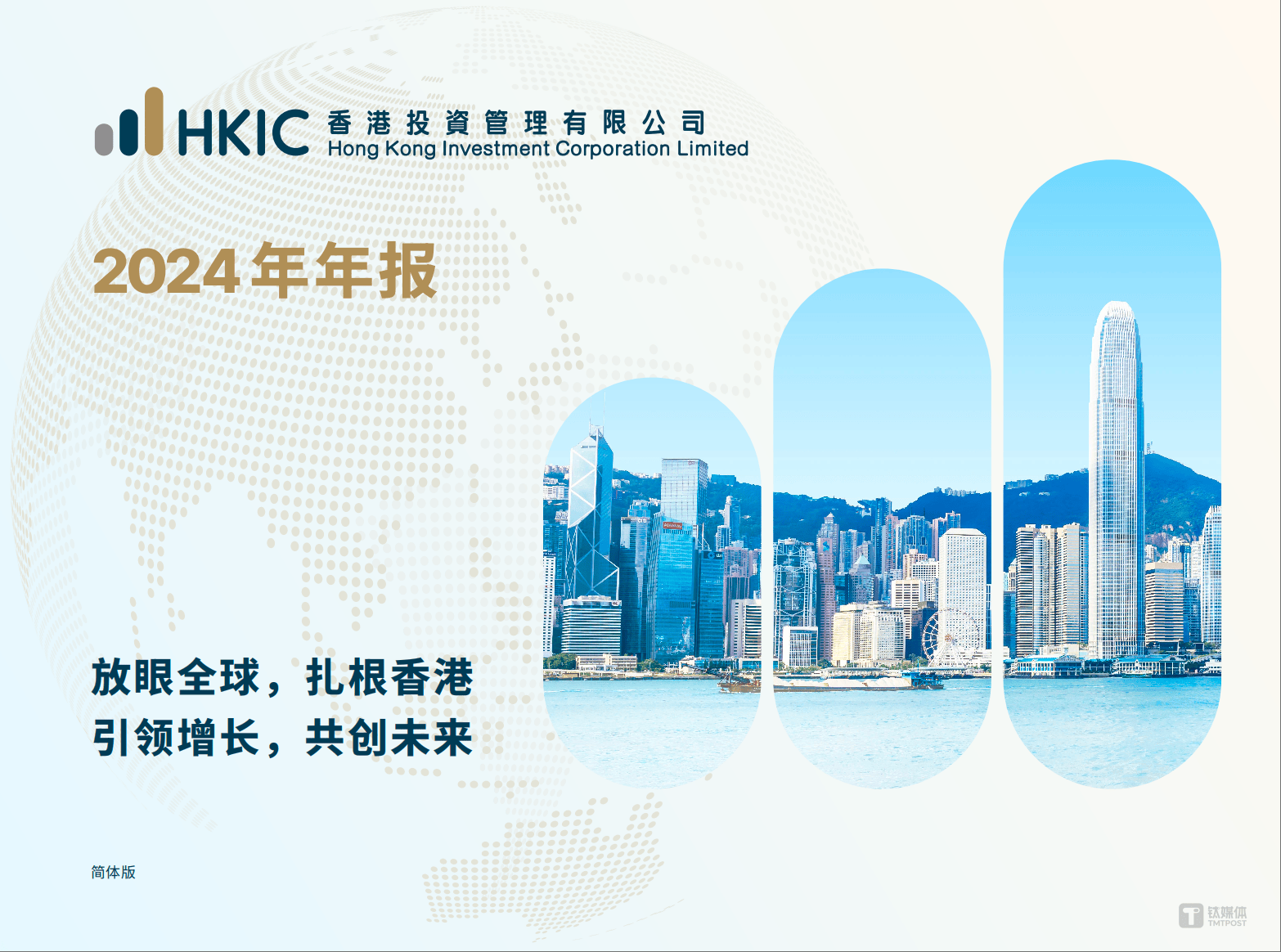
港投公司:2024年录得22.52亿港元营运利润 已投资超过150个项目
智通财经网· 2025-12-04 02:46
陈家齐指,港投公司是坚持长期投资、价值投资、责任投资的专业机构投资者。秉持全球视野,加强在 区域和国际市场上发挥影响力,贡献国家发展,说好香港故事,助力构筑互利共赢的市场规则和投资格 局。 同时,透过构建港投公司生态圈,汇聚香港本地及海外公私营界别的资源和智慧,助力转型、重塑、定 义香港产业、经济和金融发展的新优势。将持续拓展策略布局、深化投资伙伴关係,配合国家的发展战 略和香港长远的繁荣发展需要。 运营方面,截至2024年12月31日,港投公司总资产规模640.07亿港元,已投入项目的资金占不到初始资 金规模的1/5,实现投资收入23.45亿港元,营运开支仅0.93亿港元,最终录得22.52亿港元的营运利润。 港投公司行政总裁陈家齐表示,截至2024年年底,港投公司已投入项目的资金占初始资金规模的少于五 分之一,已录得23亿港元投资收入。按照"先博后深"、"循序渐进"的投资策略,旨在为香港在抢占先 机、争取区域和国际话语权、以及投资风险管控等因素之间,取得合理平衡,兼具财务和战略价值的维 度。 在2024年奠下的基础上,于2025年已进一步深耕和推进,包括按原定计划,对达到发展和表现标准的企 业,投入更多资 ...
Are WM Stock Investors Happy, or Did They Miss Out?
The Motley Fool· 2025-12-03 16:45
Core Viewpoint - WM, North America's largest trash hauler, has faced a challenging year, leading to questions about its stock performance and long-term investment viability [1]. Performance Overview - Over the past year, WM's stock has declined by 10% in December 2024 and experienced another significant drop in late October, resulting in a total return of negative 3.2% when factoring in dividends [2][3]. - Compared to the S&P 500, which has grown by 13% (15% total return), WM's performance lags significantly, with an underperformance of 8.4 percentage points on an absolute basis and 11.8 percentage points on a total return basis [3][4]. Three-Year Performance - Despite the recent downturn, an investment in WM from December 1, 2022, has yielded a 29.6% increase, or 36.1% on a total return basis over the past three years [5]. - The S&P 500 has outperformed WM during this period, with a growth of 67.1% (75.3% total return), indicating that WM still trails behind the broader market [6]. Five-Year Performance - Over the last five years, WM shares have increased by 82.2% (98% total return), while the S&P 500 has risen by 88.4% (103.6% total return), showing that WM's performance is closer to the market, trailing by about six percentage points [7]. - For much of the five-year period, WM's returns outperformed the S&P 500, only recently slipping behind [8]. Investment Perspective - WM is characterized as a slow-growing dividend stock that requires patience from investors, but it has demonstrated reliable long-term outperformance [10].


三载耕耘,硕果初现 九成个人养老金基金盈利助力养老财富积累
Cai Jing Wang· 2025-12-03 09:12
Core Viewpoint - Public funds are pioneers in personal pension initiatives and play a crucial role in the personal pension ecosystem, with the introduction of pension-targeted funds in 2018 and personal pension funds in 2022 [1] Product Matrix Expansion - As of now, a total of 1,246 personal pension products have been issued, including 466 savings products, 437 insurance products, 306 fund products, and 37 wealth management products [2] - The number of personal pension funds has expanded from 129 to 302 by the end of September 2025, with pension-targeted FOF products accounting for nearly 70% of the total [2] - By the end of the third quarter of 2025, the total scale of personal pension fund Y shares exceeded 15 billion yuan, growing over 65% since the beginning of the year [2] Performance and Growth - As of November 25, 2025, 120 out of the first 129 funds achieved positive returns, with a positive return rate of 93% and an average return of 9.14% [7] - The overall market performance of personal pension funds is strong, with an average return of 13.33% since inception, and over 90% of funds showing net value growth [7] - The largest pension FOF Y share fund, Xingquan Antai Active Pension, achieved a net value growth rate of 25.38%, surpassing its performance benchmark by 10.52 percentage points [7] Investor Engagement and Education - Companies emphasize the importance of educating investors about long-term pension planning and the need for personalized investment strategies based on individual circumstances [8] - Fund companies are focusing on enhancing investor experience and maintaining strategy stability while innovating product offerings to meet diverse investor needs [9]
见好就收?年末基金“攻守战”,基金经理操作不一
券商中国· 2025-12-01 23:31
Core Viewpoint - The article discusses the shift in investment strategies among mutual funds as they approach the end of 2025, with many funds adopting a defensive stance to lock in profits and mitigate risks associated with market fluctuations [1][2][3]. Group 1: Fund Performance and Strategy - As the market enters the fourth quarter, many previously high-performing sectors are experiencing volatility, prompting some actively managed equity funds to take profits and reduce positions to preserve gains [3]. - For instance, the Yimin Service Leading Fund, which had significant holdings in companies like BOE Technology Group and Ping An Insurance, managed to limit its decline to only 0.72% during a market downturn, suggesting a possible reduction in its position [3]. - Historical data indicates that the Yimin Service Leading Fund has successfully navigated market downturns by adjusting its positions, achieving over 30% returns this year with a maximum drawdown of approximately 6% [3]. Group 2: Fund Size and Flexibility - The flexibility in adjusting positions is largely attributed to the relatively small size of the funds, such as the Yimin Service Leading Fund with a size of only 44 million yuan, allowing for quicker tactical changes [4]. - Smaller fund sizes enable managers to execute defensive and offensive strategies more effectively, providing an advantage in rapidly changing market conditions [4]. Group 3: Market Sentiment and Future Outlook - Despite the general belief in long-term investment, fund managers are increasingly focusing on tactical adjustments to enhance investor experience amid market volatility [5]. - Some newly established funds are actively entering the market, with 41 new active equity funds launched in November alone, indicating a belief in future market opportunities despite recent fluctuations [6]. - Research from Dongwu Securities highlights that the fourth quarter is crucial for performance, with institutions shifting focus from seeking excess returns to securing existing profits and avoiding ranking volatility [7]. Group 4: Investment Themes and Expectations - The article notes a divergence in views among institutions regarding future market trends, with some expecting sustained benefits from themes like self-sufficiency in industrial chains amid a resilient domestic capital environment [7]. - The expectation of potential policy stimulus in December may lead to stronger domestic market performance compared to overseas markets [7].

中基协发布提示 鼓励私募股权创投基金设置多元退出目标 严禁明股实债
Shang Hai Zheng Quan Bao· 2025-12-01 19:23
Core Insights - The China Securities Investment Fund Industry Association has issued a guideline encouraging private equity and venture capital funds to set reasonable equity buyback terms, emphasizing long-term investment and value creation [1][2][3] Group 1: Guidelines for Private Equity and Venture Capital Funds - The guideline encourages fund managers to adopt a long-term investment philosophy and enhance their capabilities in value discovery, active management, and valuation [1][2] - Funds are advised to ensure that buyback arrangements are scientifically reasonable and do not engage in non-private fund investment activities such as disguised debt [1][2] - The guideline emphasizes the importance of communication among fund managers, investors, and buyback obligors, especially in assessing external factors like macroeconomic conditions [2][3] Group 2: Impact on Investment Relationships - A healthy development of the private equity and venture capital industry relies on positive investment and financing relationships, avoiding zero-sum strategies that could damage trust between entrepreneurs and investors [3][4] - The guideline encourages funds to negotiate amicably with buyback obligors, considering adjustments to buyback targets and terms to support struggling enterprises [3][4] - The focus is on guiding capital to play the role of "investor" and "partner," sharing the risks and rewards of enterprise growth [4]
3 Unstoppable Vanguard ETFs to Buy Even If There's a Stock Market Sell-Off in 2026
The Motley Fool· 2025-11-30 20:35
Core Viewpoint - Vanguard offers three exchange-traded funds (ETFs) that are considered solid investment options regardless of potential market downturns in 2026, emphasizing a long-term investment strategy [2][12]. Group 1: Vanguard S&P 500 ETF - The Vanguard S&P 500 ETF (VOO) tracks the S&P 500 index, which includes approximately 500 companies representative of the U.S. economy [3]. - Historical data shows that after every bear market, the S&P 500 index eventually reaches new highs, indicating a strong long-term upward trend [5]. - The ETF has a low expense ratio of 0.03%, making it an attractive option even when the index is near all-time highs [6]. Group 2: Vanguard Dividend Appreciation ETF - The Vanguard Dividend Appreciation ETF (VIG) focuses on stocks that have increased dividends annually for at least 10 consecutive years, eliminating the highest-yielding 25% to favor growth [7][8]. - This ETF has a low expense ratio of 0.05% and includes over 330 stocks, providing diversification and a history of price appreciation and dividend growth [9]. - The investment strategy is designed to favor financially strong companies with good business models, making it a growth-oriented choice rather than a yield-focused one [8]. Group 3: Vanguard Utilities ETF - The Vanguard Utilities ETF (VPU) is positioned to benefit from a projected 55% increase in electricity demand between 2020 and 2040, driven by advancements in AI, data centers, and electric vehicles [10]. - The ETF has a reasonable expense ratio of 0.9% and ensures portfolio diversification, with approximately 90% of its holdings exposed to the anticipated growth in electricity demand [11]. - This ETF offers a straightforward way to capitalize on long-term opportunities in the utility sector, which is expected to see significant investment and growth [10].

陪伴理念重构投教底层逻辑 公募基金创新服务满足投资者多样需求
Zheng Quan Shi Bao· 2025-11-30 18:25
Core Insights - The article emphasizes the importance of investor education in enhancing public financial literacy and promoting high-quality development in financial markets [1][3] - The traditional model of investor education is being redefined to focus on "accompaniment" rather than mere knowledge transmission, addressing the disconnect between wealth management institutions and investors [2][3] - The integration of AI technology is significantly improving the efficiency and quality of investor education, allowing for personalized and timely support [9][10] Group 1: Evolution of Investor Education - The concept of investor education is shifting from a one-way knowledge transfer to a more supportive and engaging approach, focusing on the investor's experience [2][3] - Recent regulatory guidelines emphasize the strategic importance of investor education, urging institutions to incorporate it into their corporate culture and allocate dedicated budgets [3] - Fund companies are increasingly focusing on long-term investment strategies and enhancing investor satisfaction through tailored educational initiatives [4][6] Group 2: Diversification and Innovation in Educational Content - The content and format of investor education are becoming more diverse, moving beyond traditional articles and lectures to include short videos, live broadcasts, and interactive activities [5][6] - Innovative collaborations, such as those between fund companies and cultural institutions, are creating immersive educational experiences that blend investment knowledge with other fields [7] - Fund companies are developing comprehensive educational frameworks that address various demographic needs, including youth, elderly, and special groups [8][12] Group 3: Role of Technology in Investor Education - AI technology is being leveraged to enhance the production and dissemination of educational content, significantly reducing the time and cost involved [9][10] - AI's capabilities in emotional analysis allow for real-time support and personalized content delivery, improving the overall investor experience [9] - The introduction of AI-driven platforms is providing investors with tailored educational resources and answers to their investment queries [10] Group 4: Differentiated Services for Diverse Investor Needs - The growing segmentation of investor demographics necessitates the development of personalized educational services that cater to specific needs and preferences [11][12] - Fund companies are adopting differentiated content strategies to ensure that educational materials resonate with various investor groups, enhancing engagement and understanding [11][12] - Initiatives are being implemented to create a comprehensive educational network that spans all age groups and investment scenarios, promoting financial literacy across the board [12]