
城市高质量发展

Search documents
时隔十年再召开,中央城市工作会议明确,推进城市更新为重要抓手
Di Yi Cai Jing· 2025-07-15 08:38
Core Insights - China's urbanization is transitioning from a rapid growth phase to a stable development phase, focusing on quality improvement and efficiency in existing urban areas [1][2] - The recent Central Urban Work Conference emphasized the importance of urban renewal as a key strategy for future urban development [1][2] Urban Development Strategy - The conference outlined a vision for modern urban development, aiming to create innovative, livable, beautiful, resilient, civilized, and smart cities [2] - Key themes include optimizing urban structure, transitioning to high-quality urban development, and ensuring urban safety [2][3] Historical Context - Since the last Central Urban Work Conference in 2015, there has been a significant shift in urban development focus from expansion to enhancement of existing urban areas [2][3] - Urbanization levels have increased by approximately 1.1 percentage points annually since 1978, with an expected urbanization rate of 67% by the end of 2024 [3] Challenges and Responses - The conference acknowledged ongoing urban issues, such as high-rise buildings and the need for green transformation, and proposed measures to address these challenges [3][4] - Emphasis was placed on improving public services and addressing urban "diseases" through effective governance and planning [3][5] Future Directions - The conference highlighted the need for a new real estate development model and the importance of urban renewal in enhancing urban living conditions [3][5] - Future urban work will focus on integrating population, industry, and transportation planning to create more comfortable and convenient living environments [5]
中央城市工作会议在北京举行 习近平发表重要讲话
证监会发布· 2025-07-15 05:33
Core Viewpoint - The Central Urban Work Conference emphasized the importance of urban development in China, highlighting the achievements since the 18th National Congress and outlining the overall requirements, principles, and key tasks for future urban work [2][3][7]. Summary by Sections Achievements and Current Situation - Since the 18th National Congress, the central government has recognized the new trends in urban development, leading to significant improvements in urbanization levels, governance, livability, cultural preservation, and ecological quality [2][3]. Overall Requirements for Urban Work - The conference outlined that urban work should be guided by Xi Jinping's thoughts on socialism with Chinese characteristics, focusing on high-quality urban development, innovation, livability, and resilience [3][4]. Key Tasks for Urban Development 1. **Modern Urban System Optimization**: Enhance the capacity of cities to support population and economic growth, promote coordinated development among cities and towns, and facilitate the urbanization of rural populations [5]. 2. **Innovative Urban Development**: Foster an innovative ecosystem and leverage reform to enhance urban dynamism, ensuring cities play a pivotal role in domestic and international circulation [5]. 3. **Livable Cities**: Integrate planning for population, industry, and transportation, improve public services, and ensure the basic needs of citizens are met [5]. 4. **Green and Low-Carbon Cities**: Strengthen ecological governance and implement effective measures for air quality, water protection, and pollution reduction [5]. 5. **Resilient Cities**: Focus on infrastructure safety, disaster prevention, and public security to enhance urban resilience [5]. 6. **Civilized Cities**: Protect historical and cultural heritage while improving the cultural quality of citizens [5]. 7. **Smart Cities**: Innovate urban governance methods and improve responsiveness to citizens' needs [5]. Leadership and Implementation - The conference stressed the necessity of strengthening the Party's leadership in urban work, enhancing policy coordination, and improving the capabilities of urban management teams [6][7]. Theoretical and Practical Implications - Xi Jinping's speech addressed fundamental questions regarding urban development, providing a framework for future urban work that emphasizes a people-centered approach and the importance of quality over quantity in urban growth [7].

中央城市工作会议在北京举行 习近平发表重要讲话
证券时报· 2025-07-15 05:02
Core Viewpoint - The meeting emphasized the importance of urban development in China, highlighting the need for a modernized urban system that aligns with the principles of socialism with Chinese characteristics, focusing on high-quality development and people's well-being [1][2][4]. Summary by Sections Achievements and Current Situation - Since the 18th National Congress, significant achievements have been made in urban development, including improvements in urbanization levels, governance, livability, cultural heritage protection, and ecological quality [1]. Overall Requirements for Urban Work - The meeting outlined the overall requirements for urban work, emphasizing adherence to Xi Jinping's thoughts, the importance of people's participation, and the need for a balanced approach to urbanization that focuses on quality rather than quantity [2]. Key Tasks for Urban Development - Seven key tasks were identified for urban development: 1. Optimize the modern urban system to enhance capacity for population and economic development. 2. Build vibrant innovation cities by fostering an innovative ecosystem and enhancing urban dynamics through reform and opening up. 3. Create comfortable and convenient livable cities with integrated planning for population, industry, and transportation. 4. Develop green and low-carbon cities by consolidating ecological governance and addressing pollution issues. 5. Establish resilient cities with safe infrastructure and effective disaster prevention measures. 6. Promote civilized cities by protecting cultural heritage and enhancing civic values. 7. Build efficient smart cities through innovative governance and effective public service mechanisms [3]. Leadership and Implementation - The meeting stressed the necessity of strengthening the Party's leadership in urban work, improving policy coordination, and enhancing the capabilities of urban work teams to ensure effective implementation of urban development strategies [4].

中央城市工作会议在北京举行 习近平发表重要讲话
中国基金报· 2025-07-15 04:35
Core Viewpoint - The Central Urban Work Conference emphasized the importance of urban development in China, highlighting the achievements since the 18th National Congress and outlining the overall requirements, principles, and key tasks for future urban work [1][2]. Summary by Sections Overall Requirements for Urban Work - The conference stressed the need to adhere to Xi Jinping's thoughts on socialism with Chinese characteristics for a new era, implement the spirit of the 20th National Congress, and strengthen the Party's leadership in urban work [2]. - It highlighted the transition of urbanization from rapid growth to stable development, focusing on quality improvement rather than quantity expansion [2]. Key Tasks for Urban Development 1. **Optimizing Modern Urban Systems**: Focus on enhancing the capacity of cities to support population and economic growth, promoting coordinated development among cities and towns [3]. 2. **Building Innovative Cities**: Foster innovation ecosystems and enhance urban dynamism through reform and high-quality urban renewal [3]. 3. **Creating Livable Cities**: Integrate planning for population, industry, and transportation, and improve public services to ensure a high quality of life [3]. 4. **Developing Green and Low-Carbon Cities**: Strengthen environmental governance and promote initiatives for pollution reduction and biodiversity enhancement [3]. 5. **Establishing Resilient Cities**: Improve infrastructure safety and disaster prevention measures to ensure urban safety [3]. 6. **Promoting Civilized Cities**: Enhance cultural heritage protection and improve the moral standards of citizens [3]. 7. **Implementing Smart Cities**: Innovate urban governance methods and improve responsiveness to citizens' needs [3]. Leadership and Implementation - The conference underscored the necessity of strengthening the Party's leadership in urban work, enhancing policy coordination, and building a scientific evaluation system for urban development [4][5]. - It called for a focus on practical results and the rejection of formalism and bureaucratic practices in urban governance [4].
中央城市工作会议在北京举行 习近平发表重要讲话
华尔街见闻· 2025-07-15 04:30
Core Viewpoint - The Central Urban Work Conference emphasized the importance of urban development in China, highlighting the need for a modernized urban framework that prioritizes innovation, livability, sustainability, resilience, and smart governance [1][2]. Summary by Sections Overall Requirements for Urban Work - The conference outlined that urban work should be guided by Xi Jinping's thoughts on socialism with Chinese characteristics, focusing on high-quality urban development and adapting to the changing urbanization phase from rapid growth to stable development [2][3]. Key Tasks for Urban Development 1. **Optimizing Modern Urban Systems** - Focus on enhancing the comprehensive carrying capacity of cities, promoting urban clusters and coordinated development between large, medium, and small cities [3]. 2. **Building Innovative Cities** - Foster an innovative ecosystem and enhance urban dynamism through reform and high-quality urban renewal [4]. 3. **Creating Livable Cities** - Integrate planning for population, industry, and transportation, and improve public services while ensuring basic living standards [4]. 4. **Developing Green and Low-Carbon Cities** - Strengthen ecological governance and implement effective measures for air quality, water source protection, and pollution reduction [4]. 5. **Establishing Resilient Cities** - Enhance infrastructure safety, upgrade old pipelines, and improve disaster prevention and public safety measures [4]. 6. **Promoting Civilized Cities** - Protect historical and cultural heritage while enhancing the cultural soft power of cities [4]. 7. **Implementing Smart City Initiatives** - Innovate urban governance methods and improve responsiveness to citizens' needs through effective communication channels [5]. Leadership and Implementation - The conference stressed the necessity of strong party leadership in urban work, advocating for improved governance structures, policy coordination, and a focus on practical results to combat formalism and bureaucratism [5][6].
中央城市工作会议在北京举行 习近平发表重要讲话
21世纪经济报道· 2025-07-15 04:26
Core Viewpoint - The Central Urban Work Conference emphasized the importance of urban development in China, highlighting the need for a modernized urban framework that prioritizes innovation, livability, and sustainability while adhering to the principles of socialism with Chinese characteristics [1][2]. Summary by Sections Achievements and Current Situation - Since the 18th National Congress, significant achievements have been made in urban development, including improvements in urbanization levels, governance, livability, cultural heritage protection, and ecological quality [1]. Overall Requirements for Urban Work - The conference outlined that urban work should be guided by Xi Jinping's thoughts, focusing on high-quality development, urban renewal, and a people-centered approach while ensuring safety and stability [2]. Key Tasks for Urban Development - Seven key tasks were identified for urban work: 1. Optimize the modern urban system to enhance capacity for population and economic development [3]. 2. Build vibrant innovation cities by fostering an innovative ecosystem and enhancing urban dynamics through reform [3]. 3. Create comfortable and convenient livable cities with integrated planning for population, industry, and transportation [4]. 4. Develop green and low-carbon cities by improving ecological governance and promoting sustainable practices [4]. 5. Establish resilient cities with safe infrastructure and effective disaster prevention measures [4]. 6. Promote civilized cities by preserving cultural heritage and enhancing civic values [4]. 7. Implement smart city initiatives to improve governance and address public concerns efficiently [4]. Leadership and Implementation - The conference stressed the necessity of strengthening the Party's leadership in urban work, enhancing policy coordination, and fostering a results-oriented approach to urban development [5].
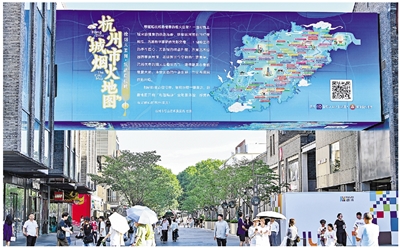
杭州城管部门发布“城市烟火地图”
Hang Zhou Ri Bao· 2025-07-03 02:08
Group 1 - The Hangzhou government launched the "City Fire Map," integrating 331 premium consumption scenes for easy navigation via the "Zheli Ban" app [1] - The map categorizes resources into six types, including commercial outdoor displays and themed markets, featuring notable locations like the "Xizi Langqiao" interactive outdoor screen [1] - A hand-drawn version of the map will be available at various service points for public access [1] Group 2 - The light show along the Qiantang River has been upgraded, increasing performances from six to nine per week and introducing a new "Four Seasons Hangzhou" theme [2] - A new "menu-style registration system" for shop signs has been introduced, allowing merchants to create design mock-ups easily on their mobile devices [2] - The city is enhancing regulatory measures to address issues like illegal street markets and outdoor cooking pollution while promoting a safe urban environment [2]
以人民城市理念引领人民城市建设(深入学习贯彻习近平新时代中国特色社会主义思想·学习《习近平经济文选》第一卷专家谈)
Ren Min Ri Bao· 2025-06-11 22:11
Core Viewpoint - The articles emphasize the importance of urban development in China's economic, political, cultural, and social activities, highlighting the need for a people-centered approach in urbanization and the unique path of urban development in China [1][2][5]. Urbanization and Development - Urbanization is deemed essential for modernization, with China needing to follow a unique path due to its large population and resource constraints [2]. - Since the establishment of New China, urbanization has rapidly progressed, with urban population increasing from 1.7 billion in 1978 to 7.1 billion in 2012, raising the urbanization rate from 17.9% to 52.6% [4]. People's City Concept - The "People's City" concept is central to China's urban development, addressing who urban development serves and relies upon [2][5]. - This concept emphasizes the importance of public participation in urban planning and management, ensuring that urban development meets the needs of the citizens [7][8]. Economic Contributions - As of 2023, urban areas contributed over 61.1% of China's GDP, with a total GDP of 77 trillion yuan from cities above the prefecture level [6]. - The urban economy is transitioning to high-quality development, with significant growth in platform, sharing, and digital economies [6]. Historical and Cultural Preservation - The articles stress the importance of preserving historical and cultural heritage in urban development, integrating cultural resources into urban life to maintain the city's historical context [9][15]. - Cities are seen as carriers of civilization, and protecting cultural heritage is essential for sustainable urban development [9]. Modernization and Technological Integration - Urban modernization is viewed as a key aspect of China's overall modernization, requiring the integration of advanced technologies and innovative practices [10][11]. - The focus is on enhancing urban quality and resilience while ensuring that all social strata benefit from modernization efforts [11]. Environmental Sustainability - Protecting the urban ecological environment is highlighted as a priority, with a call for harmonious coexistence between urban development and nature [12]. - Urban areas, while being significant economic centers, must also address their environmental impact, as they account for a large portion of global energy consumption and greenhouse gas emissions [12]. Urban-Rural Integration - The articles advocate for the integration of urban and rural development, emphasizing the need for a coordinated approach to enhance mutual benefits [17]. - Urban areas should leverage their resources to support rural revitalization, while rural areas provide ecological and cultural support to urban centers [17].
数字经济赋能城市高质量发展
Xin Hua Ri Bao· 2025-05-30 00:16
Group 1 - The core viewpoint emphasizes the importance of accelerating the development of the digital economy and its integration with the real economy to create internationally competitive digital industry clusters [1][6] Group 2 - Cities need to develop specialized plans for digital economy, such as Shanghai's "14th Five-Year Plan" aiming to build an "International Digital Capital" and Beijing's initiative to become a global digital economy benchmark city [2][3] - Shenzhen has introduced regulations to establish data element market rules, promoting public data sharing and enhancing data flow efficiency [2][3] Group 3 - The construction of new infrastructure is crucial, including the deployment of 5G networks and computing centers, with Tianjin having over 50,000 5G base stations by the end of 2022 and plans for an additional 20,000 by 2025 [3] - Guizhou's computing power has surpassed 49 EFLOPS, contributing to its status as "China's Data Valley" [3] Group 4 - A multi-faceted development model is necessary, including the establishment of digital industry parks and innovation incubators, as seen in Hangzhou's tech ecosystem and Chongqing's digital economy industrial park [4] - Collaboration between government and enterprises is encouraged to create innovative centers and promote digital applications in various sectors [4] Group 5 - Strengthening digital talent development is essential, with initiatives for specialized training and customized recruitment strategies to attract top digital talent [5] - The establishment of a "Digital Talent Port" aims to provide comprehensive services for talent, including housing and funding support [5]
一体化推进城市体检和城市更新
Jing Ji Ri Bao· 2025-05-19 22:06
Core Viewpoint - The central government emphasizes the continuous promotion of urban renewal as a strategic deployment to enhance urban high-quality development, modernize in a Chinese context, and meet the people's needs for a better life [1] Group 1: Urban Renewal Objectives - Urban renewal aims to optimize urban structure, improve functions, preserve cultural heritage, and enhance living quality, covering economic, social, and environmental aspects [1] - Urban health checks are essential for identifying issues in urban living environments and planning effective urban renewal strategies [1] Group 2: Implementation Strategies - The urban health check and urban renewal should be viewed as an integrated process, requiring coordination in resource allocation and work cycles [2] - The Ministry of Housing and Urban-Rural Development has outlined a framework for urban health checks across four dimensions: housing, community, street, and city, with 60 specific indicators to guide the process [2] Group 3: Adaptive Approaches - Urban health checks and renewal must be tailored to local conditions and adjusted dynamically based on regional differences and development stages [2] - The urban health check framework is designed to be flexible, allowing for the addition or modification of indicators as needed [2] Group 4: Technological Integration - The use of advanced information technology and big data analysis is crucial for identifying potential urban issues and supporting governance decisions [3] - Establishing an urban health check information platform will facilitate ongoing analysis, monitoring, and evaluation of urban renewal efforts [3]