现代化人民城市

Search documents
进一步加强学习
Zhong Yang Ji Wei Guo Jia Jian Wei Wang Zhan· 2026-02-25 00:45
Group 1 - The core message emphasizes the importance of theoretical learning and strengthening theoretical foundations to navigate new challenges and enhance political and strategic capabilities [1][2][3] - The article highlights the necessity of applying the Party's innovative theories to address practical issues, such as transforming traditional industries and balancing cultural heritage with modern development [3][4] - It stresses the need for a pragmatic approach in the face of complex economic and social changes, advocating for a diligent and results-oriented work ethic to achieve the goals set for the "Fifteen Five" period [4] Group 2 - The article discusses the significance of understanding and applying the Party's innovative theories to find effective solutions to practical problems, thereby unlocking new avenues for development [3][4] - It underscores the importance of a long-term perspective in decision-making, ensuring that economic and social development are aligned and mutually reinforcing [2] - The text calls for a commitment to continuous learning and practical application of theories to enhance the effectiveness of policy implementation and practical exploration [3][4]
绘就“湖滨春城 山水花都”新图景
Xin Lang Cai Jing· 2026-02-21 22:20
Core Viewpoint - The article emphasizes the vision of transforming Kunming into a modern, livable city that integrates nature and urban life, focusing on enhancing the quality of life for its residents through thoughtful urban planning and development [1][2][3] Group 1: Urban Development Goals - The "14th Five-Year Plan" outlines the goal of building a modern people-oriented city, highlighting the importance of inner growth and the integration of people, city, lake, and industry [2] - The initiative aims to create a harmonious relationship between the city and its natural surroundings, particularly focusing on the Dianchi Lake and the surrounding mountains [2][3] Group 2: Urban Planning Strategies - The development strategy includes optimizing the structure, enhancing quality, promoting green transformation, and preserving cultural heritage to establish a unique urban character [2] - The plan emphasizes the need for detailed management of urban spaces, including the renovation of old neighborhoods and the integration of historical elements to enhance local identity [2][3] Group 3: Community and Environmental Focus - The construction of "Lakefront Spring City" is centered on exploring a harmonious coexistence between people and the lake, ensuring ecological preservation while enhancing recreational spaces [2] - The initiative also aims to improve rural aesthetics around Dianchi Lake, creating beautiful rural communities that blend natural beauty with agricultural charm [2] Group 4: Quality of Life Enhancements - The article highlights the importance of innovative residential designs and the creation of pocket parks to improve urban living conditions [3] - It stresses the need for revitalizing historical areas and enhancing cultural routes to make the city's history accessible and engaging for residents and visitors alike [3]
热议发展蓝图 共谋民生福祉
Xin Lang Cai Jing· 2026-02-08 00:58
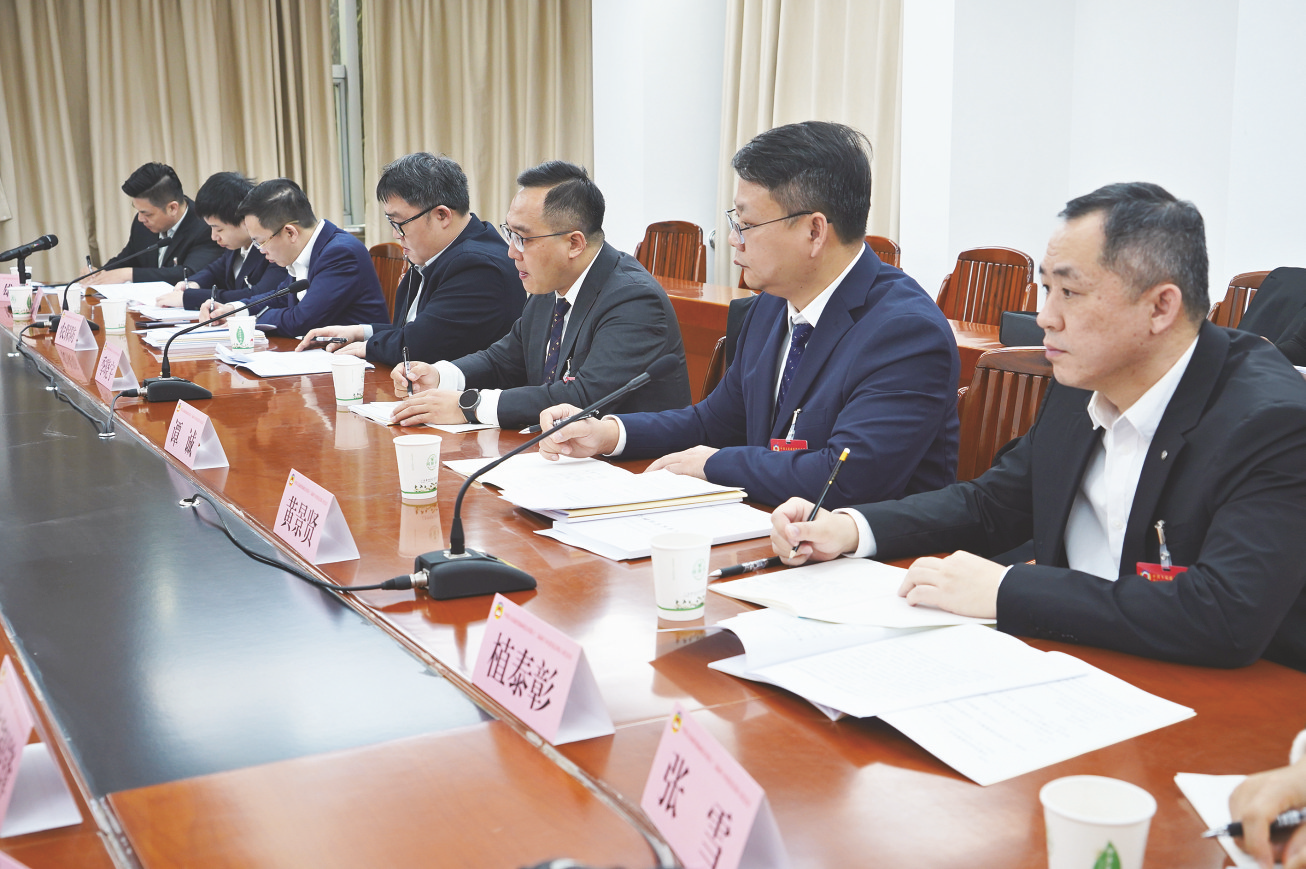
Group 1 - The city council members actively participated in discussions, contributing ideas and insights regarding the implementation of the spirit of the 20th National Congress and the speech by the city party secretary [2] - The reports presented by the city council highlighted clear themes, substantial content, and practical measures for the upcoming year, aiming to enhance the effectiveness of council members' responsibilities [2] - Council member Huang Shanzhen emphasized the importance of brand building and technological innovation in the jasmine flower industry, aiming to enhance market influence and contribute to rural revitalization [2] Group 2 - Council member Huang Xingling suggested accelerating the development of the biomanufacturing industry by formulating special industrial policies to support local leading enterprises and establish a comprehensive industrial ecosystem [3] - There is a strong confidence among council members regarding the current development momentum and future prospects of Nanning, with a commitment to fulfilling their responsibilities with a pragmatic approach [3] - Council member Wei Jiangzhou plans to focus on improving wastewater treatment, environmental facility construction, and smart operations, aiming to transform public concerns into high-quality proposals for building a modern people-oriented city [3]

让“深圳标准”走向世界,中国首份城市发展综合指数发布
Nan Fang Du Shi Bao· 2026-01-31 06:57
Core Insights - The Shenzhen Urban Index (UIS) was officially launched, representing a systematic summary of Shenzhen's development experience over 45 years, aimed at providing a replicable "Chinese solution" for global urban governance [1][3][10] Group 1: UIS Overview - UIS is designed to transform Shenzhen's urbanization experience into a public knowledge product for global sharing, contributing to urban governance with actionable insights [3][7] - Unlike traditional city rankings, UIS focuses on the future trajectory of cities and how to achieve better outcomes, emphasizing a human-centered approach [4][5] Group 2: UIS Framework - The UIS framework includes a comprehensive evaluation system with six primary dimensions: innovation, livability, beauty, resilience, civilization, and wisdom, comprising 6 primary indicators, 19 secondary indicators, and 50 tertiary indicators [5][6] - UIS connects macro global governance concepts with specific urban governance actions, providing clear goals and initiatives for cities [5][6] Group 3: Global Relevance - UIS addresses global urban challenges, offering a new development paradigm that balances efficiency with social equity, economic growth with ecological protection, and modern construction with cultural heritage [8][10] - The index has already gained international attention and is set to be presented at major global forums, including the United Nations World Urban Forum and the World Cities Summit [9][10]

《北京城市副中心条例》表决通过,推动科技创新政策在副中心先行先试
Xin Lang Cai Jing· 2026-01-29 17:44
Core Viewpoint - The Beijing Municipal People's Congress has approved the "Beijing Urban Sub-center Regulations," which will take effect on May 1, 2026, marking a significant step in the development of the sub-center and aligning with the national strategy for coordinated development in the Beijing-Tianjin-Hebei region [1]. Group 1: Legislative Framework - The regulations are designed to solidify the achievements of ten years of construction and provide a legal framework for future reforms and development in the sub-center [3]. - The regulations aim to enhance the management system, allowing the municipal government to delegate certain powers to the sub-center management committee and the Tongzhou District government [4]. - The regulations include provisions for a unified land spatial planning system and specific requirements for transportation, water management, and urban renewal [4]. Group 2: Industry Development - The regulations identify six key industries for development in the sub-center, including digital economy, modern finance, and advanced manufacturing, with a focus on nurturing future industries [4]. - Policies for technological innovation and talent recruitment will be prioritized to foster a conducive environment for industry growth [4]. Group 3: Green Development - The regulations emphasize the promotion of green and low-carbon industries, establishing mechanisms for green investment and resource conservation [4]. - A comprehensive green space system will be developed to support sustainable urban growth [4]. Group 4: Smart City Initiatives - The regulations outline plans for building a smart city, focusing on digital infrastructure and a new model for smart governance and services [5]. - The integration of public service systems and urban governance will be enhanced to improve service quality across various sectors [5]. Group 5: Implementation Tasks - Over 100 key tasks have been identified for the implementation of the regulations, covering areas such as planning, industry development, and public services [6][7]. - A series of supporting policy documents will be released to facilitate the regulations' implementation, ensuring a market-oriented and legally compliant business environment [7].
李国平:着力建设现代化人民城市
Xin Jing Bao· 2026-01-26 22:52
Core Viewpoint - The "15th Five-Year Plan" outlines a critical period for Beijing to achieve socialist modernization, emphasizing the need for high-quality development and enhanced capital functions while addressing both opportunities and challenges [1][2]. Group 1: Key Goals and Strategies - The main goals for the next five years include improving capital functions, achieving high-quality development, deepening reforms, enhancing the quality of life, increasing cultural influence, and improving safety levels [1]. - The plan emphasizes the construction of a modern economic system centered on technological innovation and the establishment of a high-level open new pattern [4][5]. - Key strategies include leveraging the "Four Centers" function, promoting high-quality development through urban renewal, and modernizing urban governance using technology [3][6]. Group 2: Urban Development and Innovation - The plan aims to position Beijing as a leader in national technological self-reliance and a core engine for the Beijing-Tianjin-Hebei region's development [2][4]. - It highlights the importance of integrating innovation chains with industrial chains to support the construction of a world-class city cluster [4][8]. - The focus will be on enhancing the city's role in global diplomacy, cultural exchange, and technological innovation, while also improving public services and urban living standards [4][10]. Group 3: Addressing Challenges - The plan acknowledges challenges such as the need for economic diversification, enhancing consumption potential, and improving original innovation capabilities [7][8]. - It stresses the importance of collaborative development within the Beijing-Tianjin-Hebei region to achieve shared growth and improved public services [7][8]. - Strategies to boost consumption include hosting large events, expanding consumer scenarios, and developing night-time economies [8]. Group 4: Public Services and Quality of Life - The plan aims to create a public service system that is inclusive, high-quality, and accessible, enhancing the overall quality of life for residents [9][10]. - It emphasizes the need for a multi-center urban layout and a comprehensive transportation system to improve efficiency and safety [10][11]. - The integration of rural and urban development is highlighted, with initiatives to enhance rural infrastructure and promote local industries [10][11].
高质量建设现代化人民城市
Xin Lang Cai Jing· 2026-01-21 05:09
Core Viewpoint - China's urbanization is transitioning from rapid growth to stable development, focusing on high-quality urban development as a key path during the "14th Five-Year Plan" period [1] Group 1: Dimensions of Modern Urban Development - The six dimensions of modern urban development include innovation, livability, beauty, resilience, civilization, and intelligence, which together form a comprehensive understanding of a modern city [1] - Innovation is driven by technology, knowledge, human resources, culture, and institutional factors, with 103 innovative cities accounting for 51% of the national population and 85% of R&D funding [1] - Livability emphasizes the construction of public service facilities and adequate public spaces within walkable distances for residents [1] - The beauty dimension focuses on achieving standards for air quality, water quality, waste management, and green space coverage [1] - Resilience involves the city's ability to withstand disasters and recover quickly, supported by smart infrastructure and resource management [1] - Civilization encompasses improvements in various environments, including governance, law, market, culture, and ecology [1] - The intelligence dimension relies on digital and smart infrastructure to support urban management and services [1] Group 2: High-Quality Urban Development Content - High-quality urban development is essential as urbanization rates approach 70%, with projections indicating a rate of 67% by the end of 2024 [1] - Key strategies include enhancing innovation carriers, improving public services, optimizing living spaces, and strengthening ecological protection [1] - Urban renewal actions are crucial for improving quality, efficiency, and sustainability, focusing on revitalizing existing resources [2] - Different urban renewal models include organic updates for industrial upgrades, systematic planning for infrastructure improvement, and market-driven participation for project execution [2] - Legal and financial frameworks are being established to support urban renewal, including policies for funding and technical standards [2]
新时代城市工作总体要求部署7项重点任务
Xin Lang Cai Jing· 2026-01-15 18:26
Core Viewpoint - The article emphasizes the overall requirements for urban work in the current and future periods, guided by the thought of socialism with Chinese characteristics for a new era, aiming for high-quality urban development and modernization of cities with a focus on innovation, livability, beauty, resilience, civilization, and intelligence [1] Group 1: Key Principles for Urban Development - The key to implementing the overall requirements lies in adhering to the principle of connotative urban development, focusing on several important principles: 1. Transforming urban development concepts to be more people-oriented 2. Changing urban development methods to emphasize efficiency 3. Shifting urban development dynamics to focus on distinctive development 4. Adjusting the focus of urban work to prioritize governance investment 5. Modifying urban work methods to enhance coordination [1] Group 2: Key Tasks for Urban Work - The article outlines seven key tasks for urban work: 1. Optimizing the modern urban system to enhance the comprehensive carrying capacity of cities and promote coordinated development among large, medium, and small cities and towns 2. Building vibrant innovative cities by cultivating innovation ecosystems and adjusting policies for high-quality urban renewal 3. Creating comfortable and convenient livable cities through integrated planning of population, industry, and transportation, and improving housing supply 4. Developing green and low-carbon beautiful cities by promoting green transformations of infrastructure and protecting water environments 5. Establishing safe and resilient cities by enhancing infrastructure safety and integrating risk prevention into urban management 6. Fostering virtuous and civilized cities by protecting historical culture and promoting urban civilization 7. Constructing efficient smart cities by improving governance through digitalization and addressing community needs effectively [2] Group 3: Strengthening Leadership in Urban Work - The article stresses the necessity of strengthening the Party's comprehensive leadership over urban work, enhancing leadership systems and mechanisms, and improving policy coordination and execution - It advocates for establishing a scientific evaluation system for urban development and improving the quality and capability of urban work personnel while opposing formalism and bureaucratism [3]
《在中央城市工作会议上的讲话》
Xin Lang Cai Jing· 2026-01-15 18:26
Core Viewpoint - The article emphasizes the importance of urban development in China, highlighting the achievements and challenges faced in the transition from rapid urbanization to stable development, with a focus on enhancing urban quality and efficiency [1][2]. Group 1: Overall Requirements for Urban Work - The article outlines the overall requirements for urban work, stressing the need for guidance from the new era of socialism with Chinese characteristics and adherence to the principles of people-oriented urban development [2]. - It calls for a focus on high-quality urban development, emphasizing the importance of urban connotation development and several key principles, including a human-centered approach and efficient resource utilization [2][3]. Group 2: Key Tasks for Urban Work - The article identifies seven key tasks for urban work: optimizing modern urban systems, building vibrant innovative cities, creating comfortable and convenient livable cities, developing green and low-carbon beautiful cities, ensuring resilient and safe cities, fostering civilized cities, and establishing efficient smart cities [3]. - Each task includes specific goals, such as enhancing urban carrying capacity, fostering innovation ecosystems, improving housing and service industries, promoting green infrastructure, ensuring safety in urban management, preserving cultural heritage, and advancing smart governance [3]. Group 3: Strengthening Leadership in Urban Work - The article stresses the necessity of strengthening the Party's comprehensive leadership over urban work, enhancing policy coordination, and improving the execution of urban policies [4]. - It advocates for a correct view of achievements in urban development and the establishment of a scientific evaluation system for urban progress, alongside the development of the capabilities of urban work personnel [4].

习近平:在中央城市工作会议上的讲话
中国基金报· 2026-01-15 07:25
Core Viewpoint - The article emphasizes the importance of urban development in China, highlighting the need for a shift from rapid growth to stable development, focusing on quality and efficiency in urbanization, and addressing new challenges faced by cities [1][10]. Overall Requirements for Urban Work - The article outlines the overall requirements for urban work, emphasizing the need to adhere to the principles of socialism with Chinese characteristics, strengthen the Party's leadership, and promote high-quality urban development through innovation, livability, and sustainability [2][10]. Key Tasks for Urban Work - The article identifies seven key tasks for urban work: 1. Optimize the modern urban system to enhance the capacity for population and economic development [3][12]. 2. Build vibrant innovation cities by fostering an innovative ecosystem and adapting policies for urban renewal [3][15]. 3. Create comfortable and convenient livable cities through integrated planning of population, industry, and transportation [3][17]. 4. Develop green and low-carbon beautiful cities by promoting sustainable infrastructure and environmental protection [3][19]. 5. Establish resilient cities that prioritize safety and disaster prevention [3][20]. 6. Cultivate civilized cities that reflect cultural heritage and promote social values [3][22]. 7. Construct smart cities that leverage technology for improved governance and community engagement [3][23].