
自由贸易

Search documents
李强出席第八届中国国际进口博览会开幕式并发表主旨演讲
证券时报· 2025-11-05 06:05
外方领导人和国际组织负责人表示,进博会为推动开放合作、促进全球经济发挥重要作用,展示了中国与世界 共享机遇、共谋发展的大国担当。各方愿深化同中方在经贸、互联互通、创新、绿色发展等领域合作,维护自 由公平贸易,共促发展繁荣。 开幕式前,李强参观了企业展。开幕式后,李强同与会外国领导人共同巡馆。 11月5日,国务院总理李强在上海出席第八届中国国际进口博览会暨虹桥国际经济论坛开幕式,并发表主旨演 讲。 李强表示,正如习近平主席指出,中国经济是一片大海,世界经济也是一片大海,世界大海大洋都是相通的。 进博会是世界经济通向中国经济的入海口,也是中国联结世界的重要桥梁。今年进博会的参展企业数量再创历 史新高,充分彰显中国超大规模市场的蓬勃生机和活力。 李强指出,进博会越办越好,很重要的是因为坚持"与天下同利"。反观当前国际上一些单边主义、保护主义的 行为,严重冲击国际经贸秩序,扰乱世界经济运行。在国际经贸活动中应当秉持什么样的价值理念,越来越成 为重要而现实的问题。李强同大家分享3点看法:一是坚持平等互利,夯实正当的共同利益基础。越是世界经 济发展放缓、国际纷争加剧,越要坚持平等互利合作、拥抱自由贸易,在携手发展中推动化 ...

拓展贸易平台 加强人文交流 共同谱写合作共赢新篇章
Zheng Zhou Ri Bao· 2025-11-05 00:44
Core Points - The meeting between the Secretary of the Zhengzhou Municipal Committee and the Chilean Ambassador marks a significant step in enhancing economic cooperation between China and Chile, particularly through the signing of a strategic cooperation memorandum between the Zhengzhou Free Trade Zone and the Iquique Free Trade Zone [1][2][3] Group 1: Economic Cooperation - The import and export volume between Zhengzhou and Chile has seen rapid growth in the first three quarters of the year, establishing Zhengzhou as a key hub for Chilean agricultural products entering the Chinese market [2] - The strategic cooperation memorandum aims to deepen collaboration in various sectors, including new energy vehicles, cross-border e-commerce, bonded logistics, intermodal transport, equipment manufacturing, and digital economy [3] Group 2: Cultural Exchange - There is an emphasis on enhancing cultural exchanges and people-to-people connections between Zhengzhou and Chile, with initiatives planned for cultural interactions, artistic exchanges, and online drama collaborations [2] - The meeting highlights the long-standing stable relationship between China and Chile, with a focus on mutual respect and equality in trade and cultural cooperation [3]
新华时评丨引领亚太开放合作续写共同发展新篇
Xin Hua She· 2025-11-05 00:38
Core Points - The APEC (Asia-Pacific Economic Cooperation) meeting emphasized the importance of regional cooperation and China's role as a leader in promoting open collaboration in the Asia-Pacific region [1][2] - Xi Jinping proposed the "Five Common" principles to enhance multilateral trade, create an open regional economic environment, stabilize supply chains, promote digital and green trade, and ensure inclusive development [2] - China aims to deepen reforms and expand high-level opening-up, providing new opportunities for the Asia-Pacific and the world through its modernization efforts [3] Group 1 - APEC has been a driving force for open development in the Asia-Pacific for over 30 years, positioning the region as a major economic growth engine [1] - The meeting highlighted the need for collective action to ensure economic growth and shared benefits amid increasing global uncertainties [1] - Xi's call for cooperation and shared opportunities resonated widely, reinforcing the commitment to multilateralism and free trade [1][2] Group 2 - Xi's suggestions for sustainable development include enhancing digital empowerment, adhering to green and low-carbon practices, and ensuring inclusive sharing of benefits [2] - The proposals reflect a systematic summary of successful experiences in Asia-Pacific development and aim to counteract anti-globalization sentiments [2] - As the host of APEC in 2026, China is committed to fostering cooperation and mutual benefits within the region [3]
第八届进博会丨李强会见格鲁吉亚总理科巴希泽
Xin Hua Wang· 2025-11-05 00:29
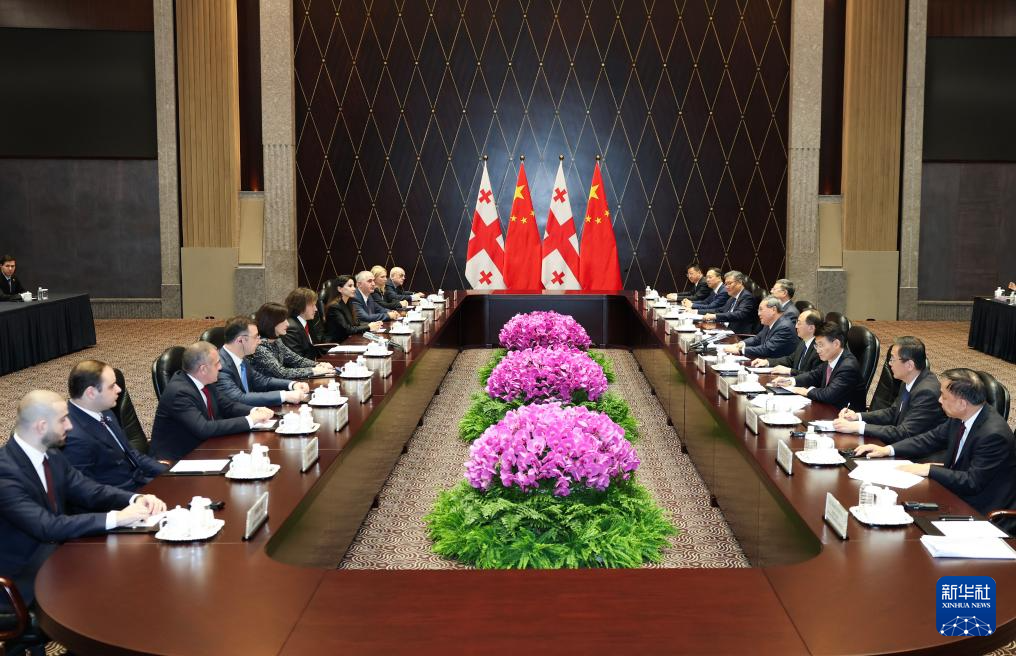
Core Points - The meeting between Chinese Premier Li Qiang and Georgian Prime Minister Irakli Garibashvili emphasizes the strong mutual respect and understanding between China and Georgia, highlighting the benefits of their strategic partnership established in 2023 [2][3] - Both countries aim to enhance cooperation in various fields, including trade, investment, and emerging industries such as digital economy, new energy, and artificial intelligence, while also promoting cultural and educational exchanges [3][4] - The signing of multiple bilateral cooperation documents in areas such as trade, artificial intelligence, agriculture, and culture signifies a commitment to deepen collaboration [5] Economic Cooperation - China and Georgia have strong economic complementarity, with China expressing willingness to strengthen development strategy alignment and enhance the role of the intergovernmental economic and trade cooperation committee [3] - The two countries are looking to conclude negotiations on upgrading their bilateral free trade agreement, which will facilitate deeper cooperation in trade, investment, and connectivity [3][4] Multilateral Engagement - Both leaders emphasized the importance of multilateral communication and coordination, advocating for the implementation of President Xi Jinping's four global initiatives to uphold multilateralism and free trade [3][4]
第八届进博会|李强会见格鲁吉亚总理科巴希泽
Xin Hua She· 2025-11-04 17:10
Core Points - The meeting between Chinese Premier Li Qiang and Georgian Prime Minister Irakli Garibashvili emphasizes the strong mutual respect and understanding between China and Georgia, highlighting the strategic partnership established in 2023 [2][3] - Both countries aim to enhance cooperation in various fields, including trade, investment, and emerging industries such as digital economy, new energy, and artificial intelligence, while also focusing on the Belt and Road Initiative [3][4] - The two leaders signed multiple bilateral cooperation agreements covering trade, artificial intelligence, agriculture, environmental protection, inspection and quarantine, culture, and aviation [4] Economic Cooperation - China and Georgia have strong economic complementarity, with China expressing willingness to strengthen development strategy alignment and enhance the role of the intergovernmental economic and trade cooperation committee [3] - The two countries are looking to conclude the upgrade negotiations of the bilateral free trade agreement, aiming to deepen cooperation in trade, investment, and connectivity [3] - Georgia is committed to providing a favorable business environment for Chinese enterprises and is keen to expand cooperation in tourism, education, technology, and culture [3][4] Multilateral Coordination - Both countries, as global South nations, are encouraged to strengthen multilateral communication and coordination, supporting the four global initiatives proposed by President Xi Jinping [3][4] - Georgia acknowledges China's role as a responsible major power in maintaining world peace and justice, expressing a desire to collaborate on promoting global stability and development [4]
菲律宾和阿联酋申请加入CPTPP
日经中文网· 2025-11-04 02:32
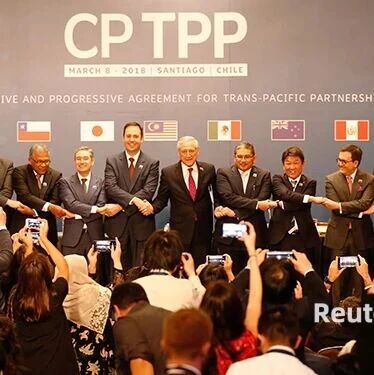
Group 1 - The core viewpoint of the article highlights the increasing attractiveness of joining the Comprehensive and Progressive Agreement for Trans-Pacific Partnership (CPTPP) due to rising tariffs imposed by the United States, prompting countries like the Philippines and the UAE to apply for membership [1][7]. - The CPTPP framework aims to eliminate numerous tariffs and unify intellectual property rules, with 12 countries currently participating and additional countries, including the Philippines and UAE, having submitted applications [3][4]. - The process for new countries to join the CPTPP requires unanimous consent from all existing member countries, with discussions on new members expected to take place at the ministerial meeting in 2025 [5]. Group 2 - The Philippines has expressed a strong interest in joining the CPTPP, driven by economic pressures from U.S. tariffs, and sees membership as crucial for its economic strategy amid increasing global trade decoupling [6]. - The UAE's application marks it as the first Middle Eastern country seeking to join the CPTPP, aligning with its economic reforms aimed at reducing oil dependency and enhancing trade and foreign direct investment [6]. - The expansion of the CPTPP is anticipated to benefit Japan's economy, with estimates suggesting a potential 1.5% increase in Japan's real GDP due to trade liberalization among member countries [7].
推动尽快恢复 中日韩自贸协定谈判
Zheng Quan Shi Bao· 2025-11-03 07:49
Group 1 - The core viewpoint emphasizes the need for China and South Korea to expedite the resumption of the China-Japan-South Korea Free Trade Agreement negotiations to jointly uphold free trade and multilateralism [1] - Both parties discussed maintaining the stability of industrial and supply chains, as well as enhancing regional and bilateral cooperation [1] - China expresses willingness to implement the important consensus reached by the leaders of both countries and aims to achieve new developments in China-South Korea economic and trade relations [1] Group 2 - The discussion included strengthening communication and coordination through mechanisms such as the China-South Korea supply chain cooperation hotline, export control dialogue, and trade remedy cooperation [1] - There is a focus on collaboration within frameworks like the World Trade Organization and the Regional Comprehensive Economic Partnership to promote the swift resumption of the China-Japan-South Korea Free Trade Agreement negotiations [1]
美一客机与直升机险些相撞;1.17亿元!马来西亚首富之子买下上海大平层;杨国福客服回应1斤豆芽卖28.8元;全红婵伤愈首秀夺冠丨每经早参
Mei Ri Jing Ji Xin Wen· 2025-11-02 21:53
Group 1 - The Ministry of Commerce of China is pushing to resume negotiations on the China-Japan-Korea Free Trade Agreement, emphasizing the importance of maintaining stable industrial and supply chains between China and Korea [2] - The Minister of Commerce urged Japan to remove Chinese entities from the export control end-user list, highlighting the need for cooperation to stabilize supply chains amid rising unilateralism and protectionism [2] Group 2 - The Shanghai Futures Exchange announced updates regarding the gold futures entry and exit processes, stating that existing rules inconsistent with the new notification will no longer be enforced [3] Group 3 - Hainan Province has announced adjustments to its automobile scrapping and renewal subsidy policy, specifying requirements for the registration locations of old and new vehicles starting from November 4, 2025 [4] Group 4 - Jiangsu Province reported that all residents were evacuated from a building in Danyang due to uneven settlement causing structural cracks, with no casualties reported [5] Group 5 - The former Party Secretary and Chairman of Guangxi Financial Investment Group, Meng Kunwei, is under investigation for serious violations of discipline and law [6] Group 6 - Malaysia's richest man's son purchased a luxury apartment in Shanghai for approximately 117 million yuan, indicating confidence in the Chinese real estate market [9] Group 7 - A Southern Airlines employee passed away during a physical fitness test, prompting the company to form a special task force to assist the family [11] Group 8 - WuXi AppTec's CAR-T cell therapy is expected to enter the commercial insurance directory, potentially reducing the financial burden on patients [13] Group 9 - The 15th National Games featured a humanoid robot named "Kua Fu" as a torchbearer, showcasing advancements in robotics technology [14] Group 10 - Suir Technology has initiated its listing guidance with CITIC Securities as the advisory institution, indicating a clear structure of actual controllers [17] Group 11 - Yang Guofu's high price for mung bean sprouts has sparked public debate, highlighting consumer sensitivity to pricing and potential impacts on brand perception [18] Group 12 - Tesla is facing controversy over a $1 trillion compensation plan for CEO Elon Musk, with institutional investors' advisory firms opposing the proposal, leading to public disputes [19] Group 13 - Various automotive companies reported significant year-on-year sales growth in October, with BYD achieving cumulative sales of 3.70 million new energy vehicles [21]




商务部部长王文涛: 推动尽快恢复中日韩自贸协定谈判
Zheng Quan Shi Bao· 2025-11-02 18:16
Core Viewpoint - The Chinese Ministry of Commerce emphasizes the importance of resuming China-Japan-Korea Free Trade Agreement negotiations to uphold free trade and multilateralism [1] Group 1: Bilateral Cooperation - The meeting between Chinese Minister Wang Wentao and South Korean Minister of Trade Kim Jong-hwan focused on stabilizing industrial and supply chains and enhancing regional and bilateral cooperation [1] - Both parties expressed a commitment to implement the important consensus reached by the leaders of China and South Korea to foster new developments in bilateral economic and trade relations [1] Group 2: Communication and Coordination - The two sides agreed to strengthen communication and coordination through mechanisms such as the China-Korea supply chain cooperation hotline, export control dialogue, and trade remedy cooperation [1] - Emphasis was placed on ensuring the stability and smooth operation of the China-Korea supply chain [1] Group 3: Multilateral Engagement - The discussion included cooperation within frameworks such as the World Trade Organization and the Regional Comprehensive Economic Partnership to facilitate the resumption of China-Japan-Korea Free Trade Agreement negotiations [1] - The goal is to jointly maintain free trade and multilateralism [1]
商务部部长王文涛: 推动尽快恢复 中日韩自贸协定谈判
Zheng Quan Shi Bao· 2025-11-02 18:00
据介绍,双方当日就维护产业链供应链稳定、加强区域及多双边合作等交换意见。王文涛表示,中韩是 重要近邻和合作伙伴,中方愿与韩方共同落实好两国领导人重要共识,推动中韩经贸关系取得新发展。 双方应通过中韩产供链合作热线、出口管制对话、贸易救济合作机制等加强沟通协调,保障中韩产供链 稳定畅通;加强在世界贸易组织、《区域全面经济伙伴关系协定》等框架下合作,推动尽快恢复中日韩 自贸协定谈判,共同维护自由贸易和多边主义。 商务部11月2日消息显示,商务部部长王文涛11月1日在会见韩国产业通商部长官金正官时指出,中韩双 方应推动尽快恢复中日韩自贸协定谈判,共同维护自由贸易和多边主义。 ...