
智慧养老

Search documents
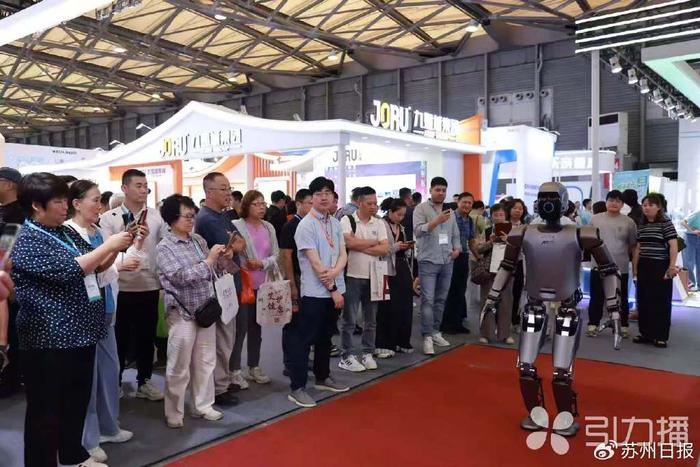
陪你养老的机器人来了
Su Zhou Ri Bao· 2025-06-12 10:11
Core Insights - The Shanghai International Elderly Care, Aids, and Rehabilitation Medical Expo showcases advancements in elderly care technology, with around 500 exhibitors from 16 countries [1][6] - The introduction of the "Xiao Mai" robot by Suzhou Meidi Technology is a highlight, designed specifically for elderly care scenarios, featuring capabilities such as visual recognition and voice interaction [3][5] Industry Overview - The aging population in China has surpassed 300 million, leading to a burgeoning silver economy projected to reach 30 trillion yuan, making "smart elderly care" a pressing social demand [6] - The establishment of Suzhou Youmai Robot Co., a joint venture between Meidi Technology and UBTECH, aims to focus on the development and industrialization of service robots in healthcare and elderly care [6] Product Features - "Xiao Mai" is a lightweight and agile robot, standing at 1.63 meters and weighing 43 kilograms, capable of performing various tasks such as greeting, health education, emotional interaction, and behavior monitoring [5][6] - The robot operates on a comprehensive solution that integrates a specialized AI model for elderly care with a smart management platform, facilitating data integration across healthcare systems and enhancing service delivery [6][8] Market Application - "Xiao Mai" is currently undergoing application testing in several elderly care institutions in Zhejiang and Shanghai, with plans to develop a smart elderly care solution characterized by platform-driven and model-enabled collaboration [8]


全国首支!养老科创产业基金来了
FOFWEEKLY· 2025-06-12 09:58
Group 1 - The establishment of China's first pension technology innovation industry fund by China Construction Bank Group's subsidiary, Jianxin Investment, in collaboration with Shanghai Dalinghao Bay Investment Development Group [1] - The fund aims to support the development of hard technology in the pension sector and smart medical applications, creating a comprehensive support system for companies from startup to maturity [1] - The fund emphasizes the role of state-owned capital in guiding investments, focusing on long-term support for technological growth and addressing the needs of the aging population [1] Group 2 - China Construction Bank Group plans to leverage its comprehensive operational advantages to provide financial support for the construction of Shanghai's "five centers" and the upgrade of the pension technology industry [1] - The initiative includes innovative mechanisms such as "investment-loan linkage" and "integration of government, industry, academia, research, and application" to facilitate the transformation of the pension industry towards intelligence, digitization, and industrialization [1] - The goal is to help China seize the global leadership in pension technology and contribute a "Chinese solution" to the challenges posed by an aging society [1]

推进智能养老机器人试点“上岗”
Guang Zhou Ri Bao· 2025-06-09 19:06
Policy Highlights - The initiative targets three types of elderly care services: home, community, and institutional, focusing on needs such as disability care, emotional companionship, health promotion, smart environments, and daily living assistance [1] - A pilot application period from 2025 to 2027 has been established, requiring at least 200 home applications and 20 community or institutional applications for service robots [1] Industry Development - The elderly care robot market in China is projected to reach approximately 7.9 billion yuan in 2024, with a rapid growth rate of around 15% over the next five years [2] - Companies are actively engaging in the elderly care robot sector, with strategic partnerships being formed to explore innovative applications of embodied intelligent technology in various care scenarios [2] Market Analysis - The elderly care robot industry is currently in its early development stage, lacking major players, with most companies offering service robots tailored to elderly needs [3] - Large-scale commercialization and widespread adoption of intelligent elderly care robots are expected within 5 to 10 years, driven by pilot programs and technology optimization [3]
为期三年,智能养老服务机器人即将试点
Zheng Quan Shi Bao Wang· 2025-06-09 15:23
Core Viewpoint - The focus on improving the quality of life for the elderly is becoming a societal priority amid accelerating population aging, with a three-year pilot program for smart elderly care service robots initiated by the Ministry of Industry and Information Technology and the Ministry of Civil Affairs from 2025 to 2027 [1] Group 1: Pilot Program Overview - The pilot program aims to enhance the quality of life for the elderly, alleviate family caregiving pressure, address the labor shortage in institutional and community elderly care services, and promote the improvement of the elderly care service system [1] - The program will implement a series of smart elderly care service robot projects in phases, focusing on collaborative research and application verification in various settings such as homes, communities, and care institutions [1] Group 2: Specific Pilot Components - The pilot consists of three main components: collaborative research, application verification, and standardization [2] - Collaborative research will target home, community, and institutional elderly care services, addressing pain points in areas such as care for the disabled and cognitively impaired, emotional companionship, health promotion, smart environments, and daily living assistance [2] - Application verification will involve testing products in real-life settings, with a minimum of 200 households for home care robots and at least 20 communities or care institutions for community and institutional robots, each requiring a deployment of at least 20 units [2] Group 3: Standards and Evaluation - The program encourages collaboration between product developers and pilot units to establish standards for smart elderly care service robots, focusing on safety, reliability, and suitability for the elderly [3] - The standards will address the physiological and psychological characteristics of the elderly, enhancing the design and development of smart elderly care service robots [3] - Notably, the "2024 Edition of the Smart Health and Elderly Care Products and Services Promotion Directory" includes products like home health care robots [3]
两部门:开展智能养老服务机器人结对攻关与场景应用试点工作
news flash· 2025-06-09 03:43
Core Viewpoint - The Ministry of Industry and Information Technology and the Ministry of Civil Affairs have issued a notice to initiate pilot projects for intelligent elderly care service robots, focusing on improving the quality of life for the elderly and addressing the pressure of family caregiving [1] Group 1: Objectives and Principles - The initiative adheres to the principles of "government guidance, demand-driven, phased implementation, and continuous iteration" [1] - The focus is on enhancing the quality of life for elderly individuals and alleviating the caregiving burden on families [1] Group 2: Implementation and Development - The plan includes phased implementation of intelligent elderly care service robot projects, promoting collaboration between research and application [1] - The goal is to develop a range of robot products that meet diverse and multi-level elderly care service needs [1] Group 3: Standards and Economic Impact - There is an emphasis on establishing and improving standards, norms, and evaluation systems for the robots [1] - The initiative aims to accelerate the integration of robots into smart elderly care services and the development of the silver economy [1]
国脉科技(002093) - 002093国脉科技投资者关系管理信息20250605
2025-06-05 08:54
Group 1: Company Overview and AI Development - Guomai Coin serves as a key tool to encourage user participation in health and elderly care services, integrating with community consumption and service exchange [2][3] - The AI system will recommend suitable activities for seniors based on their health status and interests, rewarding participation with Guomai Coins [3] - The company plans to release three types of AI systems focused on engagement, daily living support, and health management [3][4] Group 2: Market Potential and Strategic Initiatives - By the end of 2024, the elderly population aged 60 and above in China is projected to reach 310 million, accounting for 22% of the total population, with home care being the preferred choice for approximately 90% of seniors [5][6] - The "Guomai University Elderly Care" project aims to create a simulated home care community, integrating IoB technology and AI for precise health management [6] - The project emphasizes lifelong learning and intergenerational communication, enhancing the quality of life for seniors [6] Group 3: Educational Integration and Talent Development - Fuzhou University of Technology, established by the company, focuses on applied education and aligns closely with industry needs, currently hosting around 14,000 students [7][8] - The university's integration with the company fosters a talent pool and innovation platform, enhancing competitive advantages in technology and service delivery [8] - A strategic partnership with Xiamen University aims to create a collaborative innovation platform, enhancing research and talent development in key scientific fields [8] Group 4: Financial Performance - In 2024, the company achieved its best historical performance, with a net profit growth of 61% year-on-year [8] - The first quarter of 2025 continued this trend, with a net profit increase of 55% and a quarter-on-quarter growth of 345% [8]

让养老服务更智慧
Jing Ji Ri Bao· 2025-06-03 22:18
Core Viewpoint - The aging population in China is rapidly increasing, with projections indicating that by the end of 2024, there will be 310 million individuals aged 60 and above, and 220 million aged 65 and above, highlighting the urgent need for diverse and high-quality elderly care services [1] Group 1: Current State of Elderly Care Services - The main forms of elderly care services in China include home care, community care, and institutional care, with institutional care being less prevalent but offering stronger professional services [2] - As of this year, there are 404,000 various elderly care institutions and facilities across the country, with nursing beds in these institutions accounting for 62.2% of total beds [2] - Home care is the most common form of elderly care, fulfilling over 90% of the demand, with services such as meal assistance, bathing, cleaning, and medical care increasingly being provided at home [2] Group 2: Community Care Development - Community care plays a crucial role in supporting home care, with significant developments in various regions, such as over 21,000 community care facilities in Guangdong and more than 2,800 community care service stations in Chongqing [3] - The Ministry of Civil Affairs is promoting a coordinated approach among three types of elderly care services to ensure comprehensive support for the elderly across different living environments [3] Group 3: Technological Integration in Elderly Care - The rise of smart elderly care is being driven by advancements in technology, with AI robots being developed to assist in daily activities and health monitoring for the elderly [4] - The smart elderly care market in China is projected to reach 7.21 trillion yuan by 2025, indicating a significant growth opportunity for technology-driven solutions in the elderly care sector [4][5] Group 4: Challenges in the Elderly Care Sector - The elderly care industry faces several challenges, including imbalances in urban and rural development, insufficient age-friendly facilities, a shortage of professional caregivers, and varying service quality [6] - There is a pressing need for a collaborative ecosystem involving elderly care institutions, medical facilities, and technology companies to meet the diverse needs of the elderly population [6] Group 5: Talent Development in Elderly Care - To address the shortage of skilled personnel in the elderly care sector, the Ministry of Civil Affairs and other departments have issued guidelines to attract, train, and retain talent in this field [7] - The next decade is critical for implementing strategies to address the challenges posed by the growing elderly population, necessitating a shift towards a more integrated and quality-focused approach to elderly care services [7]
西湖区用科技绘就“银发幸福”图景
Hang Zhou Ri Bao· 2025-05-30 03:39
Group 1 - The core product "Tashan" hip assist exoskeleton developed by Hangzhou Zhiyuan Research Institute is officially put into use, weighing 2.7 kg and utilizing AI algorithms to adjust assistance strength in real-time for elderly individuals with declining lower limb strength [1] - The trend of building a new ecosystem for smart elderly care through technological empowerment is gaining momentum, with the concept of "embodied intelligence" included in the government work report for the first time during the National Two Sessions this year [1] - West Lake District is actively responding to this trend by showcasing a range of innovative products aimed at elderly care, including a smart portable bathing machine and a traditional Chinese medicine consultation robot [1] Group 2 - West Lake District is addressing the diverse elderly care needs of its 28,000 senior citizens by driving technological innovation to create smart elderly care and AI health service platforms, aiming to establish a "15-minute elderly care circle" [2] - Three major initiatives are being implemented to expand smart elderly care scenarios, including making smart electric wheelchairs eligible for subsidies, promoting elderly care robots and robotic dogs in community settings, and developing an elderly care robot industrial park in the Zijin Port Science and Technology City [2] - The district is also involved in drafting national pilot standards for long-term care services for disabled elderly individuals and has launched a research plan for the elderly health and wellness index [2]
王永春:老年用品市场突破五万亿,成为银发经济的重要支撑
Xin Jing Bao· 2025-05-29 01:46
Core Insights - The report released by Wang Yongchun highlights the significant growth of China's elderly products market, which is projected to expand from 2.6 trillion yuan in 2014 to 5.4 trillion yuan by 2024, reflecting a compound annual growth rate of 7.3% [2][3] Market Overview - The elderly products industry is defined as manufacturing products aimed at elderly individuals, including clothing, daily assistance products, elderly care products, rehabilitation aids, and home environment improvements [3] - The number of products included in the Ministry of Industry and Information Technology's promotion directory has rapidly increased, from 216 in 2022 to 324 in 2023, and further to 354 in 2024, marking a cumulative growth of 63.9% over three years [3] Product Category Performance - Key growth drivers in the elderly products market include care assistance products, which saw a 290% increase, health products with a 175% increase, and mobility aids with a 125% increase, indicating a strong demand driven by an aging population [3][6] Regional Distribution - The development of the elderly products industry is highly concentrated in four provinces: Guangdong, Shandong, Jiangsu, and Zhejiang, which together account for 53% of the total projects nationwide, with Guangdong leading at 19.5% [4] Emerging Trends - The report identifies emerging potential products such as service robots and new lighting products, which align with the trend towards smart elderly care and may represent future growth points [6] - In the adult incontinence products sector, factory sales are expected to reach 15.63 billion yuan in 2024, with a year-on-year growth of 7.2%, while the assistive devices industry is projected to achieve total sales revenue of 25.88 billion yuan, growing by 8.46% [6] Future Outlook - The elderly products market is transitioning from basic needs to a focus on technology and specialization, with rehabilitation aids and smart wearable devices likely to become key growth drivers in the next phase [7] - Companies are advised to focus on high-growth areas such as care assistance and health technology, while government policies should support standardization and provide tax incentives for niche product development [7]
AI赋能让香港养老生活充满“智慧”
Xin Hua She· 2025-05-28 11:05
Core Viewpoint - The integration of AI technology in elderly care is transforming the landscape of healthcare in Hong Kong, making "smart aging" a reality and injecting new vitality into the medical technology industry [1][4]. Group 1: AI Empowerment in Elderly Care - The 16th Hong Kong International Medical and Healthcare Exhibition showcased around 300 exhibitors from 13 countries, presenting innovative AI-powered products for elderly care, such as AI rehabilitation systems and portable AI diagnostic tools [1][2]. - The elderly population in Hong Kong is projected to reach 23.9% by 2024, highlighting the urgent need for technology to support and enhance the quality of life for seniors [1][4]. Group 2: Innovative Products and Technologies - A wearable exoskeleton robot designed based on the principle of neural plasticity allows individuals with severe mobility impairments to regain the ability to walk through AI-driven gait training [2]. - AI-driven solutions include a VR eye-tracking device for cognitive impairment assessment, a smart mattress that monitors pressure distribution to predict bedsores, and a portable detection device for non-invasive health checks [3][4]. Group 3: Future of Elderly Care - The Hong Kong government anticipates that by 2043, seniors aged 65 and above will constitute over one-third of the population, necessitating advancements in elder care technology [4]. - Innovations such as smart nursing beds equipped with sensors to monitor vital signs and assist with patient mobility are being developed to enhance the dignity and care of the elderly [4][5].