借壳上市

Search documents
“借壳上市”还是“资本炒作”?杜甫酒业“港股白酒第二股”质疑缠身
Sou Hu Cai Jing· 2025-05-17 05:32
Core Viewpoint - The recent name change of China Environmental Energy to Du Fu Liquor Group is perceived as a strategic move to enter the liquor market, but it is fundamentally a "brand name replacement" rather than a true reverse merger, lacking substantial asset injection or ownership change [1][8][11]. Group 1: Company Overview - China Environmental Energy has been primarily engaged in jewelry design and marketing, with a history of poor financial performance, reporting losses in 7 out of the last 10 fiscal years [5]. - The company reported a revenue of approximately 0.66 million HKD and a loss of about 0.19 million HKD for the 12 months ending March 31, 2024 [5]. - Du Fu Liquor, established in 2013, has faced significant challenges, including a period of inactivity and current debt issues, with major shareholders listed as dishonest executors [5][7]. Group 2: Strategic Moves - The sales agency agreement between China Environmental Energy and Sichuan Du Fu Liquor allows the former to sell Du Fu's products in China and 14 other countries, with a sales target of 1.5 billion HKD over three years [3][5]. - The agreement includes an innovative "excess reward mechanism," where China Environmental Energy can earn an additional 1% dividend if sales exceed targets [3]. Group 3: Market Reaction and Performance - Following the name change, the stock price of Du Fu Liquor Group surged by 129% from May 12 to May 13, reaching a market capitalization of 1.84 billion HKD, but quickly fell to 0.125 HKD by May 16, indicating volatility [7]. - The stock's performance raises concerns about its sustainability, as it risks being classified as a "penny stock" if it remains below 1 HKD for an extended period [7]. Group 4: Regulatory and Market Implications - The partnership is viewed as a "light asset binding model," which avoids stringent regulatory scrutiny associated with traditional reverse mergers, but it may lead to potential compliance risks if the liquor business revenue exceeds 50% of total income within 12 months [11][14]. - Industry experts warn that this model could lead to an influx of "zombie liquor companies" in the Hong Kong market, further deteriorating liquidity in the sector [12].

杜甫酒业“借壳上市”?公司所有权尚未变动,创始人股权被冻结
Sou Hu Cai Jing· 2025-05-16 10:34
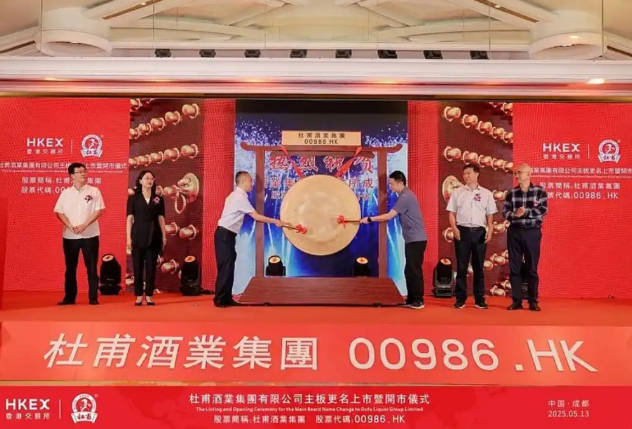
Core Viewpoint - Du Fu Liquor Group has officially changed its name from China Environmental Energy Investment Co., Ltd. and claims to have quickly listed on the Hong Kong Stock Exchange through a reverse merger with quality assets, focusing on the liquor industry and international market expansion [2][3]. Company Developments - The company held a name change ceremony on May 13, announcing its strategy to concentrate on the liquor business and enhance its presence in international markets, particularly in Southeast Asia [3]. - Du Fu Liquor aims to achieve a brand value exceeding 20 billion yuan by 2025 and aspires to become one of the "World's Top 500 Brands" [3]. Financial Performance - China Environmental Energy's financial reports from 2021 to 2024 show revenues of 106 million HKD, 109 million HKD, 68.47 million HKD, and 66.05 million HKD, with net profits of 4.447 million HKD, 604,000 HKD, -1.446 million HKD, and -1.851 million HKD respectively [7]. - Du Fu Liquor's core products are priced between 200 to 800 yuan, and the company reported over 100 million yuan in output with a 30% year-on-year increase in sales revenue for the first three quarters of 2024, although specific sales figures were not disclosed [11]. Market Reaction - Following the name change announcement, the stock price surged by 79.75% to 0.142 HKD, with a subsequent increase of 56% the next day, but it faced declines of 2% and 10% on May 14 and 15 respectively [9][10]. - The fluctuating stock performance indicates market uncertainty regarding the cross-industry collaboration [11]. Industry Context - Experts suggest that Du Fu Liquor, as a regional small to medium-sized liquor enterprise, faces challenges due to limited brand value and revenue scale, compounded by the regulatory scrutiny in the Hong Kong market [8]. - The collaboration with China Environmental Energy, which has been struggling in its jewelry business, is seen as a strategic shift towards the liquor sector, which has higher consumption frequency [7][8].
港股异动 | 杜甫酒业集团(00986)一度跌超13% 公司近期完成更名 股价两天曾暴涨近1.3倍
智通财经网· 2025-05-15 03:40
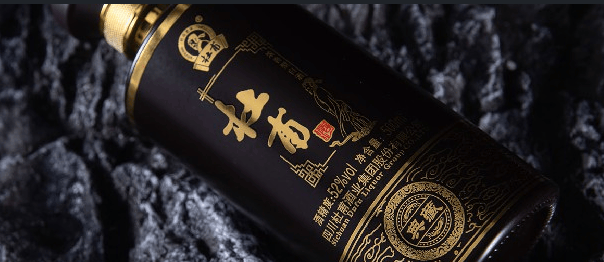
Group 1 - Du Fu Liquor Group's stock experienced a significant drop of over 13% after a previous surge of nearly 130% from May 12 to 13, with a peak increase of over 18% before closing down more than 2% [1] - The company announced a name change from China Environmental Energy to "Du Fu Liquor Group Limited," effective May 13, 2025, indicating a strategic shift towards the liquor industry [1] - The board identified business opportunities in the liquor sector, citing higher consumption frequency compared to the jewelry industry [1] Group 2 - There are speculations regarding Du Fu Liquor Group's potential reverse merger, although it was clarified that there has been no change in ownership [2] - As of May 14, major shareholders of Du Fu Liquor Group include Guo Sha and Dong Qian, holding 47 million and 40 million shares respectively, representing 8.28% and 7.04% of the voting shares [2] - The actual controller of Du Fu Liquor is Peng Zuowei, who owns 45.57% of the shares among 11 shareholders [2]
IPO受挫的一道新能,终于等来了“白衣骑士” | 能见派
新浪财经· 2025-05-15 00:57
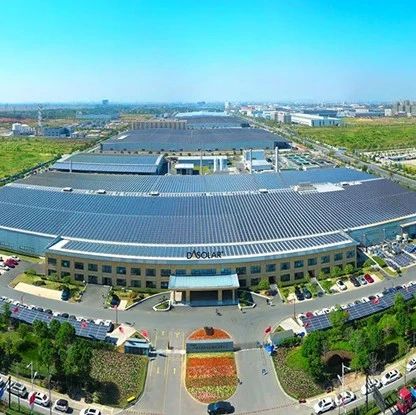
Core Viewpoint - The article discusses the acquisition of a solar energy company, Yida New Energy, by a local state-owned enterprise, Quzhou Industrial Holding Group, marking a trend of state capital entering the photovoltaic manufacturing sector amid ongoing industry challenges [1][10]. Summary by Sections Acquisition Details - Quzhou Industrial Holding Group will acquire 17.46% of Yida New Energy's shares, aiming to control at least 34.05% of voting rights post-transaction [4]. - The group, established in June 2022, has seen its total assets grow from 30.5 billion to 175 billion by the end of 2024, with a net asset of 67.7 billion and revenue of 12.6 billion [4]. Industry Context - The photovoltaic industry is experiencing downward pressure, with some companies facing financial difficulties, leading to potential further acquisitions by local state-owned enterprises [1][11]. - Yida New Energy has achieved a position among the top 10 global solar module manufacturers, with significant sales contributions from major clients like the Three Gorges Group [5]. Future Prospects - Analysts suggest that Quzhou Industrial Holding Group's involvement may lead Yida New Energy towards an A-share listing, with indications that a "shell" company has already been prepared for this purpose [8][9]. - The trend of state-owned enterprises entering the photovoltaic manufacturing sector is expected to continue, as evidenced by previous cases of state capital taking over struggling companies in the industry [11].
纵腾网络欲借壳*ST绿康?A股或诞生“跨境物流第一股”
Nan Fang Du Shi Bao· 2025-05-14 08:16
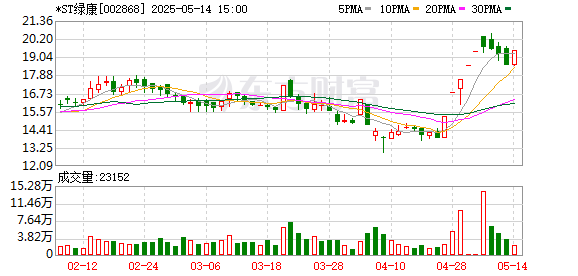
Core Viewpoint - The cross-border logistics unicorn, Zongteng Network, has become the controlling shareholder of the listed company Green康生化 through a significant asset acquisition, raising speculation about a potential "backdoor listing" in the capital market [2][7]. Group 1: Acquisition Details - Green康生化 announced the transfer of 29.99% of its shares to Zongteng Network, making it the controlling shareholder with a total payment of approximately 639.93 million yuan for 46,608,397 shares at a price of 13.73 yuan per share [5][6]. - The actual controller of Green康生化 has changed from Lai Tanping to Wang Zuan, the founder of Zongteng Network [5]. Group 2: Company Background - Green康生化, established in 2003 and listed in May 2017, focuses on the research, production, and sales of veterinary drugs. However, it has faced continuous operational challenges since its IPO, leading to four consecutive years of losses starting in 2021 [6]. - The company has diversified into the photovoltaic film business since 2022, creating a dual business model of "veterinary drugs + photovoltaics" [6]. Group 3: Zongteng Network Overview - Zongteng Network, founded in 2009, is a leading player in cross-border e-commerce logistics and serves major platforms like Amazon, eBay, TikTok, SHEIN, and Walmart. It has received significant investments from various institutions, achieving a market valuation exceeding 50 billion yuan [7]. - As of 2024, Zongteng Network reported annual revenue of 27.1 billion yuan and a net profit of 1.12 billion yuan, and it has been recognized as one of the "Top 500 Service Enterprises in China" for three consecutive years [7].

康惠制药易主疑点拼图:从老鼠仓迷雾到“速决战”玄机 | 钛媒体深度
Tai Mei Ti A P P· 2025-05-14 01:16
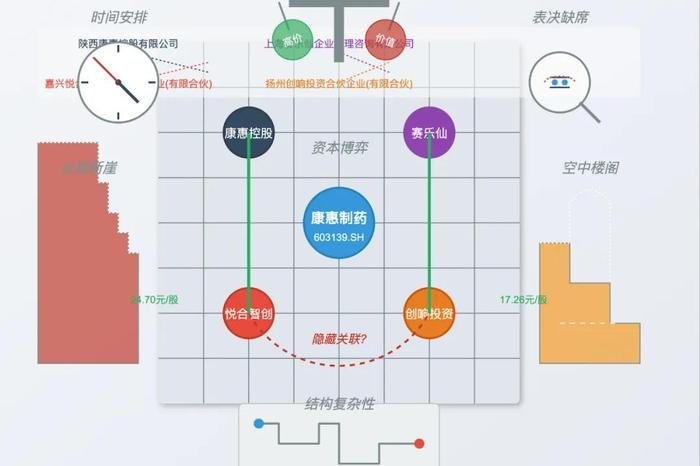
5月8日,身处控制权更迭中的康惠制药(603139.SH)在北京酒仙桥注册了新的子公司,业务聚焦科技人 工智能与中药毫无关联,名称中的"智创"字样则与收购方名称(悦和智创)一脉相承。 相关细节正折射一种可能:虽然转让控制权的交易仍在等待交易所的审查与确认,理论上尚存不确定 性,但公司已经按照易主成功完成来启动业务布局。 康惠制药这次易主事件,属于典型的"小公司,大戏码"。新崛起的"算力新贵"携真金白银完成了对传统 中药大佬的逆袭,而卡在财报季最后,康惠制药拿出一份行业垫底、经营崩塌之惨烈超预期的成绩单, 则让交易各方真实目的越来越难以遮掩:套现方急于速战速决,接盘方图的就是个"壳"。 前文《康惠制药:迷途中易主,"遗老"与"新贵"的资本联姻术》,梳理了一个靠保健品生意起家的传 统"药人",如何在运营上市企业过程中陷入并购迷途,最终只能靠卖掉企业套现来完成最后一搏; 也对这场资本联姻的逻辑进行剖析:一对算力公司实控人夫妇,通过一个当天成立的合伙企业,以外界 眼中非理性高价(24.70元/股)豪掷5.43亿,来收购一家财务恶化的中药上市公司——同时不管你信不 信,坚称其目的不是借壳。 本文则聚焦这场控制权变更"速 ...

中国环保能源今日更名杜甫酒业集团,股价单日上涨近80%
Mei Ri Jing Ji Xin Wen· 2025-05-13 11:25
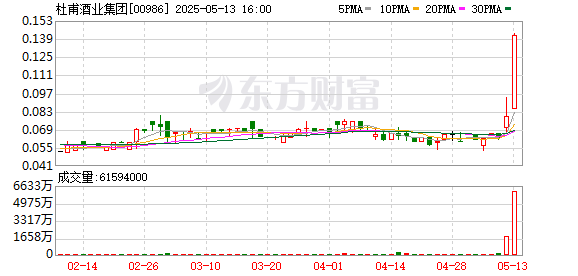
Core Viewpoint - China Environmental Energy has entered into a sales agency agreement with Sichuan Du Fu Liquor Group, aiming to promote and sell liquor products, with a sales target of at least 150 million yuan over the next three years [1][2] Group 1: Company Developments - In February, China Environmental Energy announced its role as a sales agent for Du Fu Liquor, with a potential additional 1% dividend for exceeding sales targets [1] - The company's stock price surged by 79.75% to 0.142 HKD per share following the announcement of the name change to "Du Fu Liquor Group" [1][4] - The company has struggled financially, reporting approximately 66 million HKD in revenue and a loss of about 190,000 HKD for the 12 months ending March 31, 2024, with 16 out of the last 20 years showing losses [1] Group 2: Du Fu Liquor Overview - Du Fu Liquor, established in 1983, focuses on mid to high-end liquor products priced between 200 to 800 yuan, leveraging cultural symbols from Chinese poetry [2] - The company has expressed intentions to go public, aiming to become the "first poetry liquor stock" in Hong Kong [2] - Du Fu Liquor has a significant portfolio of trademarks related to poetry and historical figures, enhancing its brand identity [2] Group 3: Board Changes - China Environmental Energy has seen frequent changes in its board members over the past two years, with new appointments in 2023 and 2024, indicating a shift towards expertise in private equity investment [3]
景兴纸业(002067) - 002067景兴纸业业绩说明会20250513
2025-05-13 09:22
Group 1: Company Performance and Financials - The company has a market capitalization of 4.6 billion yuan and a debt-to-asset ratio of 33% [12] - The company reported a loss in Q1 2025 due to a supply-demand imbalance in the packaging paper market, resulting in decreased sales revenue and a slight decline in gross margin compared to the previous year [3][4] - The company has 7.44 million yuan of convertible bonds remaining to be converted, with plans to improve stock prices through enhanced operational performance [3] Group 2: Shareholder Engagement and Stock Management - The company has repurchased 600,000 shares, accounting for 0.0477% of total share capital, with a total transaction amount of 2,088,976 yuan (excluding transaction fees) as of April 30, 2025 [6][7] - The management acknowledges the current stock price is below its intrinsic value and is committed to improving operational management to enhance shareholder returns [5][7] - The second phase of share repurchase is ongoing, with decisions based on market conditions and company assessments [5][7] Group 3: Strategic Initiatives and Market Position - The company is investing in a new project to produce 50,000 tons of recycled sanitary paper to meet growing market demand, particularly in overseas markets [4] - The company is focusing on expanding its product line to enhance market competitiveness and align with national carbon neutrality policies [4][8] - The Malaysian project is structured in two phases, with the second phase aimed at addressing domestic market needs and improving investment returns [8]

借壳上市vs类借壳:14个案例拆解核心差异与实操要点
梧桐树下V· 2025-05-07 12:25
Core Viewpoint - The article discusses the differences between reverse mergers and quasi-reverse mergers, highlighting their distinct characteristics and regulatory implications in the context of recent policies such as the "Six Merger Rules" [1]. Summary by Sections Reverse Mergers (Restructuring Listings) - Reverse mergers involve a non-listed company acquiring control of a listed company (shell company) through means such as asset swaps, thereby achieving a listing indirectly. This process serves as an alternative path for asset securitization and must meet IPO-like audit standards [2]. - Key criteria for identifying reverse mergers include: 1. Change of control must occur within 36 months, with asset purchases from the acquirer or related parties [3]. 2. The total assets purchased must exceed 100% of the listed company's total assets from the previous fiscal year [3]. 3. The purchased assets must generate over 100% of the listed company's revenue from the previous fiscal year [3]. 4. The net assets of the purchased assets must also exceed 100% of the listed company's net assets from the previous fiscal year [3]. 5. If the asset purchase leads to a fundamental change in the listed company's main business, it may also be classified as a reverse merger [3]. - Other special circumstances recognized by the China Securities Regulatory Commission (CSRC) may also lead to a reverse merger classification [4]. Quasi-Reverse Mergers (Avoidance Restructuring) - Quasi-reverse mergers are capital operations designed to circumvent the recognition standards of reverse mergers. They achieve similar outcomes to reverse mergers without formally triggering regulatory conditions through methods like staged transactions and financial engineering [6]. - The core logic involves not fully meeting the criteria of "change of control + asset scale compliance" while still achieving asset listing indirectly [6]. - Key characteristics include: 1. No change in the actual controller of the listed company [7]. 2. Asset purchases may occur after 36 months from the initial control change [7]. 3. The main business may change through acquisitions from third parties not controlled by the acquirer [7]. 4. The acquisition scale is kept below 100% to avoid triggering reverse merger conditions [7]. Key Differences Between Reverse Mergers and Quasi-Reverse Mergers - Reverse mergers require meeting all specified criteria, including a change of control, asset acquisition within 36 months, and significant asset scale [9]. - Quasi-reverse mergers typically only need to satisfy 2-3 of these conditions, making them less stringent [9]. - Regulatory recognition and operational complexity differ significantly between the two, with reverse mergers being more standardized and quasi-reverse mergers being more complex and reliant on legal and financial structuring [10].
老牌中药陕企落寞,业绩亏损与“易主”生变
Mei Ri Jing Ji Xin Wen· 2025-05-07 09:35
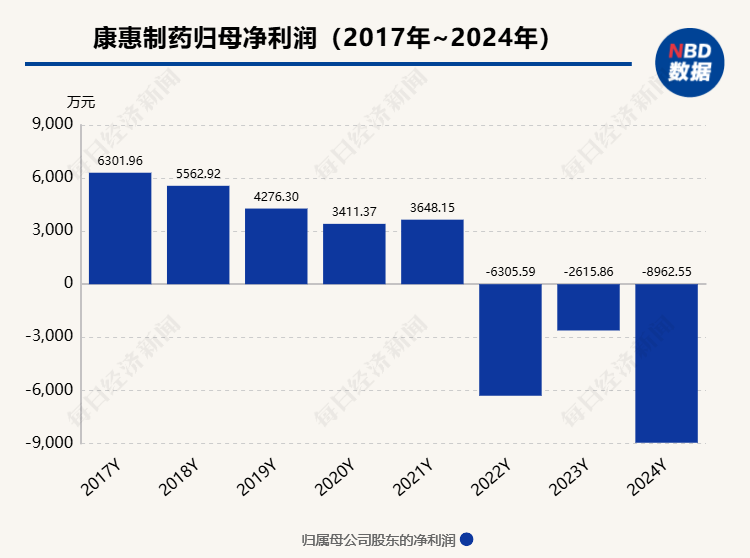
Core Viewpoint - Kanghui Pharmaceutical, a traditional Chinese medicine company, reported a significant decline in both revenue and net profit for 2024, marking its third consecutive year of losses, raising concerns about its future viability and potential acquisition by a tech firm [1][4][17]. Financial Performance - In 2024, the company's revenue decreased by 16.54% to 562 million yuan, while the net profit attributable to shareholders expanded its loss by 242.6% to 89.63 million yuan, with a non-recurring net profit loss of 67.02 million yuan [1][5][8]. - For Q1 2025, the total revenue was 121 million yuan, down 4.72% year-on-year, with a net profit loss of 17.24 million yuan [8][9]. Business Segments - The pharmaceutical manufacturing segment saw a revenue decline of 19.65% to 278 million yuan, and the pharmaceutical distribution segment's revenue fell by 16.37% to 266 million yuan, indicating a simultaneous downturn in both core business areas [5][7]. Cost and Expense Management - The company's operating expenses for 2024 reached 237 million yuan, an increase of 40.82 million yuan from the previous year, with an expense ratio rising to 42.20% [7][8]. - Sales expenses grew by 15.32% to 140 million yuan, accounting for 24.98% of revenue, with marketing costs significantly higher than industry averages [7][8]. Operational Challenges - The company faced multiple operational pressures, including underutilization of new production capacity leading to increased fixed asset depreciation, which rose from 31.77 million yuan in 2023 to 54.55 million yuan in 2024 [11][12]. - The performance of subsidiaries has also negatively impacted overall results, with significant losses reported from high-premium acquisitions that failed to meet profit commitments [13][14]. Market Environment - The company is experiencing intense pricing pressure due to industry-wide price reductions, with average price drops of 58% for similar products in the centralized procurement process [15]. - Kanghui's core products have been on the market for over ten years, lacking new blockbuster drugs, which limits its ability to withstand competitive pressures [15]. Ownership Change and Strategic Direction - Kanghui Pharmaceutical is undergoing a change in control, with its major shareholder transferring a 22% stake to a tech firm, raising questions about potential strategic shifts and the future of its core business [17][21]. - The new controlling entity, Yuhua Zhichuang, operates in the tech sector, leading to speculation about whether Kanghui will pivot away from traditional pharmaceutical operations [21][22].