
金融供给侧结构性改革

Search documents
银保监会鼓励上市银行释放更多信贷资源
Xin Hua Wang· 2025-08-12 06:27
Group 1 - The meeting emphasized increasing and improving financial supply in key areas such as "new citizens," small and micro enterprises, logistics, and infrastructure investment [1] - It was highlighted that banks should implement differentiated housing credit policies based on local conditions, supporting first-time and improved housing demand [2] - Financial institutions are encouraged to lower provision coverage ratios to release more credit resources, particularly for sectors severely impacted by the pandemic [1][2] Group 2 - The meeting called for maintaining stable and orderly financing in the real estate sector by distinguishing between project risks and corporate group risks [2] - It was stated that insurance funds should be encouraged to participate more in capital market investments, enhancing the channels for long-term investment [2] - The need for a robust financial safety net was emphasized, including the completion of special rectification work for large platform enterprises and the establishment of a financial stability guarantee fund [2][3] Group 3 - The meeting underscored the importance of enhancing the banking and insurance sectors' ability to serve the new development pattern and deepen financial supply-side structural reforms [3] - There is a push for accelerating financial support for innovation systems and strengthening the role of development and policy-oriented financial institutions in supporting technological innovation [3]
服务个人养老金长期保值增值
Xin Hua Wang· 2025-08-12 06:25
Core Viewpoint - The China Securities Regulatory Commission (CSRC) has drafted the "Interim Regulations on the Management of Publicly Raised Securities Investment Funds for Personal Pensions" to solicit public opinions, aiming to promote the development of a multi-tiered pension insurance system and regulate the third pillar of pension insurance [1] Group 1: Regulatory Framework - The draft regulations emphasize that fund managers, custodians, and sales institutions must prioritize investor interests and ensure asset safety, investment stability, long-term operation, and service convenience [1] - A long-term evaluation mechanism is to be established, aligning with previous pilot programs by the China Banking and Insurance Regulatory Commission (CBIRC) that focus on long-term financial products for personal pension investments [1] Group 2: Market Demand and Product Innovation - The development of personal pensions is driven by China's aging population and economic factors, highlighting the need for long-term, safe, and stable investment options [2] - There is a lack of suitable financial products for personal pension investments, necessitating innovation to meet diverse investor needs as awareness of retirement savings increases [2] Group 3: Information Disclosure and Risk Management - Financial institutions are required to standardize the naming of personal pension investment products and provide comprehensive disclosures regarding investment strategies, asset allocation, risks, and fees [3] - Emphasis is placed on risk management, ensuring that financial products are safe, stable, and focused on long-term value preservation, alongside enhancing financial literacy among consumers [3] Group 4: Market Potential and Policy Environment - The personal pension market has significant growth potential, with government efforts to create a favorable policy environment for its development [3] - Financial institutions are encouraged to deepen structural reforms in financial supply, leveraging their expertise to offer better products and services for personal pension investments [3]
信银理财获中国资产管理金贝奖“2023卓越至臻理财公司”奖
Xin Hua Wang· 2025-08-12 06:15
Core Insights - The "2023 China Asset Management Annual Conference" was held in Shanghai, focusing on the theme "Original Intention and Mission: Large Asset Management Supporting High-Quality Economic Development" [1] - Xinyin Wealth Management Co., Ltd. was awarded the "2023 Excellent and Ultimate Wealth Management Company" at the conference [1] Company Overview - Xinyin Wealth Management, fully initiated by CITIC Bank, officially opened in July 2020 and is the first national joint-stock bank wealth management subsidiary based in Shanghai [4] - Over the past three years, the company has adhered to the mission of "entrusted by others, managing wealth for clients," leveraging CITIC Financial Holdings' comprehensive financial license resources [4] - The company maintains a leading position in the industry, consistently ranking at the forefront in comprehensive wealth management capability evaluations by Puyi Standard and Zhongzheng Golden Bull [4] Product Development - Xinyin Wealth Management focuses on low-volatility core products and has developed "amortized cost method products" and "low-volatility stable products" [4] - The company has established a comprehensive product system covering six major product categories: currency, currency+, fixed income, fixed income+, mixed, and equity [4] - To meet diverse customer needs and enhance market competitiveness, the company emphasizes innovation in thematic products, creating several star products with social, economic, and brand benefits [5] Social Responsibility - In the area of common prosperity, Xinyin Wealth Management has innovatively explored the "charity + finance" model, launching the "Warm Childhood Journey" charitable wealth management brand [5] - The company has jointly launched public wealth management products that raised over 2 billion yuan, creating new pathways for social wealth appreciation and participation in charitable endeavors [5] Future Commitment - Xinyin Wealth Management aims to uphold the centralized and unified leadership of the Party, focusing on serving the real economy and contributing to common prosperity [5] - The company is committed to enhancing professionalism to better provide asset management services for various clients, contributing to high-quality social and economic development [5]

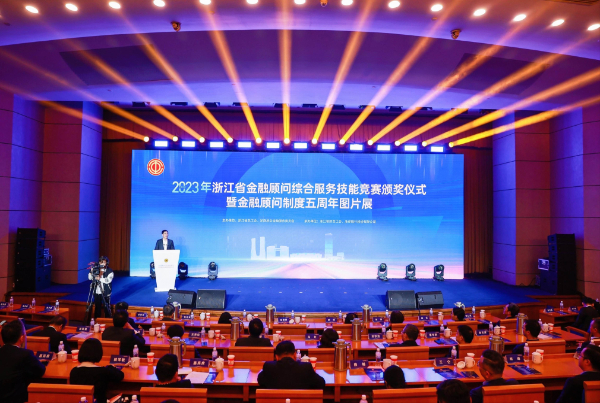
浙江省金融顾问比武大练兵 引领行业服务质量迈向新高度
Xin Hua Wang· 2025-08-12 06:14
Core Insights - The financial sector is a crucial component of the modern economy and plays a significant role in promoting high-quality development. Zhejiang Province has been at the forefront of financial innovation, having introduced the financial advisor system five years ago, which has gained widespread recognition and serves as a model for financial supply-side structural reform in China [1][6]. Group 1: Financial Advisor System - The "2023 Zhejiang Province Financial Advisor Comprehensive Service Skills Competition" is a key project under the provincial labor union, elevating the traditional financial competition model to focus on comprehensive customer service [3]. - The competition serves as a summary and showcase of the financial advisor system over the past five years, promoting the "finance for good" concept and supporting the three major initiatives of Zhejiang [3][6]. - Financial advisors are increasingly recognized as new professional laborers driving high-quality economic and social development, emphasizing the need for continuous skill enhancement and service capability [3][4]. Group 2: Competition Details - The competition attracted participation from 853 financial advisors across 44 financial and intermediary institutions in Zhejiang, with 57 advisors from 19 teams reaching the finals after rigorous selection [4]. - Finalists showcased their capabilities through team presentations, service case demonstrations, and Q&A sessions, highlighting the advantages of the financial advisor system in serving the real economy [4][5]. - The event concluded with the awarding of the "Zhejiang Golden Blue Collar" title to the winning team, underscoring the importance of skilled talent in supporting economic development [5]. Group 3: Impact and Future Directions - The financial advisor system has facilitated over 71,500 enterprise connections and secured financing exceeding 517.6 billion yuan over the past five years, alongside nearly 600 investor education events [6][7]. - Zhejiang is committed to further innovating the financial advisor system, integrating it into a high-quality labor force to better serve the province's economic modernization efforts [7].

银保监会:切实推动银行保险机构提升服务实体经济质效
Xin Hua Wang· 2025-08-12 05:55
Core Viewpoint - The establishment of a financial stability guarantee fund framework has been initiated, with the first batch of 64.6 billion yuan raised to support the banking and insurance sectors in stabilizing the economy and managing financial risks [1][3]. Group 1: Economic Support and Financial Supply - The banking and insurance sectors have effectively supported the macroeconomic stability, with a year-on-year increase of 919.2 billion yuan in RMB loans and an additional 6.6 trillion yuan in bond investments, marking a year-on-year increase of 330 billion yuan [2][4]. - Infrastructure loans increased by 2.6 trillion yuan in the first half of the year, contributing to the recovery of consumer spending, with residential consumption loans rising by 158.9 billion yuan [2][4]. - The growth of inclusive small and micro loans reached 22.6% year-on-year, indicating a focus on supporting small enterprises and innovation [2]. Group 2: Risk Management and Financial Stability - The overall operation of the banking and insurance sectors remains stable, with a capital adequacy ratio of 14.87% and a provision coverage ratio of 203.8% as of the end of June [3][6]. - The disposal of non-performing assets reached 1.41 trillion yuan in the first half of the year, an increase of 219.7 billion yuan year-on-year [3][6]. - The financial stability guarantee fund framework has been preliminarily established, with 64.6 billion yuan raised to enhance risk management capabilities [3][7]. Group 3: Real Estate and Shadow Banking - In June, new real estate loans amounted to 200.3 billion yuan, with measures taken to support the real estate sector, including a 20 basis point reduction in the lower limit of first-home loan interest rates [5][6]. - The shadow banking sector has seen a significant reduction, with a decrease of over 2.5 trillion yuan from historical peaks, indicating effective regulatory measures [6][7]. - The non-performing loan balance for commercial banks was 2.95 trillion yuan at the end of the second quarter, with a non-performing loan ratio of 1.67%, reflecting a slight decrease from the beginning of the year [6].

聚合力共同书写科技金融新篇章
Jin Rong Shi Bao· 2025-08-08 08:02
Core Insights - The meeting held on May 15 emphasized the importance of integrating technology and finance to drive innovation and industrial upgrades in China [1] - Financial institutions are increasingly collaborating with technology sectors to enhance the diversity and strength of technology financial services [2] - Various financial institutions reported significant achievements in supporting technology innovation through different financial instruments [3][4] Group 1: Meeting Highlights - The meeting was attended by key officials from the People's Bank of China, Ministry of Science and Technology, and other regulatory bodies, focusing on the role of financial support in building a strong technological nation [1] - Financial management and technology departments are urged to deepen the integration of finance, technology, and industry to provide robust financial support for high-level technological self-reliance [1] Group 2: Financial Institutions' Contributions - Industrial and Commercial Bank of China reported a technology loan balance of nearly 5.5 trillion yuan, with new loans amounting to 537.6 billion yuan in the first quarter, leading the industry [2] - CITIC Securities highlighted its leading position in the market with 29 equity financing projects and a total underwriting scale of 28.5 billion yuan in 2024 [3] - People’s Insurance Group shared its comprehensive insurance service system for technology finance, investing approximately 52 billion yuan in technology innovation [4] Group 3: Support for Technology Innovation Bonds - Following the announcement of technology innovation bonds on May 7, various financial institutions actively participated in the issuance, with China Bank leading with 3.85 billion yuan in the first day [5] - CITIC Securities initiated a bond issuance of up to 2 billion yuan, adhering to the requirement that at least 70% of the funds be directed towards technology innovation [5] - People’s Insurance Group participated in the subscription of technology innovation bonds, with a total subscription amount exceeding 5 billion yuan [5] Group 4: Market Response to Technology Innovation Bonds - The introduction of technology innovation bonds is expected to alleviate funding shortages in the domestic venture capital market, which has historically faced challenges [6] - The bond financing mechanism aims to provide stable, long-term capital for early-stage investments in hard technology [6] Group 5: Case Study of Financial Support - A high-tech company, Moer Thread, received significant financial support from a consortium of banks coordinated by the People's Bank of China, alleviating funding pressures for its chip development [7]

第三家股份行AIC获批筹建:为企业提供全方位多层次融资支持
Jin Rong Shi Bao· 2025-08-08 08:00
Core Points - The establishment of Asset Investment Companies (AICs) by joint-stock banks aims to enhance equity investment support for technology enterprises [1][5] - The approval of AICs for three joint-stock banks (China Merchants Bank, Industrial Bank, and Citic Bank) signifies a move towards diversifying the financing system and addressing the financing difficulties faced by enterprises [2][5] - The new AICs will enable banks to transition from traditional funding intermediaries to comprehensive financial service providers, enhancing their investment capabilities and optimizing income structures [6][7] Summary by Sections Establishment of AICs - China Merchants Bank has received approval to establish its AIC with a registered capital of RMB 150 billion, making it a wholly-owned subsidiary [1] - Industrial Bank and Citic Bank have also received approvals for their AICs with registered capitals of RMB 100 billion each [2][3] Policy Implications - The expansion of AICs is part of a broader financial supply-side structural reform aimed at strengthening counter-cyclical adjustment capabilities while serving the real economy and mitigating risks [7] - The policy encourages joint-stock banks to participate in AICs, promoting a more diversified investment and financing system [4][5] Benefits for Banks and Enterprises - AICs will provide comprehensive financial services throughout the lifecycle of enterprises, particularly benefiting high-growth technology firms [5][6] - The establishment of AICs is expected to create new revenue streams for banks, including transaction settlements and fee income from enhanced cooperation with technology companies [7] Challenges and Considerations - AICs face challenges in balancing traditional risk-averse banking practices with the high-risk nature of technology investments [9] - There is a need for AICs to enhance their research and investment capabilities by increasing professional talent reserves and developing a differentiated operational structure [9]
今日视点:降低非利息成本 让民企融资“体感”更好
Zheng Quan Ri Bao· 2025-08-08 07:23
从这个视角来看,银行机构提升对民营企业信用水平评估能力,就能够在一定程度上降低融资成本。目 前,部分互联网银行依托AI建模技术,将企业主信用画像、产业链生态位、税收社保数据等多个维度 纳入风控模型,正在改写"无抵押不贷款"的传统剧本。未来金融机构宜持续加强对科技的应用,打破银 企信息壁垒,降低非利息成本。 ■ 苏向杲 5月20日起正式实施的《中华人民共和国民营经济促进法》提到,金融机构在依法合规前提下,按照市 场化、可持续发展原则开发和提供适合民营经济特点的金融产品和服务,为资信良好的民营经济组织融 资提供便利条件,增强信贷供给、贷款周期与民营经济组织融资需求、资金使用周期的适配性,提升金 融服务可获得性和便利度。 民营企业在推动经济增长、促进技术创新、增加就业、改善民生等方面发挥了不可替代的作用。当前, 进一步加大对民营企业的金融支持力度对促进我国经济高质量发展意义重大。2月17日召开的民营企业 座谈会提出,继续下大气力解决民营企业融资难融资贵问题。 当前,非利息融资成本难以下降,是部分民营企业融资难融资贵的主要原因之一。目前,民营企业主要 通过贷款获取融资,贷款的综合融资成本由利息和非利息成本构成,近年来 ...
畅同金融“血脉”!湖北宣恩积极破解中小企业融资难题
Zhong Guo Jing Ji Wang· 2025-08-06 07:54
Core Insights - The article highlights the proactive measures taken by Xuan'en County to support small and micro enterprises through tailored financial services and credit loans, significantly boosting local economic development [1][2][3][4] Group 1: Financial Support Initiatives - Xuan'en County has implemented a "Small and Micro Enterprise Financing Coordination Mechanism," conducting extensive outreach to understand the financing needs of local businesses, resulting in a "申报清单" and "推荐清单" for targeted support [2] - Financial institutions in the county have issued loans totaling 21.83 billion yuan, with 1.36 billion yuan allocated to 189 small enterprises as first-time loans [2][3] - The average loan processing time for small and micro enterprises has been reduced from 7 working days to 3, enhancing accessibility to credit [3] Group 2: Economic Impact - In the first half of the year, Xuan'en County's financial institutions provided 15.09 billion yuan in new loans, exceeding the annual target by 17% and marking a historical high [1] - The county saw a 47% year-on-year increase in new business entities, with 3,164 new operating units established [1] - The tourism sector has significantly contributed to the local economy, with nearly 10 million visitors and a 45.16% increase in tourism revenue, leading to a doubling of household deposits [4] Group 3: Innovative Financial Products - Banks have developed nearly 20 new financial products aimed at small and micro enterprises, including various credit loans that do not require collateral [3] - The introduction of personal credit value loans and rural asset value loans has successfully disbursed 24.45 million yuan, demonstrating effective financial innovation [3] - The establishment of a "Financial + Industry + Tourism" ecosystem has supported key projects, with 19.08 billion yuan in credit granted for 10 major county projects [3]
强化融资支持 让更多外贸企业“轻装上阵”
Jing Ji Ri Bao· 2025-08-06 02:06
Core Viewpoint - The central government emphasizes the importance of stabilizing foreign trade through enhanced financial support, particularly for export-oriented enterprises facing challenges due to external shocks [1]. Group 1: Financial Support for Foreign Trade - Financial institutions are urged to increase credit support for foreign trade enterprises, especially small and medium-sized enterprises with high foreign trade dependence and competitive products, ensuring their reasonable financing needs are met [1][2]. - The insurance sector is encouraged to provide comprehensive insurance solutions for enterprises venturing abroad, facilitating their operations [1]. Group 2: Policy Implementation and Financial Services - Banks are expected to implement policies to stabilize foreign trade, ensuring that loans are fully utilized and tailored services are provided to enterprises facing difficulties due to tariffs [2]. - There is a focus on optimizing export credit insurance policies to enhance underwriting capacity and provide favorable rates, thereby boosting enterprises' confidence in receiving orders and exporting [2]. Group 3: Currency Risk Management - With the increased volatility of the RMB exchange rate, there is a growing demand for currency risk management services among enterprises engaged in international trade [3]. - Financial institutions are encouraged to enhance their services related to currency risk management and to offer customized hedging products for foreign trade enterprises [3]. Group 4: Integrated Financial Solutions - The demand for integrated financial solutions has surpassed mere financing needs, requiring financial institutions to tailor their services to the specific characteristics of different markets and industries [4]. - The financial system is tasked with ensuring that policies translate into tangible benefits for enterprises, thereby supporting their global development [4].