Physical AI

Search documents
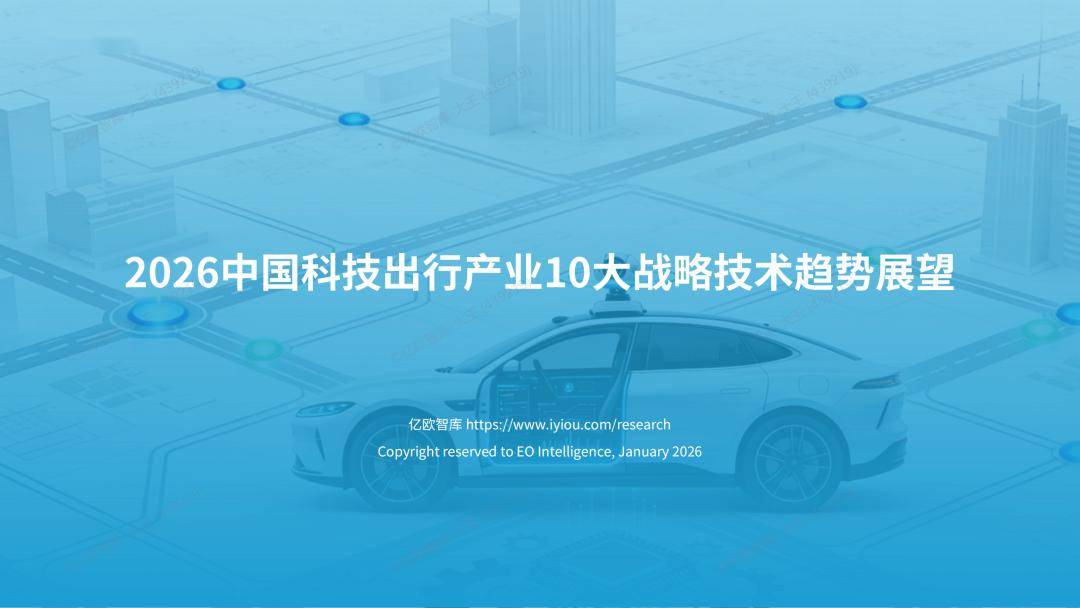
亿欧智库:2026中国科技出行产业10大战略技术趋势展望
Sou Hu Cai Jing· 2026-01-22 11:41
Core Insights - The report by Yiou Research Institute outlines ten strategic technology trends in China's technology mobility industry for 2026, focusing on autonomous driving, mobility technology, and new energy sectors, providing insights for industry players and investors [1][9]. Group 1: Cost Reduction and Efficiency - Chiplet technology is expected to become the standard for vehicle high-performance computing (HPC) by 2026, addressing the challenges of traditional SoC in terms of cost and power consumption [2][13]. - AI Box is projected to become a market breakout solution in 2026, providing flexible computing power without altering existing vehicle architectures, initially focusing on smart cockpits and later expanding to intelligent driving and body control domains [2][16]. - The domestic production of automotive-grade chips is advancing, with a focus on cost-effective, stable delivery, and local service, leading to a competitive landscape between international giants and local manufacturers [2][20]. - The 48V low-voltage architecture is set to be adopted in more flagship models by 2026, supporting high-power intelligent components, transitioning from initial partial adoption to a main distribution structure over time [2][26]. Group 2: User Experience Enhancement - Vehicle optical communication is expected to begin pilot projects in 2026, offering advantages such as high bandwidth and low latency, potentially replacing traditional vehicle Ethernet [3][23]. - The smart cockpit is entering its 3.0 era, evolving from a functional tool to a system-level intelligent entity capable of task planning and cross-domain collaboration, supported by an integrated "end-cloud-vehicle" architecture [3][31]. - The L3 autonomous driving technology is anticipated to enter a "small-scale, conditional" commercialization phase in 2026, with a focus on safety features like AEB becoming central to industry efforts [3][36]. - Small screens are emerging as a new interaction point in the cockpit, reducing cognitive load during driving and shifting the interaction logic from centralized to multi-screen collaboration [3][42]. Group 3: Ecological Innovation and Development - Physical AI technology is facilitating multi-ecosystem layouts, allowing automotive manufacturers to transition from vehicle integrators to cross-terminal AI capability platforms, promoting a second growth curve in the industry [5][39].

汽车- 2025 年第四季度前瞻:聚焦存储与大宗商品通胀-Autos & Shared Mobility-4Q25 Preview Memory and Commodity Inflation in Focus
2026-01-22 02:44
Summary of Key Points from the Earnings Call Transcript Industry Overview - **Industry Focus**: Autos & Shared Mobility in North America - **Key Themes for Earnings Season**: Memory shortage, commodity inflation, powertrain mix shift, physical AI, and policy impacts [1][11][17] Core Company Insights - **Preference for ICE over EV**: The company maintains an overweight (OW) rating on General Motors (GM) and Ford (F), while underweight (UW) on Rivian (RIVN) and Lucid (LCID) [1][2] - **Ford and GM Outlook**: Both companies are expected to present a positive outlook for 2026, having reduced EV exposure and shifted focus to higher-margin ICE products [3][4] - **Risks for EV OEMs**: Continued demand challenges for RIVN and LCID, with expectations of downside to profitability due to rising commodity costs [4][25] Financial Performance Expectations - **Earnings Projections**: - Ford: Revenue of $42.9 billion, adjusted EBIT of $1.14 billion, and EPS of $0.14 [12] - GM: Revenue of $45.3 billion, adjusted EBIT of $2.73 billion, and EPS of $2.23 [12] - RIVN: Revenue of $1.28 billion, adjusted EBIT of -$0.81 billion, and EPS of -$0.79 [12] - LCID: Revenue of $439 million, adjusted EBIT of -$0.77 billion, and EPS of -$2.55 [12] Commodity and Memory Cost Impacts - **Memory Shortages**: Anticipated cost headwinds of $300-$400 per vehicle for EVs and $100-$200 for ICE vehicles due to DRAM shortages [17][21] - **Commodity Inflation**: Significant increases in commodity prices, with lithium up 107%, copper up 45%, and steel up 37% since last January, potentially impacting margins for high-EV-exposed OEMs [18][21] Market Dynamics - **Auto Retail Outlook**: Positive sentiment towards auto retail, particularly for companies like Carvana (CVNA), with expectations of strong demand and resilient earnings models [5][10] - **Consumer Credit Concerns**: Elevated delinquency rates expected in January, but potential improvements linked to higher tax refunds could benefit auto OEMs and retailers [27] Strategic Shifts - **Powertrain Mix Shift**: Ford and GM are reducing EV capacity in favor of ICE vehicles, which could yield significant EBIT tailwinds [23] - **Investment in AI**: Increased capital allocation towards autonomy and robotics, with a focus on maintaining competitive advantages in the market [26] Policy Impacts - **Affordability and Credit Availability**: Concerns regarding auto affordability due to tariff-related inflation and tightening credit conditions, with potential impacts on consumer behavior and auto sales [27] Conclusion - The overall sentiment is cautiously optimistic for ICE manufacturers like Ford and GM, while EV manufacturers face significant challenges due to rising costs and demand issues. The auto retail sector shows promise, but credit conditions may pose risks in the near term.

Honeywell CEO: Why “Physical AI” Won’t Replace All Industrial Jobs—and What It Will Change
Yahoo Finance· 2026-01-21 21:34
Core Insights - The article discusses how Honeywell is leveraging "physical AI" to enhance operations in factories and refineries, addressing the challenge of skilled labor shortages [1] Company Strategy - Honeywell's CEO, Vimal Kapur, emphasizes the transition of AI from digital tools to physical infrastructure, indicating a strategic shift in how the company integrates technology into its operations [1] - The company aims to augment human workers rather than replace them entirely, showcasing a focus on collaboration between technology and skilled labor [1] Industry Context - The implementation of "physical AI" is positioned as a solution to current labor shortages in various industries, highlighting a broader trend of technology adoption in response to workforce challenges [1]

Serve Enters Healthcare With Diligent Robotics Acquisition
ZACKS· 2026-01-21 17:15
Core Insights - Serve Robotics Inc. (SERV) is expanding into the healthcare sector through the acquisition of Diligent Robotics, which specializes in AI-powered robot assistants for hospitals, with the deal expected to close in Q1 2026 [2][3] - The acquisition will be funded by issuing SERV common stock valued at $29 million to Diligent shareholders, with a potential earn-out of up to $5.3 million based on performance milestones [2] - Following the announcement, SERV stock increased by 3.1% in after-hours trading [4] Strategic Expansion - The acquisition allows Serve to enter indoor and healthcare environments, enhancing its ability to deploy autonomous systems that work alongside humans, marking its first foray into indoor robotics [3] - Serve will gain access to Moxi, an autonomous hospital robot that has completed over 1.25 million deliveries in over 25 U.S. hospitals, allowing clinical staff to focus more on patient care [5][6] - Each hospital deployment of Moxi is projected to generate annual revenues of $200K to $400K, contributing to improved fleet economics and validating high-revenue healthcare use cases [6][8] Inorganic Growth Strategy - Serve is pursuing a disciplined inorganic growth strategy to enhance its technological capabilities and scalability, having previously acquired Vayu Robotics and assets from Phantom Auto Inc. [7] - The acquisitions are focused on deepening core capabilities and supporting sustainable competitive advantages in the autonomous delivery market [7] Stock Performance - SERV stock has risen 21.2% over the past month, outperforming the Zacks Computers - IT Services industry's decline of 4.5% [8] - The company's third-generation fleet, equipped with advanced sensors, is expected to improve operational efficiency and reinforce SERV's competitive position [9]

Agora Partners with Sentino to Advance Physical AI Through Customizable, Retentive AI Agent Experiences
Prnewswire· 2026-01-21 15:00
Core Insights - Agora, Inc. has announced a strategic partnership with Sentino to develop a new AI Agent Platform for Physical AI, aimed at creating emotionally engaging AI companions for brands and device manufacturers [1][3] Group 1: Platform Features - The platform utilizes Agora's Conversational AI Engine, integrating real-time conversation with memory, emotion, and multimodal expression to enhance user engagement [2] - Key features include an "Agent OS" that generates context-aware inner thoughts, an AI Diary for capturing shared moments, and a Music Diary that transforms diary content into emotion-driven music [6][7][12] - The platform is designed to maintain presence and emotional connection, encouraging users to return for ongoing interactions rather than one-time engagements [4][10] Group 2: Market Positioning - Agora provides the foundational real-time AI infrastructure, while Sentino focuses on developing agent personas and companion features, allowing for rapid product launches without the need for extensive system development [9] - The collaboration aims to redefine Physical AI, making it feel personal and worth revisiting, thus enhancing user retention and emotional bonds [16][19] Group 3: Executive Perspectives - Executives from both companies emphasize the importance of building human-centric AI that transforms static characters into dynamic assets, fostering sustainable emotional economies with fans [15][21] - The platform is designed to evolve over time with ongoing updates and new scenarios, ensuring it remains relevant and engaging for users [15]


Nvidia's Jensen Huang says AI robotics is a 'once-in-a-generation' opportunity for Europe
CNBC· 2026-01-21 13:05
Core Insights - Nvidia's CEO Jensen Huang emphasized that AI robotics represents a "once-in-a-generation" opportunity for Europe, leveraging its strong industrial manufacturing base [1] - Huang noted that this opportunity allows Europe to "leap past" the software era dominated by the U.S. [2] Rise of AI Robotics - There is a growing focus on autonomous robotics within the industrial and tech sectors, driven by advancements in AI [3] - Major European companies like Siemens, Mercedes-Benz Group, Volvo, and Schaeffler have initiated robotics projects and partnerships in the past year [3] - Big Tech firms are also heavily investing in robotics, with Tesla's CEO stating that 80% of the company's value will derive from its Optimus humanoid robots, and Nvidia forming partnerships with Alphabet for physical AI [4] Energy Supply Concerns - To capitalize on AI opportunities, Europe must improve its energy supply to support necessary infrastructure investments [5][8] - High energy costs in Europe are a significant challenge, as highlighted by Microsoft’s CEO, who stated that energy costs will influence the success of countries in the AI race [5] - Huang pointed out that Europe is facing limited energy access while hyperscalers aim to deploy AI infrastructure [8] Infrastructure Buildout - Huang described the current AI infrastructure development as the "largest infrastructure buildout in human history," with hundreds of billions already invested and trillions needed for future expansion [9]


Nightview Capital 2025 Annual Letter
Seeking Alpha· 2026-01-21 06:05
Core Insights - The Nightview Fund ETF (NITE) achieved a gain of 22.56% in 2025, outperforming the S&P 500's total return of 17.88% [7] - The fund's strategy focuses on a 20-stock "best ideas" portfolio aimed at long-term investment opportunities rather than following specific trends [8] - The rise of artificial intelligence (AI) has created both opportunities and risks, with AI startups capturing 50% of all venture capital in 2025, a 37% increase from the previous year [13] Investment Strategy - The fund is bullish on AI as a transformative force in the global economy, believing it will lead to significant infrastructure changes [12] - The investment approach is barbelled, balancing exposure to technological advances with investments in sectors rooted in human experiences, such as travel and entertainment [38] - The fund has invested in Alibaba, recognizing its strong position in China's economy despite negative market sentiment [34] Sector Analysis - The semiconductor industry is experiencing a shift, with high-performance computing now accounting for approximately 60% of quarterly revenue for companies like TSMC, up from 30% in 2018 [44] - AI's integration into physical systems is expected to create competitive advantages for companies that can leverage real-world data and learning [22] - Tesla is highlighted as a key player in the transition to AI-driven autonomy, with significant improvements in its Full Self-Driving technology [25][27] Market Conditions - The current market environment presents a widening opportunity set, with some companies realizing efficiency gains from AI while others remain undervalued [33] - As interest rates stabilize, there are signs of recovery in deal-making and trading volumes across financial services [37] - The historical context of past technology cycles suggests that while excesses may emerge, the demand for AI-driven infrastructure is likely to remain strong [49][50]



Serve Robotics to Acquire Diligent Robotics, Expanding Physical AI Platform Beyond the Sidewalk
Globenewswire· 2026-01-20 21:30
Core Viewpoint - Serve Robotics Inc. has announced an agreement to acquire Diligent Robotics, marking its first expansion into indoor environments, particularly in healthcare settings [1][4]. Company Overview - Serve Robotics is a leading autonomous robotics company focused on developing AI-powered delivery robots, spun off from Uber in 2021 [16]. - Diligent Robotics, founded in 2017, specializes in AI-powered robot assistants for healthcare, having raised over $100 million from notable investors [2][14]. Acquisition Details - The acquisition involves a total transaction value of $29 million in common stock, with a potential earn-out of up to $5.3 million based on performance milestones [11]. - The transaction is expected to close in the first quarter of 2026, subject to customary closing conditions [12]. Product and Market Impact - Diligent's Moxi robot has completed over 1.25 million autonomous deliveries across more than 25 hospital facilities, with annual sales per hospital expected to range between $200,000 to $400,000 [3][6]. - The acquisition will broaden Serve's market opportunity beyond last-mile delivery, enhancing its autonomy platform for indoor applications [6][7]. Strategic Benefits - The combination of Serve and Diligent aims to accelerate the deployment of Moxi robots, improving service efficiency for clinicians and validating high-revenue healthcare use cases [7][10]. - The integration of both companies' technologies is expected to enhance learning and scalability across their robotic platforms, creating a unified autonomy stack [5][8]. Leadership and Operations - Diligent Robotics will operate as a subsidiary of Serve under the leadership of Andrea Thomaz, continuing its mission to enhance healthcare productivity through robotics [9][10].

Arm Holdings Stock is Down 43%. It’s an Underrated Play on Physical AI
Yahoo Finance· 2026-01-20 15:31
Group 1: AI and Semiconductor Industry Trends - The tech and AI trade has become more volatile, with semiconductor stocks, particularly memory chip makers and semiconductor equipment, experiencing significant growth recently [2] - The emergence of a new class of high-tech leaders is noted as the AI revolution enters its fourth year, with the "Magnificent Seven" stocks showing varied performance [2] - The AI landscape has evolved since the introduction of ChatGPT over three years ago, with expectations for more significant advancements in 2026, particularly in agentic AI and robotics [3] Group 2: Arm Holdings Performance and Strategy - Arm Holdings' stock has declined approximately 43% from its peak, raising concerns about potential further drops below $100 per share due to analyst downgrades related to overvaluation [6][7] - The company has launched a physical AI division and restructured its focus towards humanoid robots and autonomous vehicles, indicating a strategic shift in its business model [7] - Investor concerns have been heightened by Softbank's margin loan backed by Arm shares, which could lead to forced selling during market downturns [7]

华为哈勃押注,成立仅半年融资三连跳,这家公司凭什么成为“世界模型黑马”?
机器人大讲堂· 2026-01-20 09:11
Core Viewpoint - Manifold AI, founded by a former key member of SenseTime, aims to redefine embodied intelligence through its World Model technology, enabling robots to not only perceive but also predict physical interactions in their environment [1][4][12]. Group 1: Financing and Growth - Manifold AI has completed over 300 million yuan in financing within just seven months of its establishment, showcasing a rapid fundraising pace that reflects strong market interest in "Physical AI" [2][7]. - The company has successfully raised funds in three rounds: a seed round led by Inno Angel Fund, followed by two angel rounds, each exceeding 100 million yuan [4][7]. - The latest funding round included notable investors such as Meihua Venture Capital, Junlian Capital, and Huawei Hubble, indicating a strong backing from the industry [1][9]. Group 2: Technology Development - Manifold AI's technology focuses on World Model Action (WMA), which allows robots to predict physical state changes based on first-person perspective videos, moving beyond traditional visual-language models (VLM) [12][14]. - The company's WorldScape model enables robots to simulate and interact with their environment autonomously, marking a shift from mere execution of pre-set codes to possessing "brain-like" capabilities [14][15]. - Manifold AI is developing multiple specialized models, including DriveScape for autonomous driving, RoboScape for physical interaction, and AirScape for drones, all built on the foundational WorldScape model [15]. Group 3: Future Aspirations - The company aims to equip over 10% of robots in the market with its "Manifold Brain," pushing the boundaries of Physical AI agents [19][20]. - The long-term vision includes transitioning World Models from experimental stages to practical applications in warehouses, factories, and homes within the next three years [20][21]. - The strategy emphasizes creating a universal embodied world model while simultaneously commercializing sub-domain models to generate revenue and support further development [20].