
Chiplet技术

Search documents
和顺石油跨界收购半导体企业,股价与基本面现背离
Jing Ji Guan Cha Wang· 2026-02-13 03:54
Company Developments - The company plans to acquire at least 34% of semiconductor design firm Shanghai Kuixin Technology for a cash consideration of no more than 540 million yuan, aiming to gain control through voting rights delegation. This strategic move is seen as a key layout for seeking new growth points amid pressure on its traditional oil sales business [2] - The company's performance faces challenges, with total revenue of 2.126 billion yuan in Q3 2025, a year-on-year decrease of 0.13%. The net profit attributable to shareholders was 21.8062 million yuan, down 49.44% year-on-year. The company previously forecasted a net loss of between 22 million yuan and 17.6 million yuan for 2025, indicating a shift from profit to loss [4] Market Activity - The company's stock has shown strong performance, with a cumulative increase of 20.70% over the past 20 days. Market attention is focused on the cross-industry acquisition of semiconductor companies, active capital flow, and the coexistence of performance pressure and transformation expectations [1] - On February 2, 2026, the company was listed on the trading leaderboard due to a daily volatility of 16.72%, with a total net purchase of 97.094 million yuan from trading seats. Recent data indicates a net inflow of main funds, reflecting active market trading [3] Industry Environment - As a member of the oil and petrochemical sector, the company's stock price may be influenced by dynamics in the crude oil market and sector rotation. For instance, a recent trade agreement between the U.S. and India, where India committed to stop purchasing Russian oil in favor of U.S. imports, could impact the global energy market landscape and draw market attention to related sectors [5]

亿欧智库:2026中国科技出行产业10大战略技术趋势展望
Sou Hu Cai Jing· 2026-01-22 11:41
Core Insights - The report by Yiou Research Institute outlines ten strategic technology trends in China's technology mobility industry for 2026, focusing on autonomous driving, mobility technology, and new energy sectors, providing insights for industry players and investors [1][9]. Group 1: Cost Reduction and Efficiency - Chiplet technology is expected to become the standard for vehicle high-performance computing (HPC) by 2026, addressing the challenges of traditional SoC in terms of cost and power consumption [2][13]. - AI Box is projected to become a market breakout solution in 2026, providing flexible computing power without altering existing vehicle architectures, initially focusing on smart cockpits and later expanding to intelligent driving and body control domains [2][16]. - The domestic production of automotive-grade chips is advancing, with a focus on cost-effective, stable delivery, and local service, leading to a competitive landscape between international giants and local manufacturers [2][20]. - The 48V low-voltage architecture is set to be adopted in more flagship models by 2026, supporting high-power intelligent components, transitioning from initial partial adoption to a main distribution structure over time [2][26]. Group 2: User Experience Enhancement - Vehicle optical communication is expected to begin pilot projects in 2026, offering advantages such as high bandwidth and low latency, potentially replacing traditional vehicle Ethernet [3][23]. - The smart cockpit is entering its 3.0 era, evolving from a functional tool to a system-level intelligent entity capable of task planning and cross-domain collaboration, supported by an integrated "end-cloud-vehicle" architecture [3][31]. - The L3 autonomous driving technology is anticipated to enter a "small-scale, conditional" commercialization phase in 2026, with a focus on safety features like AEB becoming central to industry efforts [3][36]. - Small screens are emerging as a new interaction point in the cockpit, reducing cognitive load during driving and shifting the interaction logic from centralized to multi-screen collaboration [3][42]. Group 3: Ecological Innovation and Development - Physical AI technology is facilitating multi-ecosystem layouts, allowing automotive manufacturers to transition from vehicle integrators to cross-terminal AI capability platforms, promoting a second growth curve in the industry [5][39].

智能驾驶专题:2026中国科技出行产业10大战略技术趋势展望
Sou Hu Cai Jing· 2026-01-19 17:08
Core Insights - The report outlines ten strategic technology trends in China's technology mobility industry for 2026, focusing on cost reduction, user experience enhancement, and ecological innovation [1][4][5]. Group 1: Cost Reduction and Efficiency Enhancement - The Chiplet technology is expected to drive the iteration of vehicle chip architecture, addressing the conflict between computing power and energy efficiency [1][7]. - The automotive industry is moving towards comprehensive domestic production of automotive-grade chips, with a significant shift in the communication and power semiconductor sectors anticipated by 2026 [1][13][16]. Group 2: User Experience Enhancement - The AI Box is emerging as a flexible solution for on-vehicle AI computing, enabling local operation of large models (7B and above) without altering existing vehicle hardware [1][11][12]. - The transition to a 3.0 era of smart cockpits is expected, driven by the innovative reasoning capabilities of large models, enhancing user interaction and experience [1][25][27]. Group 3: Ecological Innovation Development - The introduction of vehicle-mounted optical communication technology is projected to alleviate bandwidth crises, with pilot projects expected to commence in 2026 [1][17][21]. - The 48V low-voltage architecture is anticipated to gradually be adopted in vehicles, supporting the application of high-power intelligent components [1][19][22]. - The line control steering technology is set to scale up, with the integration of chassis control across X/Y/Z axes accelerating [1][23][24]. Group 4: Safety and Rational Development - The L3 level of autonomous driving is expected to see phased implementation, with a focus on safety and rational development in the industry [1][28][32]. - The industry is shifting from an overemphasis on technology competition to a balanced approach prioritizing safety and user experience [1][28][32]. Group 5: Interaction and Experience Innovation - In the context of homogenization of central screens, smaller screens are expected to create differentiated multi-touchpoint interaction experiences [1][30][33]. - The evolution of smart cockpits is moving towards a system that perceives, thinks, and collaborates, enhancing the interaction between humans, vehicles, and the environment [1][30][33]. Group 6: Physical AI and Ecosystem Collaboration - Physical AI technology is anticipated to facilitate multi-ecosystem collaboration, aiding manufacturers and supply chains in diversifying their business layouts [1][34][36]. - The core capabilities of Physical AI are expected to be rapidly reused across various applications, including humanoid robots and low-altitude flying vehicles, enhancing the value potential of the supply chain [1][36][38].
从提供保护到创造价值 AI开启半导体封测新格局
Shang Hai Zheng Quan Bao· 2025-10-29 17:57
Core Insights - The global advanced packaging market is projected to reach $56.9 billion in 2025, with a year-on-year growth of 9.6%, and is expected to grow to $78.6 billion by 2028, reflecting a compound annual growth rate (CAGR) of 10.05% from 2022 to 2028 [3]. Industry Transformation - The logic of semiconductor packaging has shifted from merely providing protective casings to creating economic value, indicating a significant change in the industry dynamics [1][2]. - Advanced packaging is becoming a strategic focal point in the semiconductor supply chain, driven by the demand for AI and high-performance computing [2]. Market Dynamics - The demand for advanced packaging is largely fueled by AI applications, which have significantly increased the need for computing chips [2]. - The advanced packaging sales are expected to surpass traditional packaging for the first time in 2025, with consumer electronics and automotive electronics accounting for 85% of this market [2]. Innovation Directions - The industry is witnessing a surge in new technologies and materials, such as Chiplet technology, CoWoS packaging, and advanced substrates like silicon carbide and glass substrates [4]. - Key challenges in advanced packaging include efficient thermal management, heterogeneous integration of Chiplets, and the need for finer line widths and larger package sizes [5]. Equipment and Material Trends - The global advanced packaging equipment market is expected to reach $30 billion by 2030, with significant investments in hybrid bonding equipment and TSV etching machines [5]. - Glass substrates are emerging as a superior packaging material due to their better electrical and thermal performance, although they face challenges in production and reliability [5]. Strategic Development - The industry requires a collaborative ecosystem that integrates large, medium, and small enterprises to achieve high-quality development and innovation breakthroughs [6]. - There is a need for China to enhance its international influence by developing local standards and actively participating in global standard-setting to secure competitive advantages [6].
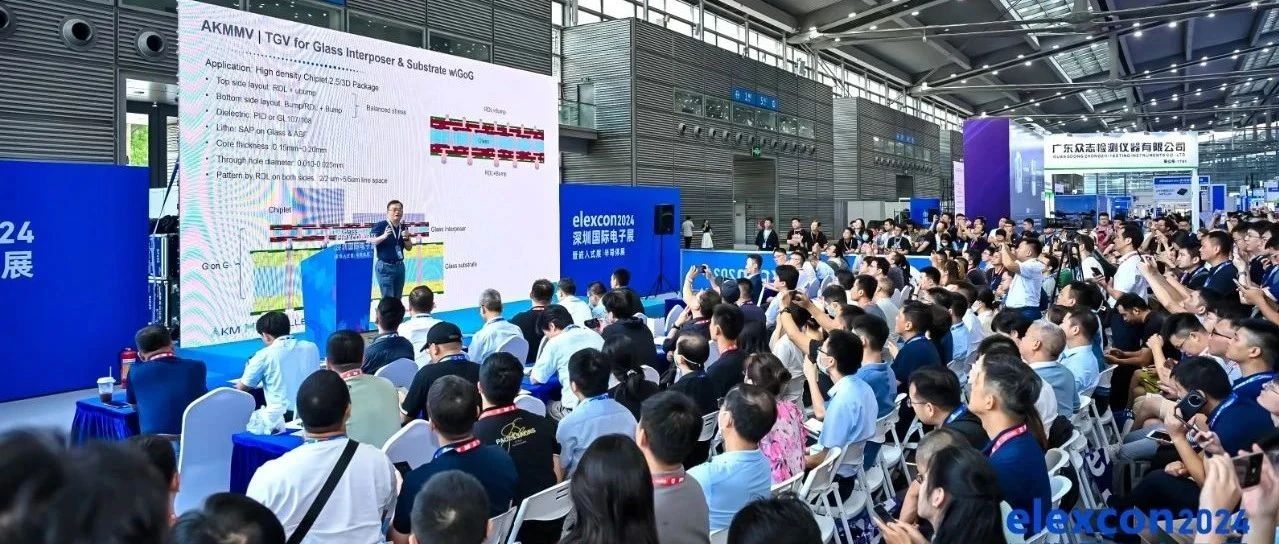
听众注册抢票!中兴微、环旭电子、天成先进、沛顿、AT&S、英特神斯、华大九天、KLA等领衔共探AI时代先进封装!
半导体芯闻· 2025-08-08 10:54
Core Viewpoint - The 9th China System-Level Packaging Conference (SiP China 2025) focuses on advanced packaging, Chiplet technology, and heterogeneous integration in the context of AI, highlighting the need for innovation in packaging solutions to meet the growing demands of AI computing power [2][28]. Group 1: Conference Overview - SiP China 2025 will take place from August 26-28, 2025, at the Shenzhen Convention Center [2]. - The main theme is "Intelligent Gathering of Chip Energy, Heterogeneous Interconnection - Innovation in Advanced Packaging and Chiplet Ecosystem in the AI Era" [2]. Group 2: Key Sessions and Topics - The main forum will cover macro trends and ecosystem building, featuring discussions on AI opportunities and challenges in advanced packaging [5][8]. - Notable speakers include industry leaders from companies like ASE, AT&S, and Siemens, discussing topics such as the trends in fan-out packaging and the integration of advanced packaging technologies [8][10][11]. Group 3: Technical Forums - Technical forums will focus on design innovation and application implementation, with sessions on testing and reliability solutions for micro-systems [15][18]. - Discussions will also include AI-driven Chiplet advanced packaging and the role of advanced packaging substrates in high-performance computing and AI applications [20][22]. Group 4: Participation and Sponsorship - The conference will feature participation from leading semiconductor companies and experts in AI chip design, emphasizing the importance of collaboration in advancing packaging technologies [28]. - Major sponsors include companies like DuPont, Ansys, and Heraeus, indicating strong industry support for the event [23][25].
宁波芯片首富:“豪横”并购,打破美日垄断,一跃成为全球第三
Sou Hu Cai Jing· 2025-07-27 19:32
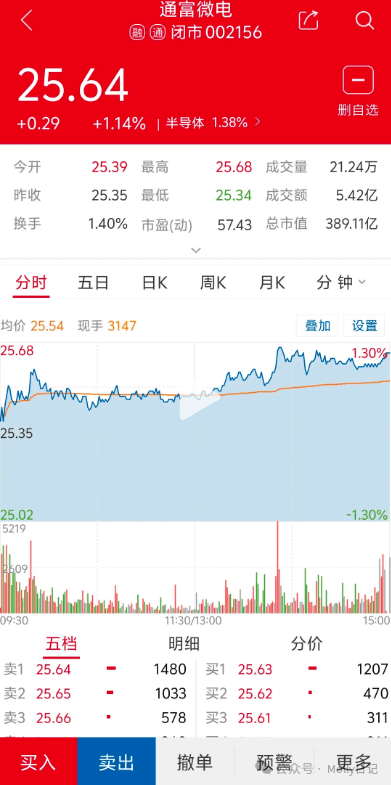
Core Viewpoint - Tongfu Microelectronics has achieved significant growth, becoming a leading player in the semiconductor packaging and testing industry, which has attracted attention from major global companies like AMD [1][11]. Company Development - The history of China's semiconductor packaging industry reflects a struggle against foreign dominance, with early companies relying heavily on imports and facing skepticism about their capabilities [3][5]. - The establishment of Jiangfeng Electronics by Dr. Yao Lijun marked a turning point, as the company successfully produced high-purity sputtering targets, a critical material for chip manufacturing, overcoming significant technological barriers [9][11]. Market Position - Tongfu Microelectronics is now ranked third in China and tenth globally in the semiconductor packaging sector, with AMD entrusting 90% of its CPU packaging business to the company, indicating a strong level of trust in its technological capabilities [11][13]. - More than half of the world's top twenty semiconductor companies are clients of Tongfu Microelectronics, showcasing its growing influence in the industry [13]. Industry Trends - The success of Tongfu Microelectronics and other Ningbo-based companies highlights a broader trend of rapid advancement in China's high-tech sector, with significant achievements in various fields, including hydraulic pumps and nuclear reactor components [15]. - The emergence of Chiplet technology is seen as a potential opportunity for Chinese semiconductor companies to leapfrog traditional manufacturing limitations, allowing for innovative chip designs that can compete with advanced processes [15][16]. Conclusion - The narrative of Tongfu Microelectronics illustrates a shift in perception regarding China's capabilities in semiconductor manufacturing, emphasizing resilience and innovation in the face of international challenges [16].

爱集微:2024年封测行业上市公司收入同比增长21% 先进封装迎发展机遇
Zheng Quan Shi Bao Wang· 2025-07-21 14:38
Group 1 - The report by Aijimi highlights the growth of the semiconductor packaging and testing industry, projecting a total revenue of 87.056 billion yuan for listed companies in 2024, representing a year-on-year increase of 20.69% with a gross margin of approximately 15.67% [1] - The top three companies by total revenue in the packaging and testing sector are Changdian Technology (35.962 billion yuan), Tongfu Microelectronics (23.882 billion yuan), and Huatian Technology (14.462 billion yuan) [1] - The report indicates that the R&D expenditure as a percentage of revenue is highest for Liyang Chip (15.95%), Jingfang Technology (14.12%), and Weicai Technology (13.22%) [1] Group 2 - The advanced packaging market is expected to generate total revenue of $51.9 billion in 2024, with a year-on-year growth of 10.9%, and is projected to reach $78.6 billion by 2028, with a compound annual growth rate (CAGR) of 10.05% from 2022 to 2028 [2] - The global semiconductor packaging market is forecasted to grow from $65.04 billion in 2020 to $118.6 billion in 2027, with a CAGR of 6.6%, while advanced packaging is expected to surpass traditional packaging in market size by 2027 [2] Group 3 - The domestic packaging and testing industry is performing well, with Chinese companies leading in brand strength, diverse teams, international operations, technical capabilities, quality assurance, production scale, and operational efficiency [3] - In 2023, capital expenditure in the advanced packaging sector reached $9.9 billion, primarily from major semiconductor companies and leading OSAT firms, with an expected increase to $11.5 billion in 2024 [3] - The report emphasizes that the growth of the semiconductor packaging market is driven by emerging technologies such as AI, IoT, cloud computing, and big data, which are increasing the demand for chips [3] Group 4 - The global Chiplet market is projected to grow from approximately $3.1 billion in 2023 to around $107 billion by 2033, with a CAGR of 42.5% from 2024 to 2033 [4] - Companies like Intel and TSMC have mature Chiplet technologies, while domestic firms such as Changdian Technology and Tongfu Microelectronics are also advancing in this area [4] - The 2.5D/3D packaging market is expected to expand from $9.4 billion in 2022 to $22.5 billion by 2028, with a CAGR of 15.6%, driven by high-performance computing and AI technologies [4]


关于AI芯片技术的焦点问题:关于先进封装、Chiplet、CPO、液冷等
硬AI· 2025-07-21 07:07
Core Viewpoint - The article discusses the advancements in semiconductor technology, particularly in AI applications, focusing on key trends such as advanced packaging, CPO technology, and cooling solutions to address performance and efficiency challenges in AI accelerators [2][3]. Advanced Packaging Technology - Advanced packaging is evolving through Chiplet technology and hybrid bonding to enhance AI processor performance. The shift from silicon interposers to silicon bridges and organic RDL is aimed at cost reduction, with a future transition to panel-level packaging expected by 2028-2029 [4][5]. - Hybrid bonding is crucial for improving performance by reducing the bonding area through enhanced alignment precision [5]. CPO Technology - CPO (Co-Packaged Optics) is identified as the next-generation connection technology for AI data center servers, effectively reducing power consumption in high-bandwidth scenarios. However, high costs and the complexity of precise assembly remain significant challenges [6]. - The introduction of next-generation 448Gb SerDes technology may increase CPO adoption, as it addresses signal degradation issues by minimizing transmission distances [6]. Client Device Packaging - In client devices, semiconductor manufacturers are carefully selecting between Chiplet and monolithic architectures based on cost and performance considerations. For instance, AMD's latest Radeon series GPU has integrated previously Chiplet-based SRAM into a monolithic design [7]. - Apple's Vision Pro features a Chiplet package with two high-bandwidth custom DRAM chips, showcasing the trend towards specialized high-performance processors [7]. Cooling Solutions - Traditional cooling methods like air and water cooling are becoming less effective due to increasing power density in AI accelerators. Two-phase liquid cooling is emerging as a key solution due to its high energy efficiency and broad applicability [3][9]. - Different cooling technologies are suited for varying thermal densities: air cooling for below 10W/cm², two-phase liquid cooling for 10-100W/cm², and water cooling for above 100W/cm². The next-generation 3nm AI data center GPUs are expected to have thermal densities around 100W/cm², making two-phase liquid cooling particularly relevant [10][11][12].

芯原股份董事长戴伟民:科创板开启公司“芯”篇章
Zhong Guo Zheng Quan Bao· 2025-07-10 20:53
Core Insights - Chipone Technology has successfully established itself as a leading player in the semiconductor IP industry, being recognized as "China's first semiconductor IP stock" after its listing on the STAR Market in August 2020 [1][2] - The company has achieved significant milestones, including being included in the STAR 50 index and successfully completing a refinancing issuance under the "light asset, high R&D investment" recognition standard [1][3] - As of the end of Q1 2025, Chipone's order backlog reached a record high of 2.456 billion yuan, maintaining a high level for six consecutive quarters, indicating strong demand and growth potential [1][3] Company Development - Chipone Technology was founded in 2001 and has evolved from providing standard cell libraries to offering comprehensive chip customization services and semiconductor IP licensing [2] - The company initially aimed for a NASDAQ listing but chose to return to the Chinese capital market, benefiting from the reforms and growth prospects of the STAR Market [2] R&D and Market Position - Chipone ranks first in China and eighth globally in semiconductor IP licensing revenue as of 2024, with a strong focus on high R&D investment, maintaining over 30% of revenue allocated to R&D from 2020 to 2024 [3][4] - The company has successfully developed 5nm system-on-chip (SoC) technology and is executing multiple projects in the 4nm/5nm range, showcasing its advanced design capabilities [3] Strategic Growth and Financing - The recent A-share private placement marks a significant step for Chipone, allowing for more flexible fund allocation towards R&D and innovation, which is crucial for maintaining competitive advantages [4][5] - The company is also exploring mergers and acquisitions to enhance its industry position and foster ecosystem development, leveraging its status as a leading semiconductor IP provider [5][6] AI and Chiplet Technology - The rise of artificial intelligence has created substantial demand for high-performance chips, particularly in the AI ASIC sector, where Chipone has made significant advancements [6][7] - Chipone's neural network processor (NPU) IP has been adopted in 142 AI chip models across various sectors, including servers and automotive, with over 100 million units shipped [6][7] - The company has been proactive in developing Chiplet technology, which allows for modular integration of chips, enhancing performance while balancing costs, particularly in cloud AI and high-end automotive applications [8]

“科创板八条”一周年,多位科创板公司掌门人发声!
Zheng Quan Shi Bao· 2025-06-15 11:34
Core Viewpoint - The "Eight Measures for Deepening the Reform of the Sci-Tech Innovation Board" have shown initial results in supporting technology innovation and enhancing the quality of capital markets for innovative companies since their release nearly a year ago [1][2][3][4][5] Group 1: Company Responses and Initiatives - Ailis has actively responded to the "Eight Measures" by increasing R&D investment and expanding international collaborations, particularly in the global rollout of its product, Furmetin [1] - Baillie Tianheng has initiated a private placement to raise funds for innovative drug R&D, benefiting from the supportive policies for unprofitable companies [2] - Crystal Integration has successfully registered a 2 billion yuan technology innovation bond to enhance financing efficiency and has implemented a second phase of its equity incentive plan to attract and retain talent [2][3] - Tianyue Advanced has launched the world's first 12-inch silicon carbide substrate, achieving profitability with a net profit of 179 million yuan in 2024 [3] - Chip Origin has progressed with its refinancing project under the "light asset, high R&D investment" standard, aiming to accelerate its strategic layout in Chiplet technology [4][5] Group 2: Suggestions for Further Reform - Ailis suggests introducing more long-term capital and enhancing international connectivity for quality sci-tech companies [1] - Baillie Tianheng calls for an optimized regulatory mechanism for unprofitable companies and a diversified refinancing toolset to support long-term R&D enterprises [2] - Tianyue Advanced recommends increasing the institutional inclusivity for core technology companies in capital operations like refinancing and mergers [3] - Chip Origin emphasizes the importance of mergers and acquisitions to enhance industry collaboration and strengthen competitive positioning [4][5]