
万隆精神

Search documents
巴基斯坦专家学者:中国践行万隆精神 为团结全球南方发挥引领作用
news flash· 2025-05-01 13:03
巴基斯坦伊斯兰堡战略研究所4月30日举办以"万隆精神(1955-2025):团结、主权和南南合作70年"为主 题的研讨会,纪念万隆会议召开70周年。与会的巴方专家学者表示,万隆精神至今仍推动着发展中国家 之间的合作,并强调,中国在促进南南合作、和平共处和全球公平发展等方面发挥着引领作用。(新华 社) ...
万隆精神激励全球南方国家联合自强
Ren Min Ri Bao· 2025-04-29 22:31
Core Viewpoint - The Bandung Conference, held from April 18 to 24, 1955, in Indonesia, marked a significant milestone for Asian and African nations in their pursuit of independence and cooperation, promoting principles of sovereignty, peaceful coexistence, and solidarity over the past 70 years [6][9]. Group 1: Historical Significance - The Bandung Conference was the first international meeting of Asian and African countries without Western colonial powers, symbolizing a pivotal moment in the anti-colonial movement [8][9]. - The conference led to the establishment of the "Ten Principles" that guided international relations and fostered cooperation among developing nations [11]. Group 2: Contributions of China - China played a crucial role in the success of the Bandung Conference, with Premier Zhou Enlai's leadership and the principle of "seeking common ground while reserving differences" helping to navigate initial disagreements [10][11]. - The "Five Principles of Peaceful Coexistence" proposed by China were recognized and incorporated into the conference's foundational principles, reflecting a commitment to equality and mutual respect among nations [11]. Group 3: Modern Implications - The recent inauguration of the Jakarta-Bandung High-Speed Railway exemplifies the ongoing collaboration between China and Indonesia, enhancing connectivity and economic development in the region [12]. - The spirit of Bandung continues to inspire contemporary South-South cooperation, emphasizing the importance of harmonious international relations and mutual benefits among developing countries [13].

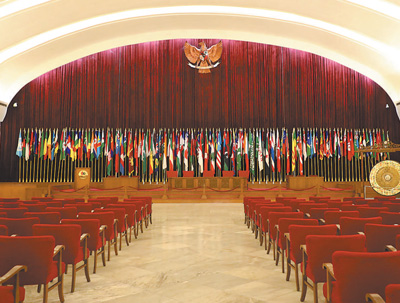
共同的宝贵财富(国际观澜)
Ren Min Ri Bao· 2025-04-29 22:13
万隆会议形成团结、友谊、合作的万隆精神,体现了亚非国家人民摆脱殖民统治,掌握自己命运的决心 和信心,为不结盟运动诞生奠定了基础。中国是万隆精神的重要实践者,一直以实际行动推动全球南方 国家团结合作。中国提出的和平共处五项原则,与万隆会议提出的处理国家间关系的十项原则高度契 合,和平共处五项原则与万隆会议十项原则成为国际社会广泛认可的国际关系基本准则。 当前国际形势下,亚非国家应该继承、发扬万隆精神,并赋予万隆精神新的时代内涵。在各国携手推动 全球发展的进程中,万隆精神激励各国特别是广大发展中国家,通过加强合作共同应对挑战,推动全球 治理朝着更加公正合理的方向发展。 今年是万隆会议召开70周年,这为我们深入思考这一历史事件如何影响全球格局提供了重要契机。 从世界历史角度看,万隆会议是促进亚非拉民族解放运动、加速全球殖民体系瓦解历史进程、促进亚非 人民团结合作的里程碑。在没有西方殖民国家参加的情况下,万隆会议为亚非国家搭建了平台,让各国 能够超越社会制度和历史文化差异坐在一起,增进了解、促进友好合作。会议秉承《联合国宪章》宗 旨,强调各国尊重彼此主权和领土完整,互不干涉内政,为推动国际关系朝着正确方向发展、深化南 ...
国际观察:万隆精神照亮全球南方合作新征程
人民网-国际频道 原创稿· 2025-04-28 06:21
Core Viewpoint - The Bandung Spirit, established during the first Afro-Asian Conference in 1955, continues to serve as a guiding principle for cooperation among Global South countries, emphasizing unity, friendship, and collaboration [1][2]. Group 1: Historical Context and Development - The Bandung Conference laid the foundation for cooperation among Afro-Asian nations, promoting anti-colonialism and the pursuit of national self-determination [1]. - The Bandung Spirit has evolved over 70 years, influencing movements such as the Non-Aligned Movement and the emergence of BRICS, as well as initiatives like the Belt and Road Initiative [1][2]. Group 2: Economic Cooperation and Global Governance - The BRICS mechanism aims to democratize global economic governance, providing alternative financing channels for developing countries through institutions like the New Development Bank [1]. - The Belt and Road Initiative exemplifies the Bandung Spirit in a globalized context, focusing on mutual benefits and enhancing economic vitality in participating countries [2]. Group 3: Current Global Challenges - Developing countries face challenges such as trade barriers, technological monopolies, and financial hegemony, with the Bandung Spirit offering guidance for deepening economic cooperation and sustainable development [3]. - The principles of equality and non-interference advocated by the Bandung Conference remain relevant today, providing a foundation for Global South countries to resist unilateralism and promote multilateralism [2][3]. Group 4: Future Directions - The Bandung Spirit continues to inspire Global South countries to unite in addressing contemporary challenges and pursuing sustainable development goals, particularly in areas like renewable energy and digital economy [3]. - As the international landscape becomes increasingly complex, the Bandung Spirit serves as a beacon for cooperation among developing nations, guiding them towards a more just international order [3].
纪念万隆会议70周年国际研讨会在多哥举行
人民网-国际频道 原创稿· 2025-04-28 05:30
Core Viewpoint - The international academic seminar held in Lome, Togo, commemorates the 70th anniversary of the Bandung Conference, emphasizing the theme of "Rebuilding the World 70 Years After the Bandung Conference: The Path to Unity of the Asia-Africa Community of Shared Future" [1][2] Group 1: Historical Significance - The Bandung Conference is regarded as a historical milestone for global southern countries in their pursuit of fairness and justice [1] - The principles established during the Bandung Conference remain relevant today, highlighting the need for enhanced cooperation among global southern nations [2] Group 2: Current Relevance - The seminar featured discussions on the historical significance and contemporary value of the Bandung spirit, focusing on topics such as China-Africa cooperation and the development of the global south [2] - Participants emphasized that structural inequalities still exist in international trade and financial systems, necessitating closer unity among Asia-Africa countries to pave new paths for development [1]
王毅谈中印尼外长防长“2+2”对话机制首次部长级会议共识
news flash· 2025-04-21 08:07
Group 1 - The core viewpoint of the news is the establishment of the first ministerial-level "2+2" dialogue mechanism between China and Indonesia, marking a new chapter in strategic mutual trust and political security cooperation between the two emerging economies [1] - Both countries emphasize the importance of high-level exchanges and mutual support for each other's core interests and major concerns, while opposing external interference [2] - The two nations agree to deepen cooperation in various fields, including security, trade, and regional economic integration, while promoting a fair and inclusive global economic environment [3] Group 2 - The dialogue mechanism aims to enhance cooperation in areas such as arms control, cybersecurity, and combating transnational crime, reflecting a commitment to a comprehensive and sustainable security outlook [2] - Both countries reaffirm their commitment to maintaining peace and stability in the South China Sea and have signed a maritime security cooperation agreement [2] - The 75th anniversary of diplomatic relations between China and Indonesia presents new opportunities for enhancing mutual trust and strategic collaboration, aiming to amplify the influence of the China-Indonesia community of shared destiny [3][4]