
三不腐

Search documents
深度关注丨筑牢家庭廉洁防线
Zhong Yang Ji Wei Guo Jia Jian Wei Wang Zhan· 2026-01-17 06:40
Core Viewpoint - The construction of family integrity is emphasized as a crucial aspect of promoting a clean political culture and combating corruption within the ranks of party officials [1][17]. Group 1: Family Integrity and Anti-Corruption Measures - The focus on family integrity is seen as a key strategy to cultivate a culture of integrity among party members, with initiatives aimed at educating and guiding officials to maintain a clean family environment [3][11]. - The central government highlights that the family environment of leaders directly impacts the political atmosphere, thus making family integrity a priority in anti-corruption efforts [3][17]. - The integration of family education into the broader anti-corruption framework aims to address issues of corruption stemming from improper family conduct [4][18]. Group 2: Supervision and Accountability - Local authorities are intensifying scrutiny on the "key minority," particularly the relatives of leaders, to prevent the misuse of power for personal gain [4][5]. - The focus is on identifying and addressing new forms of corruption, such as proxy investments and hidden ownership, which often involve family members of officials [5][6]. - The use of technology and data analysis is being implemented to enhance the efficiency of monitoring and identifying potential violations related to family business dealings [6][7]. Group 3: Educational Initiatives and Cultural Promotion - Educational programs are being developed to raise awareness among officials and their families about the importance of maintaining integrity and avoiding corruption [10][11]. - The promotion of traditional cultural values related to family integrity is being leveraged to foster a positive atmosphere and encourage ethical behavior among officials [11][19]. - Local governments are organizing various activities, such as workshops and seminars, to reinforce the significance of family integrity in public service [10][11].

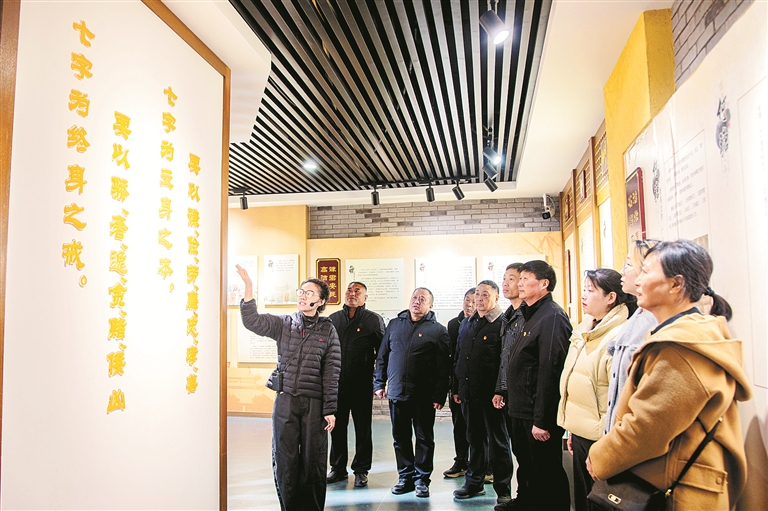
坚决把党的自我革命要求落实到位 推动我区政治生态实现全面净化根本重塑
Xin Lang Cai Jing· 2026-01-17 01:15
Core Viewpoint - The meeting emphasizes the importance of deepening the understanding of anti-corruption education and the necessity of maintaining a strict approach to governance and party discipline to ensure a clean political environment in Guangxi [1][2][4]. Group 1: Importance of Anti-Corruption Education - The meeting highlights the need to analyze the root causes of corruption and the evolution of minor mistakes leading to major issues, reinforcing the importance of anti-corruption education [2]. - Leaders are urged to recognize the urgency of anti-corruption efforts and maintain a clear and firm stance against corruption, reflecting the central government's unwavering commitment to strict governance [2][3]. Group 2: Key Issues Identified - Six critical issues are identified for reflection, including the dangers of deviating from the "two safeguards," the erosion of party character, and the violation of the party's organizational principles [3]. - The meeting stresses the importance of maintaining political loyalty, theoretical grounding, and a people-centered approach to prevent the loss of communist ideals [3]. Group 3: Responsibilities and Measures - The meeting calls for enhanced accountability in party governance, emphasizing the need for a complete responsibility chain among party leaders to foster a strict atmosphere and promote positive conduct [4]. - It is essential to implement corrective measures based on the lessons learned from corruption cases, ensuring that political tasks are prioritized and effectively addressed [4]. Group 4: Cultural and Systemic Changes - The meeting advocates for the establishment of a robust system to supervise and restrict power, ensuring transparency and accountability in decision-making processes [4]. - There is a focus on cultivating a culture of integrity and moral education among party members to prevent corruption and promote ethical behavior [4].
砥砺前行担使命 忠诚履职谱新篇
Xin Lang Cai Jing· 2026-01-16 18:01
Group 1 - The core viewpoint emphasizes the importance of strengthening the party's work style and anti-corruption efforts, with a focus on practical implementation and education [1][2][3] - The organization is committed to a high-pressure approach to combat corruption, targeting key areas and individuals while promoting a culture of integrity [3][4] - Continuous efforts are made to address issues related to public welfare and corruption, ensuring that the public's needs and expectations are met [5][6] Group 2 - The organization is implementing a comprehensive strategy to tackle corruption and misconduct, integrating various methods and approaches to enhance effectiveness [2][3][4] - A significant focus is placed on improving the quality and efficiency of case handling, with a commitment to strict management and supervision [9][10] - The organization is actively engaging in training and capacity building to strengthen its personnel and improve overall operational effectiveness [8][9]
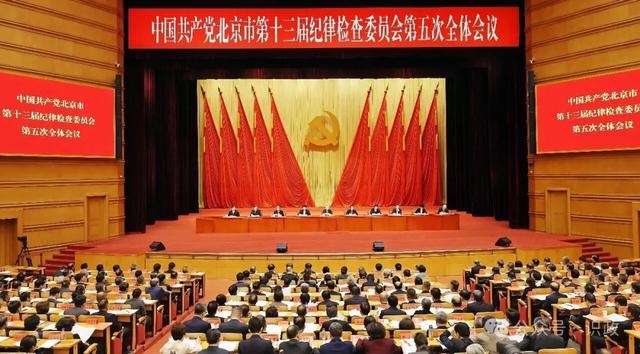
市纪委全会召开,尹力部署我市全面从严治党工作
Xin Lang Cai Jing· 2026-01-16 12:56
一要毫不放松强化 政治监督,确保党中央重大决策部署落实到位。围绕落实党中央决策部署、 实现 "十五五"时期目标任务,紧盯优化提升首都功能、深化京津冀协同发展、推动高质量发展、全面深化改 革开放、推进共同富裕、加强生态环境保护、统筹发展和安全等重点工作,加强具体化、精准化、常态 化监督检查。把树立和践行正确政绩观作为监督的重要内容,推动党员干部始终干在实处、务求实效。 加强对中央巡视和中央生态 环境保护 督察反馈 问题 整改情况的监督检查,以整改实效促进工作整体提 升。严明政治纪律和政治规矩 , 严防 "七个有之"。严查选人用人方面的不正之风和腐败问题,真正把 忠诚可靠、表里如一、担当尽责的好干部选出来、用起来。 二要毫不放松 贯彻中央八项规定精神, 扎实 推进作风建设常态化长效化。坚持党性党风党纪一起抓, 常态化开展政治忠诚、理想信念和纪律作风教育,引导党员干部以坚强党性涵养优良作风。 从严从实 纠治 "四风",深化整改整治。各级党组织要定期研究作风建设,完善经常性发现问题、解决问题机 制。狠抓群众身边不正之风和腐败问题集中整治,下更大力气惩治"蝇贪蚁腐"。聚焦就业、社保、住 房、医疗、执法司法等领域深化治理 ...
持之以恒 推进纪检监察工作高质量发展
Xin Lang Cai Jing· 2026-01-15 22:30
Core Viewpoint - The meeting emphasized the need for provincial disciplinary inspection and supervision agencies to deeply understand and implement the spirit of the 20th Central Commission for Discipline Inspection's fifth plenary session, focusing on high-quality development in anti-corruption efforts [1][2] Group 1 - The meeting highlighted the importance of strengthening political supervision, particularly in relation to major deployments and projects outlined in the "14th Five-Year Plan," ensuring adherence to political and election discipline [1] - There is a commitment to deepen the integrated approach of "three no-corruption," focusing on key areas, issues, and targets to maintain a high-pressure deterrent against corruption [1] - The use of digital empowerment is emphasized to enhance the effectiveness of case handling and supervision, promoting a comprehensive approach to corruption governance [1] Group 2 - The meeting called for practical measures to align with the "three more" important requirements and the key tasks outlined in the work report, ensuring that every deployment has corresponding implementation [2] - There is a focus on creatively implementing these measures in accordance with local conditions in Sichuan, aiming for a more systematic and sustainable approach to disciplinary inspection and supervision [2]
浙江用AI抓出贪官
Zhong Guo Ji Jin Bao· 2026-01-14 16:09
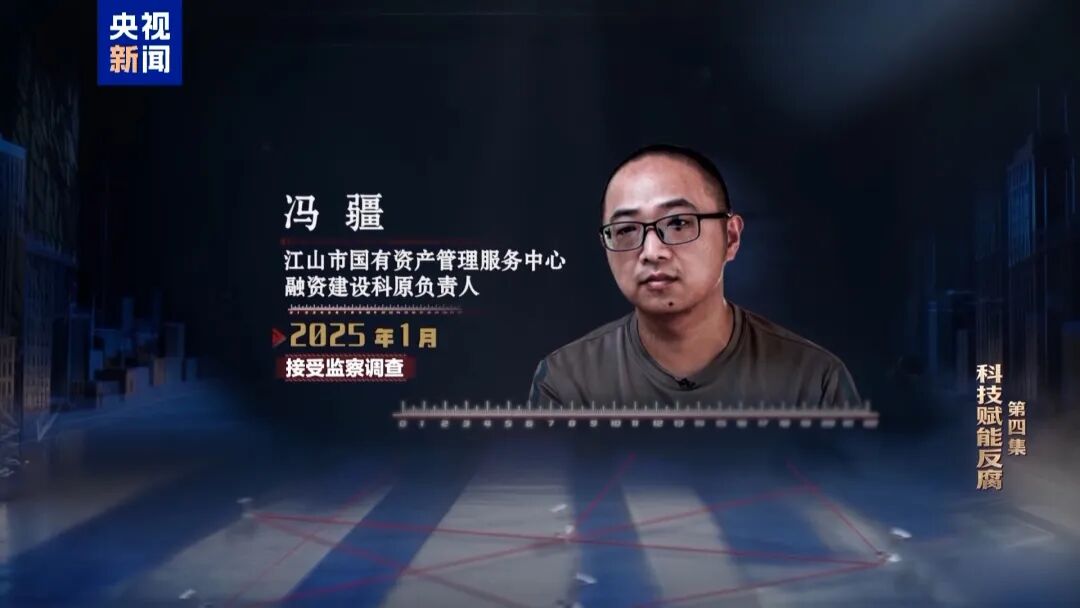
Core Viewpoint - The documentary highlights the use of intelligent supervision systems in combating corruption in public bidding processes, showcasing the case of Feng Jiang, a former official involved in corrupt practices, and how technology has enhanced the detection and prevention of such activities [1][2][4]. Group 1: Case Analysis - Feng Jiang, former head of the financing construction department at the Jiangshan State-owned Assets Management Service Center, was involved in corrupt practices related to public bidding [4]. - The intelligent supervision system identified anomalies in the bidding process for a city lighting project, leading to the discovery of collusion and bribery [6][10]. - The system's data analysis revealed that the winning bidder had no significant technical advantage, indicating potential manipulation in the bidding process [6][10]. Group 2: Technology and Corruption Prevention - The intelligent supervision system utilizes big data and AI to analyze past cases, identifying patterns of corruption and providing alerts for potential issues in current projects [17][19]. - The system acts as a filter, allowing for the rapid identification of irregularities in bidding processes, significantly improving the efficiency of corruption investigations [19][21]. - The integration of technology into regulatory frameworks enhances the ability to detect and address corruption, creating a more robust governance structure [26][29]. Group 3: Impact on Governance - The system has led to a significant increase in the detection of corruption cases, with improved accuracy in identifying issues [15][27]. - It promotes a culture of accountability by ensuring that any flagged issues are addressed and results are reported back to the system [25][26]. - The intelligent supervision system also includes features for proactive education and reminders for public officials, aiming to prevent corruption before it occurs [27][29].
浙江用AI抓出贪官
中国基金报· 2026-01-14 16:02
Core Viewpoint - The article discusses the implementation of a smart regulatory system in Zhejiang Province, which enhances the supervision of bidding processes and helps uncover corruption cases, exemplified by the case of Feng Jiang, a former official involved in corrupt practices [2][4][27]. Group 1: Case Analysis - The case of Feng Jiang illustrates how the smart regulatory system identified potential corruption through data analysis, revealing irregularities in the bidding process for a city lighting project [6][10]. - The system generated risk alerts based on data collisions, indicating possible collusion and unfair practices among bidders, which led to further investigations by the local disciplinary inspection and supervision authorities [12][14]. - The analysis of the bidding process showed that the winning company had no significant advantages but received disproportionately high scores, suggesting manipulation in the evaluation process [10][25]. Group 2: System Functionality - The smart regulatory system utilizes big data and AI to analyze past cases, identifying patterns of corruption and irregularities in bidding processes, thus improving the accuracy and efficiency of investigations [29][33]. - The system acts as a filter, processing data through various models to detect anomalies, which significantly enhances the ability to uncover corruption compared to traditional methods [31][35]. - Feedback from case investigations continuously improves the system, allowing it to adapt and refine its data models based on new findings and emerging corruption tactics [36][38]. Group 3: Impact on Governance - The integration of technology and regulatory frameworks has led to a more proactive approach in identifying and addressing corruption, thereby reducing the opportunities for misconduct [45][52]. - The system's ability to send automated integrity reminders to public officials at critical stages of the bidding process aims to foster a culture of compliance and ethical behavior [47][49]. - Overall, the initiative seeks to eliminate the conditions that allow corruption to thrive, thereby enhancing governance capabilities and promoting a more transparent public sector [51][52].

视频丨年度反腐大片第四集《科技赋能反腐》今晚播出
Yang Shi Xin Wen· 2026-01-14 00:31
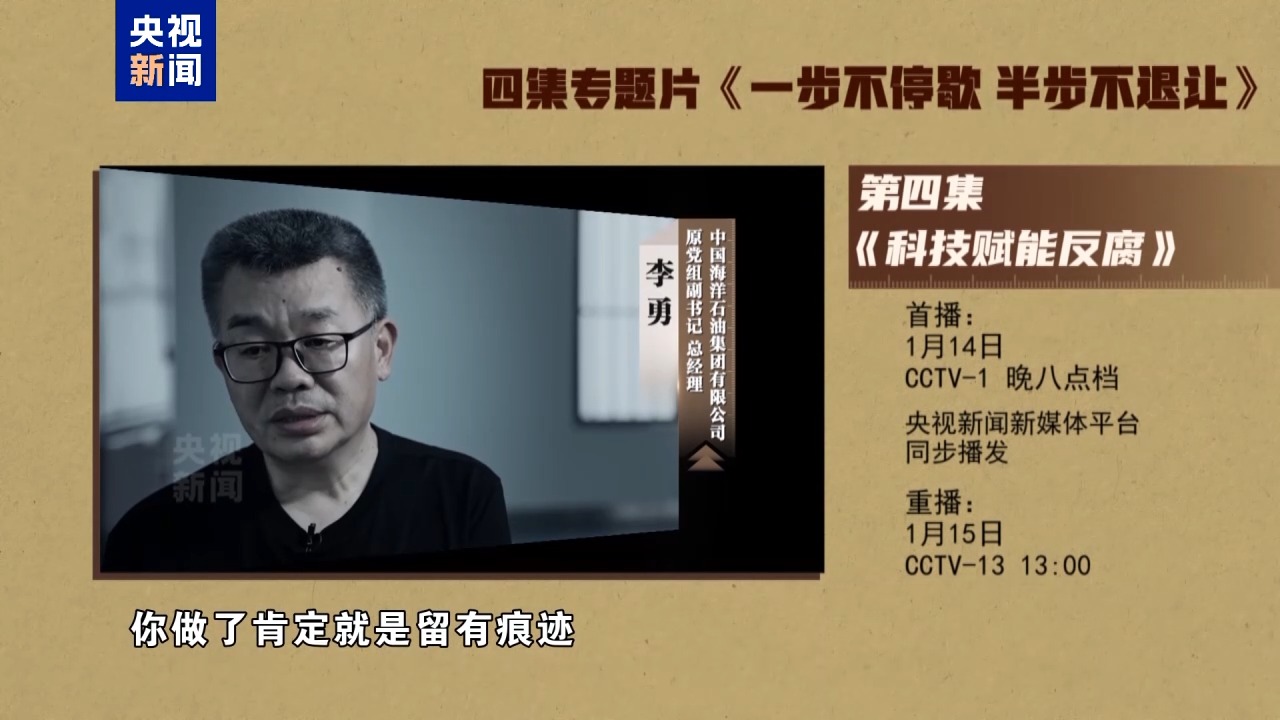
Group 1 - The article emphasizes the deepening understanding of the laws of anti-corruption struggles under the leadership of Xi Jinping, highlighting the expansion of anti-corruption achievements and the development of a unique Chinese path to combat corruption [1] - The television documentary "Step Forward Without Hesitation, Step Back Without Retreat" focuses on the use of technology in anti-corruption efforts, showcasing how information technology is employed to identify and address corruption issues effectively [1] - The article mentions the increased efforts by disciplinary inspection and supervision agencies to combat cross-border corruption, utilizing information technology to uncover corrupt activities even outside the country [1] Group 2 - Ouyang Baiqing, Deputy Director of the International Cooperation Bureau of the Central Commission for Discipline Inspection, states that all overseas evidence is obtained, and illicit funds are fully recovered, emphasizing the need to be vigilant against new forms of corruption such as bribery through virtual currencies [5] - The article discusses the transformation of public power supervision through digitalization, which is becoming an essential method for promoting the "three no-corruption" strategy [9] - Xu Huibo, a member of the Jiangshan Municipal Commission for Discipline Inspection, highlights the importance of a system that aggregates intelligence from numerous sources, enhancing the effectiveness of anti-corruption efforts [13]
让腐败分子没有藏身之地
Zhong Yang Ji Wei Guo Jia Jian Wei Wang Zhan· 2026-01-13 23:45
Group 1 - The importance of maintaining a high-pressure stance against corruption is emphasized, with a focus on eliminating corrupt elements and ensuring they have no place to hide [1] - The current situation of the anti-corruption struggle is described as severe and complex, with significant challenges remaining in eradicating the conditions that foster corruption [1] - The need for comprehensive case sourcing and focusing on key areas is highlighted, utilizing various methods such as supervision, reporting, and case investigations to expand sources of information [1] Group 2 - The establishment of a "room-group-local" joint case handling mechanism is identified as crucial for addressing major complex cases in the transportation sector, enhancing case handling quality and efficiency [2] - Continuous improvement of the joint case handling mechanism is planned, with an emphasis on collaboration with local supervisory bodies and optimizing multi-level coordination [2] - The integration of digital and intelligent supervision models is being promoted to enhance oversight in areas such as bidding, construction, and asset management [3] Group 3 - The focus on preventing corruption in higher education institutions is emphasized, shifting from post-event investigations to preemptive measures and real-time controls [4] - The need for a systematic approach to address corruption in key areas is highlighted, with efforts to analyze typical cases and identify underlying vulnerabilities in power operations and regulatory blind spots [4] - The integration of measures such as separation of evaluation and responsibility into bidding policies is aimed at closing institutional loopholes and promoting governance reforms [4]
自我革命这根弦必须绷得更紧——写在二十届中央纪委五次全会召开之际
Ren Min Ri Bao· 2026-01-12 00:27
Core Viewpoint - The article emphasizes the importance of the Communist Party's self-revolution and strict governance to ensure effective leadership and promote economic and social development in China. Group 1: Party Governance and Self-Revolution - The Central Committee, led by Xi Jinping, is committed to strict party governance and self-revolution to address corruption and improve party conduct, ensuring progress in national affairs [1][2]. - In 2025, the implementation of the Central Eight Regulations is highlighted as a key task for party building, aiming to maintain discipline and improve party style [1][2]. Group 2: Education and Institutional Measures - The emphasis on deepening the education of the Central Eight Regulations is seen as a way to consolidate the achievements of party discipline education and promote strict governance [2][3]. - New regulations, such as the revised "Regulations on Rural Cadres' Integrity," are introduced to support grassroots officials in performing their duties with integrity [3][4]. Group 3: Anti-Corruption Efforts - In 2025, significant efforts were made to combat corruption, with 840,000 cases of misconduct reported, resulting in the recovery of 66.62 billion yuan for the public [7][8]. - The article notes that the fight against corruption is ongoing, with a focus on addressing both minor and major corruption issues to maintain public trust [9][10]. Group 4: Political Supervision and Accountability - Political supervision is emphasized as a crucial measure to ensure adherence to the Central Committee's leadership and to promote accountability among party members [6][9]. - The article discusses the importance of establishing a correct view of political achievements, linking it to the overall development of the party and the nation [5][10]. Group 5: Cultural and Systemic Reforms - The promotion of a culture of integrity is identified as a foundational project for advancing anti-corruption efforts, with plans for a three-year action plan to enhance integrity culture [13][14]. - The article highlights the need for continuous reform and innovation in the mechanisms of power operation and supervision to combat new forms of corruption effectively [14][15].