二级关税

Search documents
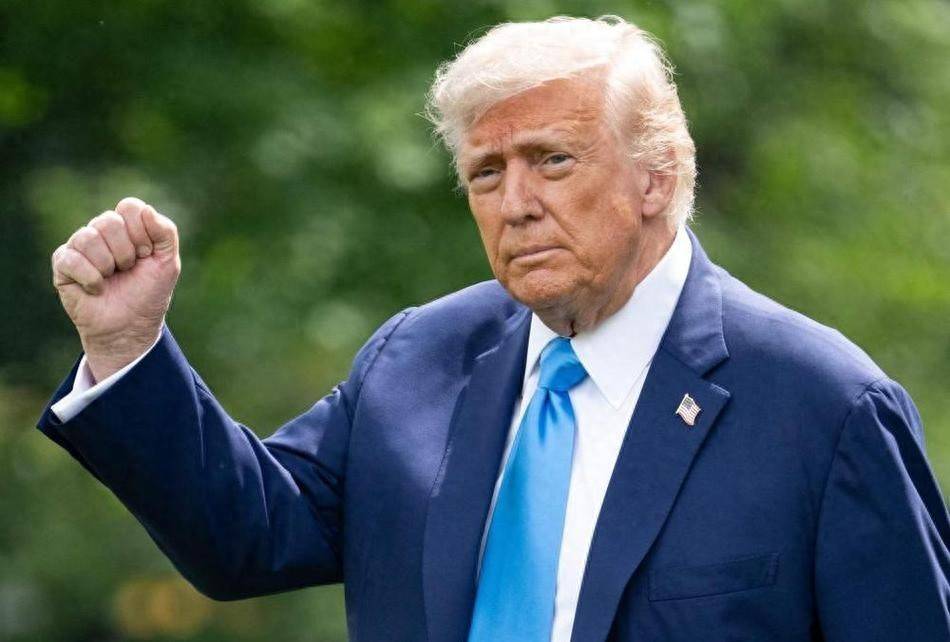
深夜突发!特朗普:关税加到50%!
中国基金报· 2025-08-06 15:03
Core Viewpoint - The article discusses the recent decision by President Trump to impose an additional 25% tariff on Indian goods, raising the total tariff rate to 50%, primarily due to India's imports of Russian oil [3][5][6]. Group 1: Tariff Imposition - The White House announced on August 6 that an additional 25% tariff will be imposed on India, increasing the total tariff rate to 50% [3]. - This new tariff is part of Trump's strategy to penalize countries purchasing Russian oil, with India being a significant target due to its imports [5][6]. - The new tariff will take effect 21 days after the announcement [5]. Group 2: Market Reactions - Following the announcement, Indian stock index ETFs fell to intraday lows, oil prices increased, and the Indian rupee weakened significantly against the US dollar [8]. Group 3: Geopolitical Context - Trump's dissatisfaction with President Putin is highlighted, as he set a deadline for a ceasefire in Ukraine, threatening potential sanctions against countries buying Russian energy [10]. - Allies of Ukraine argue that India's energy purchases are supporting the Russian economy and undermining pressure on Moscow to end the ongoing conflict [13]. Group 4: India's Response - The Indian government criticized the targeted measures from the US and EU, noting that those criticizing India are also engaged in trade with Russia [14][15]. - Indian Prime Minister Modi is scheduled to visit China from August 31 to September 1, coinciding with the heightened tensions over tariffs and energy purchases [17].


惩罚来了!特朗普对印度再追加25%重税!
Jin Shi Shu Ju· 2025-08-06 14:46
Group 1 - The U.S. President Trump announced a 25% additional tariff on Indian goods due to India's purchase of Russian energy, following unsuccessful talks between Washington and Moscow regarding Ukraine [2] - This new tariff will be implemented on top of an existing 25% country-specific tariff and will take effect within 21 days [2] - The announcement led to a decline in the iShares MSCI India ETF and a spike in oil prices, while the Indian Rupee weakened against the U.S. dollar [2] Group 2 - Kremlin stated that the meeting between Putin and U.S. envoy Weitkov resulted in an exchange of "signals," but did not provide detailed information [3] - The discussions lasted nearly three hours and were described as "beneficial and constructive," focusing on the prospects of U.S.-Russia relations [3] - Trump indicated that additional tariffs could be imposed on other countries purchasing energy from Russia, similar to the situation with India [3]
搬起石头砸自己的脚?专家警告:制裁俄罗斯将重创美国经济!
Jin Shi Shu Ju· 2025-08-06 10:46
Core Points - The article discusses President Trump's plan to impose new tariffs on countries purchasing Russian oil to pressure Russia into peace with Ukraine [1][2] - Analysts warn that these tariffs could negatively impact the U.S. economy, leading to higher consumer prices, lower profit margins for U.S. companies, and potentially increased oil prices [1][2] Group 1: Tariff Implementation - Trump has set a new deadline for imposing tariffs on countries buying Russian oil, with a potential 100% tariff if peace is not achieved within a specified timeframe [1] - The tariffs are expected to lead to increased inflation in the U.S. and higher import costs for American businesses [1] Group 2: Impact on India - India has become a significant target for Trump's tariffs due to its high demand for Russian oil, which constitutes 36% of its oil market [1][2] - Trump has vowed to significantly increase tariffs on India within 24 hours due to its continued purchases of Russian oil [2] Group 3: Global Oil Market Dynamics - Analysts express skepticism about the effectiveness of the proposed tariffs, suggesting they may cause more harm to the U.S. economy than intended [2] - The global oil market is heavily influenced by Russian exports, which account for nearly 5% of global consumption, making it difficult to replace [2]
OPEC+或考虑新一轮增产 特朗普关税将如何影响市场
Sou Hu Cai Jing· 2025-08-05 17:01
Group 1 - OPEC and non-OPEC countries agreed to increase oil production by 547,000 barrels per day in September, leading to a decline in international oil prices by over 5% in two days due to concerns over supply-demand balance and tariff threats [1][2] - OPEC+ supplies about 45% of the world's oil and has been increasing production since April to regain market share after pandemic-related cuts, with oil prices rebounding nearly 10% from April's low due to seasonal demand [2] - Analysts are closely monitoring OPEC+'s unused production capacity, with no clear signals yet on whether this capacity will be deployed, despite the potential for further supply increases [2] Group 2 - The U.S. tariffs on imports from various economies, including Canada and India, could impact global economic growth, which is projected to slow from 3.3% last year to 3% by 2025, affecting energy demand [3] - The U.S. non-farm payroll report showed a disappointing increase of 73,000 jobs in July, raising concerns about future economic performance, while crude oil inventories unexpectedly rose by 7.7 million barrels, indicating weaker domestic demand [3] - The potential for secondary tariffs on Russian oil buyers poses a significant risk to supply, with predictions that it could affect 2.75 million barrels per day of Russian maritime oil exports [3][4] Group 3 - India's oil imports from Russia increased to approximately 1.75 million barrels per day in the first half of the year, despite pressure to change policy, with indications that India is seeking to diversify its oil sources [5] - India's largest refiner, IOC, has recently purchased 7 million barrels of oil from the U.S., Canada, and the Middle East, indicating a shift in strategy to replace Russian oil [5]
重启跌势!OPEC+或考虑新一轮石油增产
第一财经· 2025-08-05 01:35
Core Viewpoint - The article discusses the recent decisions made by OPEC+ to increase oil production and the potential implications of U.S. tariffs on oil prices and supply dynamics in the global market [2][4][7]. OPEC+ Production Increase - OPEC+ agreed to raise oil production by 547,000 barrels per day in September, marking the end of the current phase of production recovery [4]. - Since April, OPEC+ has increased production by a total of approximately 2.5 million barrels per day, which accounts for about 2.4% of global demand [4]. - Despite the increase in production, oil prices have rebounded nearly 10% from their 2025 low in April, partly due to seasonal demand [5]. Economic and Tariff Concerns - The article highlights concerns regarding U.S. tariffs imposed by President Trump on imports from various economies, which could impact global economic growth and energy demand [7]. - The IMF forecasts a slowdown in global economic growth from 3.3% last year to 3% by 2025, influenced by Trump's trade policies [7]. - Recent U.S. employment data showed a lower-than-expected increase in non-farm payrolls, raising concerns about future economic performance [7]. Secondary Tariff on Russian Oil - Investors are wary of potential U.S. sanctions on Russian oil, with a significant date being August 8, when Trump threatened to impose a 100% secondary tariff on Russian oil buyers [9]. - This could jeopardize approximately 2.75 million barrels per day of Russian oil exports, leading to potential price increases due to supply constraints [9]. - India has been increasing its imports of Russian oil, but recent reports suggest a shift towards sourcing oil from the U.S., Canada, and the Middle East to mitigate risks associated with sanctions [9].
国金地缘政治周观察:俄乌冲突与美国二级关税情景预判
SINOLINK SECURITIES· 2025-08-03 15:14
Group 1: US-EU Trade Agreement - The US and EU reached a trade agreement that includes a 15% tariff on EU products entering the US, while the EU will invest $600 billion in the US and purchase $750 billion worth of US energy products[2] - The agreement aims to fulfill multiple objectives for Trump, including fiscal, investment, industrial, and promotional goals, but its implementation remains uncertain due to lack of internal coordination within the EU[2] Group 2: US Tariff Structure - The US "reciprocal tariffs" categorize countries into four tiers: 10% for surplus countries like the UK, 15% for allies and developing economies, around 20% for countries with trade deficits like Vietnam, and over 25% for countries without agreements, such as Myanmar[2] - The implementation of these tariffs is set to take effect on August 1, with potential adjustments based on ongoing negotiations[2] Group 3: US-Russia Relations - The US threatens to impose a 100% secondary tariff on countries purchasing Russian oil, targeting primarily China and India, as Russia gains ground in the Ukraine conflict[3][4] - The US aims to leverage these tariffs to pressure China and India in trade negotiations, while also attempting to curb Russian military advances in Ukraine[3][4] Group 4: Geopolitical Implications - The ongoing conflict in Ukraine has seen Russia occupy significant territory, with a reported increase of 634 square kilometers in July alone, raising concerns for US and European interests[3][19] - The US's military response includes deploying nuclear submarines near Russia, indicating a heightened level of military deterrence amid escalating tensions[29] Group 5: Future Considerations - The likelihood of the secondary tariffs being implemented is low, with a more probable scenario being a delay or selective application of tariffs on specific products[24] - Key upcoming events include monitoring the implementation of the reciprocal tariffs and the potential for further deterioration in US-Russia relations, particularly by August 8[28]

特朗普公布全球关税,中国不在名单上,两组数字暴露他的下一步棋
Sou Hu Cai Jing· 2025-08-03 07:48
Group 1 - The absence of China from the U.S. global tariff list is a strategic political maneuver by the Trump administration, aimed at maintaining leverage while avoiding backlash from American companies reliant on Chinese imports [3][5] - The U.S. has a significant dependency on Chinese exports, particularly in machinery and electronics, which account for 58% of exports to the U.S., indicating that imposing tariffs could adversely affect major U.S. companies like Apple and Tesla [5][19] - The tariff rates imposed on other countries reflect a blend of economic pressure and geopolitical strategy, with higher rates for countries like Syria and Myanmar, and lower rates for allies like Japan and South Korea [8][11] Group 2 - The U.S. trade deficit with China decreased by 12% in the first half of 2025, while deficits with the EU and India increased by 18% and 23% respectively, showcasing a targeted approach to trade relations [11] - The "secondary tariff" mechanism proposed by the Trump administration aims to impose additional tariffs on countries purchasing energy from Venezuela and Russia, indicating a shift in using tariffs as geopolitical tools [12][13] - The investment-for-tariff model is emerging, where countries like South Korea and Japan are making substantial investments in the U.S. to secure lower tariff rates, creating a network of economic dependencies [15]
谈判已经结束,中美没有签字,美财长空手回国,转身请特朗普出山
Sou Hu Cai Jing· 2025-08-02 05:18
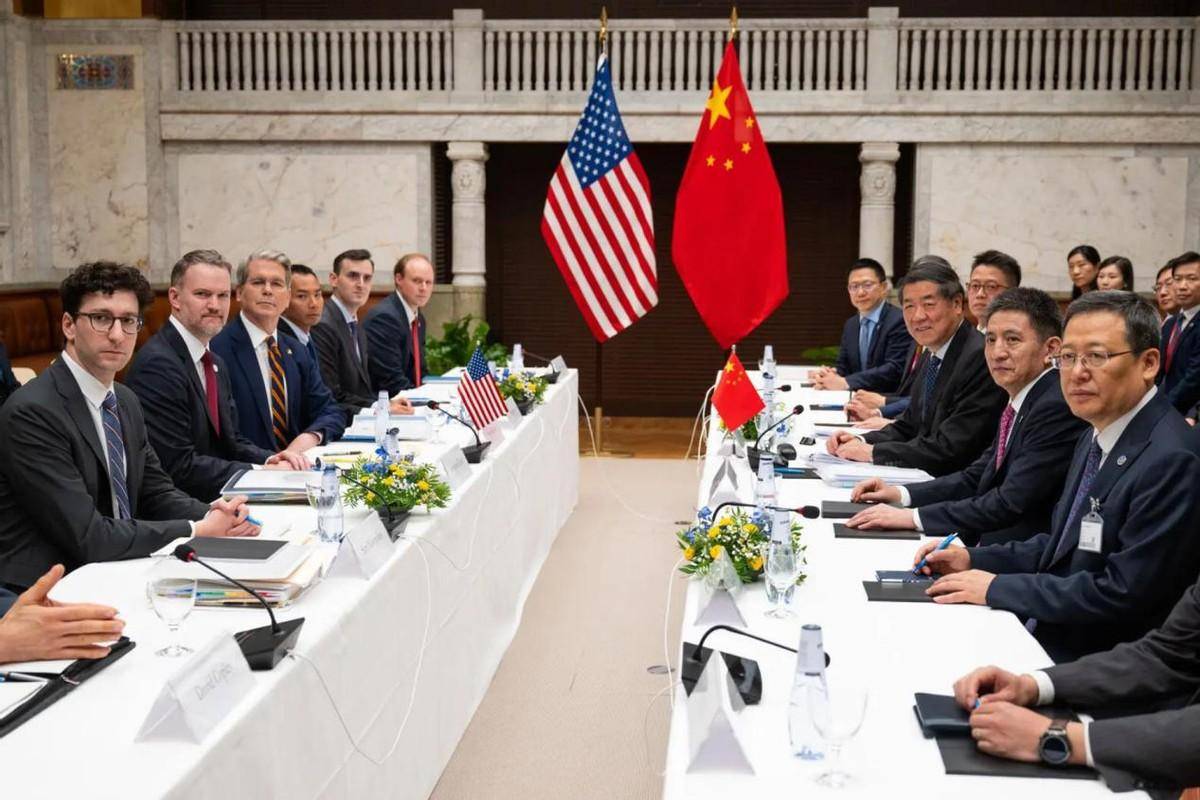
Group 1 - The core objective of the Trump administration is to pressure China regarding its reliance on oil from Russia and Iran, which is closely tied to ongoing US-China trade negotiations [1][3] - The recent US-China economic talks in Sweden did not result in a substantial agreement, highlighting the complexities of the relationship and the unreliability of verbal commitments [3][7] - The Trump administration's strategy aims to force China to purchase more US oil to alleviate the US trade deficit, leveraging the higher prices of US oil compared to Russian and Iranian oil [3][5] Group 2 - China maintains a firm stance on its right to choose oil suppliers and refuses to be constrained by US demands, emphasizing its independence in energy sourcing [5][7] - The Trump administration's approach mirrors previous trade agreements with Japan, the UK, and the EU, where countries accepted US tariffs in exchange for commitments to purchase US goods and energy [5][7] - Following the Sweden talks, Trump may delay decisions on extending tariff relief until after August 12, potentially waiting for Russia's response regarding the Ukraine conflict [7]
乌克兰高官预判:中国将在欧美贸易与俄罗斯石油之间做出选择
Sou Hu Cai Jing· 2025-07-31 16:06
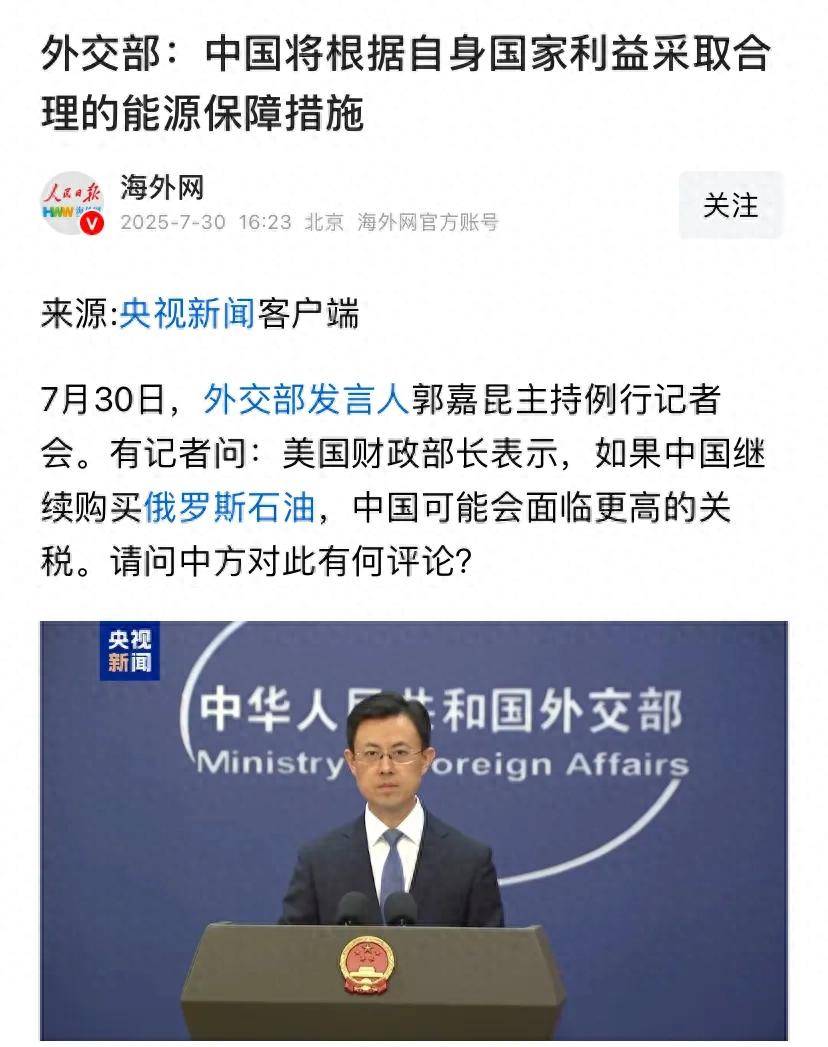
7 月 30 日,美国财政部长贝森特披露,在瑞典与中方进行经贸磋商期间,双方谈及了中国购买俄罗斯石油的议题。 贝森特表示,鉴于俄罗斯始终未停止对乌克兰的战事,美国正将制裁俄罗斯石油作为推动停火的手段,为此他提出警 告:那些购买俄罗斯石油的国家,或将面临 100% 的二级关税。 他还提到,中方认为购买俄罗斯石油是主权范围内的事,而美国虽无意侵犯中国主权,但言下之意,中国若继续购 买,恐怕就得承担这笔额外的关税了。 7月30日,乌克兰总统办公室主任顾问波多里亚克的看法很有代表性。 他预计,美国此举等于迫使中国在与西方贸易和与莫斯科贸易之间做出选择。 因为一旦美国对俄罗斯石油实施二级关税,欧洲随后很可能跟进,那么对购买俄罗斯石油的国家就会有一种西方集体 联合施压的压力。 基于此,波多里亚克判断,在美国与欧盟缔结贸易协定后,双方有望恢复互利合作关系。这一点对华盛顿而言尤为重 要,毕竟美国与中国的谈判仍在推进过程中。 对此我们外交部发言人说,中国将根据自身国家利益采取合理的能源保障措施,并提到反对胁迫与施压。 由于美国人把关税谈判和俄乌战争联系起来,因此乌克兰方面对中国的态度就非常重视。 他进一步指出,在这样的背景下, ...
切断中俄石油贸易,特朗普射出毒箭,美包机将直飞北京,情况危险
Sou Hu Cai Jing· 2025-07-31 14:08
特朗普上任后不久,便开始对俄罗斯采取一系列经济制裁措施,尤其是在石油贸易领域,目标直指中俄之间那条至关重要的石油管道。2025年3月底,他通 过电话采访公开威胁,计划对购买俄罗斯石油的国家征收25%至50%的二级关税,尤其是针对中国和印度这些重要的进口国。他还表示,如果俄罗斯不参与 乌克兰和平谈判,他将采取更为严厉的措施。 特朗普的这一系列威胁,使得全球石油市场出现了不小的波动。布伦特原油价格一度突破每桶90美元,市场的巨大不确定性让油价波动加剧。分析师认为, 如果俄罗斯的石油出口突然消失,全球市场将面临严重缺口。沙特和阿联酋能够补充一部分供应,但仍然远远不够。更为严重的是,美国自身也面临压力, 油价上涨将加剧通胀,而美国民众的反感情绪可能使特朗普的政策受到更多阻力。 特朗普此前也曾威胁对委内瑞拉石油买家征收25%关税,但这一威胁至今未付诸实施,中国依然是委内瑞拉的最大石油买家。对于特朗普的威胁,俄罗斯方 面并未过于担心。克里姆林宫发言人佩斯科夫表示,需要时间对特朗普的声明进行分析,但并没有对此表示过于紧张。外长拉夫罗夫更是直言这是经济霸 凌,俄罗斯将与中国和印度进一步加强合作。 然而,实际情况与特朗普的预期 ...