
交通拥堵

Search documents
今日晚高峰广州中心城区或持续中度至严重拥堵
Xin Lang Cai Jing· 2025-12-31 00:19
Group 1 - The core viewpoint of the articles highlights the expected surge in traffic and passenger flow in Guangzhou during the upcoming New Year holiday, with an estimated total of 17.65 million people traveling in and out of the city and over 8.61 million vehicle trips on the highway network [1][2] Group 2 - The traffic forecast indicates that the road network may experience "moderate to severe congestion" during peak hours on December 31, particularly from 5 PM to 7 PM, with major roads like Tianhe Road and Zhongshan Avenue likely to face heavy traffic [1] - The holiday period will see stable overall traffic operation within the city, with popular tourist attractions and commercial areas experiencing high foot traffic, especially around events such as concerts and themed markets [2] - Three peak travel waves are anticipated: the outbound peak on December 31 from 4 PM to 9 PM, the first day of the holiday on January 1 from 9 AM to 12 PM, and the return peak on January 3 from 4 PM to 8 PM [2]
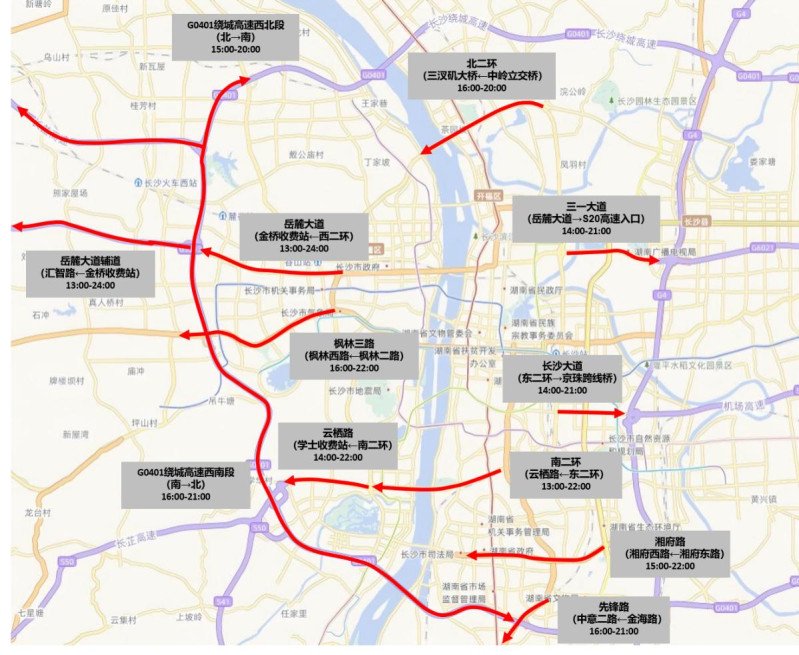
长沙元旦假期出行,最新避堵攻略来了
Xin Lang Cai Jing· 2025-12-29 08:55
Core Insights - The traffic management department of Changsha has analyzed historical traffic data to provide guidance for the New Year's holiday travel from January 1 to January 3, 2026, indicating expected congestion patterns and peak travel times [1] Group 1: Traffic Patterns - The highest traffic pressure is expected on December 31 from 16:00 to 19:00, coinciding with the end of the workday and increased outbound travel [2] - Overall traffic volume during the holiday is projected to slightly increase compared to previous years, with a focus on short-distance travel and local tourism [2][3] - Peak outbound travel times are anticipated on December 31 from 15:00 to 20:00 and January 1 from 07:00 to 11:00, while return traffic peaks on January 3 from 13:00 to 20:00 [5][14] Group 2: Congestion Hotspots - Key roads expected to experience heavy outbound traffic include Yuelu Avenue, Yunqi Road, and South Second Ring Road, particularly during peak hours [5][6] - Popular tourist attractions such as Orange Isle and Yuelu Mountain are likely to see congestion from January 1 to 2, with recommendations for public transport [8] - The Wuyi commercial area is identified as a major congestion zone, especially on New Year's Eve and during the afternoons and evenings of the holiday [9] Group 3: Specific Road Congestion Data - A detailed list of roads prone to congestion on December 31 includes Yuelu Avenue, South Second Ring Road, and Yunqi Road, with specific time frames for expected delays [6] - On January 3, roads such as Yunqi Road and South Second Ring Road will face significant congestion from 13:00 to 20:00 [7] - Additional congested areas include various commercial and scenic spots, with specific times outlined for each location [12][13]

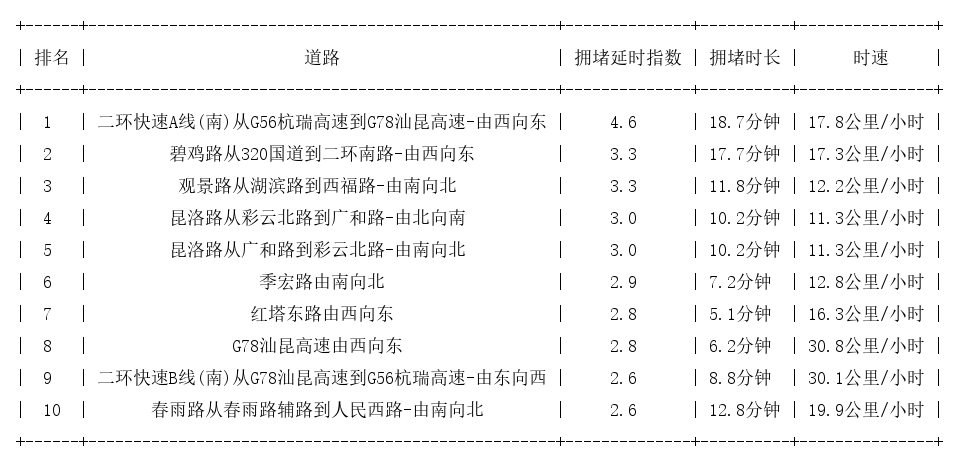
12月21日18时, 昆明晚高峰路况
Xin Lang Cai Jing· 2025-12-21 10:24
Core Insights - The article highlights severe traffic congestion in Kunming during the evening peak hours, particularly on the South section of the Second Ring Expressway, with a congestion index of 4.6 and an average speed of only 17.8 km/h [1] Traffic Congestion Rankings - The top congested roads in Kunming are listed, with the following details: - **1st Place**: South Second Ring Expressway from G56 Hangrui Expressway to G78 Shankun Expressway - Congestion Index: 4.6, Delay Time: 18.7 minutes, Speed: 17.8 km/h [1] - **2nd Place**: Biji Road from National Highway 320 to South Ring Road - Congestion Index: 3.3, Delay Time: 17.7 minutes, Speed: 17.3 km/h [1] - **3rd Place**: Guanjing Road from Hubin Road to Xifu Road - Congestion Index: 3.3, Delay Time: 11.8 minutes, Speed: 12.2 km/h [1] - **4th Place**: Kunluo Road from Caiyun North Road to Guanghe Road - Congestion Index: 3.0, Delay Time: 10.2 minutes, Speed: 11.3 km/h [1] - **5th Place**: Kunluo Road from Guanghe Road to Caiyun North Road - Congestion Index: 3.0, Delay Time: 10.2 minutes, Speed: 11.3 km/h [1] - **6th Place**: Jihong Road Northbound - Congestion Index: 2.9, Delay Time: 7.2 minutes, Speed: 12.8 km/h [1] - **7th Place**: Hongta East Road Eastbound - Congestion Index: 2.8, Speed: 16.3 km/h, Delay Time: 5.1 minutes [1] - **8th Place**: G78 Shankun Expressway Eastbound - Congestion Index: 2.8, Delay Time: 6.2 minutes, Speed: 30.8 km/h [1] - **9th Place**: South Second Ring Expressway B from G78 Shankun Expressway to G56 Hangrui Expressway - Congestion Index: 2.6, Delay Time: 8.8 minutes, Speed: 30.1 km/h [1] - **10th Place**: Chunyu Road from Chunyu Road Auxiliary Road to Renmin West Road - Congestion Index: 2.6, Delay Time: 12.8 minutes, Speed: 19.9 km/h [1]
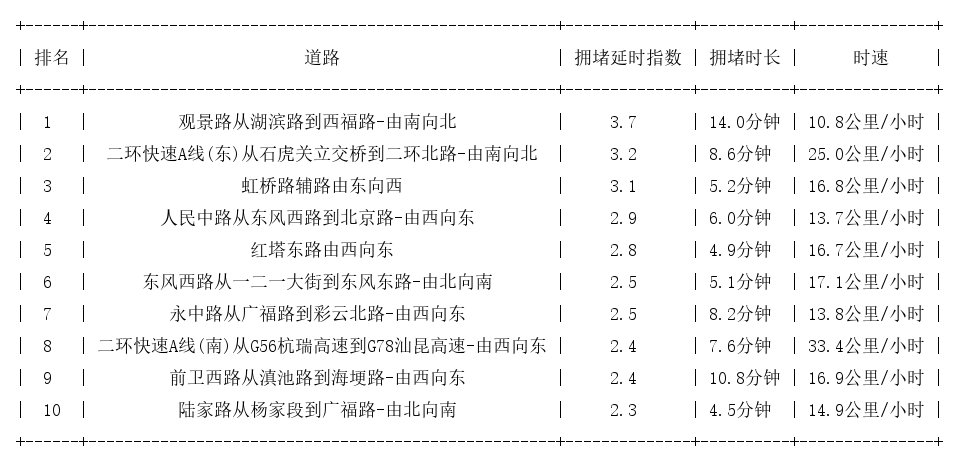
12月20日19时, 昆明晚高峰路况
Xin Lang Cai Jing· 2025-12-20 11:52
Core Insights - The article highlights the traffic congestion situation in Kunming during the evening peak hours, specifically noting the most congested routes and their respective congestion indices [1] Traffic Congestion Summary - The most congested route is from Hubei Road to Xifu Road on Guanjing Road, with a congestion index of 3.7 and an average speed of only 10.8 km/h, resulting in a delay of 14.0 minutes [1] - The second most congested route is the East section of the Second Ring Expressway from Shihuguan Interchange to the North Ring Road, with a congestion index of 3.2, an average speed of 25.0 km/h, and a delay of 8.6 minutes [1] - Other notable congested routes include: - Hongqiao Road Auxiliary Road (3.1 congestion index, 16.8 km/h, 5.2 minutes delay) - Renmin Middle Road (2.9 congestion index, 13.7 km/h, 6.0 minutes delay) - Hongta East Road (2.8 congestion index, 16.7 km/h, 4.9 minutes delay) [1] - The article provides a top 10 list of congested roads, indicating varying levels of congestion and average speeds, with the least congested route being Lujia Road from Yangjiadun to Guangfu Road, having a congestion index of 2.3 and an average speed of 14.9 km/h [1]
自动驾驶时代的新堵点:Robotaxi挑战与协同管理之解
科尔尼管理咨询· 2025-11-20 09:41
Core Viewpoint - The article emphasizes that the deployment of autonomous ride-hailing services (Robotaxis) may exacerbate traffic congestion rather than alleviate it, highlighting the need for regulatory measures to integrate these vehicles into urban transportation systems effectively [1][2][4]. Group 1: Misconceptions about Autonomous Taxis - Urban planners are often misled by the myth that autonomous taxis will magically solve traffic congestion, as they are expected to reduce private car usage and optimize traffic flow [2][4]. - The reality is that autonomous taxis can contribute to increased congestion due to their operational behaviors, such as cruising without passengers [2][4]. Group 2: Hidden Realities of Autonomous Ride-Hailing - Unmanaged autonomous technology is likely to double traffic congestion instead of reducing it, as evidenced by studies showing that many city officials are optimistic about the benefits but also concerned about increased vehicle mileage and reduced public transport usage [4][6]. - Autonomous taxis can create "induced" demand, leading to more trips that would otherwise have been made using public transport or not at all [6][11]. Group 3: Factors Contributing to Increased Congestion - Autonomous taxis may operate empty for significant portions of their journeys, with studies indicating that 30% to 40% of their total mileage could be without passengers [7][11]. - The convenience of autonomous taxis may encourage urban sprawl, as people are more likely to live farther from city centers when commuting becomes easier, leading to longer travel distances and increased overall vehicle mileage [9][11]. - Autonomous taxis compete with public transport rather than complementing it, potentially leading to a 75% drop in public transport ridership if not properly integrated [11][13]. Group 4: Proposed Solutions for Managing Autonomous Taxis - Cities should implement geographic restrictions on autonomous taxi operations to prevent congestion hotspots, especially during peak hours [13][14]. - Integrating ticketing systems between autonomous taxis and public transport can enhance the overall efficiency of urban mobility [13][14]. - Charging fees for empty or low-occupancy trips can discourage unnecessary cruising and promote shared rides [13][14]. - Mandatory data sharing and public oversight are essential to ensure that autonomous taxi operations align with community transportation goals [13][14]. Group 5: Urgency for Action - There is an urgent need for cities to prepare for the potential congestion exacerbated by autonomous taxis, requiring bold regulations and coordinated oversight [15]. - The focus should be on ensuring that autonomous vehicles serve public transportation needs first, rather than merely enhancing personal convenience [15].
专家说了“中国油价不高,还有上调空间”应该涨十倍,缓解压力
Sou Hu Cai Jing· 2025-10-26 11:50
Core Viewpoint - Experts suggest that China's oil prices are not high and even propose increasing them significantly to alleviate traffic congestion and reduce the burden on food supply [1][3]. Group 1: Oil Price Discussion - A professor from Fudan University proposed raising oil prices to ten times the current level, arguing it could help ease traffic congestion and lessen the burden on food supply [3]. - Current oil prices in China have risen sharply, with 92-octane gasoline nearing 9 yuan per liter, compared to just over 6 yuan previously [5]. - Another expert from China National Offshore Oil Corporation stated that China's oil prices are relatively low compared to global standards, with tax burdens in China being around 50%, while in Europe it is about two-thirds [5][7]. Group 2: Economic Impact of Rising Oil Prices - Increasing oil prices would raise transportation costs for both personal vehicles and freight, leading to higher prices for essential goods such as food [7][10]. - The potential rise in oil prices could lead to inflation, affecting the cost of everyday items, including basic necessities [10]. - The suggestion to increase oil taxes significantly could deter car ownership and usage, making driving a luxury for many [7][12]. Group 3: Alternative Solutions - Experts argue that addressing traffic congestion should involve multiple strategies, such as developing the electric vehicle industry, improving public transportation, and optimizing urban planning [12].
节后首个工作日早高峰,北京已严重拥堵
Xin Jing Bao· 2025-10-09 02:18
Core Points - The article discusses the severe traffic congestion in Beijing on the first working day after the National Day holiday, exacerbated by rainy weather and the return of students to school [1] - The Beijing traffic index reached a peak of 8.5 during the morning rush hour, indicating a high level of congestion [1] Traffic Conditions - As of 9 AM, the traffic index in Beijing was at 8.2, categorized as severe congestion [1] - Specific congested areas include major ring roads and key routes leading into the city, such as Caihuying South Road and Lianshi East Road [1] - Highways such as Jingzang, Jingcheng, Jingkai, Jinggangao, and Jingtong experienced heavy traffic in the direction of the city [1] Weather Impact - Continuous rainfall has led to slippery road conditions and reduced visibility, contributing to the traffic issues [1] - The traffic pressure is expected to ease as the morning rush hour concludes, but some routes will still experience significant congestion due to the weather [1] Safety Reminders - The traffic department advises drivers to maintain safe speeds and distances due to wet road conditions [1] - Drivers are encouraged to remain calm during traffic delays and to follow traffic rules [1] - Quick handling of minor traffic accidents is recommended to minimize disruption [1]
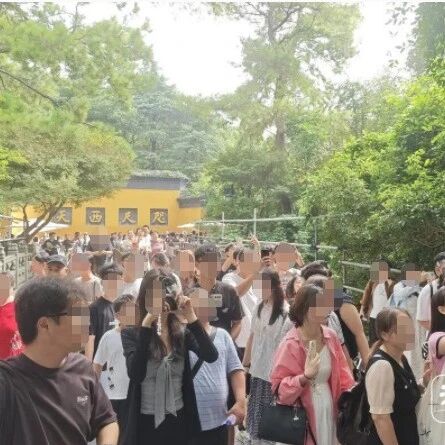
全是人!西湖一天涌入44万人,故宫、九寨沟等约满售罄!高速上14小时挪200公里,有人睡一觉还在原地,有电车车主排队4小时充电
新浪财经· 2025-10-02 08:07
Core Viewpoint - The article highlights the significant increase in travel and traffic congestion during the National Day holiday, with popular tourist destinations experiencing record visitor numbers and highways facing unprecedented traffic volumes [3][11][26]. Group 1: Tourist Attractions - On October 1, the first day of the National Day holiday, West Lake in Hangzhou received 446,300 visitors, a year-on-year increase of 12.33% [3] - Major attractions like the Forbidden City and Jiuzhaigou have reported sold-out tickets, with Jiuzhaigou stating that tickets for several days were fully booked [8] - The peak travel day coincided with the National Day and Mid-Autumn Festival, leading to high demand for tickets at various scenic spots [8] Group 2: Traffic Conditions - On September 30, Guangdong's highway network recorded over 10 million vehicle trips in a single day, setting a historical peak [11] - Travelers faced severe traffic jams, with reports of vehicles moving only a few kilometers in several hours, highlighting the congestion on major highways [9][15] - The article describes the frustration of travelers who experienced long delays, with some stuck in traffic for over 14 hours [13][20] Group 3: Electric Vehicle Charging - High demand for electric vehicle charging stations led to long wait times, with some drivers reporting waits of up to 4 hours to charge their vehicles [18][20] - The increase in electric vehicle usage during the holiday has put pressure on charging infrastructure, leading to reports of queues at service areas [22][23] - Despite the growth in charging stations, the article notes that many drivers still prefer to charge on the highway due to the convenience compared to finding standalone charging stations [23]
北京今日晚高峰提前:二环内已严重拥堵,多条高速出京交通压力大
Xin Jing Bao· 2025-09-30 08:08
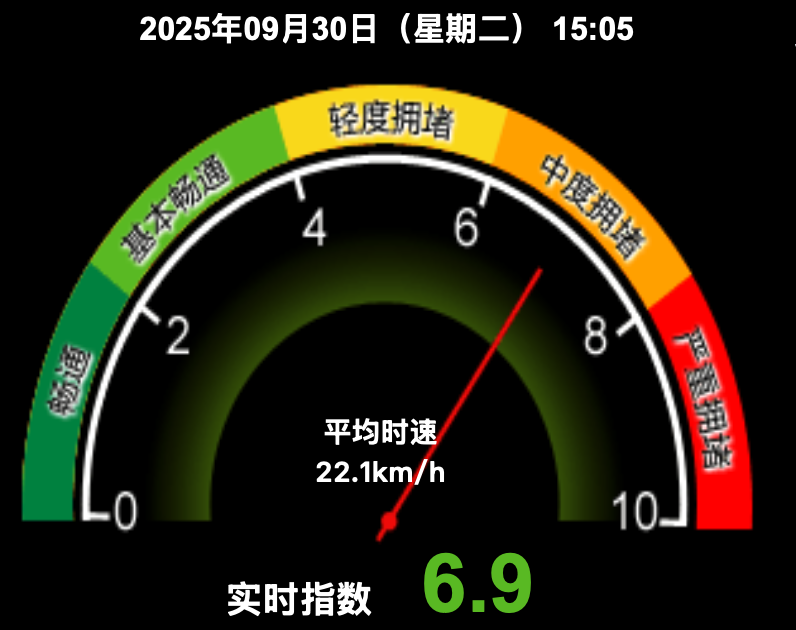
Core Insights - The traffic index in Beijing reached 6.9 as of 15:05 on September 30, indicating moderate congestion [3][4] - The peak traffic period is expected to start earlier than usual, with significant congestion anticipated between 17:00 and 19:00 [5] Traffic Conditions - As of 15:05, the traffic index for the entire road network is 6.9, with an average speed of 22.1 km/h [4] - The second ring road has reached a severe congestion level with a traffic index of 8.1 [4] - Specific areas such as Xicheng District and Chaoyang District are experiencing moderate congestion with traffic indices of 7.8 and 7.5, respectively [4] Road Network Pressure - The traffic volume in the city significantly increased after 15:00, with major routes like the eastern and western ring roads and key expressways experiencing slow traffic [5] - Areas around major transportation hubs, including airports and train stations, are expected to see increased traffic pressure due to higher passenger flow [5] - The traffic monitoring center reported that certain highways, including the Jingping and Jingcheng expressways, are under significant pressure due to high traffic volume [4]
广州下周二下午将迎国庆中秋假期出行高峰!易拥堵路段公布
Nan Fang Du Shi Bao· 2025-09-26 23:51
Group 1 - The National Day and Mid-Autumn Festival holiday lasts from October 1 to October 8, totaling 8 days, with a free passage policy for small passenger vehicles (7 seats and below) during this period [1] - A travel peak is expected from the afternoon of September 30 to noon on October 1, with a return peak starting on the morning of October 6 and the highest return traffic expected on the afternoon of October 8 [1] - Major highways prone to congestion during outbound travel include Beihuan Expressway Shabei section, Guangqing Expressway, Beierhuan Expressway Changping section, and several others [1] Group 2 - Popular tourist attractions with high visitor traffic include Chimelong Tourist Resort, Guangzhou Zoo, Canton Tower, and Baiyun Mountain Scenic Area [2] - Major commercial areas with dense foot traffic include Beijing Road, Xiguan, Shangxiajiu, and Huacheng Square [2]