京津冀交通一体化

Search documents
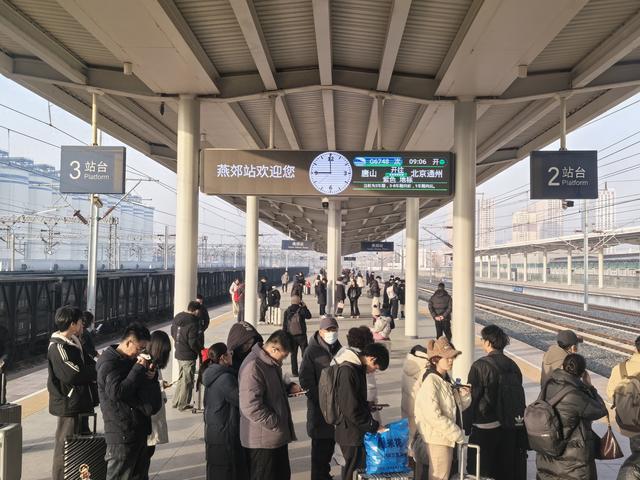
从走得了到走得好,跨省通勤族收获协同发展新福利
Xin Lang Cai Jing· 2026-01-17 09:29
Core Insights - The integration of transportation networks in the Beijing-Tianjin-Hebei region is enhancing cross-province commuting, making it more efficient and comfortable for residents [1][4]. Transportation Developments - The Beijing-Tangshan Intercity Railway has been fully opened, allowing direct travel from Yanjiao to Tongzhou in just 12 minutes, significantly reducing commuting time compared to previous bus routes [2][3]. - Customized express buses have been introduced, providing door-to-door service for commuters in the region, with a focus on convenience and speed [4]. Commuter Experience - Commuters like Ms. Zhang have shifted from traditional bus routes to high-speed rail, allowing for better time management and a more pleasant commuting experience, including the ability to sleep longer in the morning [2][3]. - The new transportation options are not only beneficial for daily commuters but also facilitate family visits and tourism, enhancing overall connectivity between the two regions [3]. Regional Connectivity - The opening of the Anshi Road connecting Xianghe County and Beijing's Tongzhou District has improved travel times by at least 20 minutes, promoting economic and social interactions between the areas [9][11]. - The enhanced transportation infrastructure is expected to drive regional development, allowing for better access to markets and services, thus benefiting local industries and public services [9].

京津冀首开环线高铁,方便京津与雄安间交通
Xin Lang Cai Jing· 2026-01-16 22:13
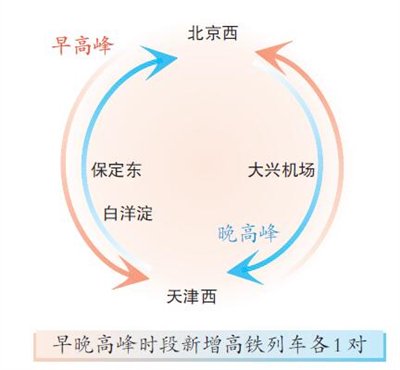
Group 1 - The new train operation schedule by China Railway Beijing Group will be implemented starting from January 26, introducing the first high-speed rail service on the Beijing-Tianjin-Hebei circular line, enhancing commuting convenience in the region [3] - During peak hours, new high-speed rail services will be added, including one pair of trains from Beijing West to Baoding East and Tianjin West, and another pair from Beijing West to Daxing Airport and Tianjin West [3] - The new services will facilitate transportation between Beijing, Tianjin, and Xiong'an, with specific train schedules detailed for morning and evening peak times [3] Group 2 - Additional train services will be launched at Tianjin Station, Tianjin West Station, and Tianjin South Station, including new routes to cities like Jage Daqi and Changsha, as well as increased capacity on the Beijing-Shanghai high-speed rail [4] - Tianjin West Station will see the introduction of several new train services, including G8860, G8864, G8863, and G8861, along with increased intercity train services [4] - The overall adjustment will result in a total of 9 additional trains for daily operations and 7 for weekend services on the Beijing-Shanghai high-speed rail, with further increases during peak times [4]
北京往返霸州定制快巴1月19日试运营
Zhong Guo Xin Wen Wang· 2026-01-15 06:18
Core Viewpoint - The Beijing-Tianjin-Hebei customized express bus service between Beijing and Bazhou is set to begin trial operations on January 19, 2026, addressing commuting challenges and enhancing transportation integration in the region [1][3]. Group 1: Service Details - The new bus line will focus on core commuting needs, featuring an "appointment-based travel, flexible stops, online verification, and remote security checks" operational model [1]. - The service will utilize dedicated bus lanes and expedite entry through checkpoints, significantly improving travel efficiency compared to self-driving, high-speed rail, and regular buses [1]. - The line will cover approximately 90 kilometers with two main routes, connecting key transportation hubs and densely populated areas [2]. Group 2: Operational Schedule - Route one will operate between Bazhou Bus Station and Tiangongyuan Subway Station, with departures from Beijing at 05:40 and 06:20, and returns at 17:50 and 18:20 [2]. - Route two will connect Bazhou Bus Station with Songjiabao Subway Station, with a departure from Beijing at 06:00 and a return at 18:00 [2]. Group 3: Future Plans and Expansion - The Beijing-Tianjin-Hebei customized express bus service currently operates 12 main lines and over 50 branch lines, providing robust support for intercity travel [3]. - The launch of the Beijing-Bazhou line further strengthens the commuting network around Beijing, aligning with the collaborative development strategy of the Beijing-Tianjin-Hebei region [3]. - Future plans include expanding service coverage and enhancing service quality to support the construction of a "one-hour commuting circle" around Beijing [3].
承平高速元旦通车
Xin Lang Cai Jing· 2026-01-02 22:40
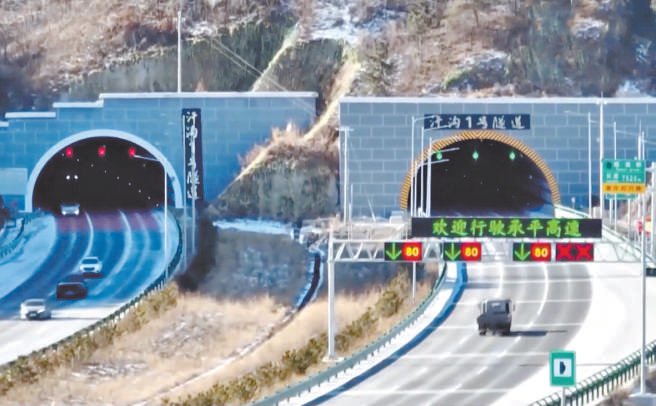
Group 1 - The Chengping Expressway officially opened on January 1, 2024, enhancing the integration of transportation in the Beijing-Tianjin-Hebei region, allowing for a one-hour drive from Sanhe and Pinggu to Chengde [2] - The Jin Hai Lake service area, the largest expressway service area in the region, combines traditional services with tourism and emergency support functions, addressing traffic congestion during peak tourist seasons [2] - The "Pingji Sanxing Consultation Hall" was inaugurated, aimed at facilitating collaborative decision-making and project promotion among the four local governments [3] Group 2 - The Shilou Road, connecting Beijing's urban sub-center with Xianghe County in Hebei, officially opened on December 31, 2025, providing new commuting options for residents [4] - The Shilou Road spans approximately 4.7 kilometers and is designed as a dual four-lane road, enhancing connectivity between Beijing and the surrounding Hebei region [5] - With the opening of Shilou Road, the number of connecting roads between Beijing's urban sub-center and the Langfang North Three Counties has increased to 12, improving the regional transportation network [5]
承平高速元旦通车,京津冀最大服务区亮相
Xin Lang Cai Jing· 2026-01-01 12:37
Core Insights - The Chengping Expressway will officially open on January 1, 2026, enhancing transportation connectivity in the Beijing-Tianjin-Hebei region [1] - The "Pingji Sanxing Consultation Hall" will be inaugurated on December 31, 2025, serving as a collaborative platform for the four regions involved [1] Group 1: Infrastructure Development - The Chengping Expressway is a crucial axis for transportation integration in the Beijing-Tianjin-Hebei area, allowing for a one-hour drive from Sanhe and Pinggu to Chengde [3] - The Jin Hai Lake service area, the largest expressway service area in the region, combines traditional services with tourism and emergency support functions [3] Group 2: Service Area Features - The service area operates under a dual-purpose concept, providing regular service to drivers while also serving as an emergency response and resource storage facility [3] - The design of the service area optimizes route connections, allowing social vehicles to access it without entering the expressway, thus improving traffic efficiency and stimulating local business interactions [3] Group 3: Collaborative Initiatives - The Consultation Hall will focus on five key functions: collaborative decision-making, policy alignment, project advancement, information sharing, and emergency coordination, promoting integrated development among the four regions [3] - A joint tourism initiative titled "Enjoy Pingji Sanxing during the New Year" will be launched, featuring two travel routes: a fast route via expressways and a traditional slower route [4] Group 4: Tourism Opportunities - The tourism routes will highlight attractions such as Jin Hai Lake, Yuyang Ski Resort, and various cultural sites, making it convenient for residents of Beijing to access these destinations within an hour [5] - The initiative aims to enhance regional tourism by providing diverse travel options and promoting local attractions [5]
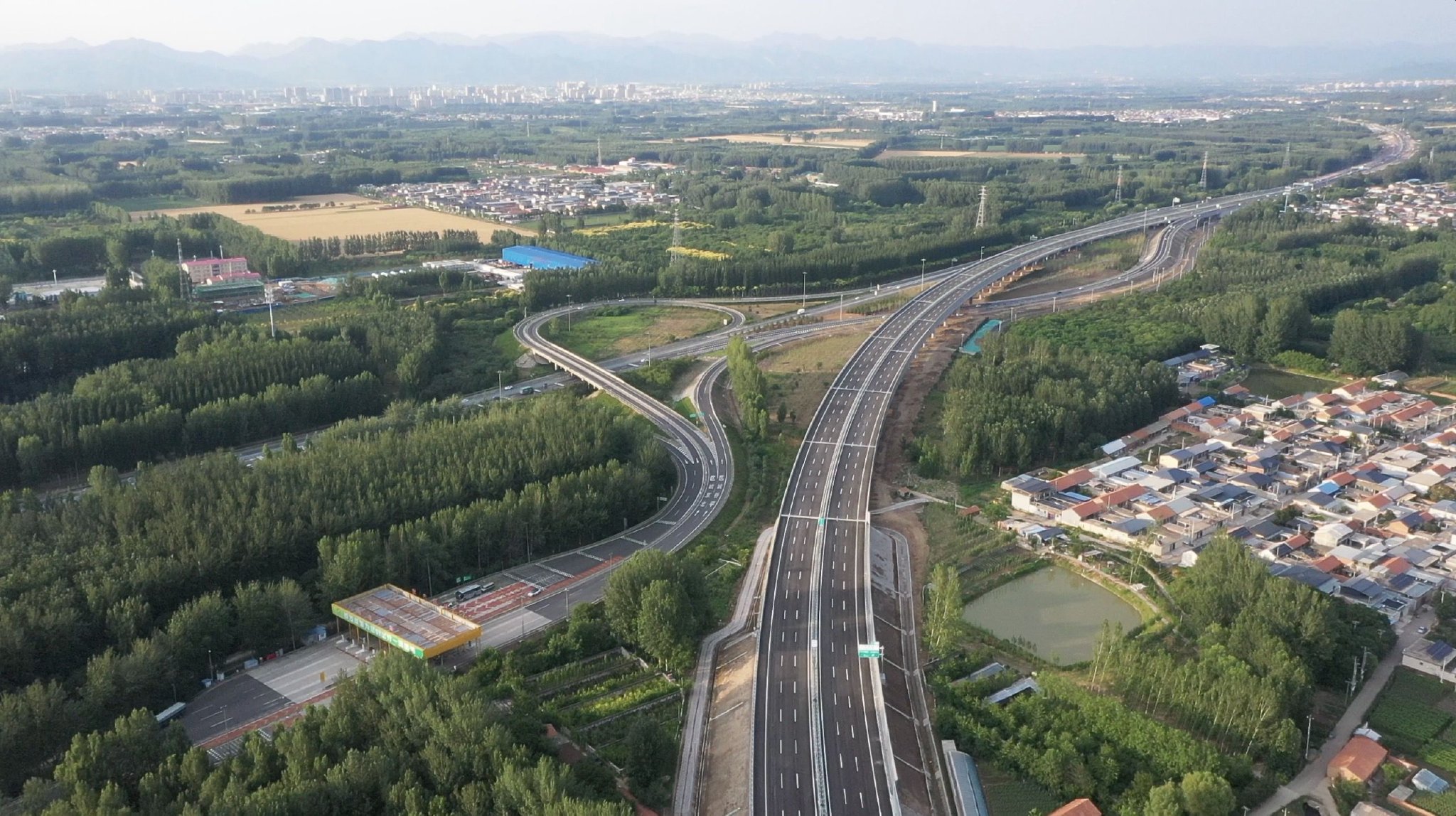
承平高速(北京段)及京平高速改扩建工程建成通车
Xin Lang Cai Jing· 2026-01-01 05:25
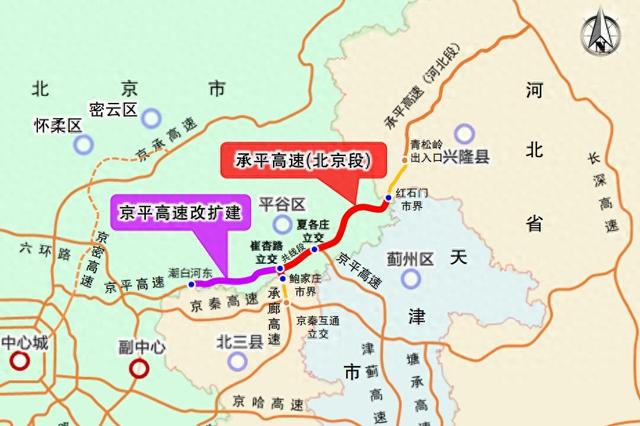
Core Viewpoint - The completion of the Chengping Expressway (Beijing section) and the expansion of the Jingping Expressway will enhance logistics efficiency and traffic integration in the Beijing-Tianjin-Hebei region, contributing to regional collaborative development [1][2]. Group 1: Project Details - The Chengping Expressway (Beijing section) is approximately 34.8 kilometers long, with 26.7 kilometers newly constructed and features a six-lane dual carriageway [1]. - The Jingping Expressway expansion project, which began on December 30, 2023, will extend approximately 26.5 kilometers, upgrading from a four-lane to a six-lane dual carriageway [1]. Group 2: Impact on Transportation - The new expressways will improve transportation capacity and emergency response in the northeastern direction of Beijing, alleviating traffic pressure on existing routes such as the Jingcheng Expressway [2]. - The expressways will create a multi-node, networked expressway system, facilitating rapid connections between key areas such as Pinggu, Chengde, and Langfang, thus promoting traffic integration in the Beijing-Tianjin-Hebei region [2]. Group 3: Economic Significance - The expressways will directly connect critical functional areas, including the Capital International Airport Economic Zone and the Shunyi Innovation Industry Cluster, playing a significant role in the high-quality economic and social development of surrounding districts like Shunyi and Pinggu [2].
承平高速(北京段)及京平高速改扩建工程今日通车
Xin Lang Cai Jing· 2026-01-01 02:19
Core Viewpoint - The completion of the Chengping Expressway (Beijing section) and the expansion of the Jingping Expressway will enhance the logistics efficiency and transportation integration in the Beijing-Tianjin-Hebei region, providing new momentum for regional coordinated development [1][3]. Group 1: Project Details - The Chengping Expressway (Beijing section) spans approximately 34.8 kilometers, with 26.7 kilometers newly constructed and featuring a six-lane dual carriageway [3]. - The Jingping Expressway expansion covers about 26.5 kilometers, transforming from a four-lane to a six-lane dual carriageway, marking it as Beijing's first full-section expressway expansion project [3]. - Both projects are set to open on January 1, 2026, filling a critical gap in the northeastern expressway network of Beijing [1][3]. Group 2: Impact on Transportation and Economy - The new expressways will improve transportation service capacity and emergency response levels in northeastern Beijing, alleviating traffic pressure on existing routes [3]. - The projects will create a networked expressway system connecting multiple regions, facilitating rapid connectivity among Pinggu, Chengde, Jizhou, Langfang, and other areas surrounding Beijing [3]. - The expressways will directly link key functional areas such as the Capital International Airport economic zone, Shunyi innovation industry cluster, and Pinggu Mafang logistics base, significantly contributing to the high-quality economic and social development of the surrounding districts [3].
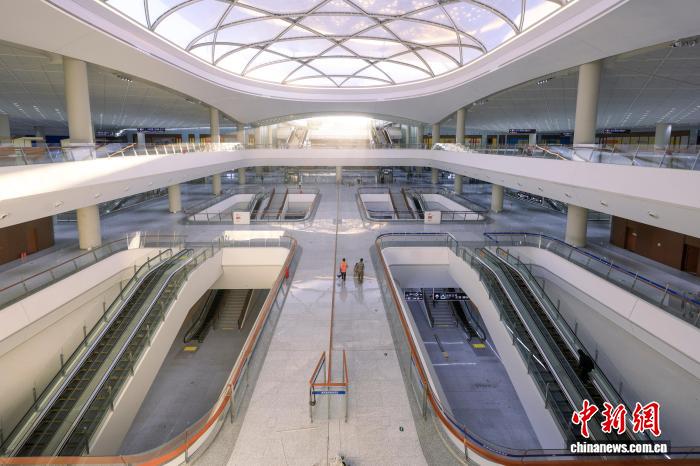
北京通州站今天开通投运
Xin Lang Cai Jing· 2025-12-30 00:15
Core Viewpoint - The Beijing Tongzhou Station, located in the city's sub-center comprehensive transportation hub, is set to officially open on December 30, enhancing connectivity in the Beijing-Tianjin-Hebei region [1] Group 1: Operational Details - The station will facilitate train services to Tangshan, Qinhuangdao, and Tianjin Beichen, with tickets already available for purchase [1] - Travel times from Beijing Tongzhou Station to various destinations are as follows: Tangshan in 55 minutes, Baodi in 26 minutes, Beichen in 56 minutes, and Qinhuangdao in 90 minutes [1] Group 2: Regional Impact - The opening of Beijing Tongzhou Station is expected to significantly reduce travel times between major cities in the Beijing-Tianjin-Hebei area, thereby shortening the spatial and temporal distance among these urban centers [1]
北京日报社区小板报|待明年长城贯通迎客,看今朝京唐通衢启程
Bei Jing Ri Bao Ke Hu Duan· 2025-12-29 23:47
Transportation - The Beijing-Tangshan intercity railway has officially opened, integrating Tangshan into the "one-hour" transportation circle with Beijing, enhancing travel options for passengers and boosting regional economic integration [4][6] - The new Beijing Tongzhou Station is now operational, with travel times to various destinations such as Tangshan (55 minutes) and Yanjiao (11 minutes) [6] - Starting January 6, 2026, Beijing's public transport will undergo optimization, including the introduction of new bus routes and the cancellation of low-traffic lines to improve accessibility [6][8] Education - The Ministry of Education has released new regulations mandating that all preschool children must have a unique student ID that will remain unchanged throughout their educational journey [9][11] - Despite the new regulations, it has been indicated that not having a preschool student ID will not affect a child's ability to enroll in primary school [11] Public Services - The Beijing Spring Water Plant has commenced operations, providing clean water to over 800,000 residents in northern Haidian District, filling a gap in the local water supply [15] - Beijing's market supervision authorities have intensified efforts to crack down on illegal modifications of electric bicycles, resulting in the closure of 18 illegal modification sites and the seizure of 1,356 non-compliant vehicles [17] Tourism - The renovation of the China Great Wall Museum is set to be completed, with the real Great Wall at Badaling becoming the museum's main exhibit, enhancing the tourist experience [19][20] - The historical areas of the Xian Nong Tan have been restored, allowing visitors to experience the ancient rituals of the Ming and Qing dynasties [20] Technology - The "Beijing Brain No. 1" has successfully converted brain signals into Chinese phrases, marking significant progress in brain-machine interface technology, with plans for a sixth implantation [26][27]

蓝图变通途 京津冀交通一体化“加速跑”
Zhong Guo Xin Wen Wang· 2025-12-29 09:31
蓝图变通途 京津冀交通一体化"加速跑" 中新社北京12月29日电 (记者 吕少威)"蓝图变通途,三地若比邻。"今年,首条外埠进北京公交班线开 通运营,京冀首条跨省域城市轨道交通线路——北京轨道交通22号线(平谷线)加速建设,京滨城际铁路 天津机场站全面开工建设,京雄高速二期完成主体建设,北京通州站开通投运在即……京津冀交通一体 化版图不断上新、扩展。 "交通一体化是推进京津冀协同发展的先行领域。'十四五'期间,京津冀交通一体化跑出了'加速度',交 通网络实现了密度、速度双跃升。"北京交通发展研究院院长许焱长期研究京津冀交通发展情况。 他向中新社记者表示,当前,京津冀高速公路和营运性铁路总里程均达1.1万公里,其中,高速公路总 里程较2014年底增长超四成,营运性铁路总里程增长近三成,"轨道上的京津冀"加速实现,公路网络纵 横延伸,环京"1小时通勤圈"初具规模。 "'不是同城,胜似同城'成为越来越多人的共鸣。由此带来的是跨区域通勤更加便利,'双城生活'有了更 多可能。"他说。 诚然,交通业具有"一业兴,百业旺"的乘数效应,新线、新站往往"一子落,全局活"。"十四五"时期, 京津冀协同发展由蓝图走向现实,京津冀交 ...