
人工智能赋能

Search documents
2025年第二期“政协杭商荟”活动举行
Hang Zhou Ri Bao· 2025-08-04 03:10
Core Insights - The event focused on soliciting suggestions for high-quality economic development in Hangzhou during the "15th Five-Year Plan" period [1][2] - The discussions highlighted the importance of technology innovation, financial support, and the role of private capital in venture investment [1][2] Group 1: Economic Development Strategies - Nine representatives provided suggestions on accelerating the transformation of technological innovation results and enhancing financial support in the tech sector [1] - Emphasis was placed on encouraging private capital participation in venture investments and accelerating the integration of artificial intelligence across various industries [1] Group 2: Talent and Industry Development - Recommendations included strengthening talent cultivation and promoting the development of cultural and creative industries, as well as modern agriculture [1] - The need for a resilient smart city infrastructure and the promotion of common prosperity were also discussed [1] Group 3: Government and Business Collaboration - The city government aims to incorporate the insights from entrepreneurs into the "15th Five-Year Plan" to create a better business environment and innovation ecosystem [2] - The event underscored the importance of collaboration between the government and businesses to drive high-quality development and innovation [2]
广东传统产业谋变:强化人工智能赋能新型工业化
Sou Hu Cai Jing· 2025-08-01 02:03
Core Viewpoint - Traditional industries are crucial for Guangdong's economic structure, serving as a foundation for overall manufacturing growth and requiring transformation towards high-end technology and intelligent development to remain competitive globally [1][2][3]. Group 1: Importance of Traditional Industries - Traditional industries account for over 70% of the added value in large-scale manufacturing in Guangdong, contributing 65% of tax revenue and employing 75% of the workforce [2]. - Guangdong leads the nation in the production of over 160 industrial products, with significant contributions from traditional sectors such as textiles, apparel, and home appliances [2][4]. - The textile and apparel industry cluster in Guangdong has reached a scale of 2.86 trillion yuan, with an annual clothing production exceeding 4 billion pieces [2]. Group 2: Challenges and Transformation - The transformation of traditional industries is complex due to the predominance of small and medium-sized enterprises, which face difficulties in upgrading and transitioning [1][6]. - Issues such as lack of technology, talent, and experience hinder the transformation process, with many enterprises still reluctant or unable to adapt [6][7]. - The global economic environment poses additional challenges, including shrinking demand and declining global trade, which exacerbate existing issues in traditional industries [5][6]. Group 3: Policy and Innovation Support - Guangdong has implemented various supportive measures, including legislation for high-quality manufacturing and digital economy promotion, to facilitate the transformation of traditional industries [3][4]. - The province aims to enhance policy supply and project support, focusing on technological innovation and green development to drive the transformation of traditional industries [10]. - The integration of artificial intelligence and innovation is emphasized as a key driver for upgrading traditional industries, with examples of successful applications in companies like Feiya [7][9].
工业和信息化部召开“推进信息化和工业化深度融合”重点建议提案办理座谈会
news flash· 2025-07-22 10:50
Core Viewpoint - The meeting emphasized the importance of integrating information technology and industrialization as a strategic task and practical implementation to support the development of a strong manufacturing and network nation [1] Group 1: Meeting Objectives - The meeting aimed to gather opinions from representatives on key proposals related to the digital transformation of manufacturing, development of industrial internet platforms, AI empowerment, and training of leading talents in manufacturing [1] - The Ministry of Industry and Information Technology (MIIT) highlighted the need to align proposal handling with the implementation of important directives from General Secretary Xi Jinping and the decisions of the Central Committee and State Council [1] Group 2: Integration Significance - The meeting stressed the critical significance of promoting the deep integration of information technology and industrialization, viewing it as a strategic task for advancing new industrialization [1] - It called for the establishment of a robust system for integrated development, solidifying the foundation for such integration, and fostering an ecosystem that supports this development [1] Group 3: Future Directions - The MIIT aims to push for the integration of information technology and industrialization at broader, deeper, and higher levels to provide strong support for advancing new industrialization and building a manufacturing powerhouse and a network power [1]
中国科协年会专题论坛聚焦极端环境重大岩土工程难题与挑战
Huan Qiu Wang· 2025-07-15 11:55
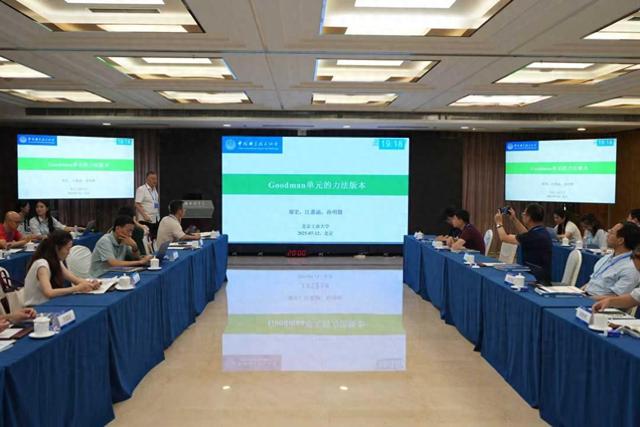
Group 1 - The forum focused on "Major Geotechnical Engineering Challenges in Extreme Environments," addressing the scientific issues and technical bottlenecks faced in geotechnical engineering under complex and extreme natural conditions [3][4] - The event was attended by over 50 experts and scholars from various universities and research institutions, emphasizing the collaborative nature of the discussions [3][4] - Key topics included disaster mechanism analysis, information perception and intelligent technology, structural stability theory innovation, and multi-field coupling and system regulation [3][4] Group 2 - Featured reports included topics such as "Disaster Mechanism and Engineering Countermeasures for High-Energy Geological Environment Tunnels" and "Key Technologies for Geological Information Transparency in Ultra-Deep Buried Tunnels" [4] - Experts discussed the increasing complexity and challenges of major geotechnical engineering in extreme environments, highlighting the need for continuous integration of theory and technology [4] - There was a consensus on the importance of developing systematic solutions and enhancing technological empowerment in the field [4]

中国科学院召开生命科学和生物技术领域发展战略研讨会
news flash· 2025-06-07 00:47
Core Insights - The Chinese Academy of Sciences held a strategic seminar on the development of life sciences and biotechnology, focusing on key drug research and major disease prevention technologies [1] - The seminar emphasized the importance of high-level research supported by major scientific infrastructure and the autonomous development of key equipment and materials [1] - The goal is to address major issues in frontier basic science, overcome critical core technology challenges, and achieve high-level self-reliance and strength by 2035 [1] Group 1 - The seminar was attended by key figures including the President and Vice Presidents of the Chinese Academy of Sciences, highlighting the significance of the event [1] - Discussions included advancing important tasks in the field, deepening reforms in research institutes, and constructing key laboratories [1] - The focus areas identified include ensuring food security, promoting high-quality agricultural development, and integrating artificial intelligence with interdisciplinary research [1]
一支画笔绘出大产业
Jing Ji Ri Bao· 2025-05-22 07:52
Core Insights - Dafen Oil Painting Village, known as "China's First Oil Painting Village," has transformed from a small agricultural community into a major global oil painting production and trading hub, with an expected output value of 3 billion yuan in 2024 [1][2] - The village hosts over 1,200 galleries and related businesses, employing more than 20,000 people, creating a complete oil painting industry chain that includes creation, production, sales, trading, and supporting services [1][2] Historical Development - In the 1980s, Dafen Village was primarily an agricultural area with around 300 residents. The oil painting industry began to take shape in 1989 when a Hong Kong art dealer recognized the area's low labor costs and proximity to Hong Kong, leading to mass replication of oil paintings for export [2][3] - By 2004, Dafen Oil Painting Village gained international recognition after becoming the only sub-venue for the first China (Shenzhen) International Cultural Industry Fair, significantly increasing its export orders [2] Challenges and Adaptation - The global financial crisis in 2008 severely impacted Dafen's export orders, prompting a shift towards original artwork production. The local government supported this transition by promoting original artists and developing proprietary products [3][4] - Dafen Art Museum has played a crucial role in nurturing original artists, hosting around 1,000 exhibitions and events since its establishment in 2007, including various art competitions and exhibitions [3][4] Talent Development - Dafen Oil Painting Village has implemented initiatives to support original talent, including a painting skills competition that has attracted approximately 200 artists and provided housing for artists through dedicated apartments [4] - Currently, there are over 400 professional artists in Dafen, with many recognized by various art associations, contributing to the cultural development of Shenzhen [4] Market Expansion - Dafen Oil Painting Village is actively exploring new market segments such as art experiences, cultural tourism, and educational programs, enhancing its role in local economic and cultural prosperity [6][7] - The village has seen a rise in experiential consumption, with businesses transforming traditional art training into engaging, shareable experiences that attract a broader audience [6][7] Internationalization and Innovation - The oil painting industry in Dafen is evolving through digital art creation, art derivative product development, and the integration of artificial intelligence, aiming to transition from a "world oil painting factory" to an "international art hub" [8][9] - Companies like Yajin Cultural Group are leveraging AI technology to produce high-quality paintings at a fraction of the cost, while also facilitating the internationalization of Dafen's art products [8][9] Future Outlook - The Dafen Oil Painting Village is poised for further growth, with plans to enhance original capabilities, attract young artists, and expand its international market presence, supported by a strong network of over 800 member organizations [10]
苏州工业园区发布“生物医药及大健康产业腾飞计划”
Su Zhou Ri Bao· 2025-05-13 00:43
Core Insights - The "Suzhou Industrial Park Accelerates the Action Plan for the Biopharmaceutical and Health Industry (2025-2027)" was officially released, focusing on key areas such as innovative drugs, high-end medical devices, and health care [1][2] - The plan aims to support the scaled development of enterprises, the landing of quality incremental projects, the launch of innovative products, and the promotion of their application [1][4] Group 1: Enterprise Development - The park will focus on nurturing strong enterprises by supporting increased fixed asset investment, expanding enterprise scale, boosting revenue, and enhancing R&D investment [1] - There will be a focus on attracting world-class companies, including Fortune 500 and top Chinese pharmaceutical companies, to support the localization of quality product pipelines and contract development manufacturing organizations (CDMO) [1][2] Group 2: Product Support and Promotion - The plan includes support for the listing of significant products, dynamic selection of key product pipelines, and enhancement of clinical trial capabilities in medical institutions [2] - It will also promote the use of innovative drugs and devices in medical institutions and encourage participation in centralized procurement to expand sales [2] Group 3: Financing and Investment - The park will enhance equity financing support through cornerstone investments and long-term holdings, aiming for over 5 billion yuan in investments in park enterprises over the next three years [3] - There will be an increase in credit financing, with commercial banks encouraged to provide medium- and long-term credit products [3] Group 4: Innovation and Regulatory Support - The plan aims to address development bottlenecks through institutional innovation, leveraging advantages from international cooperation and free trade zones [4] - It includes initiatives to shorten review and approval times for clinical trials and support global leading food and health products in compliance with regulations [4] Group 5: Future Goals - By 2027, the park aims to cultivate over 5 leading enterprises with international competitiveness, over 50 landmark enterprises, and achieve significant sales milestones for key products [4]