传统产业转型升级

Search documents
两会提案:刘永好提出“推动科研院所向传统产业开放仪器资源”
仪器信息网· 2026-03-03 09:02
Group 1 - The core viewpoint emphasizes the need for traditional industries to transition from downward trends, such as price wars and inefficient expansion, to upward trends focused on technology, quality, and service [1] - Liu Yonghao, a member of the National Committee of the Chinese People's Political Consultative Conference and chairman of New Hope Group, submitted a proposal to encourage and guide the transformation and upgrading of traditional industries [1] - The proposal suggests that industry associations should strengthen guidance to shift enterprises from scale expansion to value enhancement, and promote the implementation of the Private Economy Promotion Law [1] Group 2 - The article highlights the importance of compiling technical guidelines tailored to the characteristics of traditional industries and supporting leading enterprises in forming innovation alliances [1] - It advocates for research institutions to open up experimental instruments and testing platforms to traditional industries, enabling better application of technological innovations for upgrading [1]



内蒙古全力建设现代化产业体系推动经济高质量发展
Nei Meng Gu Ri Bao· 2026-02-27 02:05
Core Insights - Inner Mongolia is focusing on high-quality development, emphasizing the transformation and upgrading of traditional industries, particularly in advanced manufacturing and resource deep processing [1][2][5] Group 1: Traditional Industry Transformation - The region is witnessing a significant shift from traditional industries to high-end manufacturing, with coal being transformed into high-value chemical materials [2][3] - The total investment of 48.4 billion yuan in the Ordos Baofeng 3 million tons coal-to-olefins project demonstrates the scale of transformation, producing over 9,000 tons of olefins daily [2] - Inner Mongolia has established over 500 green factories, with their output accounting for over 26% of the total industrial output value, surpassing the national average [5] Group 2: Technological Advancements - The use of intelligent production equipment in projects like the Inner Mongolia Jinglei Industrial Co. has led to a 10-15% reduction in electricity consumption and a 10% decrease in coke consumption [1] - The development of a closed-loop industrial chain in the coal-to-BDO (1,4-butanediol) sector has resulted in a 20% reduction in energy consumption and a 15% decrease in costs [2] - Breakthroughs in rare earth materials have enabled the region to become a global leader in new materials, enhancing product value by up to 10 times [3] Group 3: Green and Sustainable Practices - Inner Mongolia's coal mining sector is increasingly adopting green mining practices, with 61% of coal mines being green and 74% being intelligent [3] - The green electricity usage in the Hohhot Zaha Naor 350,000 tons green aluminum project is as high as 80%, leading to industry-leading energy consumption and carbon emissions [4] - The chemical industry is transitioning towards high-end, green circular production, with new products like high-end resins and medical materials being developed [4] Group 4: Agricultural and Food Industry Development - The dairy industry in Inner Mongolia is modernizing and brand-building, with major companies like Yili and Mengniu capturing around 60% of the national market share [5] - The region has over 62 million acres of high-standard farmland, maintaining a stable grain output of over 80 billion jin, contributing to national food security [5] - Agricultural products are evolving from basic commodities to high-end brands, with regional brands gaining recognition both domestically and internationally [5]


善借东风培育新动能
Jing Ji Ri Bao· 2026-02-24 22:15
Core Insights - The traditional Sichuan cuisine industry is adapting to changes such as instant retail demands, e-commerce innovations, and international challenges, showcasing a path of innovation while maintaining its cultural essence [1][3] Group 1: Industry Transformation - The conflict between the "minute-level fulfillment" demand of instant retail and the traditional "slow supply" of Sichuan cuisine requires dual solutions through product innovation and supply chain acceleration [1] - Companies like Pixian Douban Co., Ltd. have developed convenient products like pre-chopped Pixian Douban to meet instant consumption needs, while others like Tianwei Food Group are utilizing quick-freezing technology to preserve taste and build cold chain systems [1] Group 2: E-commerce Integration - E-commerce's "precise reach" can effectively address the challenges of traditional Sichuan cuisine companies in new product development and market feedback, helping to reconstruct the R&D-marketing-production closed loop [2] - Companies such as Dandan Pixian Douban Group are launching new products through live streaming channels, reducing costs and building customer bases, while Yang Guofu Group is using data to align production with consumer preferences [2] Group 3: International Expansion - The challenges of "standard barriers" and "cultural adaptation" in the international market require collaboration between government and enterprises for effective solutions [2] - The government should establish public service systems to assist companies with qualifications and customs issues, while enterprises need to adapt Sichuan flavors to fit overseas markets [2] Group 4: Future Outlook - The transformation practices in the Sichuan cuisine industry demonstrate that embracing new business models and optimizing products and supply chains can revitalize traditional industries [3] - With the implementation of relevant policies, the Sichuan cuisine industry is expected to preserve cultural heritage while fostering new growth, serving as a model for upgrading other traditional industries [3]
“加快培育发展未来产业”系列解读之七 “十五五”时期,创新之于未来产业有何意义?
Ren Min Wang· 2026-02-24 08:49
Group 1 - The core focus is on the importance of cultivating and developing future industries to seize technological and industrial leadership, enhance new productive forces, and improve the quality of life for the people [1] - China's economic new momentum will primarily rely on innovation-driven growth, shifting from traditional factor input reliance to a sustainable self-sustaining model [2] - Innovation is viewed as a systemic project that requires the integration of technology, talent, industry, market, and policy to foster deep integration and growth of new momentum [2] Group 2 - Traditional industries are characterized by their extensive reach and long supply chains, and innovation is becoming the main driving force for their transformation and upgrading [3] - The use of "Artificial Intelligence +" is emphasized to empower traditional industries, accelerating technological upgrades based on previous digital transformations [3] - Emerging and future industries are seen as active forces for China's economic growth, with a focus on disruptive technologies such as quantum technology, biomanufacturing, hydrogen energy, and sixth-generation mobile communication [3]
从部分皮革企业“欣欣向荣”看传统产业生命力
Xin Lang Cai Jing· 2026-02-23 21:43
Industry Overview - The leather industry is a traditional sector in China, which is the largest producer, exporter, and consumer of leather globally. The industry faces significant challenges due to changing consumer trends, raw material price fluctuations, rising labor costs, and increasing environmental pressures [1][8]. Decline of Traditional Leather Factories - In Jiangmen, Guangdong Province, a key leather manufacturing base, the industry peaked in the 1990s with around 200 enterprises and tens of thousands of employees, forming a trillion-yuan industrial cluster. However, the number of factories has drastically decreased to about ten from over a hundred [2][3]. - The decline is attributed to multiple factors, including environmental regulations classifying leather as a "heavily polluting industry," reduced orders from Western markets, and a lack of interest from the younger generation in continuing family businesses [3][4]. Struggles of Remaining Factories - Remaining factories in the region report significant drops in business, with some experiencing over a 70% reduction in foreign orders compared to peak levels. Many are now focusing on domestic markets and developing new products to survive [4][5]. Resilience of Some Leather Companies - Despite the overall decline, some leather companies in Jiangmen are thriving. For instance, Yixing Leather Co., a Sino-American joint venture, has maintained stable growth by focusing on quality and market adaptation, benefiting from a strong international client base [5][6]. - Another example is Bawei Leather Factory, a German-funded enterprise that has shown healthy growth, with an annual output value exceeding 400 million yuan and tax contributions of nearly 30 million yuan [6]. Diversification and Adaptation Strategies - Some domestic companies are adopting diversification strategies to navigate the industry's challenges. For example, Zhujiang Industrial Co. has expanded its product range and established itself as a key player in high-end leather production [7]. The Value of Traditional Industries - Industry experts argue that traditional industries like leather should not be dismissed as "low-end" but rather recognized for their resilience and potential for transformation. The leather industry continues to play a significant role in economic value creation and employment [8][10]. - The shift in consumer preferences towards leather products in automotive and aviation sectors indicates that the overall market for leather remains stable, despite declines in traditional uses [9][10]. Future Directions - The industry must adapt to new consumer trends and enhance technological capabilities, brand value, and international competitiveness. There is a call for government support to nurture these traditional sectors rather than pushing them towards obsolescence [9][10].
税收大数据显示:2025年我国科技创新与产业创新融合发展加快
Xin Lang Cai Jing· 2026-02-23 16:33
Group 1 - The core viewpoint of the articles highlights the accelerated integration of technology and industry in China, with significant growth in strategic emerging industries and improved efficiency in technology transfer by 2025 [1][2] Group 2 - Strategic emerging industries are experiencing robust growth, with high-tech industry sales revenue expected to increase by 13.9% year-on-year in 2025, driven by high-tech manufacturing and services growing by 10.1% and 16.6% respectively [1] - Notable sectors such as lithium battery manufacturing, service robots, industrial robots, and biopharmaceuticals are showing impressive sales growth, with increases of 25.1%, 60.7%, 17.4%, and 7.7% respectively [1] - The conversion of scientific and technological achievements is being enhanced, with sales revenue from research and technical services projected to rise by 20.4% year-on-year, and revenue from patent-intensive industries increasing by 10.7% [1] - The digital economy's core industries are expected to see a sales revenue growth of 9.4% in 2025, with digital product manufacturing and digital technology application sectors growing by 9.4% and 13.8% respectively [2] - Traditional industries are accelerating their transformation, particularly in automation, with significant increases in procurement of automation equipment in sectors like petrochemicals, steelmaking, and ironmaking, showing growth rates of 17.3%, 11.7%, and 12.7% respectively [2] - The data reflects a solid achievement in China's technological self-reliance and the cultivation of new productive forces, indicating a strong and sustainable internal momentum for high-quality development [2]
(新春走基层)百年“绣”韵焕新机 一件旗袍“穿出”新故事
Zhong Guo Xin Wen Wang· 2026-02-15 04:08
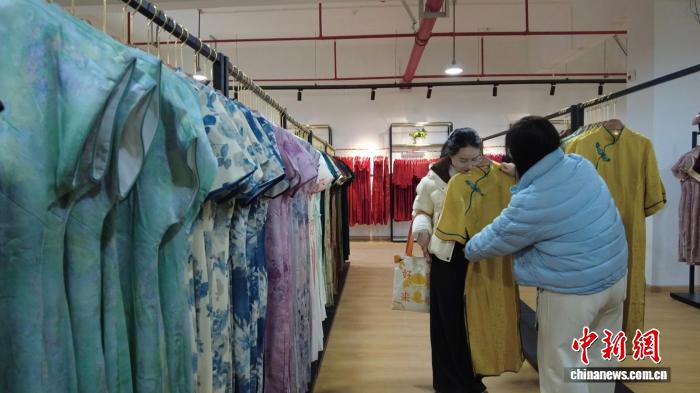
Core Viewpoint - The article highlights the transformation of the Qipao industry in Yongquan Town, Zhejiang, as it shifts from traditional manufacturing to a modernized business model, leveraging technology and new sales channels to enhance its market presence and cultural significance [1]. Group 1: Industry Transformation - Yongquan Town, known for its rich history in embroidery, is evolving from a focus on OEM production to creating a national Qipao commercial landmark, the Linhai Qipao City, to support the upgrade of traditional industries [1][3]. - The Qipao industry in Yongquan has become one of the largest production bases in China, with an annual output of over 16 million Qipaos and an industry output value exceeding 1.5 billion yuan [3]. Group 2: Technological Integration - The introduction of digital technology has significantly improved the production process, allowing for faster sample creation and collaboration with young designers from cities like Shanghai and Guangzhou, resulting in the launch of 300 to 400 new styles annually [3]. Group 3: Cultural and Commercial Fusion - The Linhai Qipao City aims to integrate Qipao customization, intangible cultural heritage experiences, and modern commercial consumption, creating a new cultural tourism scene that showcases traditional clothing and crafts [3][6]. - The city will feature various attractions, including photo spots and traditional props, appealing to younger consumers and enhancing the cultural experience [4][6]. Group 4: Future Development Plans - The Linhai Qipao City plans to attract 70 to 80 local businesses upon its official opening in March, focusing on building a strong industrial cluster and promoting the "Yongquan Qipao" regional brand [6].
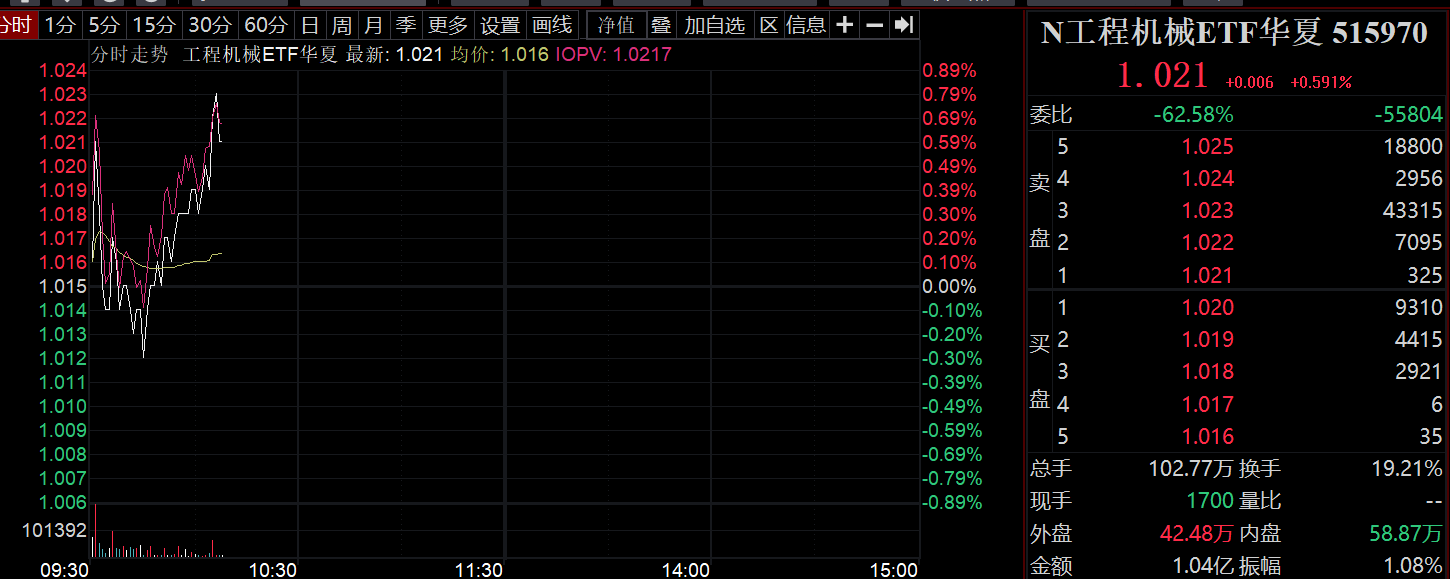
工程机械ETF华夏(515970)今日登陆上交所 首日交投活跃彰显市场信心
Mei Ri Jing Ji Xin Wen· 2026-02-12 02:31
Core Viewpoint - The launch of the engineering machinery ETF by Huaxia Fund is seen as a significant opportunity for investors to access the engineering machinery industry and capitalize on the transformation and upgrading of traditional industries [1]. Group 1: Initial Performance - The engineering machinery ETF recorded a trading volume of nearly 100 million yuan within the first half-day of trading, with a price of 1.021 yuan, reflecting a 0.59% increase [2]. Group 2: Market Drivers - The ETF's success is attributed to favorable macroeconomic conditions, including the "14th Five-Year Plan" focusing on modern infrastructure and significant projects like the 1.2 trillion yuan Yarlung Tsangpo River downstream hydropower project, which supports domestic demand [4]. - The equipment renewal cycle is expected to peak between 2025 and 2028, with domestic sales potentially increasing by over 150% due to the previous sales peak from 2019 to 2021 [4]. - The overseas market is also contributing positively, with a projected 13.8% year-on-year growth in engineering machinery exports by 2025, and Chinese brands gaining market share in high-end markets in Europe and the U.S. [4]. Group 3: Product Features - The engineering machinery ETF features a low fee structure with a management fee of 0.15% and a custody fee of 0.05%, which are among the lowest in the industry [5]. - The ETF is designed to track the CSI Engineering Machinery Theme Index, with the top five holdings accounting for approximately 60% and the top ten holdings over 70%, focusing on leading companies like XCMG, SANY, Weichai Power, and others [5]. Group 4: Management and Strategy - The fund manager, Wang Xinwei, represents a new generation of talent at Huaxia Fund, with a strong educational background and experience in managing a significant asset scale [6]. - Huaxia Fund has a robust platform, with its equity ETF management scale exceeding 1 trillion yuan as of January 2026, maintaining the industry’s leading position for 21 consecutive years [6]. Group 5: Investment Strategy - The engineering machinery ETF provides an efficient, flexible, and low-cost investment option for investors facing challenges in directly investing in individual stocks within the sector [7]. - It can be combined with broad-based index products like the CSI A500 for enhanced returns or with thematic products such as artificial intelligence and dividends to optimize the risk-return profile [7].
在辽全国人大代表开展集中视察
Liao Ning Ri Bao· 2026-02-09 01:20
Group 1 - The representatives conducted on-site inspections in Fushun and Yingkou to prepare for the upcoming National People's Congress meeting, focusing on traditional industry transformation, new industry development, and modern industrial system construction [1] - In Fushun, inspections included various companies such as Fushun Special Steel Co., Fushun Petrochemical Company, and others, while in Yingkou, inspections covered companies like Liaoning Dongsheng Technology Group and Yingkou Cigarette Factory [1] - The representatives gathered first-hand information from project sites and production facilities, which will aid in formulating high-quality proposals and suggestions [1] Group 2 - The representatives emphasized the importance of enhancing their sense of responsibility and mission, actively contributing ideas and suggestions to support the revitalization of Liaoning [2] - They plan to leverage the outcomes of the inspections to align with the Central Committee's decisions and the provincial government's requirements, focusing on the needs of development and the expectations of the people [2] - The representatives aim to promote Liaoning and contribute to high-quality economic and social development during the upcoming National People's Congress meeting [2]
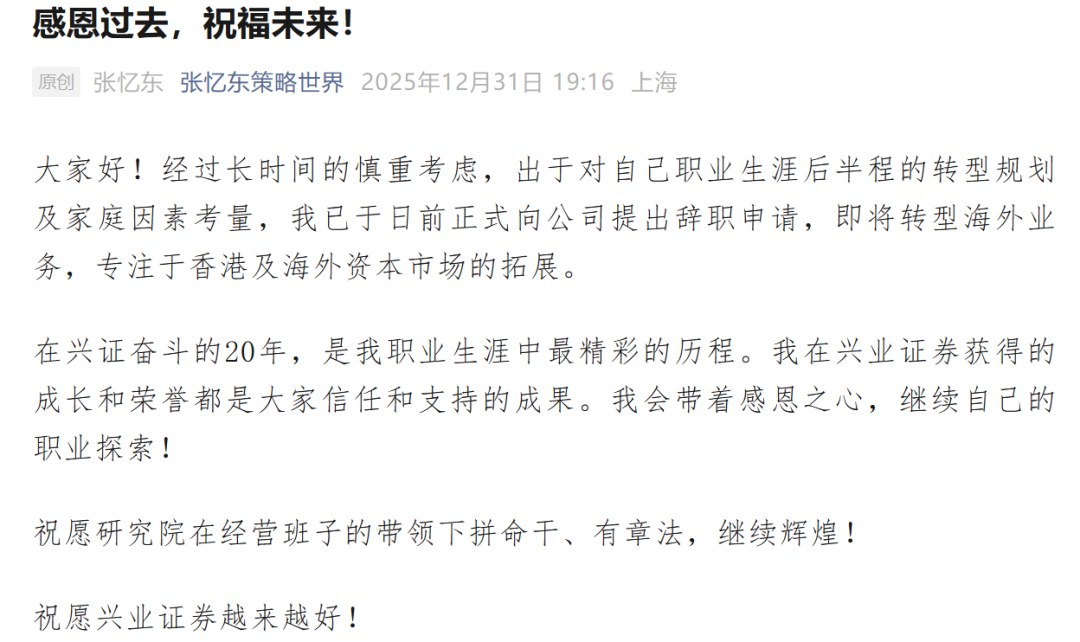
知名分析师张忆东履新
2 1 Shi Ji Jing Ji Bao Dao· 2026-02-05 09:17
Group 1 - Zhang Yidong, a prominent strategist and chief economist, has officially joined Guotai Junan Securities, taking on roles in the executive committee and as head of the equity research department [1][4] - His departure from Industrial Securities was motivated by a desire to focus on overseas markets, particularly in Hong Kong, as part of his career transition [3][4] - Zhang has a strong academic background and extensive experience in the industry, having worked for nearly 20 years at Industrial Securities and received numerous awards for his research [4] Group 2 - Zhang Yidong maintains a positive outlook for the Chinese stock market in 2026, emphasizing the importance of structural opportunities and long-term growth over short-term economic fluctuations [5] - He identifies four key areas for investment in 2026: AI and technology, dividend assets in a low-interest environment, value discovery in traditional industries, and strategic assets like gold and rare earths [5] - Zhang highlights the return of foreign capital to China, particularly through passive ETFs and active management strategies, indicating an increased allocation towards Chinese assets [7]