低碳化转型

Search documents
第五届“智荟中欧·北京论坛”举行——以本地化实践深化全球布局
Zhong Guo Jing Ji Wang· 2025-07-14 14:10
Group 1 - The importance of Chinese enterprises "going global" has become a significant part of the global economy, especially in the context of restructuring global trade patterns and external environmental changes [1] - GE Aviation's localization strategy in China is highlighted as a core success factor, with 99% of its employees being local and the establishment of eight engine overhaul bases [1] - The Chinese aviation market is currently the second largest in the world and is expected to become the largest by 2043, indicating significant growth potential [1] Group 2 - Six core experiences for state-owned enterprises going global include global resource allocation strategy, differentiated positioning, professional management, integrated collaboration, deep localization, and low-carbon transformation [2] - Micro-innovation at the enterprise level is seen as crucial for overcoming macro challenges, with a shift from simple product exports to deeper engagement in technology, capital, and management models [2] - The future of the Chinese economy relies on enterprises finding differentiated paths in the new stage of globalization, supported by both policy and market efforts [2]


民企出口含“新”量提升
Ren Min Ri Bao Hai Wai Ban· 2025-06-30 22:59
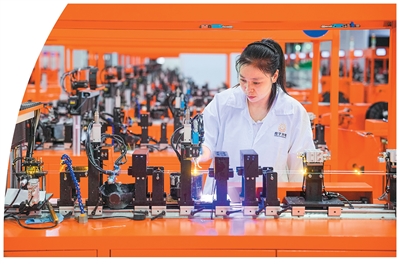
Core Insights - China's private enterprises are increasingly becoming the main force in foreign trade, with a significant shift from low-cost manufacturing to high-tech exports, particularly in sectors like industrial robots and green technology [3][6][13]. Group 1: Export Growth and High-Tech Products - In the first five months of the year, China's private enterprises achieved a total import and export value of 10.25 trillion yuan, a growth of 7%, with exports reaching 6.97 trillion yuan, up 8% [3]. - The export value of industrial robots increased by 55.4% year-on-year, with private enterprises being the primary manufacturers [3][5]. - High-tech product exports from private enterprises reached a historical high of nearly 1 trillion yuan in the first quarter, with industrial robots and high-end machine tools seeing growth rates of 67.4% and 16.4%, respectively [5][6]. Group 2: Technological Innovation and R&D Investment - Private enterprises contributed over 50% of the total R&D investment and personnel in China, with the top 1,000 private companies investing a total of 1.39 trillion yuan in R&D in 2023 [7][9]. - The continuous increase in R&D investment efficiency has led to a significant rise in the technological added value of export products [6][9]. - Companies are focusing on core technology development to enhance their competitiveness in international markets, with many achieving breakthroughs in previously monopolized technologies [8][9]. Group 3: Policy Support and Market Expansion - The Chinese government has implemented various policies to support private enterprises in their international expansion, including improved intellectual property protection and financial risk-sharing mechanisms [9][12]. - Many private enterprises are transitioning from trade-based models to localized operations, establishing factories and warehouses overseas to enhance their global presence [14]. - In Brazil, several Chinese private car manufacturers have announced significant plans, indicating their growing influence in international markets [14].