
创新性发展

Search documents
时代专论丨中国式现代化与文化强国建设
Zhong Yang Ji Wei Guo Jia Jian Wei Wang Zhan· 2025-06-26 01:18
Group 1 - The construction of a cultural strong nation is a major task in advancing Chinese-style modernization, enhancing the cultural innovation and creativity of the entire nation, and continuously strengthening the spiritual power for the great rejuvenation of the Chinese nation [2][11] - Chinese-style modernization emphasizes the coordination of material and spiritual civilization, aiming for both material abundance and spiritual richness, which distinguishes it fundamentally from Western modernization [2][3] - The essence of modernization is the modernization of people, which includes not only material living conditions but also the enrichment of spiritual life and the development of moral character [3][4] Group 2 - Cultural prosperity is an important support for promoting high-quality development, integrating deep humanistic values into various aspects of economic, political, social, and ecological construction [4][5] - The integration of culture and technology is crucial for fostering new cultural formats and models, enhancing the cultural tourism industry as a pillar of the economy [5][6] - The enhancement of national cultural soft power is essential for gaining strategic advantages in a changing global landscape, requiring improved international communication effectiveness and the promotion of Chinese culture [5][9] Group 3 - Significant progress has been made in the construction of a cultural strong nation, with a series of major deployments by the Party to elevate cultural construction to a prominent position in governance [6][10] - The vitality of cultural innovation and creativity has been fully unleashed, with advancements in the construction of an independent knowledge system in philosophy and social sciences [7][8] - The spiritual and cultural life of the people has become richer, with improved public cultural service systems and innovative cultural benefit projects [8][9] Group 4 - The international influence of Chinese culture has significantly increased, with successful international events incorporating Chinese cultural elements and promoting cultural exchanges [9][10] - The reform of cultural systems and mechanisms has yielded fruitful results, enhancing the Party's leadership in cultural work and modernizing governance capabilities in the cultural sector [10][11] - The construction of a cultural strong nation aims to enhance the ideological, spiritual, and cultural foundations for national rejuvenation, emphasizing the importance of cultural leadership by the Party [11][12]
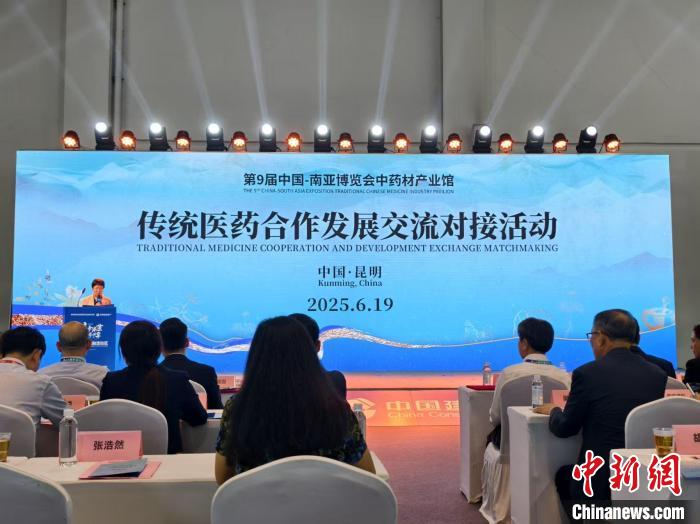
全国多地医药专家齐聚昆明 为传统医药发展“开新方”
Zhong Guo Xin Wen Wang· 2025-06-20 02:17
Core Viewpoint - The traditional medicine cooperation development exchange event was launched in Kunming, Yunnan Province, aiming to promote the creative transformation and innovative development of traditional medicine [1][2]. Group 1: Event Overview - The event took place on June 19 during the 9th China-South Asia Expo at the Chinese herbal medicine industry pavilion [2][3]. - Experts, scholars, and representatives from various associations and enterprises in the traditional medicine field gathered to discuss strategies for development [1][2]. Group 2: Key Remarks - Zhang Jie, Deputy Director of the Yunnan Provincial Department of Agriculture and Rural Affairs, emphasized the need for standardization, digitalization, and internationalization of traditional medicine to benefit people globally [2]. - Ma Zhongming, Deputy Director of the Science and Technology Department of the National Administration of Traditional Chinese Medicine, highlighted Yunnan's rich resources and the importance of improving the quality and innovation of traditional medicine [2]. Group 3: Strategic Collaborations - Strategic cooperation agreements were signed between Kunming University of Science and Technology and the Vietnam Herbal Research Institute, as well as between the Wenshan Zhuang and Miao Autonomous Prefecture Government and Yunnan Baiyao Group [4]. - An initiative for mutual recognition of international circulation standards for traditional medicinal materials was launched, focusing on information, quality safety, traceability, and customs facilitation [4].


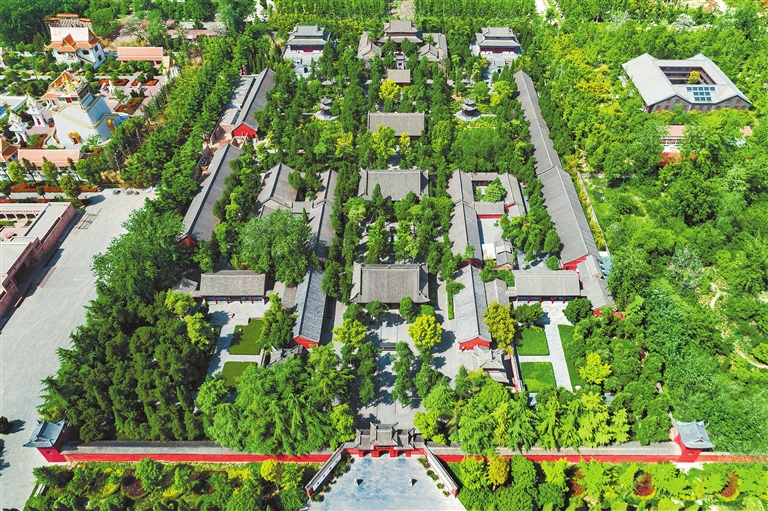
千年古刹 今朝新篇——习近平总书记在洛阳白马寺考察回访记
He Nan Ri Bao· 2025-05-21 00:06
Core Viewpoint - The visit of General Secretary Xi Jinping to Baima Temple emphasizes the importance of integrating religion with Chinese traditional culture and adapting it to socialist society [1][10]. Group 1: Historical Significance - Baima Temple, established during the Eastern Han Dynasty, is recognized as the first official Buddhist temple in China, with nearly two thousand years of history [1][2]. - The temple has been a key site for the introduction and development of Buddhism in China, showcasing the process of its sinicization [11]. Group 2: Cultural Heritage Protection - Baima Temple was designated as a national key cultural relic protection unit in 1961, with ongoing protective restoration efforts since the founding of New China [2][5]. - Recent restoration projects have included the approval of a design plan in 2018 and the allocation of special funds for preservation in 2020 [5]. Group 3: Modern Developments - A new museum is being planned at Baima Temple, focusing on immersive experiences that highlight the historical evolution of the temple across different dynasties [6]. - The local government is enhancing the Baima Temple area to boost its cultural tourism appeal, including the renovation of public spaces and infrastructure [8]. Group 4: Cultural Exchange - Baima Temple serves as a platform for cultural exchange, attracting both domestic and international tourists, and fostering understanding between different civilizations [12]. - The temple's historical significance and well-preserved artifacts contribute to its role in promoting Chinese culture globally [12].
深刻把握坚持创造性转化、创新性发展的理论意涵与实践要求(深入学习贯彻习近平新时代中国特色社会主义思想·原创性概念标识性概念纵横谈)
Ren Min Ri Bao· 2025-05-14 22:41
Core Viewpoint - The article emphasizes the importance of creatively transforming and innovatively developing traditional Chinese culture as a means to enhance national identity and cultural confidence, which is essential for the rejuvenation of the Chinese nation [1][2][3]. Group 1: Cultural Mission and Responsibility - The Chinese Communist Party (CCP) recognizes the preservation and promotion of traditional culture as a historical responsibility and sacred mission [1][4]. - Since the 18th National Congress, the CCP has prioritized cultural construction, focusing on the transmission and development of Chinese civilization [1][2]. Group 2: Theoretical Framework - The concepts of "creative transformation" and "innovative development" are seen as significant theoretical innovations that guide practical exploration in cultural development [2][5]. - These concepts aim to address the "ancient-modern and East-West debate" and promote theoretical innovation within the CCP [3][6]. Group 3: Practical Pathways - The CCP views the creative transformation and innovative development of traditional culture as effective pathways to fulfill its cultural mission [4][5]. - The party's cultural construction theory has evolved, emphasizing the need for cultural confidence and openness to external influences while maintaining a focus on traditional values [16][17]. Group 4: Contemporary Relevance - The article highlights the contemporary value of traditional culture in shaping core socialist values and enhancing national governance capabilities [12][19]. - It stresses the importance of integrating traditional culture with modern practices to ensure its relevance in contemporary society [20][21]. Group 5: Methodological Significance - The principles of serving the people and socialism, along with the idea of diverse cultural expressions, are fundamental to the CCP's approach to cultural development [14][15]. - The article outlines a methodological framework that balances tradition and innovation, aiming to elevate the understanding of cultural construction within the party [18].