国际法治

Search documents
荷兰媒体:美国传递出“极其糟糕”的信息
Xin Hua She· 2026-01-06 06:28
特朗普的真实意图已再无疑问。过去几个月里,人们还在作一些拙劣的努力,试图为在委内瑞拉周边的 军事集结赋予合法性。马杜罗被指控通过向美国输送毒品——一种"大规模杀伤性武器"——来威胁美国 人的生命。然而,在加拉加斯行动后就清楚了,有关毒品的指控只是权宜之计,特朗普关注的核心是委 内瑞拉的石油。 来自欧盟的最初反应显得软弱无力,这在一定程度上可以理解。特朗普告别旧世界秩序的速度令人措手 不及,而在正在形成的严酷的新世界秩序中,美国仍然是欧盟不可或缺的盟友,想要轻易与之保持距离 并不现实。但沉默绝不是选项,人们希望欧洲领导人能尽快作出回应,不仅在言辞上维护国际法治,更 要在行动上加以捍卫。正在竭力维系多边主义的联合国,理应得到欧洲所能提供的一切支持。 新华财经海牙1月5日电(记者邵海军)荷兰主流媒体《新鹿特丹商报》日前刊发评论文章认为,美 国"绑架"委内瑞拉总统马杜罗,不仅是对一个主权国家的非法攻击,也是对国际法治的挑衅,开了一个 危险先例,传递出"极其糟糕"的信息。文章摘要如下: 美国总统特朗普通过这一行动传递的信息是:如果你想要什么,就去夺取,必要时动用暴力。这是一个 极其糟糕的开端。 在委内瑞拉之后,美国还会 ...
“美国绑架马杜罗,高市早苗陷入两难境地”
Xin Lang Cai Jing· 2026-01-05 00:10
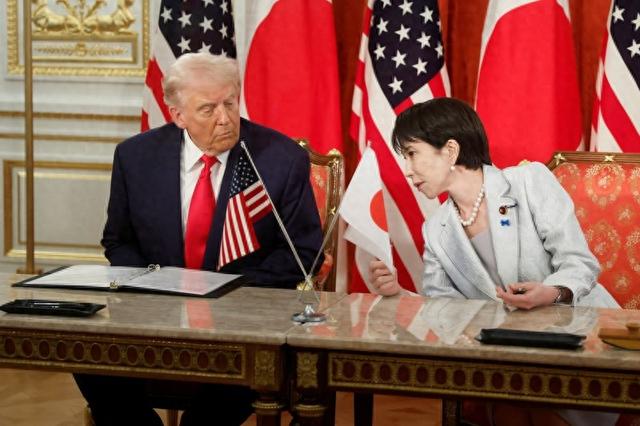
【文/观察者网 柳白】新年伊始,特朗普政府以公然绑架他国总统的强盗之姿,令西方世界自诩的"国际 法治"沦为笑谈,也让日本愁坏了。 日本时事通讯社1月4日发表报道指出,在特朗普政府对委内瑞拉发动军事行动并掳走马杜罗总统后,日 本政府在外交立场上陷入两难。一方面,日本长期对外强调"法治"和"反对单方面改变现状";另一方 面,美国又是日本唯一的同盟国,使东京难以公开批评。首相高市早苗虽在社交平台表态将致力于缓和 局势,但刻意回避对美方军事行动本身的评价。日本政府内部坦承,此次表态是在坚持既有原则与顾及 日美同盟关系之间小心拿捏的结果。 报道称,针对特朗普政府对委内瑞拉发起的军事行动,日本政府正陷入应对困境。 高市早苗4日在社媒X平台上表示,日本政府将致力于稳定局势,将日本国民的安全放在首位,同时与 相关国家密切协调,共同应对局势。 也就是说,此次若默许美国的军事行动,日方此前的外交主张或将面临自相矛盾的拷问。 另一方面,即便美方的行为涉嫌违反国际法,考虑到日美同盟的重要性,日本也难以对美国提出批判。 报道说,当前,日中关系因首相此前就台海局势的相关言论已陷入冷淡,若此时与特朗普政府的关系出 现裂痕,中国很可能会进一 ...

联合国前副秘书长索尔海姆接受《环球时报》专访:“全球治理倡议将成为世界未来发展的重要基石”
Huan Qiu Shi Bao· 2025-12-28 22:58
Core Viewpoint - The article discusses China's global governance initiative, which aims to establish principles that promote equality among nations and enhance international cooperation amidst a changing geopolitical landscape [1][2]. Group 1: Global Governance Initiative - China's global governance initiative emphasizes five core principles: sovereign equality, adherence to international law, multilateralism, a people-centered approach, and action-oriented strategies [1]. - The initiative has garnered widespread recognition from various countries, including major global South nations like India, Brazil, South Africa, and Indonesia, as well as support from several European countries [1][2]. Group 2: Challenges in Global Governance - There is a significant disparity between legal sovereignty and actual power dynamics, with strong nations often overshadowing weaker ones in terms of influence and rule-making [2]. - The existing international system, particularly institutions like the United Nations, is seen as outdated and not reflective of the current global power structure, necessitating deep reforms [3]. Group 3: Future of International Institutions - New international platforms such as the Shanghai Cooperation Organization and the Asian Infrastructure Investment Bank are viewed as essential supplements to traditional institutions, providing a voice for developing countries [3]. - The shift in global power dynamics indicates that developing nations will play a crucial role in future international rule-making, necessitating their active participation in multilateral dialogues [3]. Group 4: Sustainable Development and International Law - The core challenge of sustainable development is rooted in domestic policy discrepancies among nations, which complicate international cooperation [4]. - The article highlights that while major economies are advancing green transitions, the absence of U.S. participation does not hinder progress, as other nations can still lead initiatives [4]. Group 5: Perspectives on Future International Affairs - The outlook for 2026 suggests that China will continue its steady development and lead in global green initiatives, while the U.S. may struggle with internal divisions and declining relative power [6]. - Other regions, particularly India and Europe, are expected to accelerate their development and strategic autonomy, with hopes for peace in conflict areas like Ukraine and Gaza [6].
近年来多国频繁采用单边措施对俄中伊等国实施经济制裁 中方回应
Zhong Guo Xin Wen Wang· 2025-12-04 07:48
Core Viewpoint - The Chinese government opposes unilateral sanctions imposed by various countries on nations such as Russia, China, and Iran, arguing that these measures violate international law and undermine global cooperation [1] Group 1: Unilateral Sanctions - Unilateral measures are seen as contrary to the principles of the United Nations Charter and disrupt the foundation of multilateralism and international legal order [1] - Such sanctions are believed to severely violate basic human rights, including the right to life and development [1] Group 2: Call for Cooperation - China calls for the international community to strengthen unity and cooperation to resist unilateralism [1] - There is an emphasis on maintaining an international system centered around the United Nations and promoting a more just and equitable direction for global governance [1]
“完善全球治理法治新平台”主题边会在联合国举行
Xin Hua Wang· 2025-10-30 05:52
Core Points - The International Mediation Institute, the world's first intergovernmental international legal organization dedicated to resolving international disputes through mediation, officially opened on October 20 in Hong Kong, China [2] - The establishment of the International Mediation Institute reflects China's commitment to uphold the authority of the UN Charter, promote true multilateralism, and advance adherence to international legal governance [1] - The Institute aims to mediate disputes between countries, between countries and foreign investors, and international commercial disputes, offering unique advantages such as flexibility, cost-effectiveness, convenience, and efficiency [1] Summary by Sections International Mediation Institute - The International Mediation Institute is headquartered in Hong Kong and is the first of its kind to focus on mediation for international disputes [2] - It officially commenced operations on October 20, 2023 [2] China's Role - China is the founding and host country of the International Mediation Institute, showcasing its determination and proactive actions in defending the UN Charter and promoting international law [1] - The Chinese government encourages participation from various countries and aims to strengthen cooperation between the Institute and international organizations, including the UN [1] Global Reception - Representatives from countries such as Pakistan, Venezuela, Nicaragua, and Serbia expressed that the Institute aligns with the spirit of the UN Charter and fosters international cooperation [1] - The establishment of the Institute is seen as an innovative development in international law and a vivid representation of multilateralism, as well as a practical implementation of China's global governance initiative [1] - The UN Commission on International Trade Law indicated a willingness to collaborate actively with the International Mediation Institute, reflecting the growing recognition of mediation in the international community [1]
欧盟欲“劫富济贫”2000亿俄资产!德国急刹:千亿德企恐血本无归
Sou Hu Cai Jing· 2025-10-27 06:24
Core Points - The European political landscape is currently engaged in a fierce debate over the €200 billion of frozen Russian assets, which has become a focal point for EU Commission President Ursula von der Leyen's plan to address Ukraine's funding crisis [1][14] - Von der Leyen proposed using these frozen assets as collateral to issue €140 billion in "compensation loans" to support Ukraine, amidst concerns from Germany regarding the potential financial risks involved [1][3][14] Group 1: Proposal Details - Von der Leyen's plan aims to avoid using EU taxpayer money by leveraging what she describes as "illegal property" from Russia to assist Ukraine [3][5] - The proposal envisions a funding cycle where the frozen assets are used as collateral to issue bonds, which would then be provided to Ukraine, with the expectation that Russia would repay these loans after a potential defeat [3][5] Group 2: German Concerns - Germany, as the largest investor in Russia with investments totaling €100 billion, has expressed significant concerns about the risks associated with von der Leyen's proposal [7][11] - The potential backlash from Russia could target German investments, leading to severe economic repercussions for Germany and possibly the entire EU [11][12] Group 3: Internal EU Disagreements - There is a lack of consensus within the EU regarding von der Leyen's proposal, with countries like Belgium and Hungary voicing strong opposition due to the potential legal and financial risks involved [12][14] - Belgium's Prime Minister has indicated that the country does not want to bear the risks alone, while Hungary's Prime Minister has warned that such actions could damage the EU's financial credibility [12][14] Group 4: Broader Implications - The proposal raises significant concerns about the stability of the financial markets and the trust in the EU's financial system, as it could set a precedent for the arbitrary use of frozen assets [12][14] - The potential for legal disputes and the erosion of international law principles could lead to a chaotic financial environment, undermining global investor confidence [12][14]

古特雷斯呼吁各国携手打造“配得上全人类希望”的安理会
Zhong Guo Xin Wen Wang· 2025-10-25 02:23
Core Points - The UN Secretary-General Antonio Guterres called for countries to work together to create a Security Council that is "worthy of the hopes of all humanity" [1][2] - Guterres emphasized the need for reform in the Security Council, particularly in expanding its membership to enhance representation and stability in a multipolar world [1][2] Group 1 - The Security Council has been dedicated to achieving lasting peace for humanity since its establishment in 1946, and it has played a crucial role in preventing major wars between great powers [1] - Guterres pointed out the fragility of the Security Council's legitimacy, noting that member states often act contrary to the principles of the UN Charter, which undermines international action and the overall credibility of the UN [1] - He warned that ignoring rules could lead to disastrous outcomes, as history has shown [1] Group 2 - Guterres stated that the existence of the Security Council is not for "hegemony or empire," but rather for peace-making, highlighting the importance of a council that meets the needs of the times to avoid serious dangers [2] - On the same day, the 15 member states of the Security Council issued a presidential statement reaffirming their commitment to the purposes and principles of the UN Charter, emphasizing that multilateralism and the rule of international law are fundamental to achieving lasting peace and shared prosperity [2]
外交部:联合国宪章宗旨和原则是践行国际法治的“规矩”
Xin Hua Wang· 2025-10-23 09:53
Core Viewpoint - The spokesperson emphasizes the importance of the UN Charter as the foundation of international law and the necessity of upholding multilateralism in the face of global challenges [1][2] Group 1: Importance of the UN - The UN is described as the most universal, representative, and authoritative intergovernmental organization, having played an irreplaceable role in maintaining peace, promoting development, and improving livelihoods over the past 80 years [1] - The spokesperson argues that without the UN, the world would regress to a state of "survival of the fittest," leading to chaos and frequent conflicts [2] Group 2: China's Role and Initiatives - China, as a responsible major country, has proposed several global initiatives, including the Global Development Initiative, Global Security Initiative, Global Civilization Initiative, and Global Governance Initiative, aimed at promoting true multilateralism and a fair global governance system [2] - These initiatives are aligned with the principles of the UN Charter, forming an organic whole that promotes prosperity through development, stability through security, mutual trust through civilization, and justice through governance [2] Group 3: Commitment to International Order - Regardless of changes in the international situation, China remains committed to maintaining a UN-centered international system and an international order based on international law [2] - The goal is to work together with other countries towards a multipolar world and inclusive economic globalization, ultimately striving for the construction of a community with a shared future for mankind [2]
专访丨全球治理倡议对提升小国代表性具有积极意义——访波黑驻欧盟使团团长凯西奇
Xin Hua Wang· 2025-10-16 01:00
Core Viewpoint - The global governance initiative proposed by China positively impacts the representation of small countries, promotes international rule of law, and strengthens multilateralism [1][2] Group 1: International Law and Small Countries - The global governance initiative emphasizes adherence to international rule of law, which is appealing to many small and developing countries [1] - The current "rules-based order" primarily serves Western interests, particularly those of the United States, which creates pressure on small countries [1] - The initiative offers a viable solution for protecting the sovereignty and rights of small and vulnerable nations, aiming to alter the long-standing Western-dominated global system [1] Group 2: Multilateralism and Practical Solutions - A key highlight of the global governance initiative is its commitment to multilateralism, ensuring equal status for all countries regardless of wealth or size [2] - The effectiveness of global governance is contingent upon its ability to address real-world issues, contrasting with Western discussions that often lack practical application [2] - There is an expectation for the development of multilateral mechanisms, such as the BRICS cooperation framework, which can provide small countries with more economic and political space [2]
中方提出12个反对
第一财经· 2025-10-10 01:24
Core Viewpoint - The article emphasizes the importance of upholding international rule of law and global governance, presenting six key proposals to strengthen these principles in international relations [3][4]. Summary by Sections Section 1: Principles of International Law - The core principles of international law include the equality of sovereignty, non-interference in internal affairs, and peaceful dispute resolution, which must be collectively defended [3]. Section 2: Diversity in International Legislation - International legislation should respect cultural diversity and ensure equal participation of all countries, particularly enhancing the voice of Global South nations [3][4]. Section 3: Equality in Sovereignty - True sovereignty equality requires uniform application of international rules, opposing exceptionalism and double standards [4]. Section 4: Treaty Obligations - Adherence to treaties is a fundamental principle of international law, and all countries should fulfill their treaty obligations responsibly [4]. Section 5: Emerging Areas of International Rules - There is a need to accelerate the formulation of international rules in emerging fields such as cyberspace, outer space, and climate change, reflecting real needs and common interests [4]. Section 6: Peaceful Dispute Resolution - Peaceful resolution of disputes is a basic principle of international law, with mediation being a key method, and the establishment of an International Mediation Institute is encouraged [4]. Section 7: Commitment to Rule of Law - China is committed to the rule of law and aims to work with other countries to uphold the principles of the UN Charter and promote a democratic and law-based international order [4].