
城市可持续发展

Search documents
不排名、重进步,全球100多个城市应用的上海指数如何推动可持续发展转变
Di Yi Cai Jing· 2025-11-01 06:21
Core Insights - The Shanghai Index is evolving from a theoretical framework into a practical policy tool and collaboration platform for promoting sustainable urban development globally [1][3] - The release of the Shanghai Index Application Report at the World Cities Day event highlights its role in providing a structured approach to assess urban sustainability [1][3] Application Scenarios - The Shanghai Index, officially known as the Global Urban Monitoring Framework - Shanghai Application Index, is developed to scientifically diagnose and analyze the progress of urban sustainability [3][4] - The index includes 47 key indicators tailored to various application scenarios, focusing on human-centered urban renewal and aligning with UN Sustainable Development Goals [3][4] - Specific application scenarios include indicators for innovation cities, health cities, and mega cities, addressing diverse urban challenges [5][6] Indicator Framework - The indicator system is based on the "Shanghai Index 5×4 framework," featuring seven key indicators that capture economic and social vitality changes due to urban renewal [4][5] - The framework includes traditional metrics like GDP growth and PM2.5 concentration, alongside innovative indicators such as built-up area light index [4][5] Progress and Adaptability - The Shanghai Index emphasizes progressiveness, focusing on the improvement of urban sustainability levels rather than ranking cities [8][10] - It is designed to be an open platform that adapts to the unique stories and challenges of different cities, ensuring relevance and applicability [11][12] - The index aims to guide public policy formulation by identifying urban shortcomings and suggesting actionable solutions [5][12] Global Application and Future Directions - Over 100 cities worldwide are currently piloting the Shanghai Index, with ongoing efforts to refine its methodology through practical applications [14] - Future initiatives include integrating artificial intelligence and big data to enhance the index's capabilities and creating a global urban database for shared access [15]

惠及1000城10亿人:联合国人居署旗舰项目加速全球城市转型
Di Yi Cai Jing· 2025-10-31 03:03
Core Insights - The flagship project by UN-Habitat aims to transform 1,000 cities and improve the lives of 1 billion people through localized actions for sustainable development [1][2] Group 1: Challenges in Urban Sustainability - The most pressing challenge in urban sustainability is the global housing crisis, with approximately 1 billion people lacking stable access to water, sanitation, and land rights, a number projected to double in 30 years if current trends continue [2] - Housing issues are interconnected with employment, health, education, and social equity, exacerbated by climate change, economic pressures, and social exclusion [2] Group 2: Solutions and Strategies - The flagship project is built on three pillars: data, planning, and strategic investment, which aim to convert global goals into local projects [2] - "Data" serves as a common language to help cities identify gaps and optimize decision-making through unified, open localized data [2] - "Planning" requires integration within a multi-level governance framework, aligning national and local strategies starting from community visions [2] - "Investment" acts as a catalyst to leverage limited funds for chain investments in transportation, housing, and energy, encouraging collaboration among government, private sector, and civil capital [2] Group 3: Implementation and Global Collaboration - The flagship project currently covers 45 countries and over 180 cities, with the World Urban Forum serving as a key platform for these urban communities to gather [3] - There is a desire to leverage Chinese experiences and international resources, positioning Shanghai as a new hub for urban sustainability cooperation [3] - The aim is to showcase replicable local solutions and provide a platform for systematic upgrading and global promotion of existing successful cases [3] - UN-Habitat is focused on breaking development silos and making sustainable development goals a tangible reality through systematic pathways and global network collaboration [3]
“创新发展,共建以人为本的智慧城市” 世界城市日启航第二个十年 从上海走向全球,赋能可持续发展
Ren Min Ri Bao· 2025-10-30 22:22
Core Viewpoint - China's urbanization is transitioning from a rapid growth phase to a stable development phase, focusing on improving existing urban quality and efficiency rather than large-scale expansion [1] Group 1: World Cities Day Development - World Cities Day was established following the Shanghai Expo in 2010, with the aim of promoting sustainable urban development globally [2] - The first decade of World Cities Day has seen significant growth, establishing a framework for global activities and creating key products like the Shanghai Manual and the Shanghai Award [3] Group 2: Global Engagement and Activities - World Cities Day has developed a multi-layered global activity system, facilitating urban exchanges and citizen participation across various cities [4] - Major events have been held in cities like Milan, Quito, and Liverpool, with the next main event scheduled for Bogotá in 2025 [4] Group 3: Shanghai's Role and Initiatives - Shanghai has become a hub for World Cities Day activities, hosting significant events like the Urban Development Global Conference, which focuses on innovative urban development themes [5] - The Shanghai International Urban and Architecture Expo showcases innovations in urban construction and management, emphasizing smart and green development [6] Group 4: Achievements and Products - The Shanghai Award and the Shanghai Manual have gained international recognition, with the third Shanghai Award receiving applications from 85 cities across 33 countries in 2025 [7][8] - The Shanghai Index provides a scientific assessment of urban sustainability progress, with the 2025 report offering insights into various urban application scenarios [8] Group 5: Innovation and Future Directions - World Cities Day serves as a platform for showcasing innovative urban management solutions, including early warning systems for disasters and smart city infrastructure [9] - China aims to contribute unique solutions and wisdom for global urban sustainable development through World Cities Day initiatives [9]
迪拜商会与多国代表探讨投资合作
Shang Wu Bu Wang Zhan· 2025-10-30 14:54
Core Insights - Dubai Chamber hosted a roundtable meeting during the Asia-Pacific Cities Summit, attended by representatives from 14 countries and regions [1] - The Secretary-General highlighted Dubai as an international model in economic planning and urban development coordination [1] - Participants discussed promoting sustainable urban development through trade, technological innovation, and infrastructure investment, emphasizing the importance of public-private partnerships in attracting investment and enhancing competitiveness [1]
世界城市日中国主场活动开幕
Ke Ji Ri Bao· 2025-10-29 00:47
Core Viewpoint - The 2025 World Cities Day main event in China, held in Chongqing, focuses on the theme "People's City, Smart Future," emphasizing digital empowerment for urban development and sustainable practices [1] Group 1: Urban Development and Policy - The Chinese government adheres to the development philosophy of "People's City built by the people, for the people," viewing cities as organic systems to achieve historical development milestones [1] - Urbanization levels have significantly increased, with the urban population reaching 940 million, and 19 city clusters accommodating 75% of the national population while contributing 85% of the GDP [1] - The number of cities with a GDP exceeding 1 trillion has reached 27, indicating substantial economic growth in urban areas [1] Group 2: Urban Governance and Innovation - There has been a marked improvement in urban planning, construction, and governance, with advancements in scientific, refined, and intelligent urban management [1] - The event also introduced the 2025 edition of the "Shanghai Manual - 21st Century Urban Sustainable Development Guide" and the "Chongqing Initiative" for global urban development [1]
“数字技术活化千年古城”案例亮相联合国会议
Su Zhou Ri Bao· 2025-10-29 00:26
Core Insights - The "Digital Technology Revitalization of the Millennium Ancient City" case from Gusu District has been included in the 2025 edition of the "Shanghai Manual," showcasing China's experience in historical and cultural preservation at the World Cities Day Global Conference on Sustainable Urban Development [1] - The conference, co-hosted by UN-Habitat and the Shanghai Municipal Government, took place from October 26 to 27, 2023, and highlighted sustainable development cases from 242 cities globally, including 52 from China [1] Group 1 - The case constructs a closed-loop framework of "platform construction - protection and inheritance - revitalization and utilization," utilizing digital technology for the digital preservation, protection, maintenance, and display of cultural heritage [1] - Gusu District implemented the "Ancient City Cell Dissection Project" in December 2020, achieving over 95% household survey coverage of traditional residences, employing laser scanning and drones to create 3D models of cultural relics [2] - The "CIM+ Digital Twin Ancient City" platform was launched in October 2021, featuring multi-scale modeling with a resolution of 3 cm, integrating cross-departmental resources and supporting applications across 17 municipal and district departments with an average daily data call exceeding 20,000 times [2] Group 2 - The platform enables cross-departmental data sharing, enhancing the precision and efficiency of preservation efforts, and supports multi-temporal displays to aid planning and decision-making [2] - Gusu District has initiated the "Ancient City Protection and Renewal Partner Program," encouraging social capital participation in revitalization projects, such as transforming historical residences into boutique hotels and cultural museums [2] - Future plans include deepening the application of digital technology in health monitoring of ancient buildings, cultural tourism consumption, safety protection, and community elder care, aiming to extend the benefits of digital innovation to more residents and share the "Gusu experience" internationally [3]
2025年世界城市日中国主场活动在重庆开幕
Zhong Guo Xin Wen Wang· 2025-10-28 09:17
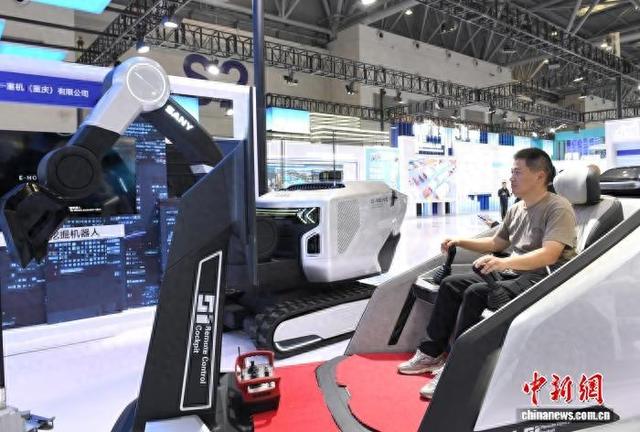
Core Points - The event "World Cities Day China Main Event 2025" was held in Chongqing, marking the first time this event has taken place in a western inland city of China [1][3] - The theme of the event is "People's City, Smart Future," aimed at enhancing international urban cooperation and implementing the United Nations' 2030 Sustainable Development Agenda [3][5] - The event featured the release of the "Chongqing Urban Autonomous Contribution Report" and the "Chongqing Initiative for World Cities Day 2025" [3][5] Summary by Categories Event Overview - The event included an opening ceremony, a global sustainable urban development mayoral forum, multiple parallel forums, thematic exhibitions, and site visits [5] - It aims to provide new ideas and solutions for challenges faced by urbanization, such as resources, environment, and transportation [3] Reports and Guidelines - The 2025 version of the "Shanghai Manual - 21st Century Urban Sustainable Development Guide" was promoted, featuring 21 case studies from 19 cities across 11 countries [3] - The guide emphasizes "people-centered smart cities" and includes practical examples from eight Chinese cities, including Chongqing, showcasing innovative urban management and services [3] Technological Innovations - The event showcased advanced technologies such as an all-electric excavator robot and a pipeline intelligent detection robot, highlighting the integration of digital solutions in urban governance [3][5] - The "Chongqing Bayu Water Management Application System" was presented as a valuable experience for global cities, utilizing an integrated sensing network for ecological governance [3]
减少浪费提高管理水平,这个国际奖项推进城市可持续发展
Di Yi Cai Jing· 2025-10-28 08:36
Core Insights - The Shanghai Award promotes urban governance innovation and experience sharing, with Fuzhou recognized for its achievements in sustainable water management [1][2] - The award is a collaborative initiative between the UN-Habitat and the Shanghai Municipal Government, established to honor cities making significant progress in sustainable development [1][2] Group 1: Fuzhou's Achievements - Fuzhou's urban water supply leakage rate decreased from 19.36% in 2018 to 5.9% in 2024, showcasing effective water management practices [1] - The city was awarded the Shanghai Award in 2023, recognized as one of the first five global awardees for its innovative urban water system governance [1] Group 2: Global Participation and Recognition - In 2024, cities such as Agadir, Tiruvannamalai, Doha, Iztapalapa, and Melbourne received the Shanghai Award for their sustainable initiatives [2] - Agadir reduced urban energy costs by 8% through LED lighting projects, while Melbourne achieved a 79% reduction in municipal operational emissions over the past decade [2] - A total of 85 cities from 63 countries participated in this year's award, with 15 cities making it to the final selection [2]
“全球城市可持续发展项目——街区绿色设计国际标准”在沪发布
Zhong Guo Jing Ji Wang· 2025-10-28 07:48
Core Points - The "Global Urban Sustainable Development Project - International Standard for Green Design of Blocks" has been officially released in Shanghai, initiated by the World Green Design Organization (WGDO) and led by East China University of Science and Technology (ECUST) [1] - This standard, which took three years to complete, is one of the first international green assessment standards focused on the entire lifecycle of urban blocks [1] - The standard evaluates dimensions such as green environment, green facilities, green governance, and the application of green technologies, integrating elements from ISO, UN norms, EU standards, LEED, and Chinese national standards [1] Group 1 - The standard includes a systematic indicator framework covering 11 aspects, including spatial planning, ecological environment, and carbon neutrality adaptation [1] - ECUST has achieved internationally influential and industry-applicable results in areas such as green processes, carbon capture and utilization, anti-corrosion materials, new energy storage, solar energy conversion, catalysts, and air purification [1] - The university emphasizes the application and transformation of scientific research achievements in green design standards, urban renewal, and community governance [1] Group 2 - Academician and Vice President of ECUST, Zhu Weihong, delivered a keynote speech on "Green Energy-Saving Fashion," discussing the latest research progress in new materials [2] - Zhu highlighted the latest research achievement, photochromic glass, which contributes to energy saving and reduction while providing a fashionable appearance for buildings [2] - This material is expected to be applied in more scenarios, including electric vehicles and large public buildings in the future [2]
2025世界城市日城市可持续发展全球大会全体大会在沪举行 陈吉宁倪虹致辞 龚正发布2025版《上海手册》
Jie Fang Ri Bao· 2025-10-27 01:57
Core Insights - The 2025 World Cities Day Global Conference on Urban Sustainable Development was held in Shanghai, emphasizing the importance of sustainable urban development and innovation in city management [1][4] - Shanghai aims to transform into a modern city model by focusing on high-quality urban development, efficient governance, and enhancing the quality of life for its residents [2][3] Group 1: Conference Highlights - The conference was co-hosted by the Shanghai Municipal Government and the United Nations Human Settlements Programme, featuring various international speakers and discussions on sustainable urban practices [1][4] - The theme of the conference was "Innovative Development, Building People-Centric Smart Cities," showcasing achievements in creating innovative, livable, and resilient urban environments [4] Group 2: Policy and Development Goals - Shanghai's leadership emphasized the need for a people-oriented approach in urban governance, integrating public participation and democratic processes into city management [2] - The focus is on promoting sustainable urban renewal, enhancing resource efficiency, and fostering a harmonious relationship between urban development and nature [3] - The city aims to leverage technology and innovation to improve urban governance and service delivery, ensuring a smart and resilient urban ecosystem [2][3]