
存亡危机事态

Search documents
中国大陆至日本航班量大幅下滑!事关侵华历史 高市早苗早年“叫板”视频曝光……新华社发文:错判时与势 注定撞南墙
Mei Ri Jing Ji Xin Wen· 2025-11-16 15:04
Group 1: Impact on Airlines - Multiple Chinese airlines, including Air China, China Southern Airlines, and China Eastern Airlines, have announced special policies for ticket refunds and changes for flights to Japan due to safety concerns raised by the Chinese government [1][4][5] - As of November 16, 10 airlines have implemented refund and change policies for flights to Japan, reflecting a significant operational adjustment in response to the current geopolitical climate [6][2] - The weekly flight volume from mainland China to Japan has seen a substantial decline, with a recovery rate of 82.9% compared to the same period in 2019, marking a 14.5% decrease from the previous week [1][6] Group 2: Market Trends - The number of flights between mainland China and Japan has been decreasing for four consecutive weeks, indicating a potential long-term impact on the travel market [6][7] - Chinese tourists have been the largest group of foreign visitors to Japan, with a notable increase in travel numbers earlier this year, but the current situation may hinder future growth [7] Group 3: Geopolitical Context - The Chinese Ministry of Foreign Affairs has issued warnings regarding the deteriorating safety environment for Chinese citizens in Japan, citing multiple incidents of violence against Chinese nationals [2][4] - Recent provocative statements by Japanese leaders regarding Taiwan have further strained Sino-Japanese relations, potentially affecting tourism and travel between the two countries [8][9]

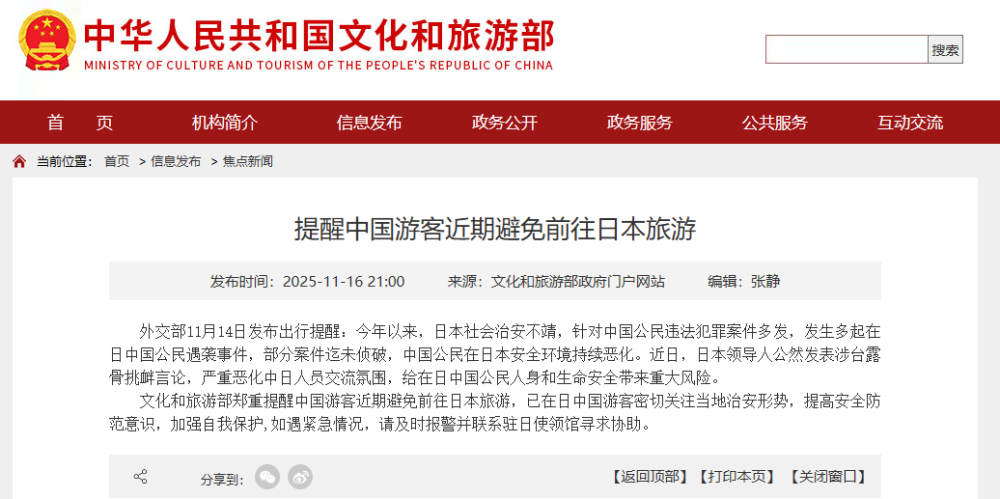
中国大陆至日本航班量大幅下滑!事关侵华历史,高市早苗早年“叫板”视频曝光……新华社发文:错判时与势,注定撞南墙
Mei Ri Jing Ji Xin Wen· 2025-11-16 14:09
Group 1 - Japan has been a major outbound destination for Chinese tourists, but recent advisories from the Chinese Ministry of Foreign Affairs and the Ministry of Culture and Tourism have led to a significant decline in flight volumes to Japan [1][6] - As of the 45th week of the year (November 3-9), the weekly flight volume between mainland China and Japan was 1,189 flights, with a recovery rate of 82.9% compared to the same period in 2019, marking a 14.5% decrease from the previous week [1][6] - Ten airlines have announced special policies for ticket refunds and changes for flights to Japan, allowing free cancellations and modifications for tickets purchased before November 15, 2023, for travel dates until December 31, 2025 [4][5] Group 2 - Chinese airlines account for approximately 80% of the flight volume on the China-Japan route, with the top five airlines (China Eastern Airlines, Air China, Spring Airlines, China Southern Airlines, and Juneyao Airlines) holding about 77% of the total capacity [6] - The number of flights from mainland China to Japan has been declining for four consecutive weeks since the end of the summer travel season, with flight numbers dropping from 1,223 to 1,189 during this period [6] - The inbound tourism market from mainland China to Japan is expected to be affected, as data from the Japan National Tourism Organization shows that in September 2025, the number of foreign tourists entering Japan was 3.267 million, a year-on-year increase of 13.7% [6]
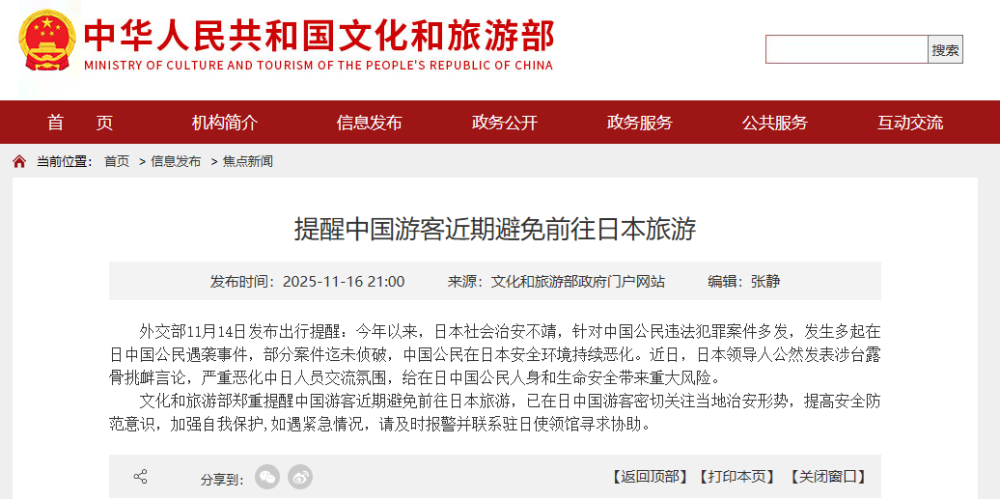
岛内舆论批高市早苗:“日本凭什么跟中国大陆硬杠?”
Zhong Guo Xin Wen Wang· 2025-11-16 08:57
Group 1 - Japanese Prime Minister Sanna Takashi made provocative remarks regarding Taiwan in the National Diet, suggesting that a sudden situation in Taiwan could trigger Japan's collective self-defense rights [1] - The term "existential crisis situation" was introduced in Japan's 2015 security legislation, allowing Japan to assist allies even if its territory is not directly attacked [1] - Takashi's statements are seen as a significant shift, as she is the first sitting prime minister to explicitly link Taiwan's situation to Japan's security, potentially opening the door for military intervention [1] Group 2 - Former legislator Guo Zhengliang compared Japan's stance to Taiwan's DPP's "anti-China, protect Taiwan" narrative, indicating a shared aggressive posture [2] - The Chinese government has warned that any attempts by Taiwan to rely on external forces for independence will ultimately fail [2] - The Chinese Ministry of National Defense emphasized that any reckless military intervention by Japan in the Taiwan Strait would result in severe consequences [2]
视频丨涉台谬论引发朝野各方反对 日本民众集会要求高市早苗下台
Yang Shi Xin Wen Ke Hu Duan· 2025-11-16 01:43
Core Viewpoint - Japanese Prime Minister Sanae Takaichi's recent statements in the Diet suggest a potential military intervention in the Taiwan issue, marking a significant shift in Japan's defense posture since World War II [1][5][14]. Summary by Sections Definition of "Existential Crisis Situation" - The term "existential crisis situation" was created by former Prime Minister Shinzo Abe a decade ago, allowing Japan to exercise collective self-defense in cases where a closely related foreign country is attacked, threatening Japan's survival [4][6]. - This concept is seen as a legal loophole to bypass the restrictions imposed by Japan's pacifist constitution, particularly Article 9, which prohibits military actions [4][6]. Takaichi's Ambitions and Policy Shifts - Takaichi, identifying as a successor to Abe's policies, has linked the Taiwan issue to Japan's "existential crisis," suggesting that Taiwan's situation threatens Japan's survival [5][6]. - The Japanese government is reportedly planning a significant shift in defense policy, including increasing military spending and potentially revising the "Three Non-Nuclear Principles" [9][10]. Domestic Reactions and Criticism - Takaichi's remarks have sparked widespread criticism within Japan, with former Prime Ministers and political figures expressing shock and urging her to retract her statements [14][16]. - Public protests have emerged, with citizens demanding Takaichi's resignation and expressing concerns over her provocative rhetoric towards China [17]. Historical Context and Implications - Analysts warn that Japan's historical pattern of military expansion often begins with a narrative of "crisis," which has been used to justify past aggressions [5][6]. - The current political climate reflects a resurgence of right-wing sentiments in Japan, aiming to reshape the post-war pacifist narrative and challenge the established international order [17].
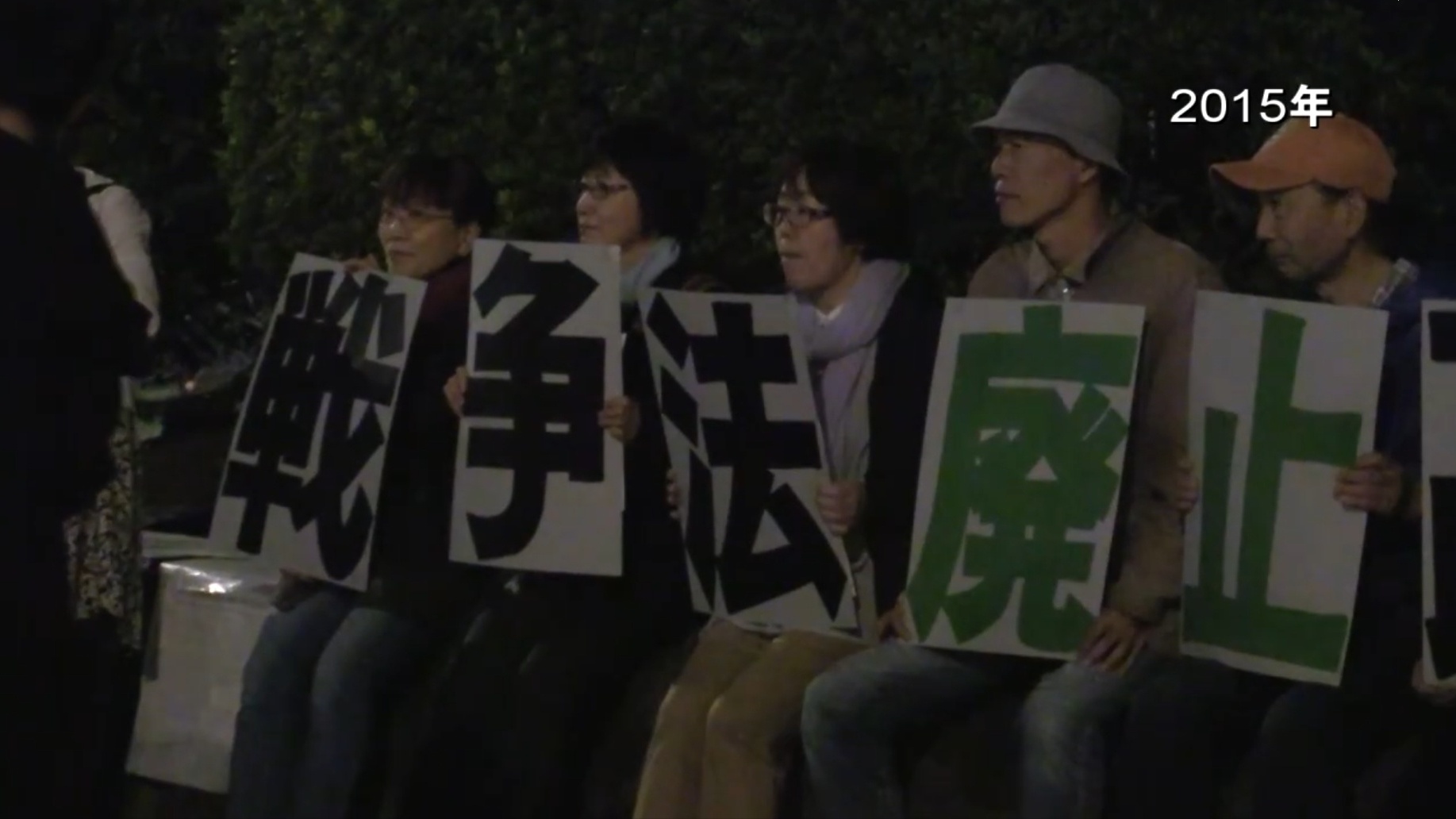
从“存亡危机”到“谋核”野心,高市早苗又要“搞什么事”?
Yang Shi Xin Wen· 2025-11-16 00:47
Core Viewpoint - Japanese Prime Minister Sanae Takaichi's recent statements in the Diet suggest a potential military intervention in the Taiwan issue, marking a significant shift in Japan's defense posture since World War II [1][5][12] Group 1: Concept of "Existential Crisis Situation" - The term "existential crisis situation" was introduced by former Prime Minister Shinzo Abe a decade ago, allowing Japan to exercise collective self-defense under specific conditions [1][2] - This concept defines a situation where an armed attack on a closely related foreign country poses a clear danger to Japan's survival, fundamentally threatening the rights of its citizens [1][2] Group 2: Political Implications - Takaichi's remarks link Taiwan to Japan's "existential crisis situation," which has sparked significant domestic backlash, with critics arguing that Taiwan is part of China and not a threat to Japan's survival [5][12] - Analysts warn that Japan's historical narrative of "crisis" has often been used to justify military expansion and aggression, suggesting Takaichi's rhetoric may serve similar purposes [5][12] Group 3: Defense Policy Shift - Takaichi has proposed aggressive military expansion policies, including a significant increase in defense spending and the potential development of nuclear capabilities [6][8] - The ruling Liberal Democratic Party is set to discuss amendments to key security documents, aiming to raise defense spending to 2% of GDP and reconsider the "Three Non-Nuclear Principles" [8][11] Group 4: Domestic Reactions - Takaichi's statements have led to widespread criticism from former prime ministers and political figures, emphasizing that Japan should not interfere in Taiwan's internal affairs [12][13] - Public protests have erupted, with citizens demanding Takaichi's resignation and a retraction of her statements, reflecting a strong opposition to her militaristic rhetoric [14][15]
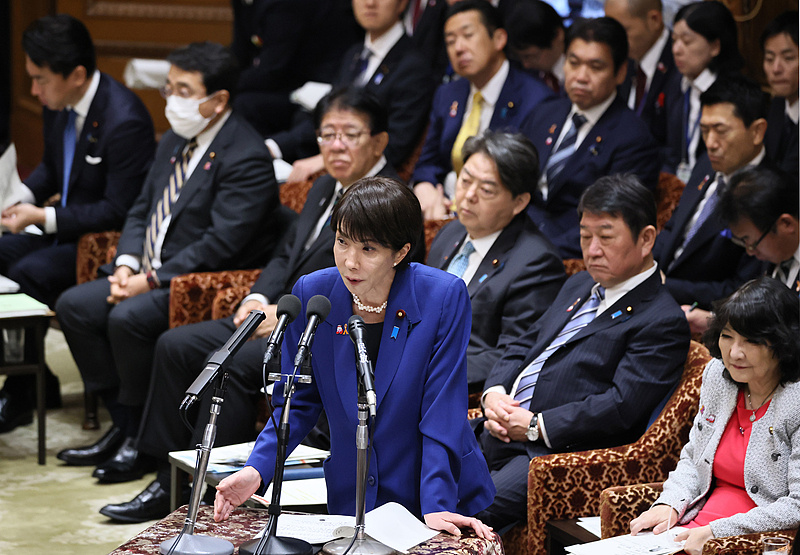
从“存亡危机”到“谋核”野心 高市早苗又要“搞什么事”?
2 1 Shi Ji Jing Ji Bao Dao· 2025-11-16 00:44
Core Viewpoint - Japanese Prime Minister Sanae Takaichi's recent statements in the Diet suggest a potential military intervention in the Taiwan issue, marking a significant shift in Japan's defense posture since World War II [1][5][10] Summary by Sections Concept of "Existential Crisis Situation" - The term "Existential Crisis Situation" was created by former Prime Minister Shinzo Abe a decade ago, allowing Japan to exercise collective self-defense under specific conditions [3] - This situation is defined as a clear and imminent danger that threatens Japan's survival due to military attacks on closely related foreign nations [3][5] Takaichi's Statements and Domestic Reactions - Takaichi linked the Taiwan issue to Japan's "Existential Crisis Situation," suggesting that Taiwan's situation threatens Japan's survival [5][10] - Her comments have sparked significant backlash within Japan, with former Prime Ministers and political leaders criticizing her statements as illogical and provocative [11][12] Defense Policy Shift - The ruling Liberal Democratic Party plans to discuss amendments to Japan's National Security Strategy and related documents, aiming to increase defense spending and potentially revise the "Three Non-Nuclear Principles" [7][9] - Takaichi's administration is pushing for aggressive military policies, including a substantial increase in defense spending and the possibility of acquiring nuclear capabilities [7][9] Public Protests and Political Pressure - Following Takaichi's remarks, public protests erupted in Tokyo, with citizens demanding her resignation and a retraction of her statements [12][13] - Various political figures and civil groups have expressed concerns over the implications of her comments for Japan's national security and international relations, particularly with China [10][12][13]
高市之“祸”:撕裂中日关系的“天崩开局”
2 1 Shi Ji Jing Ji Bao Dao· 2025-11-15 23:46
Core Viewpoint - The recent statements made by Japan's new Prime Minister, Sanae Takaichi, regarding Taiwan have sparked significant controversy in the international community, indicating a potential shift in Japan's political stance towards China and Taiwan [1][15][42]. Group 1: Political Context - Takaichi's comments suggest that a situation in Taiwan could be considered a "survival crisis" for Japan, implying possible military intervention [1][5]. - This marks a departure from previous Japanese leaders who refrained from linking Taiwan's situation directly to Japan's national security [7][17]. - The term "survival crisis" was originally introduced by former Prime Minister Shinzo Abe, allowing Japan to exercise collective self-defense under certain conditions [5][27]. Group 2: Domestic Reactions - Takaichi's remarks have faced backlash from various political figures in Japan, including former Prime Ministers who emphasize that Taiwan is a domestic issue for China and Japan should not interfere [17][19]. - Despite the criticism, Takaichi has refused to retract her statements, indicating a firm stance aligned with the current government's views [19][25]. - The political climate in Japan appears to be shifting towards a more right-leaning approach, with Takaichi's comments reflecting a broader trend among the ruling coalition [27][38]. Group 3: International Implications - The Chinese government has expressed strong discontent with Takaichi's statements, viewing them as a violation of China's sovereignty and a potential threat to regional stability [13][41]. - Experts warn that Japan's rightward political shift could lead to increased tensions in East Asia, reminiscent of historical militaristic tendencies [27][38]. - The situation raises concerns about Japan's adherence to its pacifist constitution and its implications for international law and relations [38][41].
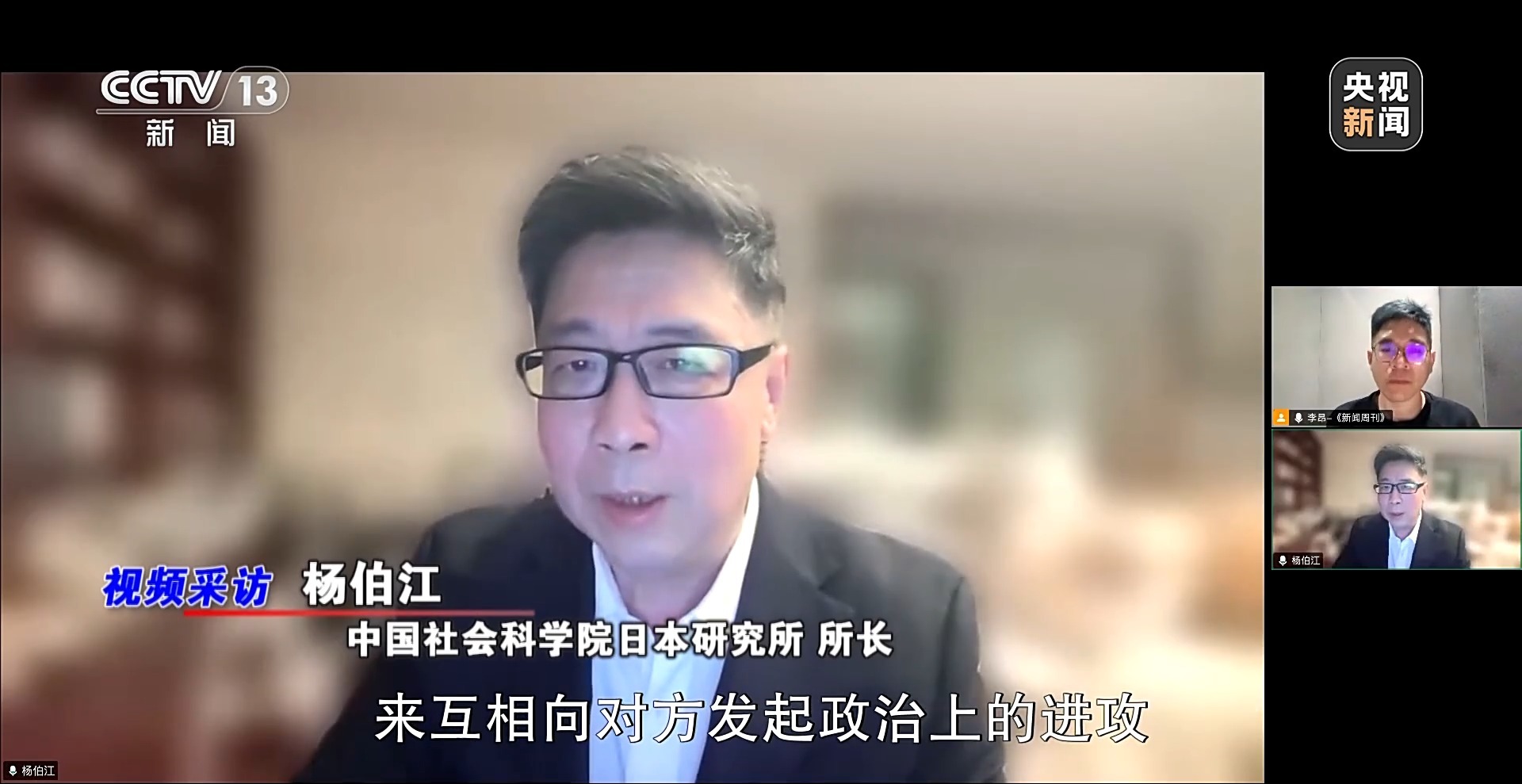
新闻周刊丨高市之“祸”:撕裂中日关系的“天崩开局”
Yang Shi Xin Wen· 2025-11-15 23:36
Core Viewpoint - The recent statements made by Japan's new Prime Minister, Sanae Takaichi, regarding Taiwan have sparked significant controversy in the international community, indicating a potential shift in Japan's political stance towards China and Taiwan [1][15][40]. Group 1: Political Context - Takaichi's comments suggest that a situation in Taiwan could be considered a "survival crisis" for Japan, implying possible military intervention [1][5]. - This marks a departure from previous Japanese leaders who refrained from linking Taiwan's situation directly to Japan's national security [7][19]. - The term "survival crisis" was originally introduced by former Prime Minister Shinzo Abe, allowing Japan to exercise collective self-defense under certain conditions [5][27]. Group 2: Domestic Reactions - Takaichi's remarks have faced backlash from various political figures in Japan, including former Prime Ministers who emphasize that Taiwan is a domestic issue for China and should not involve Japan [17][19]. - Critics within Japan have labeled Takaichi's statements as reckless and dangerous, raising concerns about the implications for Japan's military posture and regional stability [9][21][25]. Group 3: International Implications - The Chinese government has expressed strong opposition to Takaichi's comments, viewing them as a violation of Japan's previous political commitments and an interference in China's internal affairs [13][41]. - Experts warn that Japan's rightward political shift, as evidenced by Takaichi's statements, could lead to increased tensions in East Asia and a potential escalation of military conflicts [27][36][39].
高市早苗涉台错误言论,在日本国内遭到多方质疑
Huan Qiu Shi Bao· 2025-11-15 13:23
Core Viewpoint - Japanese Prime Minister Sanna Takashi's recent remarks regarding Taiwan have raised significant concerns, suggesting that a "Taiwan crisis" could trigger Japan's collective self-defense rights, indicating a potential military intervention in the Taiwan Strait and a blatant interference in China's internal affairs [1][2][3] Group 1: Domestic Reactions - Many Japanese politicians, media, and scholars have criticized Takashi's statements, emphasizing that they violate the One China principle and could jeopardize the peaceful development that Japan and China have maintained for 80 years [1][2][3] - Former Prime Minister Shigeru Ishiba criticized Takashi's comments as reckless, arguing that they imply "a Taiwan crisis equals a Japan crisis," which has never been defined by previous governments [2][3] - Concerns have been raised about the vagueness of the "survival crisis situation" concept, which could allow for arbitrary interpretations by the current government, potentially leading to military action [6][7] Group 2: Historical Context and Legal Implications - The concept of "survival crisis situation" was established in 2015, and since then, Japan has made legislative preparations for potential involvement in Taiwan-related issues [3][4] - Historically, Japanese cabinets have adhered to a "defensive-only" principle, and Takashi's statements represent a significant departure from this stance, raising alarms about the potential for military escalation [4][5] Group 3: Concerns About Regional Stability - Analysts express fears that Takashi's remarks could exacerbate tensions in the region and undermine Japan's security by entangling it in external geopolitical conflicts that do not align with its national interests [8][10] - There is a growing apprehension about the potential for Japan to revert to militaristic policies under the guise of external threats, reflecting a deep-seated awareness of historical lessons [8][10] Group 4: Future Implications for Japan-China Relations - The current political landscape in Japan, where the ruling party lacks a majority, may lead to further hardline stances against China, complicating diplomatic relations [10][11] - Experts warn that Takashi's comments have severely damaged the political foundation of Japan-China relations, indicating a period of high friction and risk ahead [10][11]
专栏丨高市的“存亡危机事态”
Xin Hua Wang· 2025-11-15 02:44
Core Viewpoint - The article discusses the implications of Japanese politician Takashi Saito's provocative statements linking Taiwan to Japan's "survival crisis situation," suggesting potential military intervention in the Taiwan Strait, which raises concerns about Japan's military expansion and constitutional violations [1][2]. Group 1: Legislative Context - In July 2015, Japan's National Diet passed a controversial security law allowing collective self-defense, which many constitutional scholars argue violates Japan's constitution [1]. - The new security law defines a "survival crisis situation" as a scenario where an allied nation faces military aggression that threatens Japan's existence and the rights of its citizens [1]. Group 2: Political Reactions - Saito's remarks have sparked significant backlash within Japan, with critics arguing that they provoke China unnecessarily and jeopardize Japan's national interests [2]. - Some voices in Japan express concern that Saito's statements limit future policy options and could lead to a more aggressive military posture [2]. Group 3: Military Expansion Concerns - Since taking office, Saito has proposed various military expansion measures, including significant increases in defense spending and easing restrictions on arms exports [2]. - There are fears that Japan is abandoning its post-war pacifism and returning to militaristic policies, raising questions about the true motivations behind Saito's rhetoric [2].