
干支通

Search documents
银川至香港航线开通
Zhong Guo Min Hang Wang· 2025-10-31 01:48
Core Points - The launch of the direct flight route from Yinchuan to Hong Kong marks a significant development for Yinchuan Airport, which aims to achieve a passenger throughput of 8.983 million in 2024, representing a year-on-year growth of 16.5% [1][2] - The new route operates three times a week, enhancing connectivity and serving as an "air bridge" between Yinchuan and Hong Kong [1] - The opening of this route is part of a broader strategy to strengthen Yinchuan Airport's role as a regional hub, complementing other key routes to Shenzhen and Tianjin [2] Industry Impact - The new Yinchuan-Hong Kong route is a result of 29 years of collaboration between Fujian and Ningxia, showcasing the ongoing development of air transport services in the region [2] - The route is expected to boost economic and cultural exchanges, acting as an "air express" to promote trade and tourism integration [2] - Yinchuan Airport plans to enhance cooperation with airlines and travel agencies to optimize its route network and improve transfer services, contributing to higher quality local economic development [2]
枢纽效应凸显 石家庄正定国际机场旅客吞吐量提前突破1000万人次
Zhong Guo Min Hang Wang· 2025-10-30 07:12
Core Insights - Shijiazhuang Zhengding International Airport has achieved a significant milestone by surpassing 10 million passengers in 2024, 16 days ahead of schedule, with a total of 10.08 million passengers as of October 29 [1] - The airport has expanded its route network significantly, adding 47 new routes this year, bringing the total to 126 routes and covering 83 cities, enhancing both the breadth and density of its network [2] - The airport has optimized its transfer services, with 60% of transfer passengers coming from within the province, Inner Mongolia, and Northeast China, indicating a growing attractiveness for transit travelers [3] Route Network Expansion - The airport has introduced new airlines such as Ruili Airlines, Longjiang Airlines, and Guilin Airlines, contributing to the expansion of its route network [2] - During the peak summer travel period, the airport maintained a flight occupancy rate exceeding 90% for 30 consecutive days, ranking first among airports with over 10 million passengers [2] - On October 1, the airport recorded its highest single-day passenger volume of 43,000, coinciding with the Mid-Autumn Festival and National Day holiday [2] Transfer and Intermodal Services - Shijiazhuang Airport has enhanced its "big transfer" services and intermodal transport options, with over 2,600 registered transfer flight combinations [3] - The airport has partnered with six airlines to expand its "one-ticket" service to 23 train stations, further enriching its intermodal transport offerings [3] - Since the launch of the air-rail intermodal service, over 9 million passengers have utilized this service, showcasing its growing popularity [3] Service Optimization - The airport has implemented a "5-5-5" system to optimize passenger flow, flight flow, baggage flow, traffic flow, and information flow, significantly improving operational efficiency and service quality [4] - The airport has achieved a flight release normal rate of 92.55% and a bridge docking rate of 96.09%, with three months exceeding 97% [4] - Special services for unaccompanied elderly and children have been well-received, with nearly 4,500 individuals receiving one-on-one assistance by the end of October [4]

冬春航季开启 航司密集上新航线
Bei Jing Qing Nian Bao· 2025-10-26 22:00
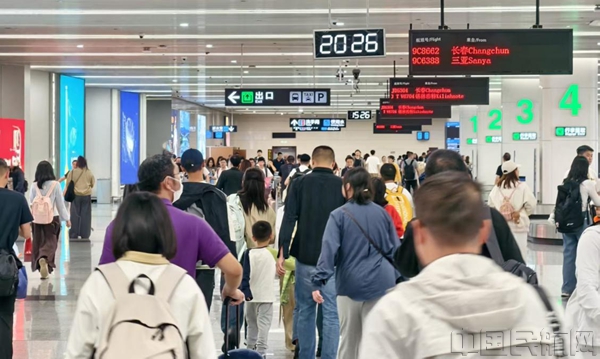
Core Insights - The 2025/26 winter-spring aviation season has officially commenced, with 210 domestic and international airlines planning to operate 119,500 flights weekly, reflecting a 1.3% increase compared to the same period last year [1] Domestic Flight Operations - Domestic airlines are set to operate 98,000 flights weekly, remaining stable compared to last year, with 95,477 passenger flights and 2,624 cargo flights [2] - A total of 39 airlines are launching 586 new domestic routes, primarily connecting regions such as Northwest to East China and Northeast to Central South China, with 5,198 weekly flights planned for these routes [2] - The Civil Aviation Administration emphasizes optimizing capacity for low-efficiency routes and enhancing tourism-related flight services to promote the integration of aviation and tourism [2] International Flight Operations - Internationally, 191 airlines plan to operate 21,427 flights weekly, marking a 10.8% increase year-on-year, serving 83 countries [3] - Passenger flights will connect to 80 countries with 13,492 flights, a 5.6% increase, while cargo flights will reach 49 countries with 5,435 flights, up by 1.7% [3] - The resumption of passenger flights between China and India, which had been suspended for five years, is highlighted, along with new routes to Oman, Argentina, Panama, Chile, and Switzerland [3] Hub Development - The top ten international hubs, including Beijing, Shanghai, and Guangzhou, account for 52.1% of international passenger flights, an increase of 8.6 percentage points year-on-year [4] - Passenger flight volumes to countries involved in the Belt and Road Initiative represent 73.5% of total flights, with significant growth in routes to Latin America and Africa [4] Airline Expansion Plans - Air China plans to expand its network with new domestic routes and increase flight frequencies on over 40 routes, with a 15% increase in flight numbers compared to the previous winter-spring season [5] - China Southern Airlines aims to operate approximately 470,000 passenger flights, introducing new routes and increasing frequencies on several domestic and international routes [5] - China Eastern Airlines has optimized its network in the Beijing area, increasing daily flights and launching a direct route to Muscat [6] - China United Airlines anticipates an average of 236 flights daily, with plans to open new routes and restore previously suspended services [7]
中国航空运输协会团标再次获评高质量团体标准
Zhong Guo Min Hang Wang· 2025-10-22 10:10
Core Points - The "Domestic Through Flight Service Part 1: Identification" standard has been recognized as a high-quality group standard by Beijing, supporting the promotion of domestic through flights and enhancing passenger experience [1][2][6] - The standard aims to unify identification for online sales and offline guidance of domestic through flights, providing specific requirements for information disclosure and service standards [2][6] - The implementation of this standard has led to significant growth in domestic through flight operations, with a notable increase in flight registrations and passenger volumes [6][7] Summary by Sections Standard Recognition - The "Domestic Through Flight Service Part 1: Identification" has been awarded as a high-quality group standard by the Beijing Municipal Market Supervision Administration [1][3] - It is included in the 2025 Capital Standardization Strategy Standard Subsidy Fund Project [1] Development and Implementation - The standard was developed under the guidance of the Civil Aviation Administration of China (CAAC) and involves collaboration among various airlines, airports, and service organizations [2][6] - It establishes a cross-entity technical collaboration platform to enhance operational support and resource allocation among airlines and airports [6] Impact on Industry - Since the standard's release, the domestic through flight business has experienced rapid growth, with 68,900 new flight registrations in the first three quarters of 2025 [6][7] - Monthly averages for flight operations, passenger numbers, and baggage transport have increased significantly, with respective year-on-year growth rates of 199%, 167%, and 174% [6][7] - The standard has improved connectivity for less accessible regions, supporting economic development and regional collaboration [7]

《国内通程航班服务第1部分:标识》获评北京市2025年高质量团体标准
Zhong Guo Min Hang Wang· 2025-10-22 05:08
Core Viewpoint - The introduction of the group standard "Domestic Through Flight Service Part 1: Identification" aims to standardize the online and offline services for domestic through flights, enhancing the overall service quality and promoting a unified brand image in the aviation industry [1][2][8]. Group 1: Standardization and Implementation - The newly released standard provides clear guidelines on the principles, components, parameters, and display requirements for identification, facilitating the standardization of domestic through flight services [1][2]. - The standard has been recognized as a high-quality group standard by the Beijing Standardization Association for 2025, indicating its significance in the industry [1]. - The implementation of the standard is expected to support the development of a comprehensive aviation transport network, enhancing the "dry branch connection" and "full network connection" service systems [1][2]. Group 2: Digital Platform Support - The standard leverages digital platforms such as the "Domestic Through Flight Service Management Platform" and the "Civil Aviation Transfer Passenger Service Platform" to create a unified identification display system across multiple scenarios [3]. - Online applications include airline websites, apps, and sales networks, while offline applications cover check-in counters and transfer service counters, ensuring a seamless travel experience for passengers [3]. Group 3: Industry Consensus and Promotion - A promotional mechanism has been established involving various stakeholders, including airlines and airports, to ensure the effective implementation of the standard [6]. - As of now, the identification has been applied by 18 airlines, 172 airports, and 6 sales networks, indicating a growing recognition and initial brand effect of the through flight service [6]. - The standard's development and promotion mark a significant step towards the standardization of domestic through flight services, with plans for further enhancements in service quality and industry standards [8].

东航2025冬春季航班计划即将执行 西北分公司持续完善枢纽网络布局
Zhong Guo Min Hang Wang· 2025-10-20 11:04
Core Viewpoint - China Eastern Airlines (CEA) is expanding its flight routes and enhancing services for the 2025-2026 winter-spring season, aiming to provide a richer and more convenient travel experience for passengers [1] Route Expansion and Service Upgrades - CEA has introduced new routes from Xi'an to Huai'an and Mangshi, each with one daily flight, enhancing regional economic and cultural exchanges [2] - The airline has increased the frequency of several domestic routes, including 17 daily flights to Shanghai Hongqiao, 11 to Beijing Daxing, and 8-9 to Nanjing, allowing for more flexible travel planning [2][3] Route Optimization - CEA has optimized existing routes by converting the Xi'an-Jinggangshan-Shenzhen/Guangzhou route to direct flights to Shenzhen and Guangzhou, reducing flight times and improving passenger experience [3] Aircraft Deployment - CEA plans to operate two C919 aircraft from Xi'an, enhancing safety and comfort for passengers, and will also use C909 aircraft on some Xi'an-Nanchang routes [4] International and Regional Connectivity - The airline continues to operate 20 international routes and 17 destinations, facilitating cultural and economic exchanges along the Belt and Road Initiative [4] Transfer Connectivity - CEA has achieved 1,089 possible domestic transfer connections through Xi'an, responding to market demand and enhancing flight operation quality [5]

2025年国内通程航班旅客突破200万人 前三季度业务增长态势强劲
Zhong Guo Min Hang Wang· 2025-10-11 08:20
Core Insights - The civil aviation industry in China has seen significant growth in domestic connecting flights, with 2.0987 million passengers enjoying high-quality services in the first three quarters of 2025, reflecting a strong upward trend from the previous year [1] - The expansion of cross-airline connecting flight services has been notable, with 140,000 passengers served in Q3 2025, marking a 22% increase from Q2 [2] - The quality of services for connecting passengers has improved, with new models for handling excess baggage being implemented to enhance passenger experience and operational efficiency [3] Group 1: Business Growth - The overall business scale of domestic connecting flights has continued to grow rapidly, with 68,900 new flight registrations in the first three quarters of 2025, leading to a monthly average of 72,200 flights and a passenger volume of 233,200, representing year-on-year increases of 199% and 167% respectively [1] - Major airlines such as Eastern Airlines, Southern Airlines, and Air China have ranked among the top three in terms of passenger volume and flight execution for connecting services [1] - The top five airlines by passenger volume for connecting flights in Q3 2025 were Eastern Airlines, Southern Airlines, Air China, Sichuan Airlines, and Xiamen Airlines [1] Group 2: Service Expansion - The service range for cross-airline connecting flights has expanded, with significant contributions from airlines like Huaxia Airlines and Sichuan Airlines, resulting in a 23-fold increase in cross-airline passenger volume compared to Q2 [2] - Major hub airports have enhanced their transfer capabilities, with Daxing Airport leading in the number of connecting passengers, serving 104,200 passengers this year [2] - The proportion of connecting passengers at Chongqing Airport reached 47.94% in Q3, an increase of approximately 15 percentage points from the first half of the year [2] Group 3: Service Quality Improvement - A new model for handling excess baggage for connecting flights was launched in August 2025, aimed at improving passenger service experience and operational efficiency [3] - Sixteen domestic airlines and 42 airports have already adopted the new excess baggage handling model, which is expected to enhance the convenience of travel for connecting passengers [3] Group 4: Brand Promotion and Public Awareness - The promotion of connecting flights has been integrated into various platforms, with branding efforts reaching 18 airlines and 163 airports, increasing public awareness [5] - The industry has actively participated in major exhibitions to promote the benefits of connecting flights, enhancing traveler recognition and preference for these services [5] - Future initiatives will focus on improving the quality and efficiency of domestic connecting flight services, aligning with national strategies to boost consumption and expand domestic demand [7]
北京大兴机场年内旅客吞吐量突破4000万人次
Zhong Guo Xin Wen Wang· 2025-10-01 02:48
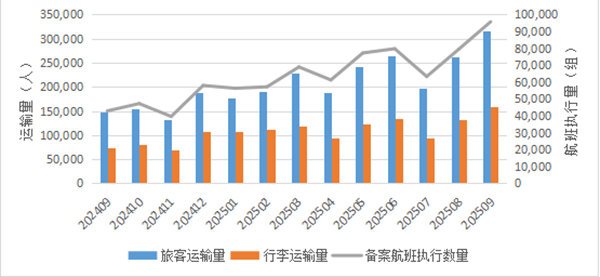
Core Insights - Beijing Daxing International Airport has achieved significant growth in flight operations and passenger traffic, with a total of 258,500 flights and 40.013 million passengers recorded by September 30, 2025, marking increases of 6.06% and 7.9% respectively compared to the same period in 2024 [1] Group 1: Operational Performance - The airport has seen a daily average of 947 flights and 146,600 passengers, with cumulative flight operations exceeding 1.34 million and total passengers surpassing 183 million since its opening [1] - A total of 70 domestic and international airlines are currently operating at Daxing Airport, with nearly 190 operational routes connecting to approximately 180 destinations [1] Group 2: Route Expansion - In 2023, Daxing Airport has opened or resumed several international routes, including Casablanca, Bandar Seri Begawan, Ho Chi Minh City, Tokyo Narita, and Dushanbe [1] - Upcoming direct flights from Daxing to Tehran and Doha are set to launch on October 3 and 16, respectively, enhancing the airport's route network and service offerings [1] Group 3: Transfer Services - The airport has strengthened its transfer service capabilities and is actively implementing the Civil Aviation Administration's "trunk and branch connectivity, full network integration" plan, resulting in a significant increase in transfer passenger volume, with a nearly 10,000 increase in the third quarter [1]
精细化管理硬核赋能区域经济发展 银川机场荣膺“中国民用机场服务质量优秀机场”
Zhong Guo Min Hang Wang· 2025-09-11 04:21
Core Viewpoint - The 2024 Civil Airport Service Quality Evaluation results were announced, with Yinchuan Hedong International Airport recognized for its outstanding service quality, operational efficiency, and humanistic care, earning the title of "Excellent Service Airport" in the 2 million to 10 million passenger category and the "2025 Sunshine Volunteer Service Station for the Disabled" award [1] Group 1: Service Quality and Efficiency - Yinchuan Airport has achieved a flight release normal rate of 90.53%, significantly above the industry average, by optimizing processes and restructuring the flight guarantee chain [2] - The airport has reduced the flight cut-off time from the industry standard of 45 minutes to 30 minutes, allowing more check-in buffer time for passengers [2] - The transfer success rate for connecting passengers has increased from 73.3% to 90%, with the minimum connection time optimized from 60 minutes to 50 minutes, enhancing the overall travel experience [2] Group 2: Customized Services and Accessibility - The airport has developed a comprehensive service product matrix covering all travel scenarios, including high-end services like "Yin Yan Butler," dedicated care for unaccompanied minors, and special channels for elderly passengers [3] - A dedicated service center for special passengers has been established, equipped with necessary facilities, and a volunteer service team has provided comprehensive assistance to over 260,000 special passengers since 2017 [3] Group 3: Economic Impact and Logistics - Yinchuan Airport serves as a key platform for regional economic development, facilitating major international events and enhancing the integration of culture and tourism [4] - The airport has supported the export of local specialty products through efficient air logistics, generating over 1 billion yuan in annual value from air transport of local agricultural products [4] - The airport is projected to handle over 6 million tourism passengers in 2024, contributing to a 15% increase in tourism revenue for Ningxia [4] Group 4: Future Development Goals - The airport aims to enhance safety, service, and development through refined management and smart airport initiatives, such as facial recognition boarding and baggage tracking [5] - The goal is to establish Yinchuan Airport as a "Northwest Inland Open Aviation Hub," contributing to the Belt and Road Initiative and promoting high-quality development [5]
多重因素利好 支线航空飞出新天地
Jing Ji Ri Bao· 2025-09-05 01:01
Core Insights - The overall accessibility of regional aviation in China is improving, with significant enhancements in connectivity to county-level cities and a notable increase in passenger throughput at regional airports [1][2][4] Group 1: Accessibility Improvements - By 2024, the accessibility time for major and regional cities to national prefecture-level cities will be 13.8 hours and 25.4 hours respectively, showing improvements of 2.0% and 2.7% compared to 2023 [1] - Accessibility for county-level cities has improved by 4.8% compared to 2023, surpassing the 1.2% increase for prefecture-level regional cities [1] - Regions such as Northwest, Xinjiang, and North China have seen significant improvements in regional city connectivity, with increases of 11.7%, 7.5%, and 7.1% respectively [1] Group 2: Market Drivers - The growth of regional aviation is supported by economic growth and the development of the tourism industry, which has led to increased demand for personalized and convenient travel options [2] - The rise of niche tourism trends has notably increased passenger throughput at regional airports, with some airports experiencing over 50% growth compared to the previous year [2] Group 3: Service Quality and Regulation - Despite improvements, there is a need for further enhancement of service quality and market regulation in regional aviation, as many regional airports still lack direct connections to hub airports [4] - The "Self-Regulation Convention for Air Passenger Transport" was introduced to address market issues and promote compliance with legal standards, aiming to improve service quality and operational practices [4][5] Group 4: Future Potential - The regional aviation sector is expected to experience significant growth, with projections indicating that passenger throughput at regional airports could reach 177 million by 2030 [6] - Innovations in technology, such as hydrogen and electric regional aircraft, are anticipated to reshape the industry landscape [6][7] - Increased financial support from the government and local authorities is expected to alleviate operational pressures on regional airlines and enhance connectivity solutions [7][8]