建筑节能

Search documents
晶雪节能股价小幅回落 盘中一度快速反弹2%
Jin Rong Jie· 2025-08-21 17:20
Group 1 - The company's stock closed at 20.58 yuan on August 21, down 0.53% from the previous trading day [1] - There was a rapid rebound in the stock price during the day, reaching a high of 20.93 yuan, with an increase of over 2% within 5 minutes [1] - The trading volume for the day was 0.88 billion yuan, with a turnover rate of 3.92% [1] Group 2 - The company specializes in building energy-saving system solutions, including energy-efficient doors and windows, and curtain walls [1] - It operates within the renovation and building materials sector, possessing relevant technology reserves for building energy efficiency [1] Group 3 - On August 21, there was a net inflow of 4.2391 million yuan from main funds, although the overall trend over the past five trading days showed a net outflow of 23.6371 million yuan [1]
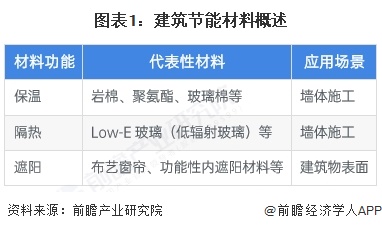
2025年中国建筑节能行业材料发展现状 保温材料、Low-E玻璃、遮阳材料等的应用有利提升节能效率【组图】
Qian Zhan Wang· 2025-07-22 04:25
Core Insights - The article discusses the development and production of energy-saving building materials in China, highlighting their importance in reducing energy consumption and carbon emissions in the construction industry [1][3]. Group 1: Overview of Energy-Saving Building Materials - Energy-saving building materials are designed to improve insulation, heat resistance, and shading, thereby reducing energy consumption in buildings [1]. - Key applications include insulation and heat-resistant materials used primarily in wall construction, as well as shading materials for building exteriors [1][2]. Group 2: Production Statistics - The production of thermal insulation materials in China began to increase significantly from 2016, with a notable rise in 2017 due to government policies [3]. - In 2021, the production of thermal insulation materials reached approximately 8.5 million tons, representing a year-on-year growth of 10.4% [3]. - The production continued to rise to 8.65 million tons in 2022, but is expected to decline in 2023 before recovering to 2022 levels in 2024 [3]. Group 3: Classification of Insulation Materials - Building insulation materials in China are classified into four fire resistance levels: A (non-combustible), B1 (flame-retardant), B2 (combustible), and B3 (easily combustible) [4]. - A-level materials are primarily inorganic, including rock wool and glass wool, while B-level materials are organic [4][6]. Group 4: Low-E Glass Development - Low-E glass, or low-emissivity glass, features a multi-layer metal or compound coating that enhances thermal insulation and light transmission compared to traditional glass [8]. Group 5: Shading Materials Development - Building shading involves installing facilities that block or regulate sunlight entering buildings, crucial for managing indoor temperatures and energy loads [10]. - Shading facilities can be categorized into external, internal, and middle shading, each with distinct advantages and disadvantages [10].


【行业深度】洞察2025:中国建筑节能行业竞争格局及市场份额(附竞争梯队、企业竞争力分析等)
Qian Zhan Wang· 2025-07-17 07:15
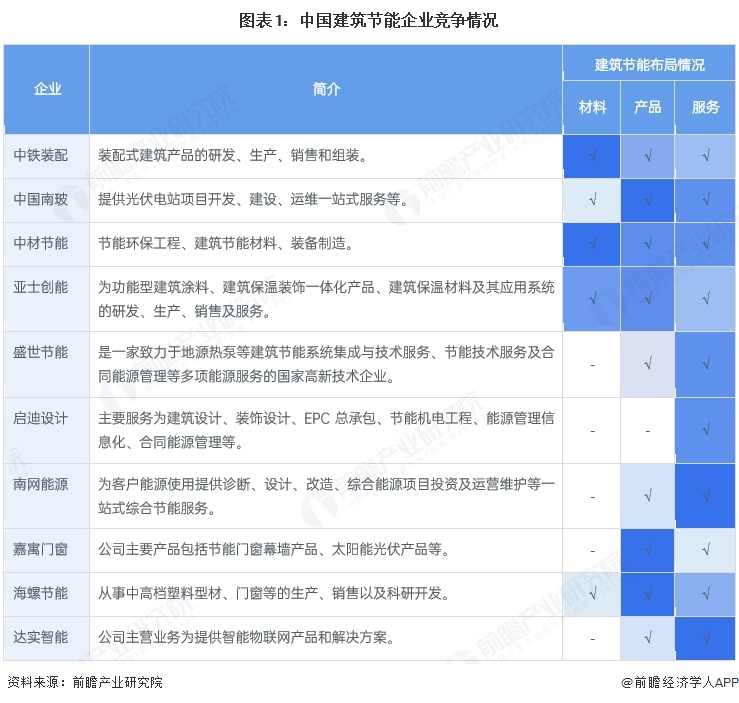
Core Insights - The article discusses the competitive landscape and strategic positioning of companies in China's building energy efficiency market, highlighting key players and their market strategies [1][4][7]. Company Layout - Major companies in the building energy efficiency sector include China National Materials Group (中材节能), Beixin Building Materials (北新建材), Qidi Design (启迪设计), and others, with a focus on providing comprehensive energy-saving solutions [1]. - Companies like Nanwang Energy (南网能源) and Dashi Intelligent (达实智能) are particularly focused on offering integrated energy-saving services to the construction industry [1]. Regional Distribution - The building energy efficiency companies are primarily concentrated in Eastern and Southeastern coastal regions of China, with Jiangsu and Guangdong having the highest representation [3]. Competitive Hierarchy - The industry is divided into three tiers: - The first tier includes leaders like Beixin Building Materials, Nan Glass Group (南玻集团), and Huajian Group (华建集团), which have strong market influence and comprehensive capabilities [4]. - The second tier consists of companies like Nanwang Energy and Qidi Design, which focus on niche areas but have notable professional advantages [4]. - The third tier includes smaller firms like China National Materials Group and Hengshang Energy, which are still in the process of market expansion and technology accumulation [4]. Strategic Cluster Analysis - The competitive landscape is analyzed through a four-quadrant model based on revenue and gross margin, identifying Beixin Building Materials as a leader due to its innovative technologies and sustainable practices [7]. - Other notable companies in the prominent category include Nan Glass Group and Huajian Group, which maintain their leadership through resource management and energy efficiency measures [7]. Market Segmentation - In specific segments, companies like China Nanbo (中国南玻) and Fuyao Glass (福耀玻璃) lead in low-energy glass, while the window industry remains fragmented with no clear leader [11]. Competitive Dynamics - The analysis using Porter's Five Forces model indicates that supplier bargaining power is moderate, while buyer power is slightly weaker due to cost sensitivity and regulatory requirements [13]. - The threat of new entrants is low due to high technical barriers and regulatory requirements, although some cross-industry players are entering through partnerships [13]. - The intensity of rivalry is high, driven by technological advancements and price competition, alongside a surge of capital into the sector [13].



2025年中国建筑节能行业应用现状 公共建筑主导节能市场【组图】
Qian Zhan Wang· 2025-07-14 04:12
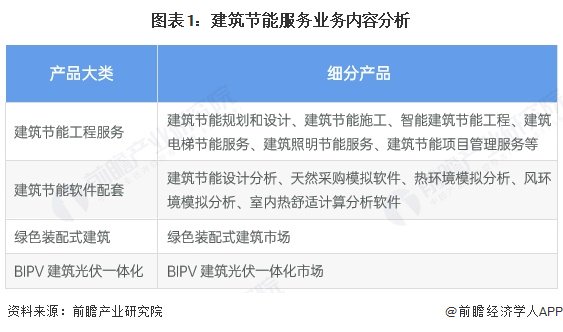
Core Insights - The article discusses the growth and trends in the building energy efficiency sector in China, highlighting the increasing energy-efficient building area and the investment trends in public, residential, and industrial buildings [1][4]. Group 1: Building Energy Efficiency Services - Building energy efficiency services include engineering services, software support, green prefabricated buildings, and BIPV (Building Integrated Photovoltaics) [1][2]. - Different building types require tailored energy-saving solutions, with public buildings focusing on systemic energy savings and residential buildings emphasizing comfort and cost balance [1]. Group 2: Energy-Efficient Building Area - As of 2020, China's energy-efficient building area reached 238.0 billion square meters, growing to 303.0 billion square meters by 2022, and further expanding to 326.8 billion square meters by 2023 [4]. - Projections indicate that by 2024, the energy-efficient building area could reach 360 billion square meters [4]. Group 3: Public Building Energy Consumption - Public buildings account for over 20% of national energy consumption, with hospitals, schools, and office buildings making up 38% of total building energy consumption [5]. - Investment in office buildings and commercial properties has been declining since 2018, with a projected investment of 416 billion yuan in 2024, reflecting a 9% year-on-year decrease [5]. Group 4: Residential Building Energy Efficiency - Residential energy efficiency focuses on insulation, natural lighting, renewable energy integration, and smart control technologies [8]. - The investment in residential buildings peaked and then declined, with 2023 investment dropping to 838.2 billion yuan and a further decrease to 760.4 billion yuan projected for 2024, a 10.5% decline [8]. Group 5: Industrial Building Energy Efficiency - Distributed photovoltaics are a significant application in industrial building energy efficiency, with cumulative installed capacity exceeding 100 million kilowatts by 2023 and projected to surpass 200 million kilowatts by 2024 [10][12].
A股市场大势研判:大盘冲高回落,三大指数小幅上涨
Dongguan Securities· 2025-07-13 23:30
Market Performance - The major indices experienced slight increases, with the Shanghai Composite Index closing at 3510.18, up 0.01%, and the Shenzhen Component Index at 10696.10, up 0.61% [2] - The ChiNext Index led the gains with a rise of 0.80%, closing at 2207.10, while the STAR 50 Index increased by 1.48% to 994.45 [2] Sector Performance - The top-performing sectors included Non-Bank Financials, which rose by 2.02%, and Computers, which increased by 1.93% [3] - Conversely, the Banking sector saw a decline of 2.41%, and the Coal sector fell by 0.60% [3] - Concept stocks such as Rare Earth Permanent Magnet and MLOps showed strong performance, with gains of 5.64% and 3.05% respectively [3] Market Outlook - The market showed a mixed performance with a notable rebound in the Rare Earth Permanent Magnet concept stocks and active trading in CRO concept stocks [4] - The overall market sentiment was positive, with more stocks rising than falling, indicating a healthy market environment [4] - The report anticipates a cautious bullish outlook for the market, particularly as it stabilizes around the 3500-point mark, with a focus on technology growth and sectors benefiting from consumer recovery expectations [6]
广州累计建成分布式光伏发电项目装机总量350万千瓦
Zhong Guo Xin Wen Wang· 2025-07-09 02:34
Group 1 - Guangzhou has built a total installed capacity of distributed photovoltaic power generation projects amounting to 3.4987 million kilowatts, which is more than five times the amount at the beginning of the 14th Five-Year Plan [1] - The city is promoting green building and high-quality development in the construction sector through various activities, including on-site observation, training, thematic promotion, and exhibitions [1] - In 2024, the proportion of newly started high-star green buildings in civil construction is expected to reach 72%, an increase of 12% year-on-year [1] Group 2 - The renovation of venues for the 15th National Games fully implements green building standards, with Tianhe Sports Center being transformed into the first near-zero carbon large sports venue in the country [2] - Guangzhou has established a system for promoting the use of green building materials in government-funded civil construction projects, with 428 companies receiving green building material certification [2] - The Metro Design Building is a benchmark project in intelligent construction and green building, achieving a comprehensive energy-saving rate of 61.56% and passing near-zero energy building and green building three-star design certification [2]
实探上海美的全球创新园区——看看建筑节能背后有哪些“黑科技”
Zhong Guo Neng Yuan Wang· 2025-07-07 08:53
Core Viewpoint - The article highlights the increasing electricity demand in China due to high temperatures, leading to a focus on optimizing energy use in buildings and promoting green, low-carbon construction practices [1][2]. Group 1: Energy Demand and Building Efficiency - In July, the peak electricity load in China reached a historical high of 1.465 billion kilowatts on July 4, driven by increased use of air conditioning and cooling devices [1]. - The construction industry is prioritizing energy efficiency and the development of high-quality, low-carbon buildings in response to rising energy demands [1]. Group 2: Midea's Global Innovation Park - Midea's Global Innovation Park in Shanghai, with an investment exceeding 7 billion and a building area of 400,000 square meters, showcases advanced technologies that transform buildings into "energy bodies" and "low-carbon engines" [1][3]. - The park features nearly 10,000 square meters of distributed photovoltaic panels, generating an average annual electricity output of 1.8 million kilowatt-hours, which accounts for 10% of the park's total annual electricity consumption [1]. - The photovoltaic system reduces carbon dioxide emissions by 1,732 tons annually and saves 552 tons of standard coal [1]. Group 3: Energy Efficiency Technologies - Midea has developed a magnetic levitation variable frequency centrifugal chiller, which improves energy efficiency by over 50% compared to traditional equipment, contributing to the park's low-carbon cooling system [2]. - The iBUILDING digital platform developed by Midea connects thousands of devices, optimizing energy consumption through real-time data monitoring and AI-driven strategies [2][3]. Group 4: Challenges and Solutions in Green Building - The green building sector faces challenges such as inconsistent local standards, financing difficulties for small and medium-sized renovations, and a lack of comprehensive carbon data [2][3]. - Midea is addressing these challenges by creating a "carbon ledger" through the iBUILDING platform, which tracks materials and operations, and by collaborating with partners like State Grid to innovate energy management solutions [3]. Group 5: Transformation and Ecosystem Development - Midea is evolving from a manufacturing giant to an enabler of building energy efficiency, integrating hardware and software solutions to create a comprehensive service for smart buildings [3]. - The company emphasizes the importance of ecological harmony and collaboration across the industry, positioning itself as a leader in the green building revolution [3].

南网能源(003035) - 南网能源2025年7月3日投资者关系活动记录表
2025-07-04 01:12
Group 1: Company Support and Business Model - Southern Power Grid provides strong brand image and customer resources, facilitating market entry and trust [2] - The company’s building energy-saving services include comprehensive energy-saving solutions for existing buildings and efficient energy systems for new constructions, generating revenue through energy cost reductions and operational efficiencies [3] - In 2024, the building energy-saving business achieved approximately CNY 949 million in revenue, maintaining steady growth [3] Group 2: Market Potential and Policy Support - The building energy-saving industry has significant market potential due to government policies promoting energy efficiency and carbon reduction in existing buildings [4] - Statistics indicate that only a small fraction of existing buildings have adopted advanced energy efficiency measures, highlighting the vast potential for growth in the sector [4] - Recent policies have been introduced to enforce energy consumption reductions and promote sustainable development, further driving market opportunities [4] Group 3: Client Segmentation and Regional Focus - The company’s industrial energy-saving services target commercial users across various sectors, including automotive, electronics, and pharmaceuticals, with notable clients like Nissan and Coca-Cola [5] - In the building energy-saving sector, the company focuses on hospitals, schools, telecommunications, and rail transit, with ongoing projects in major hospitals and educational institutions [5] - The business primarily operates in South China, with projects also in East, North, Central, and Southwest China, expanding its reach through partnerships with government agencies [5] Group 4: Financial Strategy and Project Funding - The company finances its projects with approximately 30% self-funding and 70% bank loans [7] - A strategic shift from "investment holding" to "investment holding + high-end services" aims to enhance service offerings and meet diverse market needs [7] - Plans include improving service product systems, enhancing full-chain service capabilities, and optimizing digital service platforms to better serve distributed energy and commercial clients [7]
2025年中国建筑节能行业技术现状 建筑维护结构和风平衡管理是主要技术路线【组图】
Qian Zhan Wang· 2025-07-02 07:47
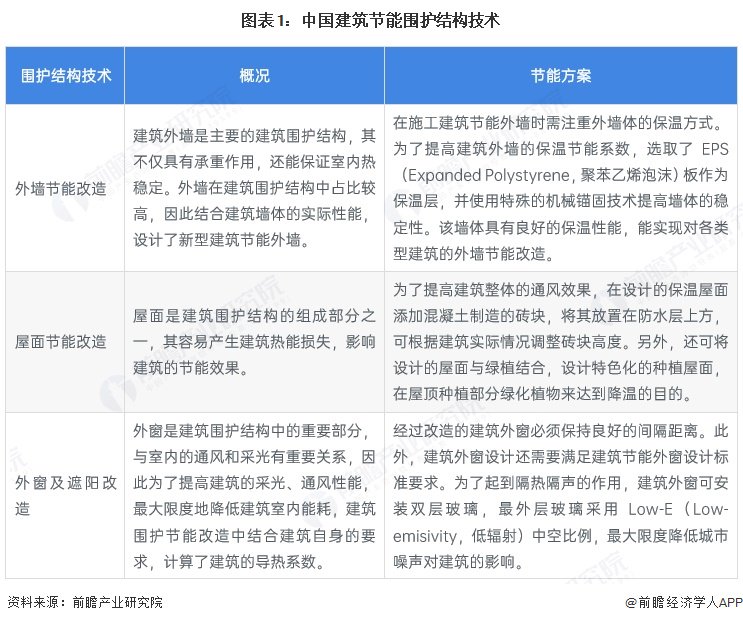
Core Viewpoint - The article discusses the advancements and trends in China's building energy-saving technologies, focusing on the insulation of external walls, roofs, and windows, which can reduce energy consumption by over 30% and help meet national energy-saving standards [1][2]. Group 1: Building Energy-Saving Technologies - The building energy-saving technology emphasizes three main areas: external wall insulation, roof modifications, and window upgrades [1]. - External wall energy-saving modifications utilize materials like EPS (Expanded Polystyrene) boards to enhance insulation performance [2]. - Roof energy-saving improvements include the addition of concrete blocks for ventilation and the integration of green roofs to lower temperatures [2]. - Upgraded windows feature low-emissivity (Low-E) glass and double glazing to improve thermal insulation and reduce indoor energy consumption [2]. Group 2: Patent Applications and Trends - As of May 2025, China has filed 9,069 patent applications related to building energy-saving technologies, with a peak of 1,397 applications in 2023 [7]. - Leading patent applicants in the building energy-saving sector include Chengde Green Building with 143 patents, China Building with 124, and Zhuobao Technology with 121 [9]. - The most popular patent category is E04B (buildings), accounting for 24.1% of applications, followed by F24F (air conditioning and ventilation) at 9.7% [10][12]. Group 3: Airflow Management in Public Buildings - Effective airflow management is crucial for the energy-efficient operation of public buildings, focusing on indoor and outdoor air movement [4][5]. - Various ventilation modes are employed based on seasonal conditions, such as natural ventilation in transitional seasons and mechanical ventilation in winter [5]. - Airflow management strategies primarily target building airtightness and the design of HVAC systems [5].
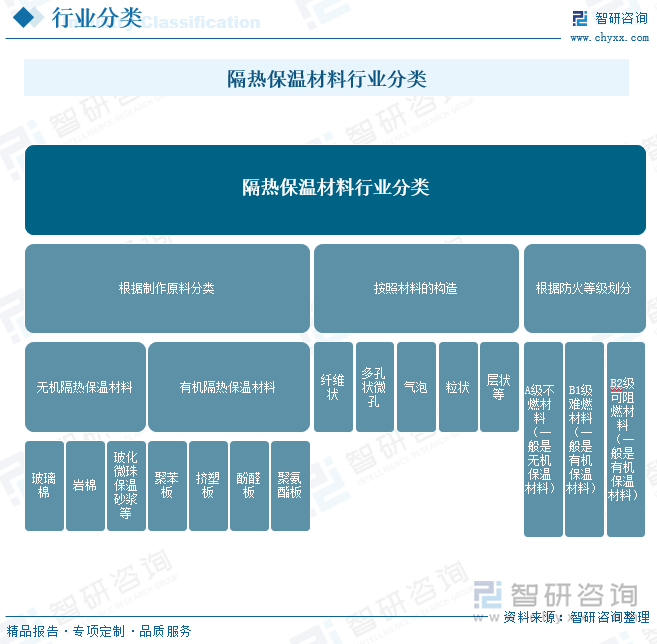
趋势研判!2025年中国保温隔热材料行业整体发展形势分析:部品生产工厂化和现场施工装配化率的不断提高,建筑节能保温隔热材料行业发展前景良好[图]
Chan Ye Xin Xi Wang· 2025-06-29 01:25
Core Viewpoint - The insulation and heat preservation materials industry is a crucial part of the national economy, aligning with the trends of green energy efficiency and low carbon development. The market size is expected to decline in 2024 but shows potential for recovery in 2025 due to industrialization and increased efficiency in construction processes [1][5][22]. Industry Definition and Classification - Insulation materials are defined as materials used to resist heat flow, including both insulation and cooling materials. They are applicable in various sectors such as thermal equipment, pipelines, and buildings [2][3]. Industry Development Status - The market size for new insulation materials in China grew from 752.1 billion yuan in 2016 to 1657.1 billion yuan in 2021, but is projected to decrease to 1270.7 billion yuan in 2024, with a slight recovery to approximately 1289.2 billion yuan in 2025 [6][7]. The urbanization rate in China has increased from 17.9% in 1978 to 67% in 2024, indicating further growth potential for the insulation materials market [5]. Industry Chain - The industry chain includes upstream raw materials such as basalt and polystyrene, midstream manufacturing of insulation materials, and downstream applications in building energy efficiency, industrial pipelines, and emerging sectors like cold chain logistics [9]. Competitive Landscape - The insulation materials industry in China is characterized by numerous small-scale manufacturers, with leading companies having a competitive edge due to their established technology and market presence. Major players include Hunan Wujian Light Chemical Group, Fujian Sait New Materials, and Shandong Luyang Energy-Saving Materials [15][16]. Key Enterprises - Key companies in the insulation materials sector include: - **Fujian Sait New Materials Co., Ltd.**: A leading manufacturer of vacuum insulation materials, with a revenue of 9.15 billion yuan from vacuum insulation boards in 2024 [18]. - **Shandong Luyang Energy-Saving Materials Co., Ltd.**: The largest producer of ceramic fiber products in China, with a production capacity of 590,000 tons annually [20]. Industry Development Trends - The insulation materials industry is expected to evolve towards industrialization, with advancements in technology and a focus on green and intelligent construction materials. The sector is crucial for energy conservation in buildings, with significant progress in related technologies [22].