
技术指标

Search documents
全球的风险,A股的机遇
Sou Hu Cai Jing· 2025-06-14 04:10
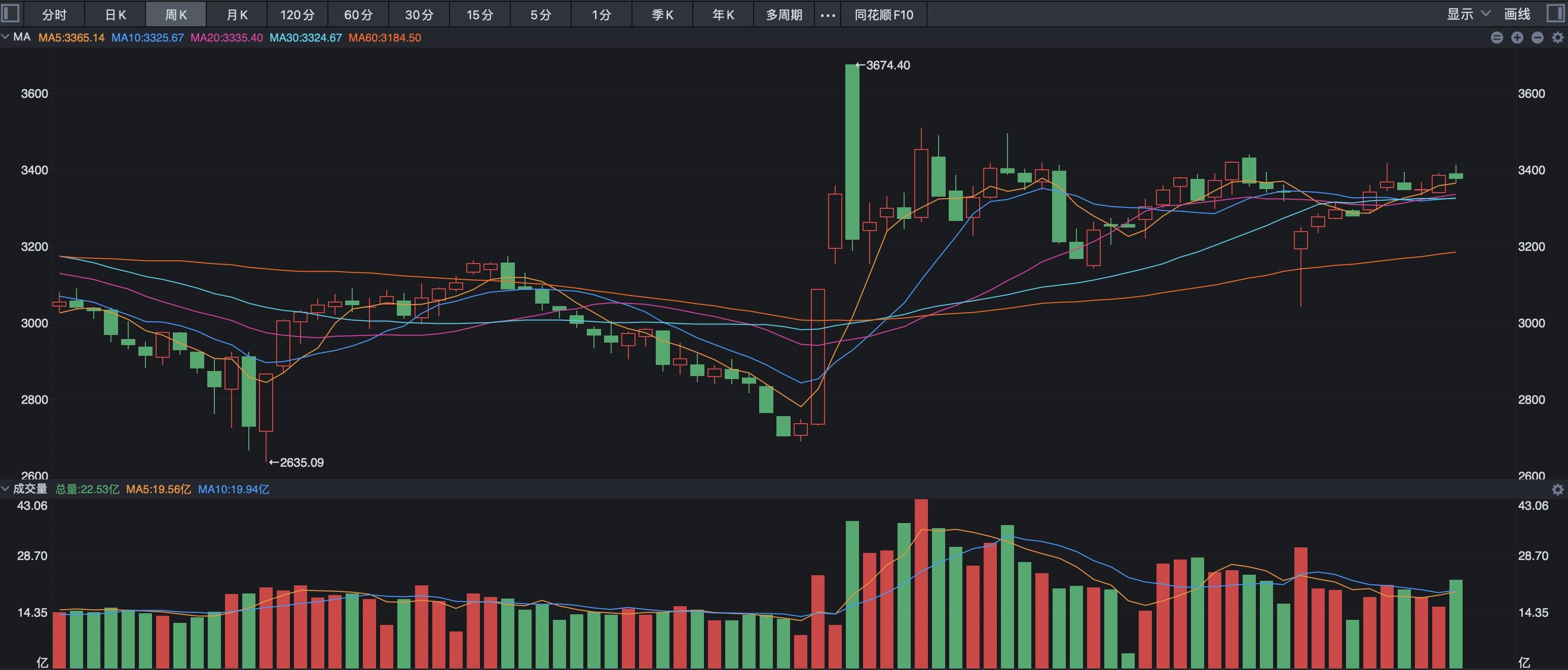
Group 1 - The recent attack by Israel on Iran has led to a significant increase in Brent crude oil futures, which initially surged by 13% and closed up 8.39% at around $75, indicating a volatile market response to geopolitical tensions [1] - Despite the initial spike in oil prices, the likelihood of prices exceeding $100 in the short term is considered low, reflecting a change in market sentiment towards geopolitical events [1] - The military sector, similar to past trends in the A-share market, has shown a muted response, with military ETFs only rising by 1.44%, suggesting that the market has become more discerning regarding such events [1] Group 2 - In the context of global risks, the A-share market is viewed as an opportunity, with domestic stability making it an attractive option for investors seeking refuge from volatility [3] - The A-share index fell by 0.75%, which is less than the declines seen in U.S. markets, indicating a relative strength and potential for capital inflow into Chinese assets [3] - Technical indicators for the A-share market suggest a potential upward breakout, contingent on positive market news and collective investor sentiment [3][4] Group 3 - The Hong Kong market is currently strong, but its ability to reach new highs is uncertain, while the A-share market, despite appearing weaker, is positioned at a lower level, which may present a comparative advantage [4]

基于技术指标的指数仓位调整月报
Soochow Securities· 2025-06-03 04:30
Market Positioning Signals - CSI 300: 3 indicators signal bullish, 20 indicators signal reduction; optimal single indicator signals reduction; both rolling momentum and rolling conservative strategies signal reduction[2] - CSI 500: 4 indicators signal bullish, 19 indicators signal reduction; optimal single indicator signals reduction; both rolling momentum and rolling conservative strategies signal reduction[2] - CSI 1000: 5 indicators signal bullish, 18 indicators signal reduction; optimal single indicator signals reduction; both rolling momentum and rolling conservative strategies signal reduction[2] Performance Metrics - The average excess annualized return from a single technical indicator based on volume-price divergence across 34 indices is 3.75%[3] - The 5-signal strategy achieved an annualized return of 2.54% on the CSI 1000, with an excess annualized return of 11.27%[3] - The rolling conservative strategy, with a rebalancing frequency of T+10, yields an average excess annualized return of 3.99%[3] Strategy Outcomes - In May, the rolling momentum strategy recorded excess returns of -0.13% for CSI 300, -0.04% for CSI 500, and 0.00% for CSI 1000[9] - The rolling conservative strategy showed a return of 0.17% for CSI 300, -0.04% for CSI 500, and -0.36% for CSI 1000[12] Risk Considerations - All statistical results are based on historical data, and future market conditions may change significantly[26] - Single-factor returns may exhibit substantial volatility, necessitating the integration of risk management methods[26] - Model calculations may contain relative errors and do not constitute actual investment advice[26]

基于技术指标的指数仓位调整月报-20250603
Soochow Securities· 2025-06-03 03:34
Group 1 - The report focuses on adjusting index positions based on technical indicators to achieve excess returns, utilizing a variety of indicators derived from volume and price data [3][8]. - A total of 27 technical indicators were constructed and tested under specified backtesting conditions across three broad indices: CSI 300, CSI 500, and CSI 1000, as well as 31 Shenwan first-level industry indices [3][8]. - The average excess annualized return from the technical indicators designed based on the concept of volume-price divergence reached 3.75% across 34 indices [3][8]. Group 2 - The report outlines the latest performance statistics, indicating that the rolling momentum strategy achieved excess returns of -0.13% for CSI 300, -0.04% for CSI 500, and 0.00% for CSI 1000 in May [9][12]. - The rolling momentum strategy showed a strong performance in the CSI 1000 index, yielding an annualized return of 2.54% and an excess annualized return of 11.27% [3][10]. - The report distinguishes between two strategies: the rolling momentum strategy, which is suitable for investors with higher risk tolerance, and the rolling conservative strategy, which is more appropriate for those with lower risk tolerance [8][9]. Group 3 - As of early June, the model's position and signal judgments indicated that for CSI 300, 3 indicators signaled bullish, while 20 indicated a reduction in positions; similar trends were observed for CSI 500 and CSI 1000 [18][22]. - The report provides a detailed analysis of the number of bullish and bearish indicators across various sectors, highlighting the varying market conditions and potential investment opportunities [23][25]. - The report includes a comprehensive summary of the model's excess returns across different sectors, indicating performance variations and potential areas for investment focus [12][13].
怎么判断股指期货空头增仓和多头增仓呢?
Sou Hu Cai Jing· 2025-05-26 08:12
Group 1: Understanding Market Positions - The distinction between bulls and bears is essential, where bulls believe in rising stock indices and buy futures, while bears expect declines and sell futures [1] - An increase in short positions indicates that bears expect further declines, leading to more sold futures [1] Group 2: Indicators of Short Position Increase - Monitoring changes in open interest can signal short position increases; a rising open interest suggests bears are adding to their positions [2] - Price trends are crucial; if indices are falling while open interest rises, it likely indicates bears are increasing their positions [3] - Market sentiment influenced by news or policy changes can also indicate a higher likelihood of short position increases [4] Group 3: Indicators of Long Position Increase - Similar to short positions, an increase in open interest can suggest bulls are adding to their positions, which should be analyzed alongside price trends [6] - If indices are rising and open interest is increasing, it likely indicates bulls are increasing their positions [7] - Trading volume is a significant indicator; increased volume alongside rising prices suggests a higher probability of long position increases [8] - Market sentiment and technical indicators can also signal long position increases, such as bullish sentiment or technical signals like moving averages crossing [9] Group 4: Summary of Key Indicators - The primary indicators for assessing both long and short position increases are trading volume, open interest, and price trends [10] - Signals for long position increases include rising markets, increased trading volume, and rising open interest [11] - Conversely, signals for short position increases include falling markets, increased trading volume, and rising open interest [12]

如何识别常见反转形态,把握行情机会?邀你免费进群参加技术面特训营!常见技术形态、技术指标快速入门!仅限前100名
news flash· 2025-05-24 00:46
Group 1 - The article promotes a free technical training camp aimed at helping participants identify common reversal patterns and seize market opportunities [1] - The training will cover common technical patterns and indicators, providing a quick introduction for attendees [1] - The offer is limited to the first 100 participants, creating a sense of urgency for potential attendees [1]
金工定期报告20250506:基于技术指标的指数仓位调整月报-20250506
Soochow Securities· 2025-05-06 04:16
Quantitative Models and Construction Methods 1. Model Name: Single Technical Indicator Signal Model - **Model Construction Idea**: This model is based on price-volume data, utilizing various technical indicators to generate buy and sell signals. The goal is to adjust the position of an index to achieve excess returns[3][8] - **Model Construction Process**: - A total of 27 technical indicators were constructed and tested under specified backtesting conditions across three broad-based indices (CSI 300, CSI 500, CSI 1000) and 31 Shenwan first-level industry indices[8] - The indicators were designed based on the concept of price-volume "divergence" to capture potential trading opportunities[3][8] - **Model Evaluation**: The average annualized excess return of these indicators across 34 indices reached 3.75%, demonstrating their effectiveness in generating excess returns[3][8] 2. Model Name: Multi-Signal Combination Model - **Model Construction Idea**: This model combines multiple technical indicators through direct signal synthesis and rolling search methods to enhance performance and stability[3][8] - **Model Construction Process**: - Two strategies were developed: a 5-signal strategy and a 7-signal strategy - Signals were combined using correlation analysis to reduce redundancy and improve predictive power[3][8] - **Model Evaluation**: - The 5-signal strategy performed well on broad-based indices, achieving an annualized excess return of 11.27% on the CSI 1000 index[3][8] - The 7-signal strategy further refined the buy-sell distinction, improving performance in certain scenarios[3][8] 3. Model Name: Rolling Signal Combination Model - **Model Construction Idea**: This model uses rolling synthesis methods to combine signals, with two distinct approaches: post-merge buy-sell (Rolling Stable Strategy) and pre-merge buy-sell (Rolling Momentum Strategy)[3][8] - **Model Construction Process**: - **Rolling Stable Strategy**: Signals are merged first and then processed, resulting in more stable performance suitable for low-risk investors - **Rolling Momentum Strategy**: Signals are processed first and then merged, emphasizing momentum and reducing missed opportunities, suitable for high-risk investors[3][8] - **Model Evaluation**: - The Rolling Stable Strategy achieved an average annualized excess return of 3.99% with lower volatility - The Rolling Momentum Strategy demonstrated stronger momentum-following capabilities but with slightly higher volatility[3][8] --- Model Backtesting Results 1. Single Technical Indicator Signal Model - CSI 300: Annualized excess return of 3.01%[10] - CSI 500: Annualized excess return of 4.27%[10] - CSI 1000: Annualized excess return of 4.81%[10] 2. Multi-Signal Combination Model - **5-Signal Strategy**: - CSI 300: Annualized excess return of 3.24%[10] - CSI 500: Annualized excess return of 1.61%[10] - CSI 1000: Annualized excess return of -4.20%[10] - **7-Signal Strategy**: - CSI 300: Annualized excess return of 3.24%[10] - CSI 500: Annualized excess return of 4.25%[10] - CSI 1000: Annualized excess return of -1.76%[10] 3. Rolling Signal Combination Model - **Rolling Stable Strategy**: - CSI 300: Annualized excess return of 3.49%[14] - CSI 500: Annualized excess return of 4.25%[14] - CSI 1000: Annualized excess return of 5.11%[14] - **Rolling Momentum Strategy**: - CSI 300: Annualized excess return of 3.23%[14] - CSI 500: Annualized excess return of 1.90%[14] - CSI 1000: Annualized excess return of 0.00%[14]