
数字化管理

Search documents
内蒙古能源集团工程建设板块跨越式发展实现新突破
Xin Hua Cai Jing· 2026-01-20 03:34
Core Viewpoint - The Inner Mongolia Energy Group's Engineering Construction Division has achieved a transformative development from scale expansion to a focus on quality and efficiency, demonstrating high-quality growth through practical actions and innovation [1] Market Development - The Engineering Construction Division adopts a strategy of "consolidating local markets and expanding external markets," aiming for a total contract amount exceeding 17 billion yuan by 2025 and a cumulative total of over 60 billion yuan during the 14th Five-Year Plan period [2] - Projected revenue for 2025 is over 12 billion yuan, with a cumulative total exceeding 50 billion yuan during the 14th Five-Year Plan [2] - The division has secured four large-scale thermal power projects with a total installed capacity of 8 million kilowatts and has a market share exceeding 60% in the regional thermal power engineering market [2] - In the renewable energy sector, the division has undertaken projects with an installed capacity exceeding 23 million kilowatts, achieving over 50% market share in the regional renewable energy engineering market [2] External Market Breakthroughs - The division has established regional market development centers in Xinjiang and Beijing, focusing on energy-rich areas in Northwest and Northeast China, successfully entering high-end markets such as the Southern Power Grid and State Grid [3] - During the 14th Five-Year Plan, the division has completed over 6,300 kilometers of transmission lines and 108 substation projects, demonstrating capabilities in ±800kV ultra-high voltage engineering [3] - The division is actively developing emerging businesses in energy storage, green hydrogen, and coal reserve bases, successfully winning multiple energy storage projects [3] Operational Management - The division has implemented a collaborative management model centered on projects, focusing on cost control and performance, resulting in continuous profit growth from 2022 to 2024, with a projected profit of 420 million yuan in 2025 [4] - Digital management upgrades have been achieved through the deep application of ERP systems, optimizing 75 processes and integrating safety and internal control systems [4] - A comprehensive cost control system has been established, leading to savings exceeding 2.4 billion yuan through transparent procurement practices [4] - The division has implemented an incentive assessment mechanism to promote management improvement and has adopted a rigorous approach to project cost pre-control and benchmarking [5] Future Development - The Engineering Construction Division aims to continue its development philosophy of "precise positioning, quality improvement, risk prevention, collaborative integration, and brand enhancement" to create a new high-quality development landscape for the entire industry chain [5]
“矿业双雄”的掘金密码
Zhong Guo Jing Ying Bao· 2026-01-18 10:48
Core Insights - In 2025, Zijin Mining and Luoyang Molybdenum both achieved record-high profits and market valuations, driven by strategic positioning in the global commodity market and effective operational management [1][2][4]. Financial Performance - Zijin Mining expects a net profit of 51-52 billion yuan for 2025, marking a year-on-year increase of 59%-62%, with core mineral products seeing significant price and volume growth [2][3]. - Luoyang Molybdenum anticipates a net profit of 20-20.8 billion yuan, representing a year-on-year growth of 47.8%-53.71%, and is entering the 20 billion yuan profit range for the first time [2][3]. Production and Market Position - Zijin Mining's production includes approximately 90 tons of gold, 1.09 million tons of copper, and 437 tons of silver, positioning it as the fourth-largest metal mining company globally and the largest gold mining company [2][3]. - Luoyang Molybdenum's copper production reached 741,100 tons, with cobalt, molybdenum, tungsten, and niobium also hitting historical highs [3][4]. Strategic Initiatives - Luoyang Molybdenum's success is attributed to its long-term strategic focus on the energy transition and early investments in overseas copper assets, alongside capitalizing on the current metal price upcycle [1][4]. - The company is advancing its KFM Phase II project, expected to add 100,000 tons of copper production annually by 2027, and is planning further expansions to reach a target of 1 million tons of copper by 2028 [4]. Management Changes - Zijin Mining has undergone a leadership transition, with a new management team emphasizing stability and internal promotion, which is seen as crucial for maintaining strategic continuity [5][6]. - Luoyang Molybdenum has introduced a new management team with significant external experience, aiming to enhance global management capabilities and adapt to evolving industry demands [7][8]. Industry Trends - The contrasting management strategies of Zijin Mining and Luoyang Molybdenum reflect broader trends in the mining industry, with Zijin focusing on internal stability and Luoyang on external talent acquisition to drive innovation and digital transformation [9].


土壤“体检”定制“肥方”
Xin Lang Cai Jing· 2026-01-13 22:56
Core Viewpoint - The company is transforming agricultural practices from "experience-based planting" to "data-driven farming" by implementing a comprehensive approach to fertilizer management and soil analysis for the 2026 spring planting season [1][2] Group 1: Fertilizer Management and Technology - The company has developed a personalized fertilization recommendation card for farmers, enhancing their confidence in the upcoming planting season [1] - In the previous autumn harvest, the company's technicians collected 800 soil samples and conducted standardized processing and precise testing to identify nutrient deficiencies in the soil [1] - A digital model of soil nutrients was created, allowing for the optimal ratio of nitrogen, phosphorus, and potassium to be determined, resulting in over 2,800 tailored fertilization recommendations for farmers [1] Group 2: Historical Context and Impact - The company has been implementing soil testing and fertilization technology since 2007, achieving nearly 20 years of experience in this field [2] - The standardized and rational application of this technology has led to a reduction of 1 to 3 kilograms of fertilizer per acre for farmers, with an average increase of 3% in rice yield per acre [2] - The integration of digital management with fertilization practices has created an intelligent connection across the entire process from fertilization to storage, enhancing agricultural production efficiency and providing dual support for rice yield and farmer income [2]

钱大妈冲刺港股IPO 已布局近3000家门店
Zheng Quan Ri Bao· 2026-01-13 03:15
Core Viewpoint - Qian Dama International Holdings Limited is the largest community fresh food chain in China, with a strong market position and growth potential in the community fresh food sector [1][2]. Group 1: Company Overview - Qian Dama has maintained the top position in China's community fresh food chain sector for five consecutive years based on GMV of fresh products [1]. - As of September 2025, Qian Dama has established 2,938 stores, creating a nationwide community fresh retail network [3]. Group 2: Market Potential - The community fresh food market in China is projected to reach 1.7 trillion yuan in 2024, with a low chain rate of only 44.7%, indicating significant growth potential [2]. Group 3: Business Model and Strategy - Qian Dama employs a "discount daily clearance" model to reduce inventory loss and operational risks, fostering deep consumer trust within communities [4]. - The company has built a comprehensive supply chain infrastructure, enabling rapid delivery of fresh products, with most items reaching stores within 12 hours [4]. Group 4: Financial Performance - Qian Dama's revenue for 2023 and 2024 is projected to be 11.744 billion yuan and 11.788 billion yuan, respectively, with operating profits of 129 million yuan and 155 million yuan [3]. Group 5: Future Growth Strategy - The company plans to enhance its store network by increasing penetration in core regions and expanding into lower-tier cities, while also exploring franchise and strategic acquisition opportunities [6]. - Qian Dama aims to strengthen its supply chain capabilities and expand online channels, including live e-commerce, to drive future growth [6].
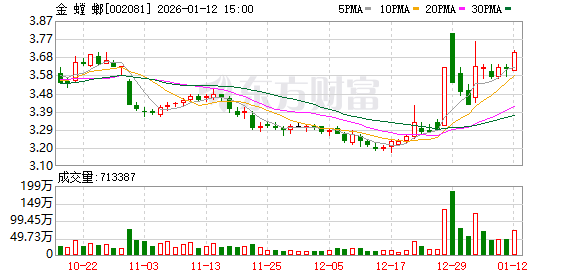
金螳螂:2025年公司围绕战略方向有序推进各项业务与管理工作
Zheng Quan Ri Bao· 2026-01-12 11:39
Core Viewpoint - The company is focused on high-quality development and strategic business management, with plans to enhance operational efficiency and explore new growth opportunities by 2026 [2] Group 1: Business Development - The company is advancing its core market layout and steadily developing sectors such as urban renewal, clean technology, and overseas business [2] - The company has established capabilities in cleanroom system integration and has successfully completed several benchmark projects, including the Nanjing Integrated Circuit Industry Service Center and the North China Lithium Battery Cleanroom [2] - The company aims to enhance its technical research and market expansion efforts in the cleanroom business while continuously improving its service system [2] Group 2: Digital Management and Cost Efficiency - The company is implementing digital management upgrades and ongoing cost reduction and efficiency enhancement initiatives across its operations [2] - The overall operational performance is maintaining a steady trend, indicating effective management practices [2] Group 3: Aerospace Construction - The company has gained experience in aerospace-grade engineering delivery and clean control through the Hainan Commercial Space Launch Site project [2] - The company plans to leverage its existing technical advantages and project experience to capture market opportunities in the aerospace sector [2]


2025年中国茶叶连锁行业发展历程、产业链、市场规模、重点品牌及趋势研判:绿色消费带动茶叶连锁发展,茶叶供给能力不断增强[图]
Chan Ye Xin Xi Wang· 2026-01-11 01:03
Core Insights - The tea chain industry in China has seen significant growth, with market size increasing from 49.13 billion yuan in 2015 to 91.54 billion yuan in 2022, reflecting a compound annual growth rate (CAGR) of 9.3% [1][11] - However, a projected decline of 2.66% is expected in 2024, with the market size estimated at 87.83 billion yuan, primarily due to rational consumer spending and competition from online channels and new tea beverage brands [1][11] - The industry is anticipated to evolve towards greater branding and specialization, with an emphasis on brand building, market segmentation, and enhanced consumer experiences through smart features [1][11] Industry Overview - The tea chain industry operates through a standardized and chain-based business model, providing tea products and related services across various retail formats [3][11] - It can be categorized by product type (green tea, black tea, etc.), sales channels (direct, franchise, e-commerce), and service forms (tea shops, tea experience stores) [3] Industry Development History - The industry began in the 1990s, gaining momentum in the 21st century as consumer demand diversified and e-commerce emerged as a significant opportunity [5][6] - The current landscape features a more concentrated market with established brands and a need for continuous innovation to address challenges like product homogenization and intense competition [6] Industry Value Chain - The upstream of the tea chain industry includes tea plantations and processing facilities, while the midstream consists of tea chain enterprises responsible for brand management and retail operations [6] - The downstream involves consumers who drive demand and feedback, influencing the entire value chain [6] Market Trends - The tea chain industry is expected to focus on experiential retail, transforming stores into cultural and social spaces that enhance customer engagement [15] - Digital tools will facilitate precise service and supply chain integration, improving operational efficiency and product traceability [15] - There will be a shift towards health-oriented products and innovative forms, catering to modern consumer preferences [16][17] Key Companies - Notable companies in the tea chain industry include Baima Tea, Lancang Ancient Tea, Tianfu, and others, each with unique market strategies and product offerings [2][12] - Baima Tea, for instance, has over 3,700 stores and has established a strong online presence, achieving significant sales growth [12][13]


韶能股份:智能集控中心建设项目一期工程投入运行
Xin Lang Cai Jing· 2026-01-08 10:52
Core Viewpoint - Shaoneng Co., Ltd. announced the implementation of the first phase of its intelligent centralized control center construction project, with an investment of 8.7005 million yuan, marking a significant milestone in the company's digital management upgrade [1] Summary by Sections Project Overview - The project is planned to be implemented in three phases, with the first phase focusing on building the intelligent centralized control center at the company's headquarters and retrofitting and connecting several hydropower stations in Shaoguan [1] - The second phase will expand to all hydropower enterprises, while the third phase will cover biomass power generation, photovoltaic fields, and related systems [1] Impact on Business - The operation of the first phase is expected to enhance the energy business level and efficiency, contributing to the overall digital transformation of the company [1]

万辰集团20260107
2026-01-08 02:07
Summary of the Conference Call for Wancheng Group Industry Overview - The hard discount supermarket sector has experienced a compound annual growth rate (CAGR) exceeding 90% over the past few years, indicating it is a high-growth area within the consumer sector [2][5] - The snack industry is a trillion-dollar market with low penetration rates, where the two leading companies hold approximately 10% market share, and the largest company has less than 2% [4][15] Company Expansion Plans - Wancheng Group plans to open 10,000 stores in 2024, while Mingming Henbang aims to open 8,000 stores by 2026, showcasing strong expansion capabilities [2][5] - The company primarily targets county and town markets, which account for 60% of its store openings, addressing unmet market demand and demonstrating high net profit potential and long operating cycles [2][5][6] Market Dynamics - The demand for snacks and beverages in county and town markets remains strong, with limited e-commerce competition, resulting in lower rent and operational costs [10] - The logistics network has improved significantly, with over 60 warehouses established nationwide, enabling next-day delivery in most regions [9] Profitability and Valuation - The snack industry is expected to maintain a net profit margin of around 5% through 2026 and likely into 2027 [4][17] - A specific brand is projected to achieve a net profit of at least 2 billion yuan by 2026, with a potential market capitalization of approximately 400 billion yuan at a 20x PE ratio, indicating significant growth potential [4][22] Competitive Landscape - The hard discount model in China is still in its infancy, with only about 4% market penetration compared to 20-30% in developed markets like Europe and the U.S., suggesting substantial growth opportunities [3] - The competition in the snack sector is characterized by high margins and strong bargaining power among major companies, supported by digital management that enhances efficiency and reduces costs [17][20] Future Trends - The retail landscape is expected to evolve towards a "snack+" model, where maintaining a combination of products can sustain high net profit margins [23] - The overall industry is projected to have a store ceiling of 80,000 to 100,000 locations, with major brands likely to reach 30,000 stores by 2026 [11][24] Challenges and Risks - Expanding into new product categories may introduce competitive pressures, particularly in lower-margin areas like fresh produce [12] - The presence of private labels poses a challenge to traditional brands, but they can coexist by offering different price points and value propositions [19] Conclusion - The hard discount supermarket and snack sectors present significant investment opportunities due to their growth potential, strong demand in underserved markets, and the ability to maintain profitability through effective management and expansion strategies [2][4][22]
中企承建沙特红海旅游项目 施工环保两不误 鱼类重回珊瑚丛
Ren Min Ri Bao· 2026-01-07 22:18
Group 1 - The Red Sea tourism project is a major infrastructure initiative under Saudi Arabia's Vision 2030, emphasizing environmental sustainability during construction [1] - China Electric Power Construction's Shandong Electric Power Construction Company is responsible for building three seawater desalination plants and laying underwater cables for the project [1] - The project includes a dedicated environmental department that regularly monitors coral growth and conducts joint environmental activities with stakeholders to protect marine life [1] Group 2 - Shandong Electric Power Construction Company is also in charge of the first phase of public utility infrastructure for the Red Sea tourism project, which includes solar power, energy storage, and wastewater treatment [2] - The project management incorporates digitalization through the use of Building Information Modeling (BIM) and Geographic Information Systems (GIS) to enhance design and construction efficiency [2] - The application of BIM has successfully prevented approximately 2,000 construction collisions over the past year, showcasing the project's commitment to high-quality and intelligent construction practices [2]
双林股份(300100) - 300100双林股份投资者关系管理信息20260107
2026-01-07 01:04
Group 1: Company Overview and Core Competencies - The company is a global leader in precision transmission components, with a strong market position in multiple segments, particularly in the automotive sector [3][4] - It has developed a comprehensive R&D and manufacturing capability across the entire supply chain, ensuring product quality and technological advancement [3][4] - The company has successfully transitioned into the humanoid robot sector, leveraging its existing technology and market position [3][4] Group 2: Strategic Transition to Robotics - The strategic shift from automotive precision transmission to humanoid robotics has yielded significant progress, including the establishment of a dedicated R&D team for robotic modules [4][5] - The company has achieved a production capacity of 100,000 sets for roller screws and is planning for a scalable production of 1 million sets [4][5] - Client validation has been successful, with initial samples provided to leading domestic and international humanoid robot manufacturers [5][11] Group 3: Future Plans and Market Positioning - The company aims to become a top global provider of intelligent transmission solutions, focusing on applications in humanoid robots, smart vehicles, and low-altitude aircraft [6][7] - Continuous investment in R&D is planned to enhance product precision and efficiency, particularly in electric cylinders and robotic systems [6][7] - The company is expanding its production capacity and global footprint, with investments in Thailand and partnerships with international distributors [6][7] Group 4: Product Development and Technological Advancements - The company has developed advanced grinding machines with improved precision, efficiency, and stability, enhancing production capabilities [8][9] - The second-generation grinding machines are expected to achieve a monthly capacity of 40 units by June 2026, supporting the production of precision screws [10] - The company has introduced a range of roller screws tailored for humanoid robots, with 17 product variations covering various joints [11][12] Group 5: Collaboration and Innovation - The partnership with Tsinghua University focuses on collaborative innovation in the development of modular platforms for automotive applications [15][16] - Tsinghua's role includes foundational research, subsystem development, and talent collaboration, enhancing the company's technological capabilities [16][17] - The collaboration aims to establish a sustainable and open technology system for intelligent chassis solutions [19][20]
