新能源车险

Search documents
汽车产业变革倒逼车险转型,新老玩家如何破局?
3 6 Ke· 2025-07-03 08:00
Core Insights - The rapid growth of the new energy vehicle (NEV) market in China is not matched by the development of the corresponding insurance market, leading to high premiums, high claim rates, and high loss ratios in NEV insurance [1][3][7] - The insurance industry is facing challenges due to the high repair costs associated with NEVs, which are exacerbated by the vehicles' design and technology [15][18] - The market for NEV insurance is projected to grow significantly, with estimates suggesting it could reach 500 billion yuan by 2030, accounting for nearly 50% of total auto insurance premiums [9][10] NEV Market Growth - In March 2025, NEV sales in China reached 1.237 million units, with a month-on-month growth of 38.7% and a year-on-year growth of 40.2%, achieving a penetration rate of 42.4% [1] - By the end of 2024, the total number of NEVs in China is expected to reach 31.4 million, representing 8.9% of the total vehicle population, with an annual growth rate exceeding 50% [1] Insurance Market Dynamics - In 2024, the insurance industry covered 27.95 million NEVs, generating 140.9 billion yuan in premiums but incurring a loss of 5.7 billion yuan [3][10] - The average premium for NEVs is approximately 30%-50% higher than that for traditional fuel vehicles, with NEV premiums ranging from 3,000 to 4,000 yuan compared to 2,000 to 3,000 yuan for fuel vehicles [6][10] Challenges in NEV Insurance - The high repair costs for NEVs are attributed to advanced designs, high-tech components, and a lack of scale in parts production, leading to increased insurance claims [15][18] - The operational use of NEVs, particularly in ride-hailing and delivery services, results in a higher claim rate compared to traditional vehicles, with 5.5% of NEVs used for commercial purposes versus only 0.4% for fuel vehicles [19] Regulatory and Industry Responses - Regulatory bodies are closely monitoring the NEV insurance market, with initiatives aimed at improving pricing mechanisms and developing new insurance products to address the unique risks associated with NEVs [14][19] - Major insurance companies are adopting strategies to maintain market share in the NEV segment despite ongoing losses, indicating a willingness to invest in the future potential of this market [9][10] Competitive Landscape - Traditional insurance companies maintain a significant market share in NEV insurance, with the top three companies holding approximately 74.7% of the market [21] - New entrants, including automotive manufacturers, are beginning to establish their own insurance operations, aiming to integrate insurance offerings with their vehicle sales to enhance customer loyalty [22][24] Future Outlook - The NEV insurance market is expected to evolve with increased competition and potential collaboration between traditional insurers and automotive manufacturers, as both sectors seek to adapt to the changing landscape of vehicle technology and consumer needs [27][28]

小米汽车发文提示假车险!缘何总有用户“上当”
Bei Jing Shang Bao· 2025-06-08 12:34
Core Viewpoint - The rise of fake car insurance has become a significant concern, particularly for electric vehicle owners, who may confuse service products with legitimate insurance policies [1][3][4] Group 1: Identification of Fake Insurance - Fake car insurance often uses terms like "guarantee" or "service" instead of "insurance," and the premiums are significantly lower than standard car insurance [3][4] - Many consumers have mistakenly believed that service products, such as "motor vehicle loss guarantee," are legitimate insurance, leading to denied claims when seeking compensation [3][4] - The contracts associated with these fake products are not legally recognized as insurance contracts and lack the protections afforded by insurance law, increasing the risk of claim denial [3][4][5] Group 2: Consumer Awareness and Identification - Consumers should be vigilant and recognize that legitimate insurance policies are issued by licensed insurance companies, while fake policies often come from service or logistics companies [4][5] - Payment for legitimate insurance is made to the insurance company's official account, whereas fake insurance may involve payments to non-insurance entities or individuals [4][5] - Verification of insurance policies can be done through official channels or apps, which is not possible with fake policies [4][5] Group 3: Regulatory and Industry Response - Regulatory bodies need to enhance qualification reviews and legal frameworks to combat illegal operations in the insurance sector [6] - The insurance industry should promote self-regulation and improve consumer education to enhance risk identification capabilities [6] - The introduction of the "Car Insurance Easy to Insure" platform aims to facilitate the insurance process for electric vehicle owners, ensuring they can access legitimate insurance options [8] Group 4: Innovations in Insurance Products - Electric vehicle manufacturers are increasingly integrating insurance services into their business models, offering unique products that combine insurance with additional services [9][10] - Companies like BYD and NIO are developing innovative insurance products that leverage their technological advantages and provide comprehensive coverage [9][10] - Despite the advancements, challenges remain in defining responsibilities, data availability, and consumer understanding, necessitating collaboration and talent development within the industry [10]


聚焦3·15|政策引导、企业协力,破解新能源车“难买、难用、难卖”痛点
Zhong Guo Jing Ji Wang· 2025-03-14 11:08
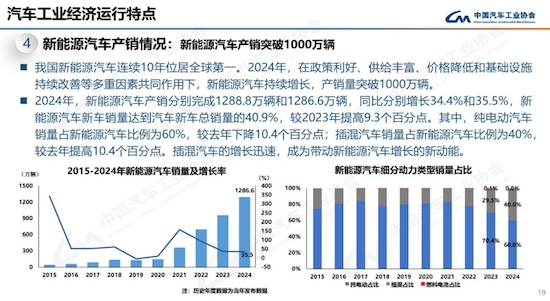
Core Insights - In 2024, China's new energy vehicle (NEV) sales are projected to exceed 10 million units for the first time, reaching 12.866 million units, with a strong growth trend continuing into 2025 [1] - The rapid expansion of the NEV market has exposed various issues across the entire supply chain, from sales to recycling [3] - Consumer acceptance, industry guidance, and corporate strategies are critical in addressing the challenges faced by the NEV sector [4] Market Dynamics - The competition in the NEV market is intensifying, pushing companies to enhance their technological capabilities and accelerate product iterations [4] - A survey indicated that price fluctuations have become a significant complaint among consumers, highlighting marketing shortcomings within NEV companies [4] Consumer Sentiment - Following the launch of BYD's advanced driving system, many recent buyers expressed dissatisfaction, claiming misleading sales practices regarding product iterations [5] - Similar complaints have emerged from owners of other brands, such as XPeng and NIO, regarding pricing and configuration discrepancies between new and existing models [6][7][8][9] Charging Infrastructure - As of the end of 2024, China is expected to have 12.818 million charging facilities, leading globally in both total numbers and vehicle-to-charging station ratios [11] - Despite the growth in charging infrastructure, issues such as peak-time shortages and inconsistent quality remain prevalent [11][12] Insurance Challenges - The high costs associated with the maintenance and repair of NEVs have led to increased insurance premiums, causing dissatisfaction among consumers [14][15] - Recent regulatory efforts aim to lower the costs of NEV insurance and improve service levels, with many car manufacturers entering the insurance market to offer tailored products [17] Second-Hand Market - The second-hand market for NEVs is facing challenges, including low residual values and liquidity issues, exacerbated by rapid technological advancements [18] - In 2024, the transaction volume of second-hand NEVs reached 1.1285 million units, marking a 47.9% year-on-year increase [22]