
日本军国主义复活

Search documents
视频丨专家:日本核试探是“饮鸩止渴” 可能酝酿战略性灾难
Yang Shi Wang· 2025-12-27 13:29
Core Viewpoint - Recent pro-nuclear statements from a senior official in Japan's Prime Minister's office have sparked significant domestic and international backlash, indicating a potential shift in Japan's defense policy and raising concerns about the resurgence of militarism in Japan [1][3][4]. Group 1: Pro-Nuclear Statements and Reactions - The pro-nuclear rhetoric, previously considered taboo in Japanese politics, has emerged under the current administration, leading to criticism from former politicians, political parties, and civil organizations within Japan, as well as strong opposition from neighboring countries [1]. - The official who made the pro-nuclear comments is responsible for nuclear disarmament and non-proliferation, highlighting a contradiction in Japan's stance on nuclear weapons [1][4]. Group 2: Implications of Nuclear Ambitions - The statements reflect a systematic disregard for Japan's post-war pacifist constitution and the "Three Non-Nuclear Principles," signaling a potential challenge to the international order that has historically limited Japan's military expansion [1][3]. - The push for nuclear capabilities is viewed as a strategic step by Japan's right-wing factions to achieve military normalization, which could destabilize regional security and provoke an arms race among neighboring countries [4][5]. Group 3: Security Concerns and International Relations - The pursuit of nuclear weapons is seen as contradictory to Japan's national interests, as it could lead to increased security threats rather than enhanced safety, given Japan's historical context as an aggressor in World War II [5][6]. - The United States is unlikely to support Japan's nuclear ambitions, as it would undermine the trust in the U.S.-Japan alliance and could lead to stricter controls over Japan's military capabilities [6].

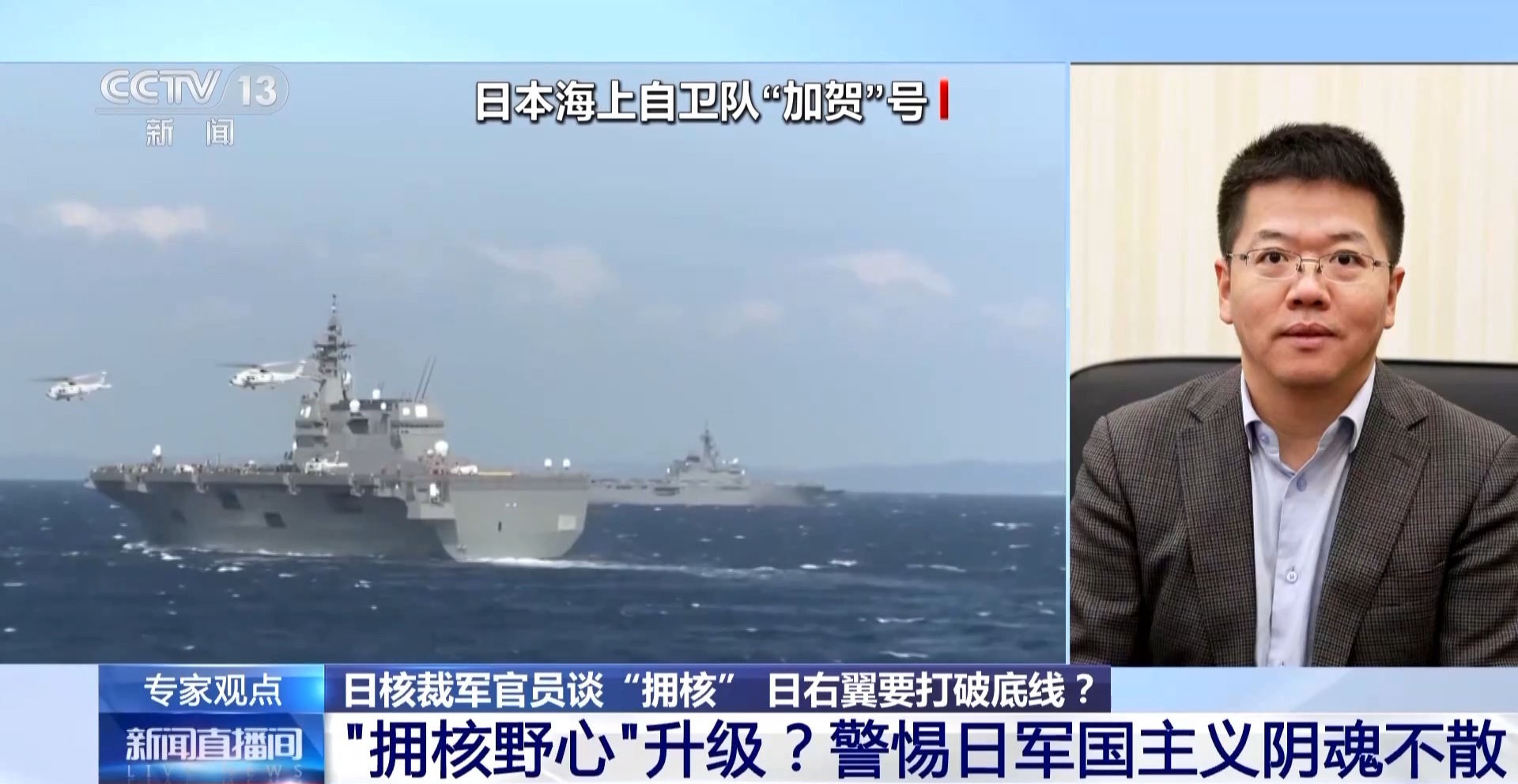
专家:日本核试探是“饮鸩止渴” 可能酝酿战略性灾难
Yang Shi Xin Wen Ke Hu Duan· 2025-12-27 12:48
Core Viewpoint - Recent statements from senior officials in Japan advocating for nuclear armament have sparked significant domestic and international backlash, indicating a potential shift in Japan's defense policy and raising concerns about the resurgence of militarism in the country [1][3]. Group 1: Nuclear Ambitions and International Response - The remarks on nuclear armament are seen as a challenge to the post-war international order, particularly Japan's commitment to non-militarization and the "Three Non-Nuclear Principles" [1][3]. - The statements reflect a systematic disregard by Japan's right-wing factions for the spirit of the post-war peace constitution, signaling a potential escalation in militaristic ambitions [1][4]. Group 2: Implications for National Security - Advocating for nuclear weapons contradicts Japan's national interests, as seeking security through nuclear armament is viewed as a paradox for a nation historically affected by nuclear devastation [5][6]. - The possession of nuclear weapons would not enhance Japan's security but could instead exacerbate regional tensions and provoke an arms race among neighboring countries [5][6]. Group 3: Impact on Alliances - Japan's pursuit of nuclear capabilities could strain its alliance with the United States, as the U.S. is unlikely to support a nuclear-armed Japan due to trust issues and the implications for nuclear control [6]. - Such actions would likely lead to increased restrictions from the U.S. on Japan, further complicating Japan's security environment and undermining its strategic objectives [6].
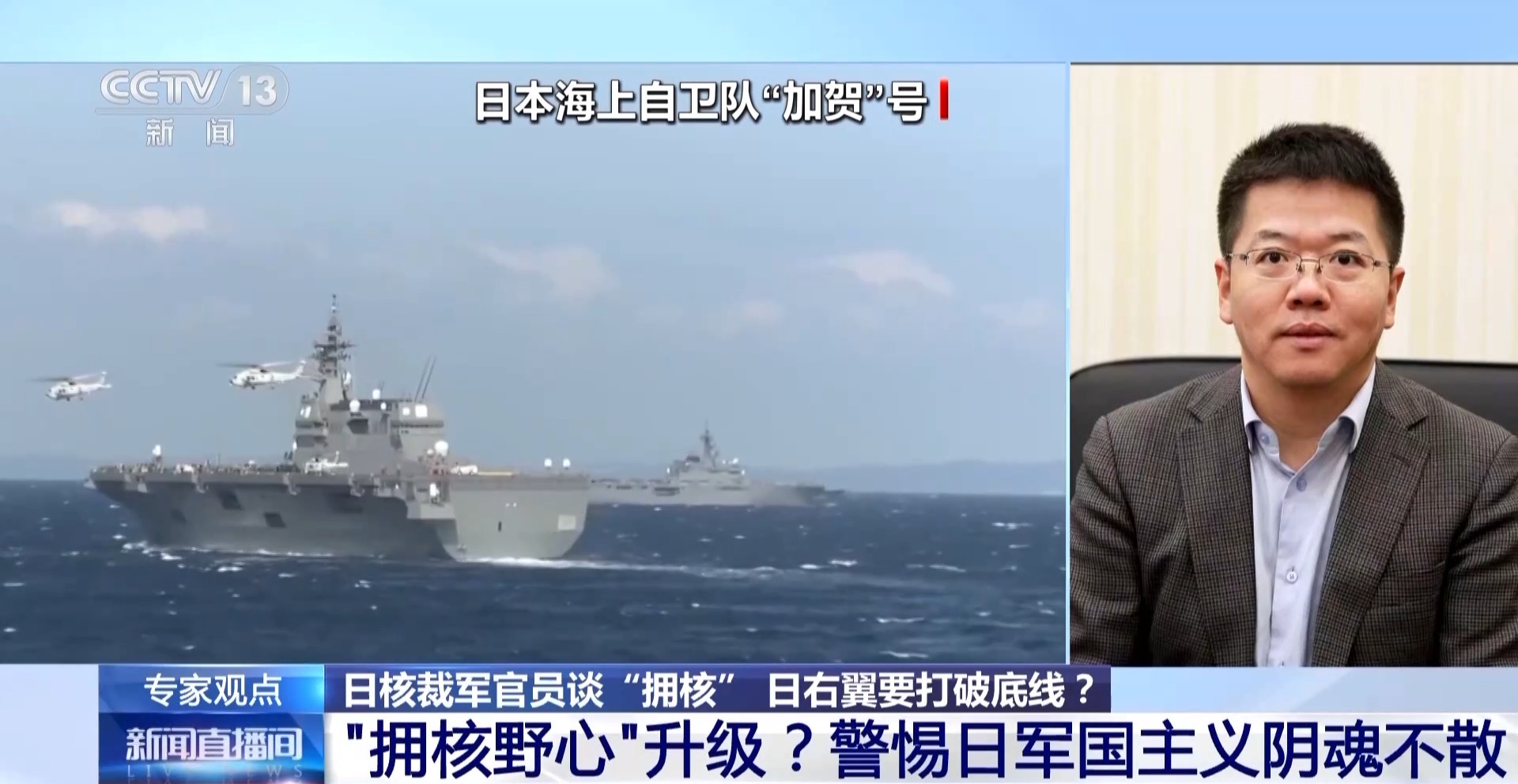
涉中美两军关系!2025年12月国防部例行记者会文字实录来了
Xin Lang Cai Jing· 2025-12-25 13:18
Core Viewpoint - The Chinese Ministry of National Defense emphasizes the importance of military diplomacy and defense cooperation, highlighting the need to maintain national sovereignty and security while addressing regional tensions and international relations. Group 1: Military Diplomacy and International Cooperation - In 2025, military diplomacy focused on strategic communication with countries like Russia, the U.S., and European nations, enhancing defense relations through various high-level meetings and dialogues [4][10] - The organization of multilateral military forums and conferences, such as the Shanghai Cooperation Organization Defense Ministers' Meeting and the China-Latin America High-Level Defense Forum, aimed to strengthen international military cooperation and promote China's voice in global security [4][10] - Joint military exercises with multiple countries, including Russia and Malaysia, showcased practical training and enhanced capabilities to address security challenges [4][10] Group 2: Response to Regional Tensions - The Ministry responded to Japan's military developments and statements regarding nuclear capabilities, asserting that China's defense spending is reasonable and within global averages, while urging Japan to cease provocative actions [6][10] - The Ministry condemned U.S. arms sales to Taiwan and emphasized that such actions undermine peace and stability in the Taiwan Strait, calling for adherence to the One China principle [10][20] - The Ministry reiterated its commitment to defending national sovereignty and territorial integrity, particularly concerning Taiwan, and warned against foreign interference in domestic affairs [20][28] Group 3: Military Training and Readiness - The Chinese military has intensified training efforts in 2025, focusing on practical combat skills and adapting to complex environments to meet the centenary goals of the armed forces [7][10] - Emphasis was placed on integrating new technologies and conducting joint training exercises with foreign militaries to enhance operational readiness and international collaboration [7][10] Group 4: Humanitarian Efforts and International Relations - The Chinese Navy's hospital ship "Silk Road Ark" provided medical services to various countries, demonstrating China's commitment to humanitarian assistance and international cooperation [29] - The Ministry expressed a desire to deepen military exchanges with Latin American and Caribbean nations, contributing to regional stability and development [29]
警惕日本自卫队的“靖国旧梦”
Xin Lang Cai Jing· 2025-12-24 18:49
Core Viewpoint - The resurgence of militaristic sentiments in Japan is evident through the activities of the Japan Defense University students and the increasing influence of the Yasukuni Shrine on the Self-Defense Forces [1][2][3][4] Group 1: Activities and Traditions - Japan Defense University students are required to participate in a "night march" to the Yasukuni Shrine at least once during their four years of study, indicating a long-standing tradition [1] - On August 15, Japan's defeat day, members of the Self-Defense Forces (SDF) in uniform are frequently seen collectively visiting the Yasukuni Shrine, showcasing the infiltration of historical revisionism into the SDF [1] Group 2: Policy and Regulations - The Japanese Ministry of Defense has internal regulations prohibiting collective visits to shrines by SDF personnel, yet these rules are increasingly ignored, as evidenced by a high-ranking official leading a group to the Yasukuni Shrine [2] - The Ministry's investigation into such incidents often downplays them as "private visits," undermining the seriousness of the violations [2] Group 3: Educational Content and Historical Narratives - The Defense University’s required course materials reflect the "Yasukuni view of history," distorting Japan's military actions as self-defense against Western imperialism [3] - Criticism has emerged regarding the university's choice of guest speakers, who promote a narrative that glorifies Japan's wartime actions [3] Group 4: Personnel and Leadership - The appointment of a former high-ranking SDF officer as the head of the Yasukuni Shrine marks a significant intertwining of military and religious leadership, raising concerns about the militarization of the shrine [3] - The advisory board of the Yasukuni Shrine includes several former SDF leaders, further solidifying the connection between the military and the shrine [3] Group 5: Broader Implications - The increasing militarization of Japan, coupled with political rhetoric advocating for military intervention, raises alarms about the potential revival of aggressive military policies reminiscent of Japan's past [4] - Statements from SDF officials regarding the Yasukuni Shrine as a "spiritual home" and the notion of preparing for "death in battle" reflect a troubling shift towards militaristic ideology [4]
专栏|警惕!日本自卫队的“靖国旧梦”
Xin Lang Cai Jing· 2025-12-24 12:42
Core Viewpoint - The article highlights the concerning resurgence of militaristic sentiments in Japan, particularly through the activities of the Self-Defense Forces (SDF) and their connections to the Yasukuni Shrine, which symbolizes Japan's militaristic past [1][2][3][4]. Group 1: Activities and Traditions - A video showing students from the National Defense Medical College participating in a collective visit to Yasukuni Shrine has gone viral, indicating a troubling revival of militaristic traditions [1]. - The National Defense Medical College has a long-standing tradition where students must participate in a "night march" to Yasukuni Shrine at least once during their four years of study [1]. - On significant dates like August 15, the anniversary of Japan's defeat in World War II, SDF personnel in uniform are frequently seen visiting Yasukuni Shrine [1]. Group 2: Policy and Regulations - The Japanese Ministry of Defense has internal regulations prohibiting collective visits to shrines by SDF members, but these rules are increasingly ignored [2]. - In January 2024, a senior SDF officer led a group of personnel to Yasukuni Shrine, which was later classified as a "private visit" despite the public nature of the event [2]. - The Yasukuni Shrine's "Yushukan" museum is being promoted as a historical education base for the SDF, further blurring the lines between military training and historical revisionism [2]. Group 3: Educational Content and Historical Narratives - The curriculum at the National Defense Medical College includes materials that reflect the "Yasukuni view of history," distorting Japan's military actions as defensive against Western imperialism [3]. - A former professor criticized the college for inviting speakers who support the justification of Japan's wartime actions, indicating a troubling influence of revisionist history on future military leaders [3]. - In April 2024, an SDF unit publicly referred to World War II as the "Greater East Asia War," showcasing the impact of the "Yasukuni view" on official communications [3]. Group 4: Personnel and Leadership - The appointment of a former SDF officer as the head priest of Yasukuni Shrine marks a significant intertwining of military and religious leadership, with implications for the SDF's ideological direction [3]. - The advisory board of Yasukuni Shrine includes several former high-ranking SDF officials, indicating a deepening relationship between the shrine and the military [3]. Group 5: Broader Implications - Japan's increasing militarization and the rhetoric surrounding national security raise concerns about the potential revival of militaristic ideologies within the SDF [4]. - Statements from SDF officials expressing a readiness to die in battle and the characterization of Yasukuni Shrine as a "spiritual home" reflect a dangerous normalization of militaristic sentiments [4]. - The historical role of Yasukuni Shrine in mobilizing the Japanese populace for war underscores the potential risks of a militarized SDF in the current geopolitical climate [4].
专栏丨警惕!日本自卫队的“靖国旧梦”
Xin Hua She· 2025-12-24 09:04
Core Viewpoint - The resurgence of militaristic sentiments in Japan is evident through the activities of the Self-Defense Forces (SDF) and their connection to the Yasukuni Shrine, raising concerns about a potential revival of militarism in the country [1][3][4] Group 1: Activities and Traditions - A video showing students from the National Defense Medical University participating in a collective visit to Yasukuni Shrine has gone viral, highlighting a long-standing tradition where students must participate in a "night march" to the shrine during their four years of study [1] - The SDF has been seen participating in collective visits to Yasukuni Shrine, particularly on significant dates like August 15, the anniversary of Japan's defeat in World War II, indicating a deep-rooted connection to the shrine [1][2] Group 2: Policy and Regulations - Despite internal regulations prohibiting collective visits to shrines by SDF personnel, these rules have become ineffective, as evidenced by a high-ranking official leading a group to Yasukuni Shrine and being labeled as a "private visit" [2] - The Yasukuni Shrine has been controversially designated as a "historical education base" for the SDF, further blurring the lines between military training and nationalistic indoctrination [2] Group 3: Educational Content and Ideology - The curriculum at the National Defense Medical University includes materials that reflect the "Yasukuni view of history," distorting Japan's military actions as defensive against Western imperialism [3] - The influence of the "Yasukuni view" is evident in official communications from the SDF, which have used terms like "Greater East Asia War" in their announcements, showcasing a shift in historical narrative [3] Group 4: Personnel and Leadership - The appointment of a former high-ranking SDF officer as the head priest of Yasukuni Shrine marks a significant intertwining of military and religious leadership, raising alarms about the militarization of national identity [3] - The advisory board of Yasukuni Shrine includes several former high-ranking SDF officials, indicating a strong personnel connection between the military and the shrine [3] Group 5: Broader Implications - The increasing militarization of Japan, coupled with political rhetoric advocating for military intervention in regional conflicts, suggests a potential shift towards a more aggressive military posture [3][4] - Statements from SDF officials expressing a readiness to "die in battle" and the characterization of Yasukuni Shrine as a "spiritual home" for SDF personnel reflect a troubling normalization of militaristic ideology [4]
泰国军队在柬阵地缴获中国造反坦克导弹?中方回应
中国基金报· 2025-12-17 08:13
来源:中国新闻网 北京日报 新华社 中国外交部发言人郭嘉昆17日主持例行记者会。 郭嘉昆表示,中方在乌克兰危机问题上的立场一贯明确,我们支持一切有利于和平解决危机的努 力,希望各方通过对话谈判尽早达成一份公平、持久、有约束力的和平协议。 他强调,中国一贯奉行独立自主的和平外交政策,坚持在和平共处五项原则基础上,同各国发展关 系开展合作,同时我们坚定维护自身的主权安全和发展利益。 外交部回应"欧盟希望将冻结的俄资产用于乌克兰":中方一贯反对违反国际法、未经联合国安理会授权 的单边制裁 俄新社记者提问,欧盟表示希望在12月18日-19日举行的欧盟峰会上,促使欧盟各国就使用冻 结的俄罗斯资产作出决定。将冻结的俄罗斯资产用于乌克兰的决定,是否会削弱中国对欧盟投资 环境的信心? 有记者提问:据报道,泰国军队在与柬埔寨的冲突中,在柬军阵地上缴获了中国制造的反坦 克导弹等装备。中方对此有何回应? 郭嘉昆:具体情况请你向中方的主管部门进行了解。我们要强调的是,中国与泰国、柬埔寨 以往都开展了正常的防务合作,不针对任何第三国,更与柬泰边境的冲突无关。 俄方称英法德准备加强对华关系以应对美国,外交部回应 12月17日,外交部发言 ...
731部队反人类罪行,铁证如山!
Xin Hua She· 2025-12-17 00:59
12月13日,在第十二个 南京大屠杀死难者国家公祭日 中央档案馆公布了一批 俄罗斯政府转交我方的 日本731部队解密档案材料 2025年12月13日,中央档案馆公布一批俄罗斯转交我方的苏联审讯日本731部队的解密档案材料。 这是解密的档案。新华社记者 李鑫 摄 这批尘封已久的材料 以苏联审讯日本细菌战战犯 的伯力审判为主体 跨越审判前、中、后三个阶段 涵盖1939年5月 至1950年12月的珍贵档案 包括对731部队成员的审讯记录 731部队罪行调查报告等 这批材料首次披露了 审判前的侦讯过程 发现与731部队罪行相关人员 (一) 多达200余人 被公开审判的12个战犯 对其准备和实施细菌战的罪行 供认不讳 2025年12月13日,中央档案馆公布一批俄罗斯转交我方的苏联审讯日本731部队的解密档案材料。 这是解密的档案。新华社记者赵博 摄 哈尔滨市社会科学院 731问题国际研究中心主任宫文婧说 这些材料 与我国保存的731遗址、731档案 形成证据链闭环 再次证明日本细菌战是 有组织、有预谋 "以毁灭全人类为目的" 将这一反人类暴行 死死地钉在历史的耻辱柱上 2025年9月18日,人们在侵华日军第七三一部队罪 ...

中方:日方无端指责中国正当国防建设,令人不齿
Zhong Guo Xin Wen Wang· 2025-12-16 12:59
Group 1 - The Chinese government criticizes Japan's Defense Minister for making unfounded accusations regarding China's military spending, emphasizing that China's defense budget increase is legitimate and necessary for national security and international responsibilities [1] - Japan's defense spending has significantly increased over the past 13 years, with a nearly 60% rise in the last five years, leading to concerns among Asian neighbors and the international community about Japan's militarization [2] - Japan's military policy adjustments include the development of capabilities for "attacking enemy bases" and modifications to its arms export principles, raising alarms about a potential revival of militarism [2] Group 2 - The per capita defense spending in Japan for the fiscal year 2025 is projected to be three times that of China, with per capita defense personnel costs exceeding China's by more than two times [2] - The Chinese government asserts that Japan's actions contradict its commitments under international agreements and its own constitution, questioning Japan's adherence to its stated defense principles [2] - The article highlights a collective vigilance among peace-loving nations against any resurgence of Japanese militarism, emphasizing the importance of maintaining the outcomes of World War II [2]
外交部:日本加速强军扩武 只会换来对日本历史罪行的“再清算”
Yang Shi Xin Wen· 2025-12-10 08:06
(总台央视记者 赵晶) 中方呼吁所有爱好和平的国家警惕和阻止任何复活日本军国主义的危险动向,共同维护来之不易的二战 胜利成果。 12月10日,外交部发言人郭嘉昆主持例行记者会。总台央视记者提问:我们注意到日本"再军事化"加快 抬头,引发国际社会普遍关切,有评论称,日本正在从一个和平主义国家转向军事强国;日本企图复活 军国主义只会威胁地区和世界和平稳定,值得警惕。发言人对此有何评论? 郭嘉昆表示,日本加速强军扩武图谋"再军事化",只会引发对日本未来向何处去的"再质疑",换来国际 社会对日本历史罪行的"再清算"。 ...