
日本拥核

Search documents
视频丨日本政界人士:政府官员“日本拥核”言论完全不可接受
Yang Shi Xin Wen Ke Hu Duan· 2026-01-19 02:58
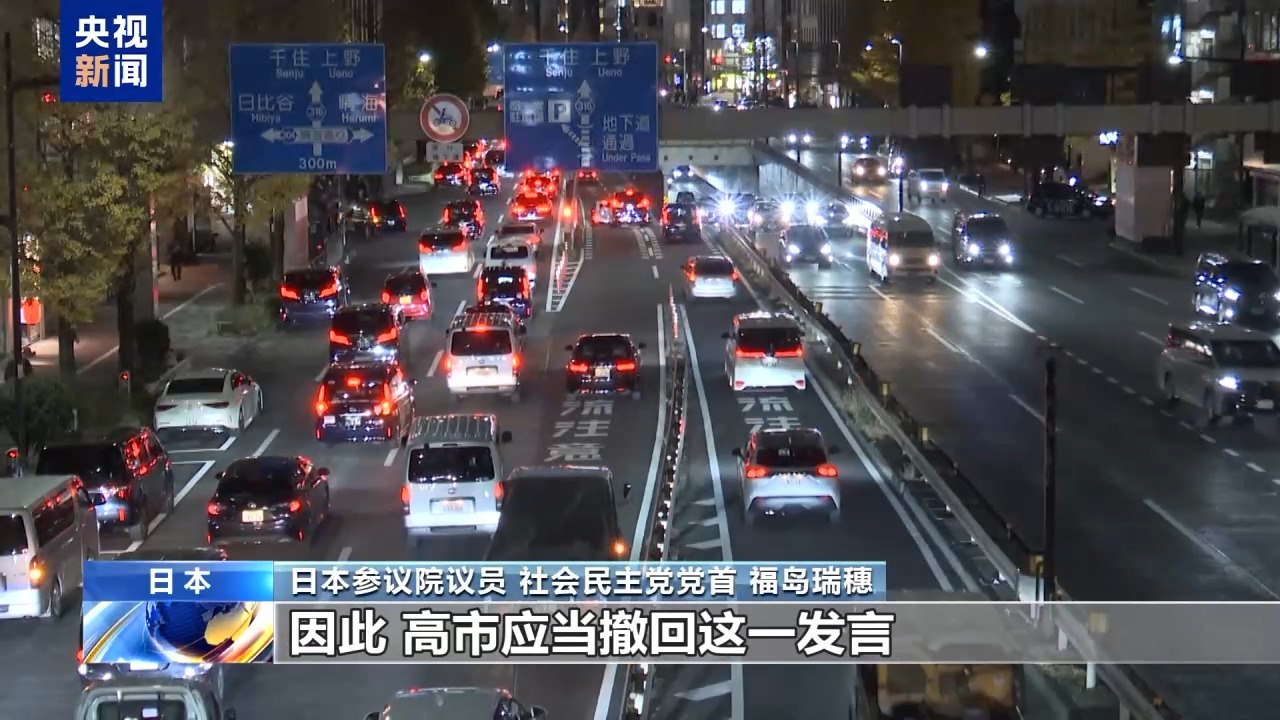
Core Viewpoint - The article discusses the strong opposition from Japanese politicians, particularly from Social Democratic Party leader Mizuho Fukushima, against Prime Minister Sanae Takaichi's attempts to alter Japan's post-war security policy, emphasizing the importance of maintaining the "Three Non-Nuclear Principles" [1][3]. Group 1 - Fukushima asserts that Japan, being the only country to have suffered atomic bombings, must adhere to the "Three Non-Nuclear Principles" and that any support for nuclear armament is unacceptable [3][4]. - The remarks made by government officials advocating for nuclear weapons are seen as a serious challenge to these principles, which Fukushima believes must be upheld [1][3]. - Fukushima criticizes Takaichi's statements regarding a "survival crisis situation," claiming they violate the Japanese Constitution and the definitions within security laws, demanding Takaichi retract her comments [4][6]. Group 2 - Fukushima emphasizes the strong sense of crisis among atomic bomb survivors regarding discussions of nuclear armament, indicating that such discussions are not merely acceptable [3]. - She calls for Takaichi to take political responsibility for her statements, suggesting that failure to do so could lead to severe consequences for the government [4][6]. - The potential implications of Takaichi's comments could lead to absurd and unacceptable outcomes, such as Japan engaging in military action during conflicts in other regions [6].

马来西亚学者:日本政府妄言“拥核”无异于政治自杀
Xin Lang Cai Jing· 2025-12-27 13:33
Group 1 - The Japanese government under Prime Minister Sanae Takaichi is attempting to revise the "Three Security Documents," specifically aiming to modify the clause regarding "not introducing nuclear weapons," which has sparked strong criticism domestically and internationally [1][2] - The remarks made by Takaichi's government are seen as blurring the lines of Japan's pacifist constitution, potentially worsening relations with neighboring countries and threatening regional security [1][2] - There is a growing concern that Japan's actions may lead to an arms race in East Asia, as neighboring countries may feel compelled to respond militarily to Japan's perceived shift towards militarization [2][6] Group 2 - The Japanese government's push for nuclear capabilities reflects a strategic anxiety regarding the adequacy of the U.S. nuclear umbrella, as well as a desire to become a "normal country" free from post-World War II constraints [4][6] - The potential pursuit of nuclear weapons by Japan could lead to global sanctions and economic collapse, as Japan is a signatory of the Non-Proliferation Treaty [4][6] - Japan's recent policy changes, including easing weapon export restrictions, indicate a shift from being a "peacekeeper" to a "potential arms dealer," which could complicate geopolitical dynamics in the region [6]
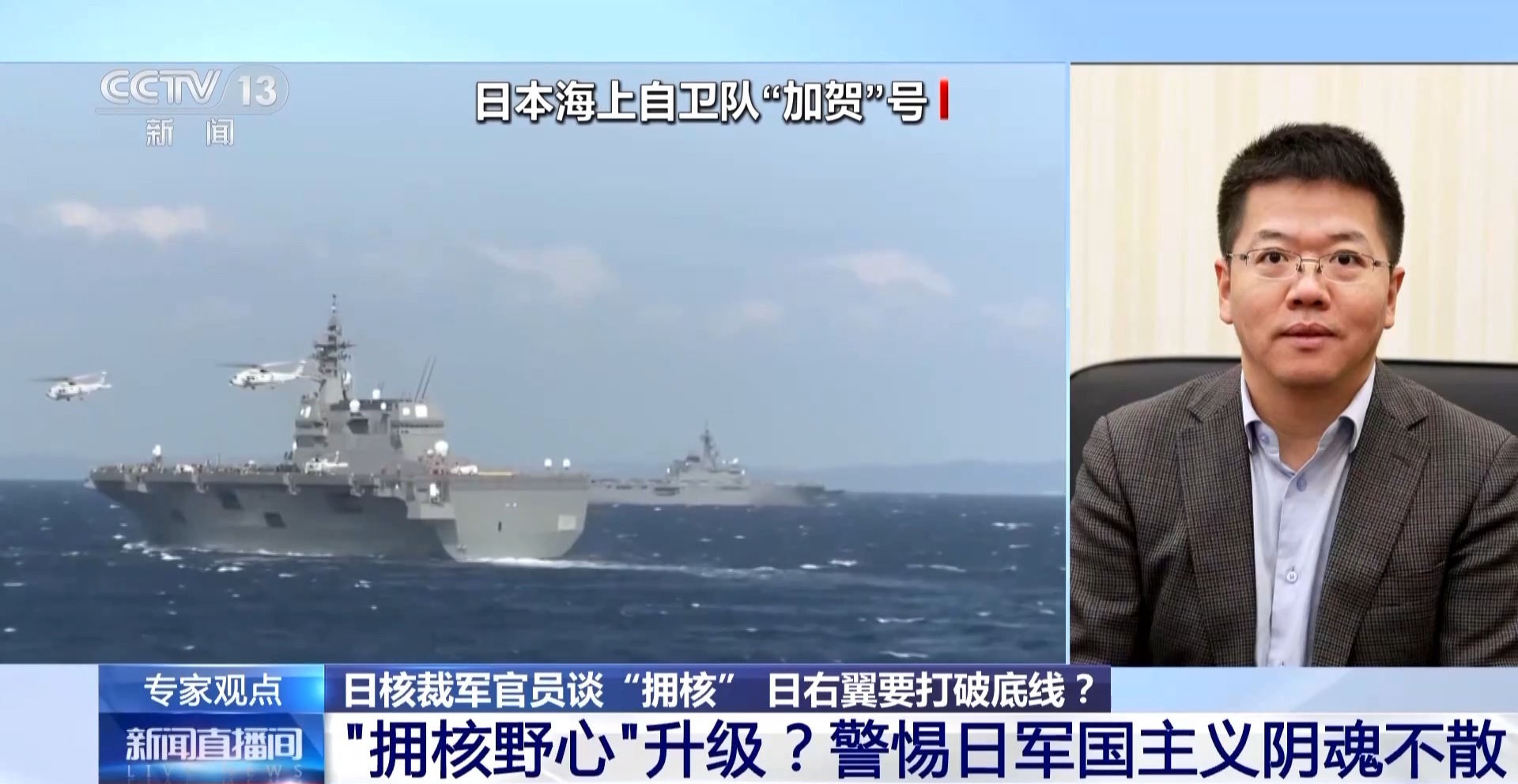
视频丨专家:日本核试探是“饮鸩止渴” 可能酝酿战略性灾难
Yang Shi Wang· 2025-12-27 13:29
Core Viewpoint - Recent pro-nuclear statements from a senior official in Japan's Prime Minister's office have sparked significant domestic and international backlash, indicating a potential shift in Japan's defense policy and raising concerns about the resurgence of militarism in Japan [1][3][4]. Group 1: Pro-Nuclear Statements and Reactions - The pro-nuclear rhetoric, previously considered taboo in Japanese politics, has emerged under the current administration, leading to criticism from former politicians, political parties, and civil organizations within Japan, as well as strong opposition from neighboring countries [1]. - The official who made the pro-nuclear comments is responsible for nuclear disarmament and non-proliferation, highlighting a contradiction in Japan's stance on nuclear weapons [1][4]. Group 2: Implications of Nuclear Ambitions - The statements reflect a systematic disregard for Japan's post-war pacifist constitution and the "Three Non-Nuclear Principles," signaling a potential challenge to the international order that has historically limited Japan's military expansion [1][3]. - The push for nuclear capabilities is viewed as a strategic step by Japan's right-wing factions to achieve military normalization, which could destabilize regional security and provoke an arms race among neighboring countries [4][5]. Group 3: Security Concerns and International Relations - The pursuit of nuclear weapons is seen as contradictory to Japan's national interests, as it could lead to increased security threats rather than enhanced safety, given Japan's historical context as an aggressor in World War II [5][6]. - The United States is unlikely to support Japan's nuclear ambitions, as it would undermine the trust in the U.S.-Japan alliance and could lead to stricter controls over Japan's military capabilities [6].
专家:日本核试探是“饮鸩止渴” 可能酝酿战略性灾难
Yang Shi Xin Wen Ke Hu Duan· 2025-12-27 12:48
Core Viewpoint - Recent statements from senior officials in Japan advocating for nuclear armament have sparked significant domestic and international backlash, indicating a potential shift in Japan's defense policy and raising concerns about the resurgence of militarism in the country [1][3]. Group 1: Nuclear Ambitions and International Response - The remarks on nuclear armament are seen as a challenge to the post-war international order, particularly Japan's commitment to non-militarization and the "Three Non-Nuclear Principles" [1][3]. - The statements reflect a systematic disregard by Japan's right-wing factions for the spirit of the post-war peace constitution, signaling a potential escalation in militaristic ambitions [1][4]. Group 2: Implications for National Security - Advocating for nuclear weapons contradicts Japan's national interests, as seeking security through nuclear armament is viewed as a paradox for a nation historically affected by nuclear devastation [5][6]. - The possession of nuclear weapons would not enhance Japan's security but could instead exacerbate regional tensions and provoke an arms race among neighboring countries [5][6]. Group 3: Impact on Alliances - Japan's pursuit of nuclear capabilities could strain its alliance with the United States, as the U.S. is unlikely to support a nuclear-armed Japan due to trust issues and the implications for nuclear control [6]. - Such actions would likely lead to increased restrictions from the U.S. on Japan, further complicating Japan's security environment and undermining its strategic objectives [6].
石破茂再批“日本拥核”言论
Xin Jing Bao· 2025-12-27 05:10
Core Viewpoint - The former Japanese Prime Minister Shigeru Ishiba criticized recent statements from a government official advocating for Japan to possess nuclear weapons, emphasizing Japan's historical stance against nuclear proliferation as the only nation to have experienced atomic bombings [1]. Group 1: Government Statements - A government official from the Prime Minister's office expressed the view that Japan should possess nuclear weapons, which has sparked domestic criticism [1]. - The official responsible for nuclear arms control and non-proliferation matters is Seiji Oe, a special advisor to the Prime Minister [2]. Group 2: Implications of Nuclear Armament - Ishiba warned that if Japan were to acquire nuclear weapons, it would necessitate withdrawing from the Treaty on the Non-Proliferation of Nuclear Weapons and the International Atomic Energy Agency, undermining Japan's energy policy based on nuclear power [1]. - He stated that such a move would not be beneficial for Japan, highlighting the potential negative consequences of deviating from its anti-nuclear stance [1].
警惕!为拥核日本开始碰瓷中国和美国了
Xin Lang Cai Jing· 2025-12-24 16:47
Core Viewpoint - The proposal for Japan to develop nuclear weapons has sparked strong reactions domestically and from neighboring countries, particularly China, highlighting a resurgence of militaristic sentiments among Japanese right-wing politicians [1][3]. Group 1: Political Context - A core official from the Japanese Prime Minister's office suggested the development of nuclear weapons, leading to significant media coverage and public concern [1]. - Former high-ranking officials from Japan's Self-Defense Forces have defended the idea of nuclear armament, using rhetoric that stirs fear regarding China and the United States [1][3]. - The actions of these officials are seen as part of a broader strategy by right-wing politicians to revive militarism in Japan by fabricating threats [3]. Group 2: Reactions and Responses - Japanese social media has seen a rise in right-wing supporters promoting narratives that exaggerate threats from China, including claims that China has nuclear weapons aimed at Japan [3]. - Rational voices in Japan are working to expose the dangerous political manipulations by right-wing factions, emphasizing the need for a balanced perspective [7]. - China has consistently clarified its nuclear policy, asserting that it maintains a defensive posture and does not engage in an arms race, countering claims about its nuclear capabilities [7]. Group 3: International Implications - The international community is urged to form a unified response to Japan's nuclear ambitions, with calls for monitoring mechanisms to prevent potential nuclear activities [9]. - There is a warning against underestimating the international resolve to uphold nuclear non-proliferation, emphasizing that any attempts by Japan to challenge post-war international order could lead to severe consequences [9].

石破茂最新表态
Xin Jing Bao· 2025-12-21 22:50
Core Viewpoint - The former Japanese Prime Minister Shigeru Ishiba stated that Japan possessing nuclear weapons would not bring any positive impact to the country, emphasizing the negative consequences of such a move [1] Group 1: Nuclear Weapons Debate - Ishiba clarified that the remarks about Japan needing nuclear weapons were personal views expressed informally by a security official from the Prime Minister's office [1] - He highlighted that if Japan were to acquire nuclear weapons, it would have to withdraw from the Treaty on the Non-Proliferation of Nuclear Weapons and the International Atomic Energy Agency [1] - Ishiba acknowledged that, overall, Japan's possession of nuclear weapons "would never bring positive effects" [1] Group 2: Domestic Reactions - The comments made by a security official on December 18, suggesting that Japan should possess nuclear weapons, sparked strong criticism within Japan [1]
事态严重!石破茂发话
券商中国· 2025-12-21 07:20
Core Viewpoint - The former Japanese Prime Minister Shigeru Ishiba stated that Japan's possession of nuclear weapons "will never bring positive effects" to the country [1][2]. Group 1: Nuclear Weapons Debate - A senior official from the Japanese Prime Minister's office suggested that Japan should possess nuclear weapons due to the increasingly severe security environment surrounding the country [2]. - Ishiba emphasized that if Japan were to acquire nuclear weapons, it would have to withdraw from the Treaty on the Non-Proliferation of Nuclear Weapons and the International Atomic Energy Agency, complicating Japan's nuclear energy policy [1][2]. - The remarks from the official faced strong criticism from various sectors, including former Defense Minister Gen Nakatani, who stated that government representatives should not make such personal opinions publicly [2]. Group 2: Political Reactions - The leader of the Komeito party, Tetsuo Saito, expressed shock and anger at the timing of the remarks, coinciding with the 80th anniversary of the atomic bombings in Hiroshima and Nagasaki, asserting that nuclear weapons would isolate Japan diplomatically and worsen its security environment [2]. - Chinese Foreign Ministry spokesperson Guo Jiajun warned that if the reports were true, it would indicate a serious situation and expose dangerous intentions from certain Japanese individuals to breach international law and acquire nuclear weapons [2].
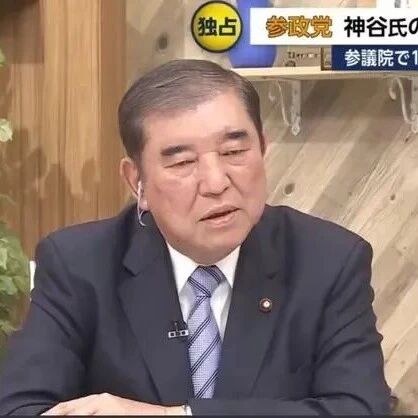
日本一官员称日本应当拥有核武器
Xin Lang Cai Jing· 2025-12-21 06:21
Group 1 - The core viewpoint of the article is that former Japanese Prime Minister Shigeru Ishiba opposes the idea of Japan acquiring nuclear weapons, stating it would not bring any positive impact to the country [1] - Ishiba clarified that the comments regarding Japan's nuclear armament were made by an official from the Prime Minister's office in an informal setting, indicating that these views do not represent official policy [1] - He warned that if Japan were to possess nuclear weapons, it would have to withdraw from the Treaty on the Non-Proliferation of Nuclear Weapons and the International Atomic Energy Agency, complicating Japan's nuclear energy policy [1]
石破茂发声:拥核“绝不会给日本带来正面影响”
Xin Lang Cai Jing· 2025-12-21 06:20
Core Viewpoint - Former Japanese Prime Minister Shigeru Ishiba stated that the idea of Japan acquiring nuclear weapons would "never bring positive effects" to the country [1] Group 1 - Ishiba emphasized that if Japan were to possess nuclear weapons, it would have to withdraw from the Treaty on the Non-Proliferation of Nuclear Weapons and the International Atomic Energy Agency [1] - He also highlighted that such a move would complicate Japan's nuclear energy policy, which is crucial for the country's energy supply [1]