智能化生产

Search documents
江苏徐州:一颗“工业大米”的智造故事
Xin Lang Cai Jing· 2026-01-12 16:57
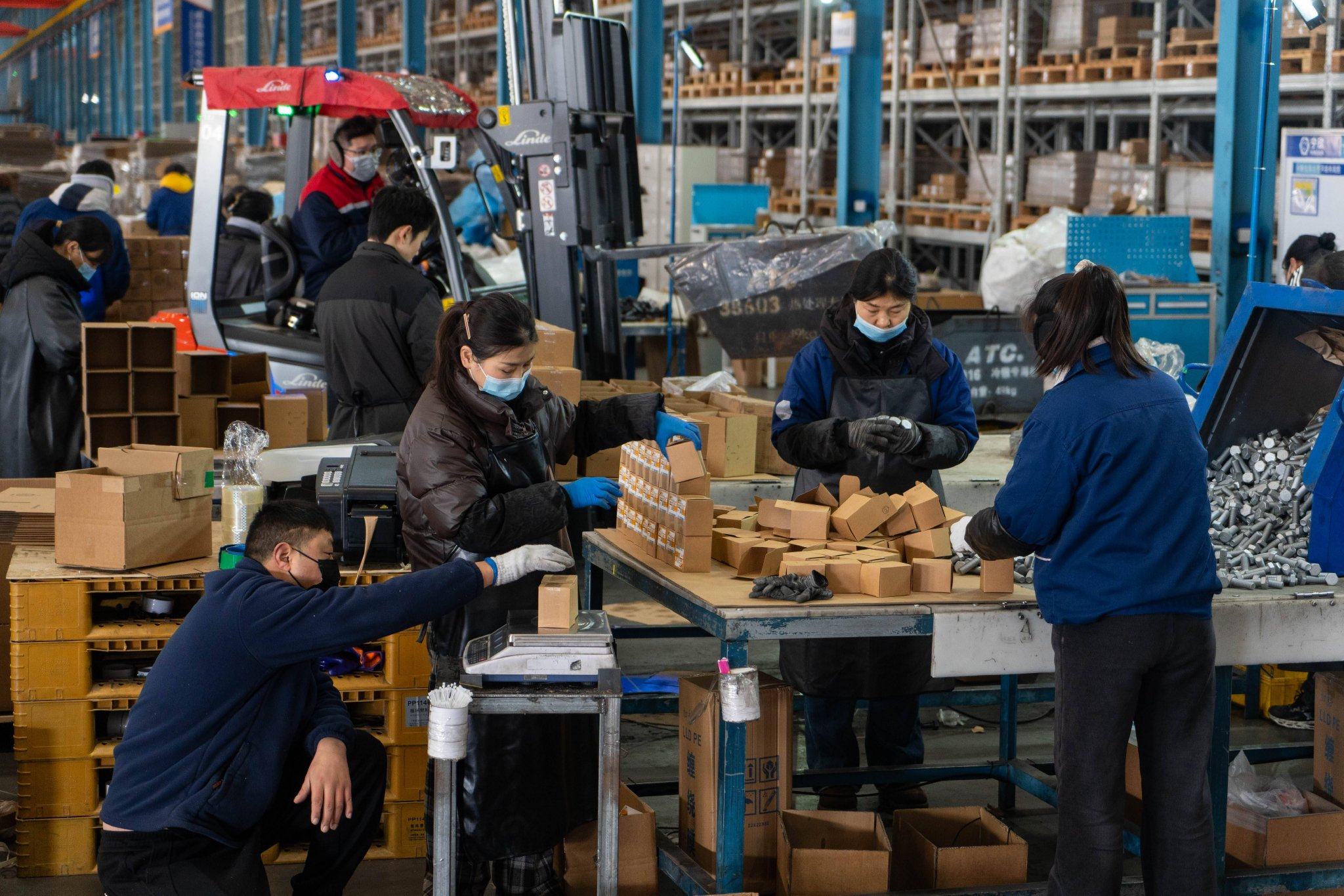
Core Insights - Jiangsu Ningxin is a key player in the fastener industry, producing over 20,000 specifications with an annual capacity of 80,000 tons, catering to various assembly needs from heavy machinery to passenger vehicles [4][8] - The company emphasizes quality over low-cost competition, focusing on stringent standards and continuous process innovation to penetrate the international supply chain [4][6] - Jiangsu Ningxin has achieved a "zero defect" delivery standard in the automotive sector, recognized by Caterpillar with the "Excellence Supplier" award in 2025, highlighting its manufacturing strength [6] Production and Technology - The production process involves high-temperature annealing at over 700 degrees Celsius to enhance material toughness and stability, followed by efficient operations using cold heading machines and thread rolling equipment [4] - Advanced optical sorting machines equipped with image recognition and AI algorithms ensure 100% accuracy in identifying specific product specifications during quality inspection [4][6] - The company utilizes a smart display to monitor real-time data on equipment utilization, energy consumption, production output, and inventory, enhancing production visibility and traceability [7] Strategic Focus and Future Plans - Jiangsu Ningxin aims to focus on the domestic and international mid-to-high-end markets, particularly in the engine and new energy fastener sectors, as part of its second five-year plan starting in 2026 [8] - The company has established partnerships for technological research, such as the collaboration with Xi'an Jiaotong University on high-strength hexagonal flange locking bolts, which has successfully entered mass production [6][8]

华阳智能:公司2025年前三季度实现营业收入3.18亿元
Zheng Quan Ri Bao Zhi Sheng· 2026-01-08 13:38
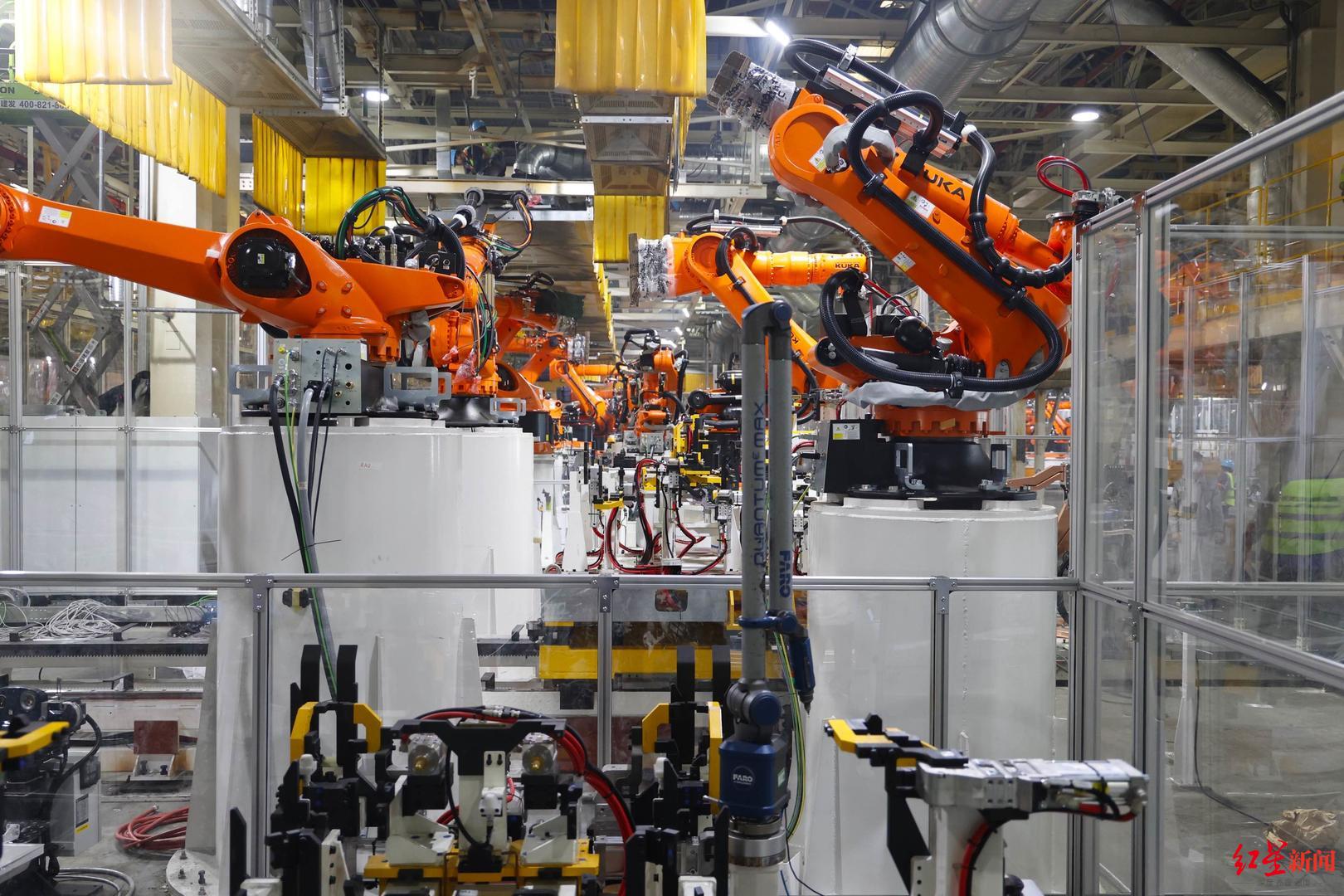
Core Viewpoint - The company reported a decline in revenue and net profit for the first three quarters of 2025, but showed significant growth in net profit for the third quarter, indicating potential recovery and strategic focus on key business areas [1]. Financial Performance - The company achieved an operating income of 318 million yuan for the first three quarters of 2025, a decrease of 14.52% compared to the same period last year [1]. - The net profit attributable to shareholders was 24.6 million yuan, down 2.38% year-on-year [1]. - In the third quarter alone, the net profit attributable to shareholders increased by 61.24% year-on-year, while the net profit excluding non-recurring items grew by 107.84% [1]. Business Development - The company focuses on two main business segments: micro-special motors and components, and precision drug delivery devices [1]. - In the micro-special motors and components segment, the company is enhancing its market presence by deepening relationships with existing clients and actively seeking new customers, while also shifting towards higher-end industry fields [1]. - The company is accelerating the automation and intelligent production transformation of micro-special motors to reduce costs and improve product competitiveness [1]. - In the precision drug delivery devices segment, the company is strengthening collaboration with existing strategic clients, increasing customer loyalty, and actively engaging with new clients, with several customized projects entering the testing and validation phase [1].
AI+果汁工厂开建 推动果饮产业升级
Xin Lang Cai Jing· 2026-01-08 00:26
Core Viewpoint - The establishment of the AI+Wokang juice black-light factory in Guangxi-ASEAN Economic Development Zone marks a significant advancement in juice manufacturing standards, emphasizing smart production and zero waste [1] Group 1: Company Overview - Guangxi Ice客食品有限公司 is fully investing in the AI+Wokang juice black-light factory, which will cover an area of 80,000 square meters and is expected to produce 100,000 tons of high-quality juice annually, generating an output value of 1 billion yuan [1] - The factory aims to utilize AI technology for 100% comprehensive utilization of Wokang and other fruits, transforming them into high-quality juice, valuable dried tangerine peel, and natural fruit fiber feed, achieving a "zero waste" goal [1] Group 2: Industry Context - The traditional Wokang processing relies heavily on manual labor, resulting in insufficient deep processing capabilities and low product added value [1] - The AI+Wokang juice black-light factory employs automated production lines for fully unmanned operations from raw material storage to finished product delivery, significantly enhancing product quality and production efficiency [1] - The Wuming area is a major production region for Wokang, providing ample raw materials and low transportation costs, which are foundational for high-quality juice production [1] - The Guangxi-ASEAN Economic Development Zone is recognized as a national-level economic and technological development zone, offering various policy benefits and a favorable business environment to support enterprise growth [1] Group 3: Smart Factory Development - In recent years, the Guangxi-ASEAN Economic Development Zone has focused on cultivating innovative entities, increasing policy and financial support, and promoting smart transformation led by enterprises [2] - There are currently 15 smart factories in the zone, covering multiple industries such as food processing, equipment manufacturing, and new energy, with 7 recognized as advanced smart factories and 8 as digital workshops in Guangxi [2]
在全球水处理市场显身手——探访威立雅水务技术公司无锡生产基地
Zhong Guo Hua Gong Bao· 2025-12-29 06:35
Core Insights - The article highlights the rapid growth and innovation of Veolia Water Technologies (Wuxi) Co., Ltd., emphasizing its role as a key strategic production base in China and its unique capabilities in intelligent manufacturing and green development [1] Localization and Capacity Enhancement - The company achieved localized production of submerged ultrafiltration products in less than six months, a significant improvement in speed compared to previous efforts [2] - The Wuxi factory has optimized its layout to achieve double-digit annual capacity growth without increasing its physical footprint, with approximately 30% of its production currently exported globally [2] Intelligent Production Efficiency - The Wuxi factory has implemented highly automated production processes, achieving an annual output of over 300,000 units, leading the industry in production efficiency [3] - As the sole global production base for Veolia's E-Cell (EDI module), the factory has continuously invested in smart manufacturing since 2015, automating key production processes and achieving paperless chemical production [3] - The factory's internal engineering team has developed customized automated production lines, enhancing production efficiency and supporting lean management [3] Green and Low-Carbon Development - Veolia is recognized as a pioneer in the domestic water treatment industry, effectively advancing the sector with its advanced technologies and water treatment concepts [4] - The company is the first to receive dual certification from leading international rating agencies SBTi and Moody's for its climate commitments, aiming for a global carbon-free emission of 15.2 million tons by 2024 [4] - The Wuxi factory has set a decarbonization target to reduce carbon dioxide emissions by 400 tons by 2025, having already achieved 60% of this goal through various innovative projects [4]
渭源:菌棒智能生产线投产 特色产业动能焕新
Xin Lang Cai Jing· 2025-12-24 04:23
Core Insights - The company has launched an intelligent production line for edible mushroom spawn, investing 10 million yuan, which is expected to enhance its high-quality development and production efficiency [1][2] Group 1: Production and Technology - The new production line automates the entire process from material selection to quality inspection, significantly reducing reliance on manual labor and improving efficiency [2] - The company has implemented smart upgrades across the entire mushroom production process, enhancing management and research capabilities while expanding market reach [1][2] Group 2: Economic Impact - The production line is projected to reduce the workforce by approximately 75%, with an expected annual output value of 20 million yuan and an increase in annual value added by 8 million yuan [2] - The annual production of mushroom spawn is anticipated to increase by 4 million sticks, contributing to the growth of the local mushroom industry [2] Group 3: Employment and Community Engagement - The company employs over 200 local workers, providing stable job opportunities and contributing to the local economy [2]
项目引擎驱动“工业新泰”攀高逐新
Xin Lang Cai Jing· 2025-12-23 12:54
Group 1 - The special paper project at Shandong Taian Baichuan Paper Industry Co., Ltd. is undergoing modernization, with the first workshop transformation nearing completion and expected to begin trial production by February next year [1] - The upgraded production line will feature fully automated operations, reducing labor costs by over 2 million yuan annually and increasing production efficiency by over 30% [1] - The company produces various types of paper, including parchment paper and food packaging paper, with an annual production capacity of 60,000 tons, targeting high-end markets with new waterproof and anti-static parchment paper [1] Group 2 - The new high-end parchment paper project is expected to produce 6,000 tons annually, generating an estimated annual output value of 120 million yuan, contributing significantly to the local economy [2] - The Shengling (Boyu Heavy Industry) industrial park's phase three project, with a total investment of 1.5 billion yuan, aims to become the largest boiler component production base in the country, with an annual capacity of 1.5 billion yuan [2] - The new production line will integrate advanced technologies, achieving a monthly production capacity of 800 tons, positioning itself at the forefront of the industry in terms of automation [2] Group 3 - The Yangliu Town is focusing on high-end equipment manufacturing, having initiated nine new projects this year to build a gradient project system for sustainable development [2] - The town is developing the "Yangliu Lifting Accessories Mall," successfully attracting 12 supporting enterprises to enhance the competitiveness of the industrial cluster through collaborative supply chain efforts [3] - New Tai City is implementing various project management systems to ensure high operational efficiency, achieving a 100% annual commencement rate for provincial key projects [3]
信宇人:公司目前在手订单正在有序生产中
Zheng Quan Ri Bao Zhi Sheng· 2025-12-18 13:17
Group 1 - The company is currently producing orders in an orderly manner, and the gross margin of its products should be referenced in the periodic reports disclosed by the company [1] - The company's fully automatic vacuum baking line technology is at the leading level in the industry, significantly improving vacuum drying efficiency while achieving full automation, intelligence, and large-scale production, with overall energy consumption savings exceeding 30% [1] - The lithium battery vacuum dewatering baking line has been widely applied among battery production customers in the fields of power, energy storage, and 3C [1]

永远的奔跑者——记澳斯卡粮油董事长张慧
Jing Ji Ri Bao· 2025-12-14 00:16
Core Viewpoint - The article highlights the rapid growth and innovative strategies of Ausca Grain and Oil Company under the leadership of Zhang Hui, emphasizing the benefits derived from the Hainan Free Trade Port policies and the company's commitment to quality and innovation in the food oil industry [1][4][7]. Group 1: Company Background and Development - Ausca Grain and Oil was established in 2020, following the release of the Hainan Free Trade Port construction plan, with an initial investment of over 1 billion yuan to create a grain and oil production facility with an annual capacity of 1 million tons [2][3]. - The company has benefited significantly from the Hainan Free Trade Port policies, enjoying approximately 300 million yuan in tariff reductions since its production began in 2021 [4]. Group 2: Innovation and Technology - The company has established a Nutrition Edible Oil Innovation Research Center in collaboration with Jiangnan University, focusing on developing high-end edible oil products and advancing key industry technologies [5]. - Ausca Grain and Oil has invested over 100 million yuan annually in research and development, leading to significant improvements in production efficiency and product quality, with a 30% increase in production efficiency and a 15% reduction in energy consumption [6]. Group 3: Production Capacity and Economic Impact - The company's production capacity has seen a substantial increase, from 190,000 tons in 2021 to 900,000 tons in 2023, with annual output value rising from 5 billion yuan to 8 billion yuan [6][8]. - The company aims to expand its international market presence, having successfully exported its first batch of 5,000 tons of soybean oil to India, showcasing the advantages of the Free Trade Port policies [7]. Group 4: Future Aspirations and Recognition - Ausca Grain and Oil has been recognized as a key leading enterprise in agricultural industrialization and ranked 168th among the "Top 500 Agricultural Enterprises in China" and 13th in the grain and oil industry [8]. - The company is committed to social responsibility and plans to contribute to rural revitalization and public welfare, reflecting its dedication to sustainable development [9].
神龙汽车成都工厂全新高端新能源车型明年7月量产
Xin Lang Cai Jing· 2025-12-13 14:29
Group 1 - The core focus of the news is the ongoing transformation of the Chengdu factory of Shenlong Automobile, aimed at enhancing automation, digitalization, and flexibility in preparation for the production of a new Dongfeng electric vehicle model, expected to commence mass production in July next year [1][2]. Group 2 - The transformation of the Dongfeng new energy project is divided into three phases, with the current focus on the welding workshop, and subsequent upgrades planned for the painting and assembly workshops during the 2026 Spring Festival and before the May Day holiday [2]. - The welding workshop's renovation involves 10 production lines, increasing the number of robots from 496 to 591, significantly enhancing automation levels, and incorporating new technologies such as AI vision detection systems for automatic measurement of body gaps [2]. Group 3 - The painting workshop will undergo modifications to adapt the electrophoretic drying furnace and conveyor systems, with the new 5C2B spraying process to improve paint appearance and durability for the new model [7]. - The assembly workshop will focus on upgrading conveyor tracks, building smart assisted driving testing platforms, and enhancing vehicle quality inspection equipment, with the production line expected to enter the new equipment debugging and trial production phase [7]. - The Chengdu factory has extensive experience in CKD, SKD, and has exported nearly 30,000 complete vehicles, including the Dongfeng Citroën Versailles C5 X, to 45 countries and regions such as Europe and Australia [7].
“2025政府采购办公家具十大品牌”榜单在京发布
Sou Hu Wang· 2025-12-10 02:13
Core Insights - The "2025 Government Procurement Office Furniture Top Ten Brands" list was established to standardize the furniture bidding procurement order and promote healthy industry development, coinciding with the 25th anniversary of the implementation of the "Bidding Law of the People's Republic of China" [1] Group 1: Evaluation Criteria - The evaluation of companies was based on six dimensions: enterprise qualifications and overall strength, product quality and technological innovation, market performance and bidding achievements, service capabilities and after-sales support, price control and policy compliance, and sustainable development and social responsibility [3][4] - Companies must demonstrate legal registration, financial stability, industry experience, and advanced production capabilities, including certifications like ISO 9001 and ISO 14001 [3] - The emphasis on product quality includes adherence to environmental standards and the use of innovative technologies, such as IoT systems and modular designs [3] Group 2: Market Context - The public procurement market in China exceeds 40 trillion yuan annually, with office furniture being a significant category; the procurement scale for 2024 is projected to reach 18.436 billion yuan [5] - The number of furniture procurement projects nationwide reached 14,142, marking a 10% increase from 2023 [5] Group 3: Featured Companies - **Saint-Ao Technology Co., Ltd.**: A leading provider of comprehensive office space solutions with a global presence in 128 countries, recognized for its innovation and social responsibility [6] - **Shenzhen Changjiang Furniture Co., Ltd.**: Established in 1986, the company has a production base of 300,000 square meters and emphasizes innovation with over 200 patents [7][8] - **Guangdong Zhongtai Furniture Group Co., Ltd.**: Founded in 1983, it operates a 600,000 square meter smart industrial park and serves various sectors, including government and healthcare [9] Group 4: Additional Notable Companies - **Dongguan Zhaosheng Furniture Industry Co., Ltd.**: Established in 1996, it focuses on environmentally friendly furniture and has received multiple awards for its innovative designs [11] - **Jiangmen Jianwei Furniture Decoration Co., Ltd.**: Founded in 1993, it integrates ergonomic design and eco-friendly materials, achieving numerous certifications [12] - **Zhongke Furniture Group Co., Ltd.**: Known for its high-quality products and commitment to innovation, it has received various industry accolades [13]