
民营经济促进法

Search documents
开局之年经济工作有哪些重点?这场会议释放鲜明信号
Yang Shi Xin Wen Ke Hu Duan· 2025-12-12 02:03
Core Insights - The Central Economic Work Conference held on December 10-11, 2025, focused on analyzing the current economic situation and setting the macroeconomic policy for 2026, emphasizing the need for a robust economic strategy amidst internal and external challenges [1][2][4]. Group 1: Economic Overview - The year 2025 is described as a significant year, with the Chinese economy expected to navigate challenges while achieving a modernized industrial system and enhancing social welfare [2][4]. - The International Monetary Fund and World Bank have raised their growth forecasts for China's economy in 2025, highlighting its resilience and contribution to global economic stability [4]. Group 2: Policy Direction - The conference emphasized a policy approach of "seeking progress while maintaining stability," focusing on improving quality and efficiency in economic governance [12][14]. - A commitment to a more proactive fiscal policy and moderately loose monetary policy was reiterated, alongside efforts to enhance the effectiveness of existing policies [14]. Group 3: Key Economic Tasks - Eight key tasks for economic work in 2026 were identified, with a primary focus on expanding domestic demand and building a strong domestic market [16]. - The importance of innovation, particularly in artificial intelligence, was highlighted as a means to foster new growth drivers and enhance industrial integration [18][19]. Group 4: Social Welfare Initiatives - The conference proposed several measures aimed at improving people's livelihoods, including job stability initiatives for key demographics and educational resource adjustments to increase access to quality education [25][27]. - Emphasis was placed on healthcare reforms to reduce medication costs and enhance support for vulnerable groups, reflecting a commitment to social welfare [27][29].

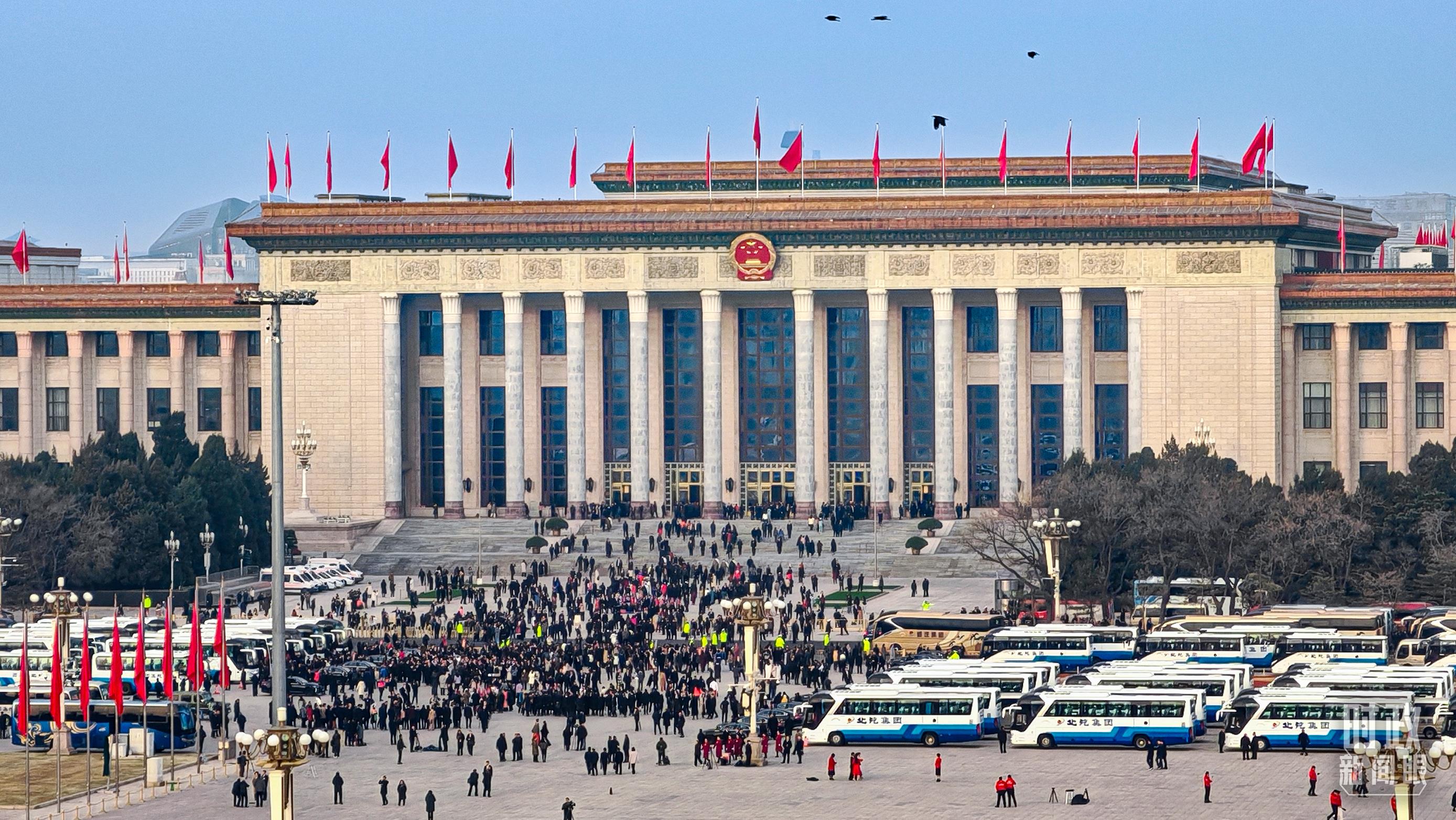
护航民营经济,中央要求完善民营经济促进法配套法规政策
Di Yi Cai Jing· 2025-12-11 12:35
多部地方性法规明年初起实行。 中央经济工作会议12月10日至11日在北京举行。此次会议部署2026年经济工作。"坚持改革攻坚,增强 高质量发展动力活力"是明年经济工作要抓好的重点任务之一,其中明确,完善民营经济促进法配套法 规政策。 李超表示,下一步,国家发展改革委将用更大力度、更实举措、更多办法,持续不断推动民营经济促进 法学习宣传和实施。 各地也正在推进配套地方性法规的立法或修法工作。《上海市民营经济促进条例》已于今年10月20日正 式实施,福建、山东、河北、天津、内蒙古、甘肃等多地已经出台地方性法规,均将于2026年1月1日起 正式施行。 已于今年5月20日起正式施行的民营经济促进法,是我国第一部关于民营经济发展的基础性法律。在国 家已出台不少促进民营经济发展的方针政策的基础上,民营经济促进法的独特意义在于以法律的形式更 加明确、集成地支持民营经济。上海财经大学法学院教授王全兴曾在接受第一财经采访时表示,该法将 促进民营经济发展的政策上升到法律层面,更具可预期性、稳定性和可靠性。 此外,还有多部地方法规条例正在公开征求意见,包括《贵州省民营经济促进条例(草案)》《宁夏回 族自治区民营经济促进条例(草案) ...
规范涉企行政执法・企业家说 | 李华:从“担心打扰”到“轻装上阵”,规范涉企行政执法给企业带来的新变化
Sou Hu Cai Jing· 2025-12-11 01:45
另外,今年开始实施的民营经济促进法也特别让我们民营企业振奋。将平等保护作为核心原则,这让我们更有信心把更多资源投入到提升药品质量和研发 新药上去,干劲更足了。 就拿药品生产行政检查来说,以前经常是不同部门分开来查,我们得反复准备、反复陪同,不仅耗时,还可能影响生产进度。现在不一样了,"综合查一 次"让多个部门一起上门,一次性把涉及到的项目都查清楚,而且重点不是上来就罚,而是边查边指导,帮我们整改,这样既守住了合法底线,又不影响 生产节奏,确实贴心。 今年我们还有个亲身经历:新药研发遇到法律方面的疑问,正担心会不会拖慢进度,结果正好赶上"综合查一次",市场监管、药监、环保几个部门一起过 来,现场检查、现场沟通,全程没有"一刀切",而是实打实地帮我们捋清楚问题、给出指引,让我们能安心继续推进。这种"无事不扰、有求必应"的执法 环境,让我们更能专注在药品研发和质量提升上。 总的感受就是,现在检查次数明显少了,执法更规范透明了,广西的营商环境确实越来越好,我们企业对未来的发展也更有信心。 规范步企行政执法 NB Erse France 192 李 NHLESSPERS 国国外国科学学校的中心理解 华 动式发出的 " ...

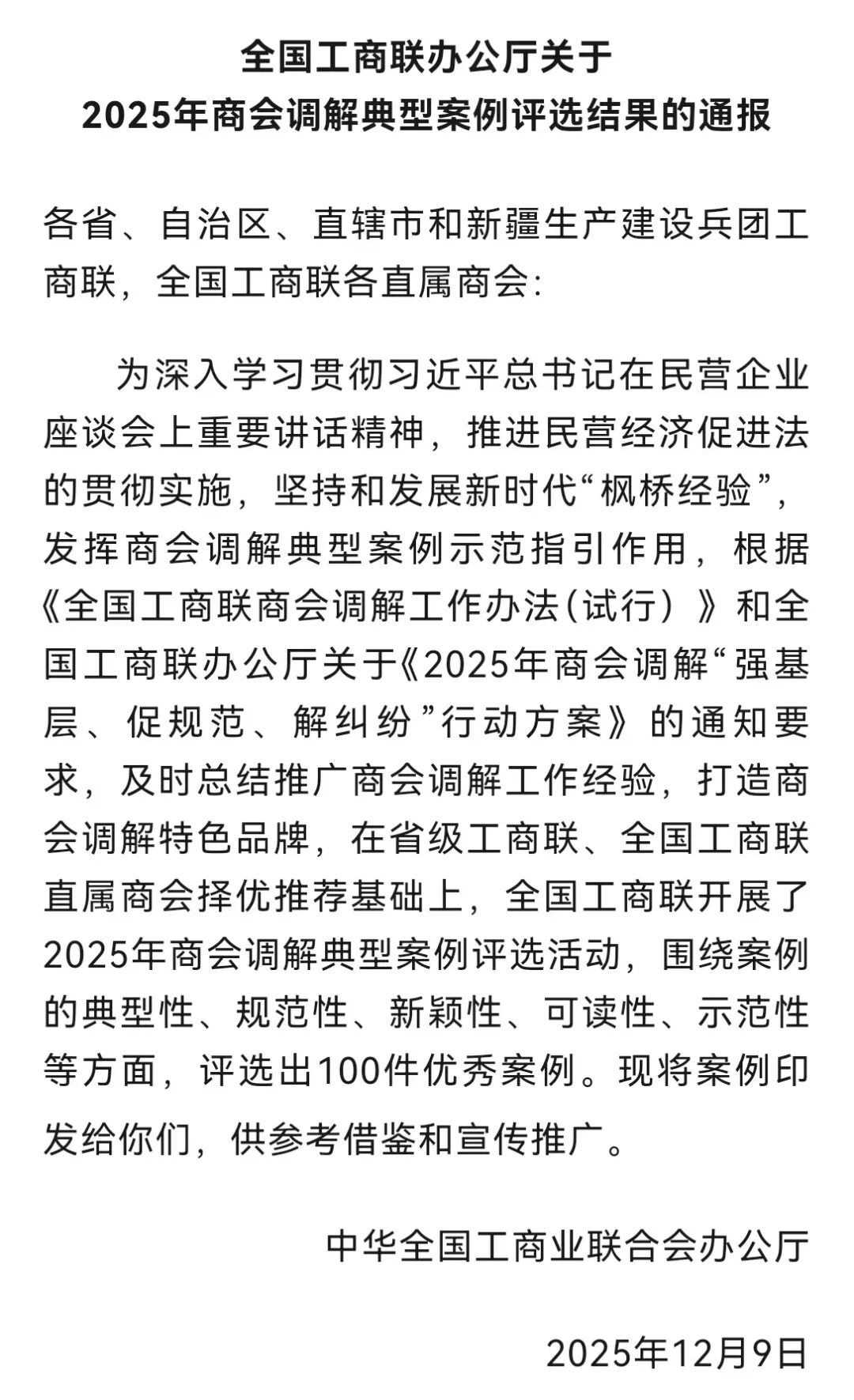
我市一调解案例获评全国工商联“2025年商会调解典型案例”
Xin Lang Cai Jing· 2025-12-09 13:36
Group 1 - The article emphasizes the importance of implementing the spirit of Xi Jinping's speech at the symposium on private enterprises, promoting the Private Economy Promotion Law, and developing the "Fengqiao Experience" in the new era [1][5][7] - The National Federation of Industry and Commerce has launched the 2025 selection of typical cases for chamber mediation, focusing on the typicality, standardization, novelty, readability, and demonstrative nature of the cases [1][5][7] - A total of 100 outstanding cases will be selected, with the case "Cross-Region Joint Mediation to Protect Rights and Efficient Resolution of Cross-Province Collective Labor Disputes" from Jining City being recognized as a typical case for 2025 [1][5][9] Group 2 - The initiative aims to summarize and promote the experience of chamber mediation work, creating a distinctive brand for chamber mediation [1][5][7] - The selection process involves recommendations from provincial federations and directly affiliated chambers of the National Federation of Industry and Commerce [1][5][7] - The article serves as a reference for promoting and publicizing the selected mediation cases [7][8]
一财社论:要在更多渠道、更宽领域听取民营企业的意见和建议
Di Yi Cai Jing· 2025-12-08 13:39
Core Viewpoint - The article emphasizes the importance of addressing the barriers faced by private enterprises and correcting violations of their legitimate rights to create a conducive environment for their development [1][7]. Group 1: Government Initiatives - The implementation of the Private Economy Promotion Law in May included extensive consultations with private enterprises, leading to the adoption of many of their suggestions [2]. - The National Development and Reform Commission (NDRC) has held 20 breakfast meetings with private entrepreneurs to gather their opinions, and has conducted over 160 discussions with various stakeholders [2]. - Local development and reform departments have organized over 20,000 meetings with private enterprises to facilitate communication [2]. Group 2: Legislative and Policy Framework - The Private Economy Promotion Law mandates that government agencies must consider the opinions of various economic organizations, including private enterprises, when formulating laws and regulations related to business activities [4]. - There is a need to ensure that the rights of private enterprises, as stipulated in the Private Economy Promotion Law, are genuinely upheld and that measures against illegal enforcement practices are effective [5]. Group 3: Feedback and Problem Resolution - It is crucial to enhance the channels for private enterprises to express their opinions and ensure that feedback leads to tangible solutions [3][7]. - Relevant departments are urged to promptly address issues raised by private enterprises, including correcting violations and ensuring compensation where necessary [7]. - The article calls for a more robust mechanism to relay the concerns of private enterprises to higher authorities, thereby promoting improvements in institutional frameworks [7].
民营经济促进法半年记②|民企出海,广东有方“法”
Sou Hu Cai Jing· 2025-12-05 20:30
Core Viewpoint - The implementation of the Private Economy Promotion Law in Guangdong has significantly enhanced the confidence and sense of gain among private enterprises, facilitating their international expansion and integration into the global economy [1]. Group 1: Economic Growth and Trade - Guangdong's foreign trade import and export scale has ranked first in the country for 39 consecutive years, with the number of private enterprises engaged in import and export increasing from 77,000 to 123,000, a growth of 60.7% during the 14th Five-Year Plan period [1]. - The proportion of private enterprises in Guangdong's import and export activities rose from 55.1% to 63.6% [1]. Group 2: Legal Framework and Support - The Private Economy Promotion Law emphasizes the need for government support in legal, financial, and logistical services for private enterprises going abroad, transforming policy guidance into a legal obligation [2]. - The law aims to provide a "legal safety lock" for enterprises, reducing risks associated with unfamiliarity with foreign legal environments [2]. Group 3: Service Platforms and Ecosystem - Guangdong is building comprehensive service platforms for enterprises going abroad, shifting from "single service" to "system empowerment," exemplified by the establishment of the "China Enterprises Going Global" service base, which connects with 198 overseas service institutions [3]. - The "Going Global" base has organized multiple seminars to address the full process of international expansion, indicating a shift in enterprises' perception of professional overseas services from optional to essential [3]. Group 4: Compliance and Development - The law outlines that private enterprises must comply with local laws and respect cultural traditions when investing abroad, marking a transition from "wild growth" to "compliant development" [7]. - Guangdong's development and reform commission has initiated salons to provide enterprises with compliance experiences and strategies for international operations [9]. Group 5: Intellectual Property and Talent Development - The law emphasizes the protection of overseas intellectual property rights, which is crucial for stimulating innovation among private enterprises [11]. - Guangdong has established eight national overseas intellectual property dispute response centers and is actively developing legal talent to support enterprises in international markets [12][14]. Group 6: Future Directions - The Guangdong Development and Reform Commission plans to further implement the Private Economy Promotion Law, supporting enterprises in establishing overseas R&D, production, logistics, and warehousing bases [14].

国家发展改革委联合多部门开展“《民营经济促进法》进园区进企业”活动
Zheng Quan Shi Bao Wang· 2025-12-05 06:44
下一步,国家发展改革委将会同相关方面,以更大力度、更实举措推动《民营经济促进法》的宣传解 读、配套制度建设和贯彻实施,持之以恒抓好法律的落地见效,充分发挥法治固根本、稳预期、利长远 的保障作用。 人民财讯12月5日电,12月4日是第十二个国家宪法日,国家发展改革委联合中央财办、最高人民法院、 司法部和北京市发展改革委等有关方面,共同开展"《民营经济促进法》进园区进企业"活动,先后赴北 京市朝阳区莱锦文化创意产业园、北京商务中心区,调研园区重点企业和律师事务所,召开"《民营经 济促进法》进园区进企业"座谈会,了解法律实施和企业经营发展情况,并向园区企业赠送《宪法》 《民法典》《民营经济促进法》等法律书籍及相关宣传材料。 ...
发改委亮出140余项配套制度 民营经济促进法落地提速
Jing Ji Guan Cha Wang· 2025-11-28 15:36
11月27日,在国家发展改革委召开的新闻发布会上,国家发展改革委政策研究室副主任、新闻发言人李 超介绍,《民营经济促进法》颁布施行以来,国家发展改革委会同各部门、各地方,从4个方面推动法 律实施。在营造公平竞争市场环境、强化民营企业要素支撑、优化涉企服务等方面,已推出140余项配 套制度,推动民营经济促进法的各项要求落实落细。 一是开展学习宣传。据初步统计,各级地方党委(党组)组织专题学习3300余场、宣讲培训11000余场, 组织送法进企业近6万次,媒体也开展了大量宣传解读工作,在全社会形成了促进民营经济发展的浓厚 氛围。 尤为重要的是,《民营经济促进法》对违法实施征收、征用或者查封、扣押、冻结等措施,以及违法实 施异地执法等行为的,要依法追究负有责任的领导人员和直接责任人员的责任,造成损失的,要依法予 以赔偿。这些规定通过强化公权力机关依法履行职责、规范执法和司法的方式保护民营企业权益,为民 营经济组织及其经营者的权益保护提供了明确、具体的法律依据,为实践中侵害民营经济组织及其经营 者权益问题的解决提供了基本的法律遵循。 二是健全配套措施。针对民营企业核心关切,在营造公平竞争市场环境、强化民营企业要素支撑 ...
发改委亮出140余项配套制度 民营经济促进法落地提速??
Jing Ji Guan Cha Bao· 2025-11-28 14:17
Core Points - The implementation of the "Private Economy Promotion Law" has led to over 140 supporting systems aimed at fostering a fair competitive market environment and enhancing support for private enterprises [1][3] - The law emphasizes equal treatment and protection for private enterprises, aiming to create a high-level socialist market economy and promote the healthy development of the private economy [3][4] - The law has already resulted in significant judicial actions, including a recent case where a government department was ordered to compensate a private enterprise over 8 million yuan [2] Group 1: Promotion and Implementation - The National Development and Reform Commission (NDRC) has organized over 3,300 learning sessions and 11,000 training sessions to promote the law, reaching nearly 60,000 enterprises [1][2] - A communication mechanism has been established to regularly gather feedback from private enterprises regarding economic conditions and industry development [2][5] Group 2: Supporting Measures - The supporting systems address key concerns of private enterprises, such as illegal fees, by establishing a long-term regulatory mechanism for enterprise-related charges [1][4] - Measures have been introduced to alleviate resource constraints for private enterprises, including optimizing credit approval processes and promoting intellectual property pledge financing [4][5] Group 3: Legal and Regulatory Framework - The law includes provisions to hold accountable those responsible for illegal actions against private enterprises, ensuring that losses incurred are compensated [4][6] - There is a need for improved coordination among the various departments involved in implementing the supporting systems to avoid policy fragmentation [6] Group 4: Future Directions - The NDRC plans to enhance efforts in promoting the law's implementation and ensure that the benefits reach market participants effectively [6]
国家发改委:正在积极推动基础设施REITs进一步扩围至城市更新设施、酒店、体育场馆、商业办公设施等更多行业领域和资产类型
Sou Hu Cai Jing· 2025-11-27 08:41
Core Insights - The National Development and Reform Commission (NDRC) has reported significant progress in the "Two Heavy" construction initiative, with substantial funding allocated for infrastructure projects aimed at enhancing national strategic capabilities and safety [2][3] Infrastructure Development - The NDRC has allocated 7 trillion yuan (approximately 1 trillion USD) in 2022 and 8 trillion yuan (approximately 1.2 trillion USD) in 2023 for 1,465 and 1,459 "hard investment" projects respectively, demonstrating a strategic and forward-looking approach [2] - Key areas of focus include urban infrastructure, major transportation projects along the Yangtze River, food security initiatives, and improvements in social welfare facilities such as high schools and hospitals [3] REITs Expansion - The NDRC is actively promoting the expansion of infrastructure Real Estate Investment Trusts (REITs), which have included various asset types since their inception in 2020, now covering 12 major industries and 52 asset types [4][5] - Recent efforts aim to further expand the REITs to include urban renewal facilities, hotels, sports venues, and commercial office spaces, enhancing support for the real economy [4] Private Economy Promotion - The implementation of the Private Economy Promotion Law has led to over 3,300 local study sessions and 11,000 training sessions, fostering a supportive environment for private enterprises [6] - The NDRC has introduced over 140 supporting measures to address core concerns of private enterprises, including a regulatory framework to prevent illegal fees [6] State-owned Forest Farms - The NDRC has issued guidelines to modernize state-owned forest farms, which cover 11.84 million acres and hold 3.81 billion cubic meters of forest stock, focusing on enhancing ecological product supply and resource management [7] - Key innovations include new management models, support for specialized industries, and the integration of modern technology in forest management [7] Emerging Industries - The NDRC is addressing challenges in emerging industries such as low-altitude economy and biomanufacturing by improving regulatory frameworks and market access [8] - The focus is on optimizing market entry conditions and supporting the development of integrated application scenarios to facilitate innovation [8][9] Energy Sector Developments - The NDRC has reported that the new energy storage capacity has exceeded 100 million kilowatts, significantly increasing the country's ability to manage power systems [10] - The hydrogen energy sector has also seen growth, with over 150,000 tons of green hydrogen production capacity established, supporting the transition to cleaner energy sources [10]