
生态环境法典

Search documents
生态环境法典草案三审 紧急情况下造成野生动物损害不担责
Zhong Guo Xin Wen Wang· 2025-12-22 08:29
Core Viewpoint - The third review of the Ecological Environment Code draft introduces provisions that exempt legal responsibility for wildlife damage in emergency situations where wildlife poses a threat to human safety [1][2]. Group 1: General Provisions - The Ecological Environment Code is China's second law named as a "code," with the overall draft expected to be presented by April 2025, consisting of five sections: General Principles, Pollution Prevention, Ecological Protection, Green Low-Carbon Development, and Legal Responsibilities [1]. - The General Principles section includes the promotion of ecological culture and further summarizes judicial practice outcomes, enhancing the roles of people's courts and procuratorates in ecological environment protection [1]. Group 2: Pollution Prevention - The Pollution Prevention section improves regulations regarding the organization and management of the burning of straw and fallen leaves, and adds regulatory measures for the cross-province transfer of solid waste [1][2]. Group 3: Ecological Protection - The Ecological Protection section introduces provisions for national support in international exchanges and cooperation on marine ecological protection, deep-sea polar exploration, and sand prevention and control [1]. - It also emphasizes the country's active participation in the conservation and sustainable use of marine biodiversity in areas beyond national jurisdiction [1]. Group 4: Green Low-Carbon Development - The Green Low-Carbon Development section enhances the overall requirements for green low-carbon development, focusing on the construction of a green low-carbon circular economy system and strengthening resource recycling measures [2]. - It further reflects the commitment to "dual carbon" goals and improves the systems and requirements for addressing climate change [2].
新华社权威快报丨再进一步!生态环境法典草案三审稿亮相
Xin Hua She· 2025-12-22 01:56
Core Viewpoint - The draft of the Ecological Environment Code is undergoing its third review by the National People's Congress, aiming to enhance legal protection for the construction of a beautiful China [5]. Group 1: Legislative Process - The Ecological Environment Code draft was initially submitted for review in April 2025, with subsequent reviews occurring in September and October of the same year [5]. - The third review draft consolidates various sections of the code that were previously reviewed separately [5]. Group 2: Key Provisions - The draft addresses issues such as conflicts between wild herbivores and livestock, as well as incidents involving large wild animals, mandating local governments to implement comprehensive prevention measures in severely affected areas [5]. - In emergency situations where wild animals pose a threat to human safety, the draft stipulates that measures causing harm to these animals will not incur legal liability [5]. - The draft enhances oversight of ecological monitoring institutions, strengthens regulations on the cross-province transfer of solid waste, introduces agricultural water-saving measures, and enriches overall requirements for green and low-carbon development [5].


再进一步!生态环境法典草案三审稿亮相
Xin Hua She· 2025-12-22 01:16
2025年12月22日 生态环境法典草案 三次审议稿 提请全国人大常委会会议审议 为美丽中国建设 提供更强法治保障 12月22日,生态环境法典草案三次审议稿提请十四届全国人大常委会第十九次会议审议。2025年4月, 生态环境法典草案整体初次提请审议。今年9月和10月,生态环境法典各编草案分两批完成了二次审 议。按照工作安排,将分拆审议并修改完善的各编草案重新合为完整的生态环境法典草案三次审议稿。 近年来,食草野生动物与家畜争草场、大型野生动物伤人等问题多发。对此,草案三审稿规定,在野生 动物致害严重区域,县级以上地方人民政府应当组织有关单位和个人积极开展野生动物致害综合防控。 值得注意的是,草案三审稿还增加规定,在野生动物危及人身安全的紧急情况下,采取措施造成野生动 物损害的,依法不承担法律责任。 草案三审稿还强化了对生态环境监测机构的监管,加强固体废物跨省转移的监管,增加了农业节水的规 定,并充实绿色低碳发展的总体要求等。 (文章来源:新华社) 新华社权威快报 ...
将进一步补充完善检察院生态环境保护职能
Xin Lang Cai Jing· 2025-12-19 23:33
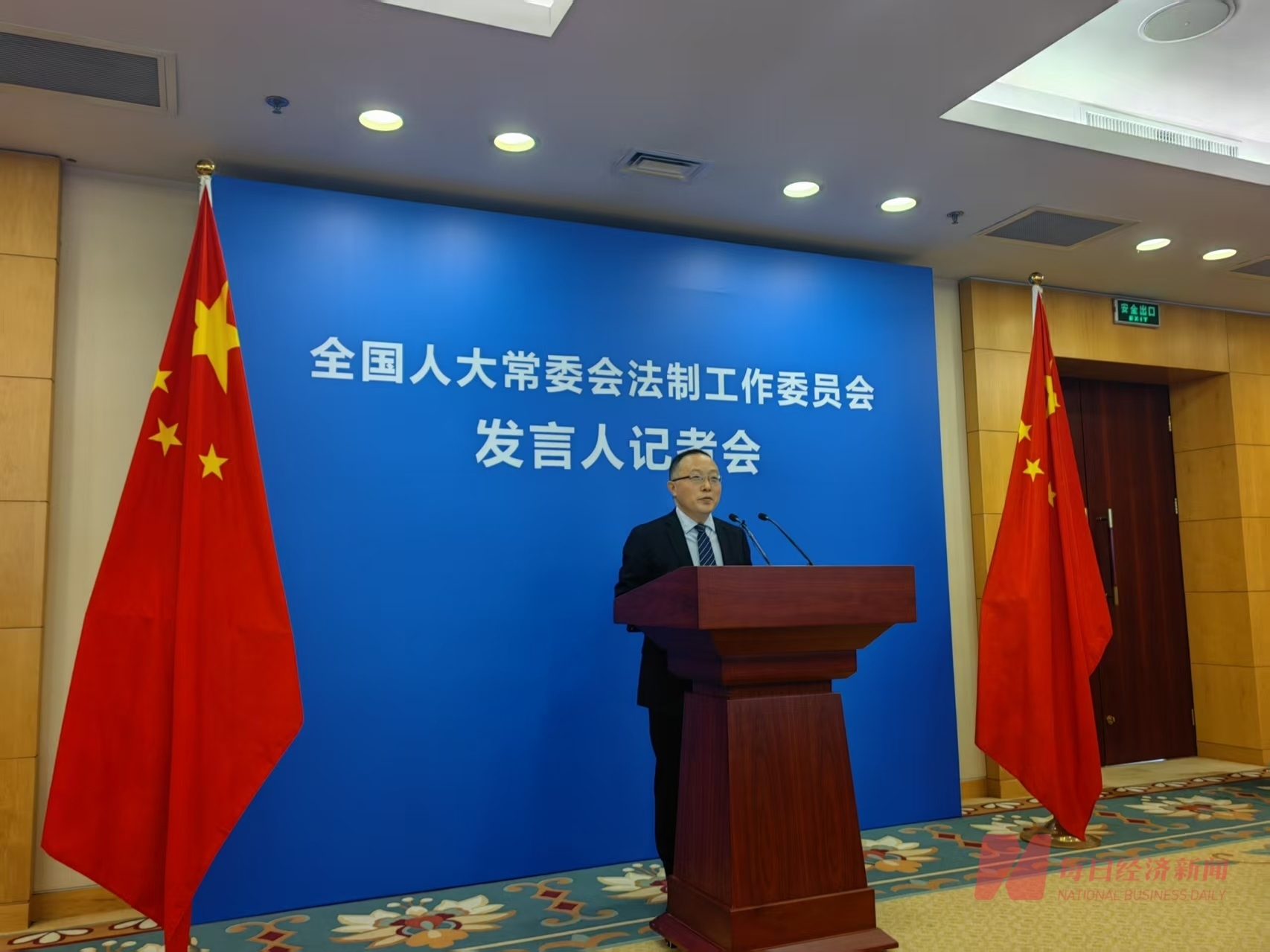
据介绍,草案三审稿修改内容还包括:在总则编,完善生态环境信用监管制度,增加信用修复的内容 等。在污染防治编,加强固体废物跨省转移的监管等。在法律责任和附则编,进一步补充相关法律责 任,体现生态环境法律制度的严密性;完善有关处罚措施,进一步贯彻过罚相当原则;完善生态环境损 害赔偿制度;进一步完善草案体例结构和衔接性规定等。 本报北京12月19日电(记者刘钊颖)"对人民法院、人民检察院在生态环境保护工作中的职能做了进一 步补充完善。"12月19日,全国人大常委会法制工作委员会举行记者会,就十四届全国人大常委会第十 九次会议拟审议的法律案相关情况进行了介绍,法工委发言人、研究室主任黄海华在记者会上表示,生 态环境法典三审稿对全国人大代表、社会公众建议的相关内容已作了修改完善。 黄海华表示,2025年9月,十四届全国人大常委会第十七次会议对生态环境法典总则编草案、生态保护 编草案和绿色低碳发展编草案进行了第二次审议。10月,十四届全国人大常委会第十八次会议对生态环 境法典污染防治编草案、法律责任和附则编草案进行了第二次审议。至此,生态环境法典各编草案已经 全部完成了二审。本次常委会会议将对生态环境法典草案进行第三次审 ...
十四届全国人大常委会第十九次会议相关法律案看点前瞻
Xin Hua She· 2025-12-19 07:01
Group 1: Legislative Developments - The 19th meeting of the 14th National People's Congress Standing Committee will be held from December 22 to 27 in Beijing, focusing on various legislative proposals including passenger rights protection and trademark registration conditions [1] - The draft of the Ecological Environment Code has completed its second review, with plans for a third review that will consolidate various sections into a complete draft, enhancing regulations on environmental monitoring and pollution prevention [2] - The draft amendment to the Civil Aviation Law aims to strengthen passenger rights protection and improve the aviation management system, addressing issues such as flight delays and cancellations [3] Group 2: National Asset Management - The draft National Asset Law will be reviewed, establishing a comprehensive legal framework for the management and supervision of state-owned assets, including natural resources and enterprise assets [4] - The draft emphasizes the need for effective management and protection of state-owned assets, promoting high-quality development of the state economy [4] Group 3: Trademark Law Revisions - The draft amendment to the Trademark Law will be presented for review, aiming to clarify registration conditions and enhance the protection of trademark rights [5] - The revisions are intended to align with national policies on intellectual property rights and improve the legal framework for trademark management [6]
完整的生态环境法典草案将提交全国人大常委会进行第三次审议
Xin Jing Bao· 2025-12-19 03:25
Core Viewpoint - The 19th session of the 14th National People's Congress Standing Committee will review the draft of the Ecological Environment Code for the third time, with all sections of the draft having completed their second review [1][2]. Group 1: Draft Modifications - The draft for the third review has undergone significant modifications based on feedback, including enhancements to the roles of the judiciary in ecological protection and the establishment of a credit supervision system for ecological environment [2][3]. - The pollution prevention section has been updated to include regulations on the management of straw and leaf burning, as well as enhanced oversight on the cross-province transfer of solid waste [2]. - The ecological protection section now includes provisions for scientific ecological protection activities and international cooperation in marine ecological protection and desertification control [2]. Group 2: Legal Responsibilities - The legal responsibilities section has been strengthened to ensure consistency in penalties for similar violations and to enhance the ecological damage compensation system [3]. - The draft emphasizes the principle of proportionality in penalties and aims to improve the structure and coherence of the code for effective implementation [3]. Group 3: Public and Representative Feedback - The drafts have received extensive public and representative feedback, with thousands of suggestions submitted during the public consultation period [4][5]. - Suggestions include improving pollution prevention measures, simplifying language in the legal text, and ensuring fair and efficient enforcement of ecological laws [5].
生态环境法典两编草案五大看点
Xin Hua Wang· 2025-10-31 02:02
Core Points - The legislative process of the Ecological Environment Code in China has advanced, with the second draft of the Pollution Prevention and Control section and the Legal Responsibilities and Supplementary Provisions section submitted for review by the National People's Congress Standing Committee on October 24 [1] Group 1: Air Pollution Prevention - The second draft of the Pollution Prevention and Control section focuses on addressing weaknesses in air pollution prevention, enhancing standards for volatile organic compounds, and strengthening regulations on emissions from heavy-duty trucks and ships [1][2] - The draft expands the definition of "organic solvents" to include "raw and auxiliary materials and products containing volatile organic compounds," thereby broadening the scope of regulation [2] Group 2: Water Pollution Prevention - The draft further details regulations on water pollution prevention, including provisions for groundwater condition surveys and stricter standards for wastewater discharge from inland vessels [3] - It emphasizes the need for clear responsibilities among government levels, regulatory bodies, and enterprises, enhancing technical support and standards for effective water pollution control [3] Group 3: Agricultural Non-Point Source Pollution - The draft strengthens regulations on agricultural non-point source pollution, addressing issues related to financial support, management of agricultural inputs, and disposal of agricultural waste [4][5] Group 4: Principle of Proportionality in Penalties - The draft implements the principle of proportionality in penalties, optimizing fine regulations to avoid excessive penalties for minor infractions and vice versa [6][7] Group 5: Combating Fraudulent Practices - The draft imposes strict penalties for fraudulent practices in environmental monitoring, including falsifying data and reports, to ensure data integrity and enhance public trust [8]
新华视点丨生态环境法典2编草案五大看点
Xin Hua Wang· 2025-10-25 06:08
Core Viewpoint - The legislative process of the Ecological Environment Code has advanced, with the second draft of the pollution prevention section and legal responsibilities being submitted for review by the National People's Congress Standing Committee, addressing key social concerns and enhancing environmental protection measures [1]. Group 1: Air Pollution Prevention - The draft emphasizes addressing shortcomings in air pollution prevention, including stricter standards for volatile organic compounds and enhanced regulation of emissions from heavy-duty trucks and ships [2][3]. - The draft expands the definition of "organic solvents" to include "raw and auxiliary materials and products containing volatile organic compounds," thereby broadening the scope of regulation [3]. - It also strengthens the oversight of emissions from mobile sources, such as vehicles and ships, reflecting the changing landscape of air pollution sources [4]. Group 2: Water Pollution Prevention - The draft includes more detailed regulations for water pollution prevention, such as conducting assessments of groundwater conditions and enhancing pollution control for ships entering inland rivers [5][6]. - It establishes management requirements for groundwater pollution prevention and sets higher standards for wastewater discharge from inland vessels [6]. Group 3: Agricultural Non-Point Source Pollution - The draft strengthens regulations on agricultural non-point source pollution, focusing on financial support, management of agricultural inputs, and disposal of agricultural waste [7][8]. - This reflects a shift in focus from point source pollution, which has seen significant improvements, to addressing the rising share of non-point source pollution in overall pollution levels [8]. Group 4: Principle of Proportionality in Penalties - The draft reinforces the principle of proportionality in penalties, optimizing fine regulations to avoid excessive penalties for minor infractions and insufficient penalties for serious violations [9][10]. - This adjustment aims to provide a more balanced approach to environmental enforcement, addressing concerns raised during the initial review of the Ecological Environment Code [10][11]. Group 5: Combating Fraudulent Practices - The draft imposes strict penalties for fraudulent practices in vehicle and ship emissions testing, as well as for falsifying monitoring data [12][13]. - It emphasizes the importance of accurate environmental monitoring data to ensure effective policy implementation and risk management [13].
网络安全法修正草案将二审 全国人大常委会法工委回应每经:拟对部分违法行为处罚规定作进一步完善
Mei Ri Jing Ji Xin Wen· 2025-10-23 08:06
Core Viewpoint - The draft amendment to the Cybersecurity Law is set for its second reading, addressing new situations and issues that have emerged in practice, and aims to modify the legal responsibility system in a targeted manner [1][3]. Legislative Developments - The Standing Committee of the National People's Congress (NPC) will review the Cybersecurity Law amendment along with other legislative proposals from October 24 to 28 in Beijing [6]. - The initial review of the draft took place in September 2025, and the current amendments are based on feedback from various stakeholders [6]. Key Amendments - The draft amendment aims to enhance the guiding principles for cybersecurity work and includes provisions to promote the safe development of artificial intelligence [6][7]. - It seeks to improve the legal responsibilities for failing to fulfill cybersecurity obligations, with further refinements to penalties for certain violations [7][8]. - The amendment will also strengthen the connection between personal information protection and existing laws, such as the Civil Code and the Personal Information Protection Law [7]. Public Feedback - During the public consultation period from September 12 to October 11, 162 opinions were received from 108 individuals, with significant input from legislative contact points [6][7]. - Suggestions focused on enhancing the leadership of the Communist Party in cybersecurity, refining penalty regulations, and improving legal coherence [6][7]. Artificial Intelligence Focus - The draft includes a framework for the governance and development of artificial intelligence, emphasizing the need for safety and ethical standards while promoting technological advancement [7][8]. - It aims to support foundational research and infrastructure for artificial intelligence, as well as to enhance safety risk monitoring and regulatory measures [7].
条款最多,生态环境法典污染防治编提请全国人大常委会二审
Xin Jing Bao· 2025-10-23 05:49
Core Points - The National People's Congress (NPC) Standing Committee is reviewing the second draft of the Ecological Environment Code, focusing on pollution prevention and legal responsibilities [1][2][3] Group 1: Pollution Prevention Measures - The second draft of the pollution prevention section aims to enhance overall requirements for pollution control, improve ecological environment quality, and safeguard public health [2] - Increased funding for agricultural and rural pollution prevention is emphasized, along with stronger measures against heavy metal pollution and volatile organic compounds [2] - The draft includes provisions for monitoring underground water conditions and regulating emissions from ships and heavy-duty vehicles [2] Group 2: Legal Responsibilities - The second draft proposes significant modifications to the legal responsibilities section, ensuring a balance in penalties for similar violations and enhancing accountability for ecological protection and low-carbon development [3][5] - Specific legal responsibilities are being refined for issues like groundwater protection and oil smoke pollution, with a new structure for the legal responsibilities chapter [3] - The draft aims to prevent disproportionate penalties in the pollution prevention sector, ensuring that fines are commensurate with the severity of violations [5][6] Group 3: Systematic Framework - The pollution prevention section is structured into nine subdivisions, addressing traditional pollution types and emerging environmental issues [4] - It integrates existing laws related to air, water, soil, solid waste, noise, radioactive pollution, chemical substances, and electromagnetic radiation, creating a comprehensive regulatory framework [4] - The goal is to provide systematic support for ongoing pollution prevention efforts, emphasizing scientific and precise pollution control [4]