电网改造

Search documents
光伏行业周报(20250428-20250504):欧洲停电或刺激光储需求释放,5月产业链排产预计环降-20250506
Huachuang Securities· 2025-05-06 06:12
Investment Rating - The report maintains a "Recommended" rating for the photovoltaic industry, expecting the industry index to outperform the benchmark index by more than 5% in the next 3-6 months [63]. Core Insights - A large-scale power outage in parts of Europe may stimulate the demand for solar energy storage, highlighting the urgency for grid upgrades and potentially increasing household storage demand [10][11]. - The report anticipates a month-on-month decline in production across the photovoltaic supply chain, with specific decreases noted in silicon materials, wafers, battery cells, and modules [11][12]. Summary by Sections 1. European Power Outage and Supply Chain Production - The recent severe power outage in Spain and Portugal has exposed the instability of the European power grid, which may accelerate the transition to renewable energy and grid improvements [10]. - The report predicts a decrease in production across the supply chain for May, with specific declines in silicon materials, wafers, battery cells, and modules [11]. 2. Market Performance Review - The report notes a 2.75% decline in the comprehensive index for the week, with the electric power equipment industry index down by 0.54% [12]. - The top-performing sectors included media and computer industries, while real estate and social services saw the largest declines [12]. 3. Photovoltaic Supply Chain Prices - Silicon material prices reported were 40.00 CNY/kg for dense silicon and 36.00 CNY/kg for granular silicon, with a slight decrease in granular silicon prices [36]. - The average price for P-type silicon wafers was 1.15 CNY/piece, while N-type wafers saw a decrease of up to 12.6% [36]. - Battery cell prices for PERC and TOPCon types showed a decline of approximately 1.69% to 5.26% [38]. - Module prices remained stable for some types, while others experienced slight declines [39][44]. - Photovoltaic glass prices decreased by 2.2% for 3.2mm coated glass and 3.5% for 2.0mm coated glass [46].
中国电力百年历史:停电何时从家常便饭,开始变成了稀罕事?
Sou Hu Cai Jing· 2025-05-04 10:30
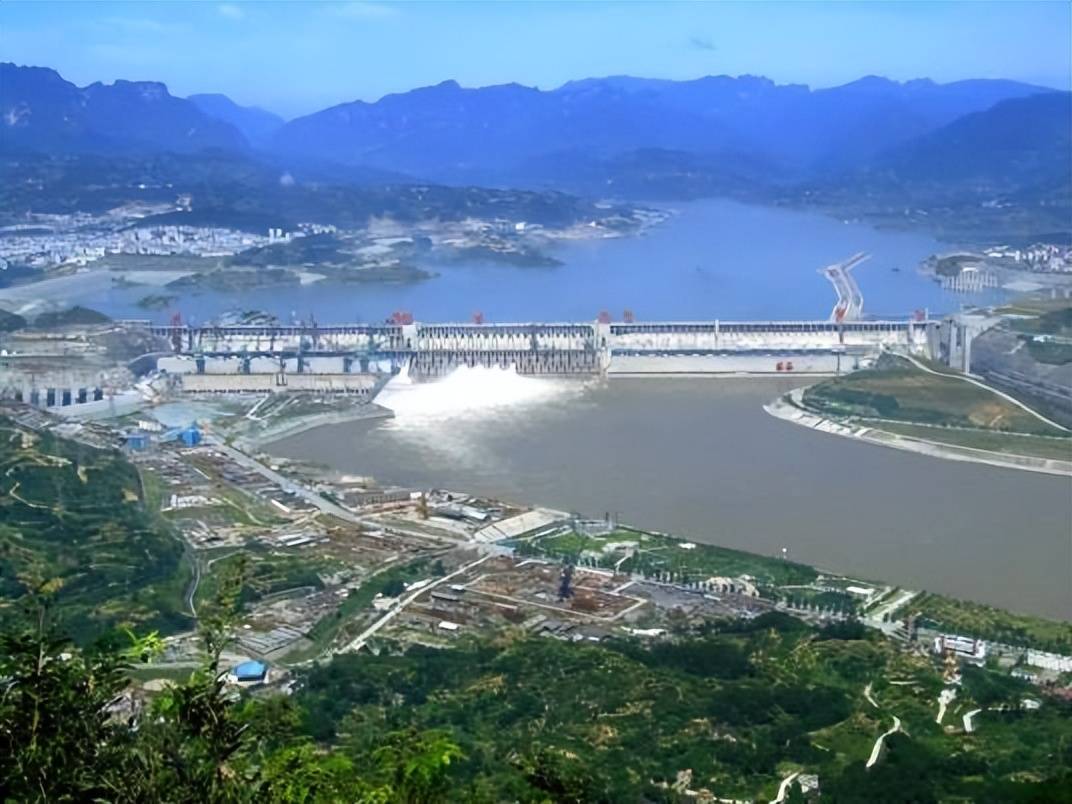
Core Viewpoint - The article discusses the evolution of electricity supply in China, highlighting the transition from a time of frequent power outages to a modern society with stable electricity access, particularly in rural areas [1][21]. Historical Development - The history of electricity in China dates back to 1879 when Shanghai lit the first electric lamp, establishing a foundation for the country's power development [1]. - Large-scale construction of the national power grid began after the establishment of the People's Republic of China, with significant projects like the 506 transmission line from the Fuling Hydropower Station to Lishizhai, spanning 370 kilometers [2][4]. Challenges in Early Development - The construction faced numerous challenges, including a lack of experience and manpower, requiring workers to rely on manual labor for tasks such as erecting towers and laying cables [4][6]. - The first 220 kV transmission line was completed in 1954, but rural electrification was not prioritized until after the economic reforms [6][8]. Rural Electrification - Initially, rural electrification only met basic lighting needs, with limited power supply and high costs based on the number of light bulbs [8][9]. - By 1997, Hunan Province achieved "village electrification," and by 2006, "household electrification" was completed, although some remote areas still relied on candles and kerosene lamps [13]. Modern Power Generation - China's power generation primarily relies on thermal power, which poses environmental challenges and high costs due to coal transportation [15]. - The government has shifted focus to clean energy sources like hydropower, with significant projects such as the Three Gorges Dam, capable of generating 70 million kilowatt-hours during peak water levels [17]. Infrastructure Investment - Between 1998 and 2004, over 210 billion RMB was invested to ensure stable electricity for 150 million farmers, marking a significant improvement in rural power supply [17]. - Ongoing upgrades to power towers and infrastructure are crucial for maintaining stability against extreme weather events [17]. Recent Challenges - Despite advancements, incidents like the 2022 power restrictions in Sichuan, caused by extreme weather and over-reliance on hydropower, highlight ongoing vulnerabilities in the electricity supply system [21][23]. - The article emphasizes that while the frequency of power outages has decreased, challenges remain to ensure that power supply becomes consistently reliable across all regions [21][23].


铜价单日暴涨800元/吨创两年新高!10万元关口在望?
Sou Hu Cai Jing· 2025-04-22 08:34
Core Viewpoint - The domestic copper market has experienced a significant surge, with the price of 1 copper rising by 800 yuan/ton to a two-year high of 77,440 yuan/ton, driven by multiple factors including a weakening dollar, supply concerns, and rising demand expectations [1] Group 1: Key Drivers - The dollar's decline has led to an influx of funds into copper futures, with the dollar index hitting a new low since 2022 and political pressure for interest rate cuts creating a trust crisis in the dollar [1] - Supply anxiety is heightened due to mining tax reforms and environmental restrictions in major producing countries like Chile and Peru, alongside a 0.5% annual decline in global copper ore grades and delayed new project launches [1] - Demand expectations are rising, particularly with a 45% year-on-year increase in copper demand for photovoltaic applications in China's new energy infrastructure, and increased copper usage for transformer production in Europe and North America [1] Group 2: Industry Dynamics - The upstream sector is thriving, with leading companies like Zijin Mining achieving a gross profit of over 30,000 yuan per ton and accelerating overseas acquisitions [1] - The downstream sector is under pressure, as cable manufacturers are raising prices by 5%-8%, and air conditioning manufacturers are preparing for another round of price increases [1] - Capital market activity is intense, with copper options implied volatility rising to 35% and speculative long positions reaching historical highs [1] Group 3: Institutional Divergence - Goldman Sachs maintains the view that "copper will be the new oil," setting a target price of 98,000 yuan/ton [1] - Morgan Stanley warns of short-term overbought risks, stating that the market has already priced in a two-year supply gap [1] - Domestic brokerages generally believe that if the Federal Reserve initiates interest rate cuts in June, copper prices could challenge the 80,000 yuan mark [1]