科普

Search documents
为新质生产力培厚知识土壤
Ren Min Ri Bao· 2025-09-29 01:29
Core Viewpoint - The articles emphasize the importance of science popularization in enhancing public understanding of emerging technologies and fostering new productive forces in China [1][2][3][4] Group 1: Science Popularization Initiatives - Zhejiang province has launched a new batch of provincial-level science popularization experience centers covering various emerging technology fields, with participation from universities, research institutions, and tech companies [1] - The "Sharing Future" series of science popularization activities in Beijing's Huairou Science City allows participants to engage with both ancient and modern computing technologies, enhancing their practical skills [2] Group 2: Importance of Scientific Literacy - Improving national scientific literacy is crucial for building a strong technological nation and developing new productive forces, as highlighted by President Xi Jinping [1] - The proportion of citizens with scientific literacy in China reached 15.37% by 2024, surpassing the 2025 target, indicating significant progress in science popularization efforts [3] Group 3: Challenges and Ethical Considerations - The rapid advancement of artificial intelligence presents challenges such as AI hallucinations and data poisoning, necessitating a focus on ethical considerations in science popularization [3] - The revised Science Popularization Law emphasizes the importance of scientific ethics, aiming to balance knowledge dissemination with the promotion of scientific spirit and ethical governance [3] Group 4: Impact on Daily Life and Economic Development - Science popularization is not merely an accessory but a vital component that nurtures technological innovation and cultivates new productive forces, impacting daily life and economic development [4] - As public scientific literacy improves, more cutting-edge technologies are expected to be transformed into new productive forces, driving high-quality development in the economy [4]
为新质生产力培厚知识土壤(人民时评)
Ren Min Ri Bao· 2025-09-28 22:28
Core Insights - The significance of popular science lies not only in disseminating scientific knowledge but also in bridging cutting-edge technology with daily life, thereby enriching the knowledge base for developing new productive forces [1][4] - The promotion of scientific literacy among the public is essential for building a strong technological nation and fostering new productive forces [1][3] Group 1: Importance of Popular Science - Popular science is crucial for transforming advanced technologies into practical applications that benefit everyday life, allowing the public to transition from observers to beneficiaries [1][4] - The integration of popular science with emerging industries and cutting-edge technologies enhances public understanding and engagement with new productive forces [2][3] Group 2: Role of Education and Engagement - Activities like the "Sharing Future" series in Beijing aim to cultivate scientific thinking and practical skills among participants, thereby fostering demand for new technologies [2] - The recent revision of the popular science law emphasizes the importance of scientific ethics, addressing the need for a balanced approach that includes knowledge, spirit, and ethics in science communication [3] Group 3: Progress and Future Directions - Since the 14th Five-Year Plan, significant progress has been made in popular science efforts, with the proportion of citizens possessing scientific literacy reaching 15.37% by 2024, ahead of the 2025 target [3] - The ongoing improvement in scientific literacy across various demographics indicates that there is still substantial potential for further development in popular science initiatives [3][4]
今天,我们这样做科普(科技视点)
Ren Min Ri Bao· 2025-09-28 22:28
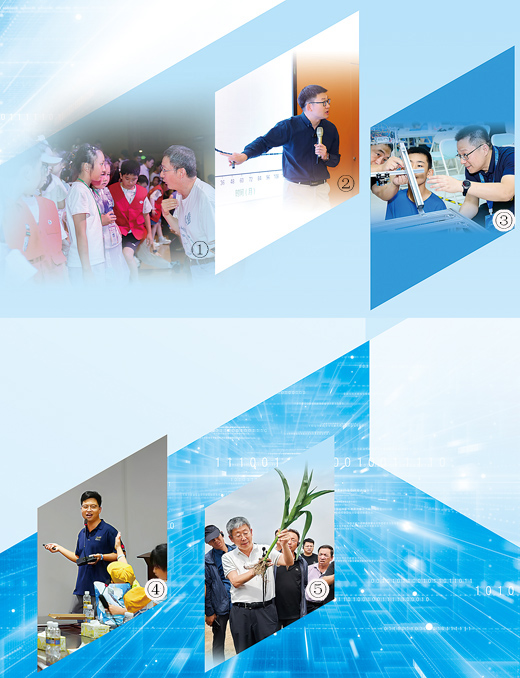
Core Points - The article emphasizes the importance of science popularization alongside scientific innovation, as highlighted by President Xi Jinping [2] - It showcases various science communicators who share their experiences and methods in making science accessible to the public [3] Group 1: Science Communication - Science communication is increasingly integrating into public life through diverse and engaging formats, such as short videos and live broadcasts [2] - The article features five science communicators who share their stories and approaches to making complex scientific concepts understandable and interesting [3] Group 2: Individual Contributions - Xu Xing, a paleontologist, focuses on instilling a scientific spirit in children by sharing stories about dinosaurs and the nature of scientific inquiry [4][5] - Li Zhizhong, a popular science author, aims to bridge the gap between professional research and public needs, emphasizing the importance of clear communication in health-related topics [8][9] - Chen Zheng emphasizes the need for science education to be practical and relatable, using everyday materials for experiments to engage students [11][12] - Wang Haozhan shares his journey in marine science communication, highlighting the importance of passion and curiosity in educating the public about marine biodiversity [14][15] - Li Shaokun discusses the implementation of "field classrooms" to effectively communicate agricultural science to farmers, resulting in significant increases in crop yields [18][19]

首个全国科普月:50余万场活动掀起热潮
Xin Hua She· 2025-09-28 18:19
Core Points - September marks the first National Science Popularization Month in China, with over 500,000 science popularization activities organized and more than 3 million science workers participating, creating a widespread and high-quality science popularization wave [1][2] - Various activities such as science reports, technology exploration, science education, science sports events, and science markets have been presented, facilitating cross-industry and cross-regional exchanges among science workers [1] - The National Science Popularization Month aims to align with the strategic goal of building a strong science and technology nation by 2035, focusing on targeted and precise science popularization [1] Participation and Engagement - Over 100 national societies organized cutting-edge science popularization activities, with more than 1,000 universities opening their facilities to the public, and nearly 3,000 activities conducted by 46 central enterprise associations and 225 national and local technology park associations [1] - Online science popularization initiatives, such as the "Science Light: Large-scale Online Broadcasting Activity," attracted over 500 million public participants, while the "Millions of IPs Creating Science Popularization" campaign mobilized over 10 million users and collected 4.71 million works, generating a topic dissemination volume of over 13.85 billion [1] Regional and Institutional Involvement - During the National Science Popularization Month, all 31 provinces, autonomous regions, municipalities, and regions such as Hong Kong and Macau actively created diverse science popularization activities, achieving full regional coverage [2] - More than 200,000 science popularization entities, including universities, enterprises, research institutes, science venues, popular science bases, and volunteer teams, participated in promoting diverse and high-quality science resources to a broader public [2]
特色活动打造“科普盛宴”
Ke Ji Ri Bao· 2025-09-26 01:24
Group 1 - The "National Science Popularization Month" is marked by various engaging activities across the country, showcasing scientific knowledge and innovations to the public [1][2] - The event features interactive exhibits and hands-on experiences, making advanced technologies more accessible and relatable to the audience [2][3] - The activities aim to bridge the gap between scientific concepts and everyday life, enhancing public understanding of science [3][4] Group 2 - The "Marine Science Popularization Caravan" initiative aims to bring marine biology education to inland areas, fostering interest in oceanic life among youth [4][5] - The collaboration between coastal and inland regions enhances the sharing of scientific resources, expanding the reach and impact of science education [5]
硬核科技褪去“冰冷外衣”
Ke Ji Ri Bao· 2025-09-26 01:24
Core Insights - The article emphasizes the importance of transforming abstract scientific concepts into tangible experiences for better public understanding and engagement in science [1] Group 1: Scientific Communication - Real-life research cases serve as the best scripts for science popularization, as demonstrated by a lecture that engaged over 200 middle school students in a mystery-solving format [2] - The integration of AI technology in science education platforms aims to provide personalized learning experiences for youth, covering various educational scenarios [3] Group 2: Innovative Approaches - The "Science + Ideology" model in science popularization not only ignites scientific enthusiasm among youth but also instills a sense of patriotism through immersive experiences [4] - The construction of a world-class salt lake industry base in Qinghai highlights the role of science popularization in nurturing future talent for resource exploration and ecological awareness [5] Group 3: Educational Initiatives - Lectures and interactive sessions during the National Science Popularization Month encourage students to engage with modern technology and foster curiosity and exploration in scientific fields [5]
全国科普月特别节目播出
Ren Min Ri Bao· 2025-09-24 23:22
Group 1 - The first national science popularization month special program "2025 Science Popularization China in Action" was broadcasted on CCTV-10, focusing on the theme "Technology Changes Life, Innovation Wins the Future" [1] - The program featured interviews with renowned scientists and showcased impactful science popularization cases, highlighting the active participation of scientists in promoting science [1] - The program utilized augmented reality technology to create a "Science Popularization China" high-speed train, showcasing various science popularization highlights across different regions [1] Group 2 - The newly revised Science and Technology Popularization Law will take effect on December 25, 2024, designating September as the National Science Popularization Month [2] - The "Dianzan·Science Popularization China" collection of the top 100 science popularization cases is a key activity for the 2025 National Science Popularization Month, providing content support for the special program [2] - Selected cases include various science communication projects and activities, such as "The 72 Transformations of Chinese Computing" and "Ten Thousand Whys: China National Parks" [2]
典赞·2025科普中国在行动
Ren Min Ri Bao· 2025-09-24 23:22
Group 1 - Various educational and scientific outreach projects are being implemented across different regions in China, focusing on topics such as environmental science, technology, and health [1][2][3][6][7][8][10][11]. - Notable projects include "The Story of Pi," "The Power of Water," and "Exploring the Secrets of Fire," which aim to enhance public understanding of scientific concepts [1][2][3]. - Institutions like Beijing University and various local universities are actively participating in these initiatives, showcasing a collaborative effort in science communication [2][10][11]. Group 2 - The establishment of science education bases, such as the "Three Gorges Project Museum" and "Guangzhou Zhengjia Plaza," aims to provide hands-on learning experiences for the public [9][10][11]. - Activities like the "National Disaster Reduction Day" and "World Water Day" are organized to promote awareness and education on disaster preparedness and water conservation [6][7][9]. - The integration of technology in education is highlighted through projects like the "AI and Cloud Computing" initiatives by companies like Alibaba and other tech firms [11][12]. Group 3 - The promotion of scientific literacy is emphasized through various competitions and events, such as the "National Agricultural Product Quality Safety Science Popularization Competition" and "Youth Poetry and Science Challenge" [7][9]. - Collaborative efforts between educational institutions and local governments are evident in initiatives aimed at enhancing rural education and technology access [6][7][9]. - The focus on health-related education is reflected in projects like "Healthy Eating Week" and "Oral Health Awareness," which aim to improve public health knowledge [7][8].
苏州市科普月专题活动举行
Su Zhou Ri Bao· 2025-09-24 00:42
Core Viewpoint - The event organized by the Suzhou Land Society aims to promote awareness of land resource conservation and the protection of the Taihu ecological environment through educational activities during the first National Science Popularization Month [1] Group 1: Event Overview - The theme of the event is "Cherish Land Resources, Protect Taihu Ecology - Exploring Intangible Cultural Heritage and Geological Science Popularization" [1] - Representatives from various organizations, including the Municipal Science Association and the Land Society, participated in the event, visiting locations such as the Zhoushan Nuclear Sculpture Village and the Xiangxia Bay Wetland Ecological Safety Buffer Zone [1] Group 2: Educational Focus - The Wu Zhong District Xishan Geological Museum, the first national geological museum in Jiangsu, features an area of approximately 1,200 square meters and showcases unique natural landscape resources of the Taihu Basin [1] - The museum serves as a scientific tourism site and a popular science education base, integrating exhibition, collection, research, and education [1] - Participants learned about local geological evolution, mineral resources, and paleontological fossils, gaining insights into the natural, cultural, and geographical characteristics of Xishan [1] Group 3: Objectives and Aspirations - The Suzhou Land Society aims to deepen participants' understanding of the importance of cherishing land resources and protecting the Taihu ecological environment through the activities of Science Popularization Month [1]
探索科学传播新表达(弘扬科学家精神·关注科普月)
Ren Min Ri Bao· 2025-09-23 22:12
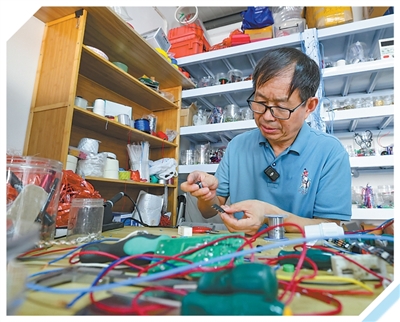
Core Viewpoint - The article highlights the innovative approaches of three science popularizers who utilize both online and offline methods to engage audiences and promote scientific knowledge in various fields, including physics and agriculture [6][7]. Group 1: Science Popularizers - Tang Shouping, a retired physics teacher, creates engaging physics experiments and videos, transforming complex concepts into fun demonstrations [8][9]. - Li Baoju, a researcher at the Chinese Academy of Agricultural Sciences, uses short videos to educate farmers about vegetable cultivation and pest control, earning the nickname "Vegetable Guardian" [10][11]. - Zhang Chenliang, director at the China National Geographic Media Center, combines humor and fast-paced content in his science videos, amassing over 50 million followers [12][13]. Group 2: Methods and Impact - Tang Shouping has developed over a hundred teaching aids and conducts public classes, making science tangible and enjoyable for children [9]. - Li Baoju addresses misinformation in agriculture through timely video responses, enhancing public understanding of agricultural practices [11]. - Zhang Chenliang emphasizes the importance of relatable content and audience engagement, believing that science communication should be both entertaining and educational [13].