
科学普及

Search documents
安徽科学技术出版社2025年度好书
Xin Lang Cai Jing· 2026-02-26 16:38
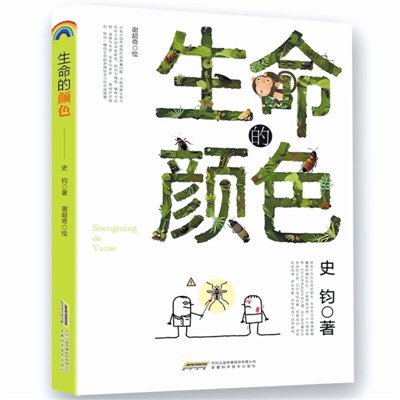
Group 1 - The article discusses various books that cover topics ranging from evolution and communication history to scientific exploration and clinical diagnosis [10][12][15]. - Notable works include "The Color of Life," which explores the evolutionary logic behind the colors of plants and animals, and "The Story of Combustible Ice," which provides insights into deep-sea gas hydrate exploration [10][11]. - The "Doctor Has Something to Say" series aims to educate patients and families about diseases and health management through a Q&A format, making complex medical information accessible [10]. Group 2 - "Research on the Craft of Bronze Ware in the Shang and Zhou Dynasties" utilizes modern technology to uncover the manufacturing secrets of ancient bronze artifacts, showcasing a blend of archaeology and science [11]. - "CT Diagnosis and Clinical" focuses on abdominal and pelvic diseases, featuring nearly 2000 high-quality images to aid clinical practitioners in enhancing their diagnostic skills [15]. - "The Brain Pop-Up Book" engages children with interactive elements to foster interest in neuroscience, highlighting the importance of early scientific education [16].

上海科技馆即将试开放,“上海科技馆”地铁站变身全民科普车站
Xin Lang Cai Jing· 2026-02-11 14:35
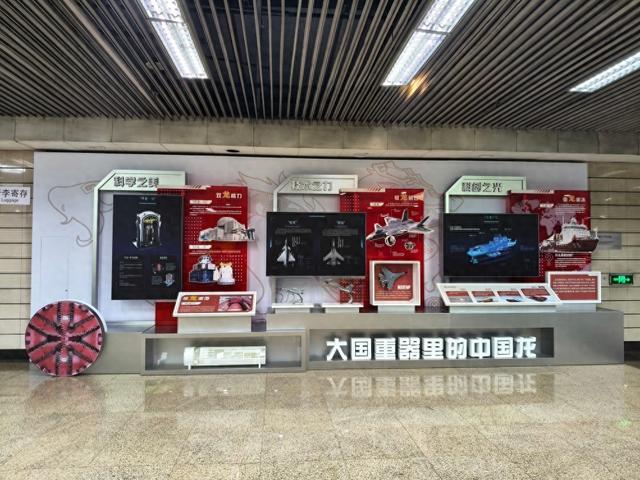
Core Insights - The "Shanghai Science and Technology Museum Station - National Science Popularization Station" has been newly launched, with public trial opening set for February 17, 2026 [1][3]. Group 1: Project Overview - The renovation of the science popularization station took six months and features a 20-square-meter immersive science space themed "Chinese Dragon in Major National Instruments" [3]. - The station is designed as a cultural demonstration site among over 500 subway stations in the city, promoting the idea that "science is everywhere" [3]. Group 2: Content and Features - The station showcases major national instruments such as the "Snow Dragon 2" polar research icebreaker, "Dragon" series fighter jets, "Silver Dragon" shield tunneling machine, and nuclear technologies like "Hualong One" and "Linglong One" [5]. - It employs lightweight visual design and incorporates science videos and interactive games to enhance citizen engagement and experience [5]. Group 3: Educational Impact - The station aims to connect "technological innovation" with "science popularization," serving as a key project in the science popularization efforts of the Pudong New Area [5]. - The renovation is seen as an innovative practice extending the functions of the Shanghai Science and Technology Museum, establishing a model for science popularization in public spaces [5].

全国人大代表潘复生:打通“从0到1再到100”的链条
Ren Min Ri Bao· 2026-01-30 03:30
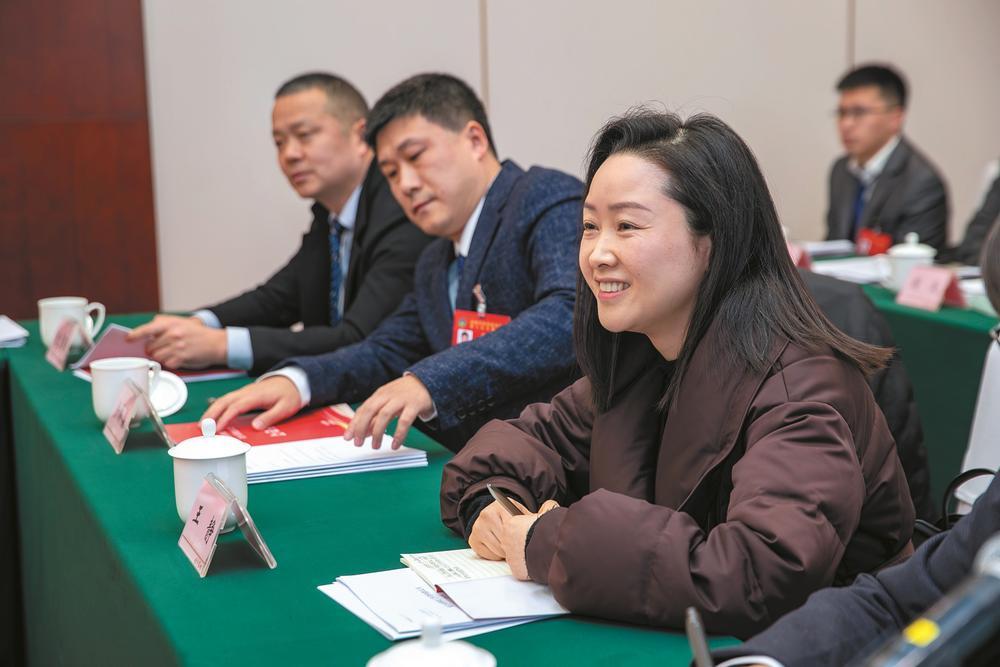
Group 1 - The core viewpoint emphasizes the importance of deep integration between technological innovation and industrial innovation as a foundation for establishing a modern industrial system [1][2] - There is a notable shortage of high-quality laborers, which hinders the deep integration of technological and industrial innovation. The proportion of personnel with basic scientific literacy in China needs improvement [1] - Recommendations include enhancing science popularization efforts to improve the scientific quality and capabilities of laborers, particularly those managing technological work [1] Group 2 - From a technical perspective, the shortage of original technologies and pilot testing platforms is a significant bottleneck for the integration of technology and industry in China [1] - A new national system is suggested to bridge the gap from "0 to 1 to 100," with a focus on addressing the challenges in the engineering process of pilot testing [1] - Mechanism-wise, there are still bottlenecks in China's technology sector that restrict innovation vitality. Suggestions include breaking down innovation barriers and adopting principles from game theory to rationally distribute risks and benefits [2]
打造磁悬浮观光线 建设科普创作中心
Xin Lang Cai Jing· 2026-01-22 19:12
Group 1: Core Perspectives - The Chengdu Association for Science and Technology's 10th Congress emphasizes the importance of technological innovation and integration with industry to contribute to the construction of a significant national technology innovation center [2][3] - High-temperature superconducting magnetic levitation technology is highlighted as a key original technology, with a focus on creating application scenarios to drive industry development [2] - The integration of science and industry is seen as a core engine for developing new productive forces, facilitating the transformation of scientific achievements into economic advantages [3] Group 2: Innovation Applications - The proposal to create a magnetic levitation sightseeing line connecting major tourist attractions aims to enhance the tourism experience and establish a "super IP" for Chengdu [2] - The establishment of a joint laboratory and pilot testing platforms is suggested to accelerate the commercialization of scientific research outcomes [3] Group 3: Science Popularization - The importance of science popularization is recognized as essential for fostering an innovative ecosystem, with initiatives like themed trains and community outreach programs being implemented to enhance public scientific literacy [4] - There is a call for more science communication professionals and resources to support the development of diverse science popularization projects, including the establishment of regional science creation centers [4]
河北省组建113个“科创河北”科技服务团
Xin Lang Cai Jing· 2026-01-17 23:55
Group 1 - The core viewpoint emphasizes the acceleration of technology transfer from laboratories to production lines in Hebei Province, driven by innovation and new productivity requirements during the 14th Five-Year Plan period [1][2] - Over the past five years, Hebei has established 113 "Science and Innovation Hebei" technology service teams, conducting over 400 service activities across various cities, counties, and enterprises [1] - The province has built 300 doctoral innovation stations, collected over 1,000 technical demands from enterprises, and promoted more than 100 doctoral achievements [1] Group 2 - The establishment of the Hebei Bearing Association marks a significant step in targeting county-level characteristic industrial clusters, aiming to create an innovation highland for the bearing industry in Linxi County within three years [2] - The provincial science association plans to implement a special action to support 107 county-level characteristic industrial clusters, utilizing a mechanism that connects enterprises, academic societies, and experts to address industrial challenges [2] - Since 2022, Hebei has formed a science spirit promotion team, conducting numerous outreach activities to foster a culture that values science and talent, reaching over 20,000 attendees [2] Group 3 - The province has made strides in popularizing science, with mobile science museums conducting 192 exhibitions and serving over 10 million people, while science outreach vehicles have traveled 116,000 kilometers, directly serving 1.146 million people [3] - A total of 48 national and 504 provincial science education bases have been established, creating a comprehensive network for science popularization [3] - The number of activities during National Science Day has reached 15,000, with a steady annual increase in participation [3]
矢志报国 彰显院士担当
Xin Lang Cai Jing· 2026-01-05 19:46
Core Viewpoint - The recent announcement of the "2025 Beijing Model" highlights the achievements of ten individuals, including Teng Jiwen, who is recognized for his lifelong contributions to geophysics and science education [1][2]. Group 1: Contributions to Science - Teng Jiwen is a pioneer in deep geophysical exploration, dedicating his life to research in areas such as internal physics of the Earth, continental dynamics, and disaster prevention [2][3]. - Over the past decade, he has published over 60 papers as the first author and has guided students in their research, contributing to the academic community significantly [2]. Group 2: Advocacy for Practical Applications - Teng emphasizes the importance of aligning scientific research with national needs and economic demands, regularly engaging with grassroots organizations to understand advancements in mining technology and disaster prevention [3]. - He promotes innovative geophysical exploration methods and actively contributes to the integration of academia and industry, providing insights for local economic development [3]. Group 3: Commitment to Education and Outreach - Teng is dedicated to science popularization, participating in various outreach activities across multiple provinces, aiming to inspire the next generation of scientists [3][4]. - His efforts in science communication include serving as a member of the Chinese Academy of Sciences' outreach team and engaging in educational initiatives at various levels [3][4]. Group 4: Personal Dedication and Legacy - Despite being 91 years old, Teng continues to work diligently, demonstrating a commitment to scientific inquiry and mentoring young talents [2][4]. - His life and work serve as an inspiration, embodying the spirit of perseverance and dedication to the pursuit of truth in science [4].
浙大教授:数学之美,在于自由
Xin Lang Cai Jing· 2026-01-01 13:37
Core Viewpoint - The article discusses the phenomenon of "interest disease" among university students, where they lose interest in learning after entering higher education, and emphasizes the importance of nurturing curiosity and imagination in students to combat this issue [3][4][5]. Group 1: The Issue of "Interest Disease" - The phenomenon of "interest disease" is prevalent among students who excelled in high school but lose their enthusiasm for learning in university [3]. - The excessive amount of information and repetitive content taught in primary and secondary education contributes to cognitive overload, leading to a lack of curiosity and imagination [4]. - Encouraging curiosity and imagination through storytelling and interdisciplinary connections can help reduce the likelihood of students developing "interest disease" [3][5]. Group 2: Educational Approach and Solutions - Teachers and parents should nurture children's curiosity and enhance their imagination, as curiosity is innate but tends to diminish with age [5]. - A balanced approach to education that combines academic rigor with the promotion of scientific culture and public understanding of science is essential [14]. Group 3: Mathematical Insights and Innovations - The integration of additive and multiplicative number theory in the work "Additive-Multiplicative Number Theory" represents a significant innovation in the field, addressing longstanding problems in number theory [10]. - The research includes conjectures related to the representation of integers as sums of powers and the generalization of Fermat's Last Theorem, which have garnered attention from notable mathematicians [10][11]. - The work emphasizes the connection between seemingly unrelated concepts, showcasing the importance of creativity and observation in mathematical research [9][10].
【人民日报】科学有答案 创新无止境——八位院士眼中的二〇二五
Ren Min Ri Bao· 2025-12-29 03:02
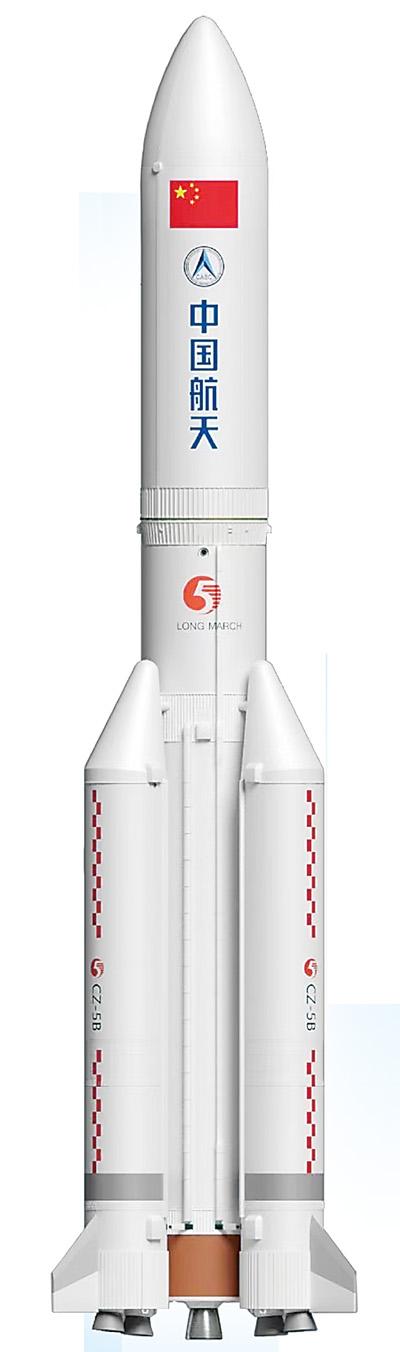
Core Insights - China's technological innovation is expanding into various fields, including quantum technology and lunar research, with significant breakthroughs expected by 2025 [4][6] - The "14th Five-Year Plan" emphasizes the importance of technology and innovation, highlighting a commitment to advancing scientific research and applications [4] - The development of deep space exploration and quantum computing is seen as crucial for China's strategic technological autonomy and future economic growth [8][17] Group 1: Deep Space Exploration - Major breakthroughs in lunar research are anticipated, including the discovery of new mineral types from samples returned by the Chang'e 6 mission, which will enhance understanding of lunar oxidation mechanisms [5] - The Tianwen-2 probe is set to conduct close-range exploration of a near-Earth asteroid, with sample return expected by the end of 2027 [5] - Future projects include the construction of a lunar research station, manned lunar missions, and exploration of Mars and Jupiter, aiming to enhance capabilities in deep space science and resource utilization [5][6] Group 2: Quantum Computing - Quantum computing is identified as a key technology for future strategic autonomy, requiring advancements in hardware and software integration [8] - China's third-generation superconducting quantum computer, "Benyuan Wukong," has been successfully deployed, participating in numerous collaborations across various sectors [9] - The development of quantum computing is likened to building a rocket, emphasizing the need for a comprehensive approach from hardware to software [8] Group 3: Brain-Computer Interfaces - Brain-computer interface technology is evolving to connect biological and machine intelligence, with advancements in decoding and encoding neural signals [10] - Clinical applications of brain-computer interfaces are emerging, with significant progress in invasive and non-invasive technologies [12] - The technology aims to redefine the boundaries of intelligence by integrating carbon-based and silicon-based systems [11] Group 4: Hydrogen Energy - Hydrogen energy is positioned as a vital component of the renewable energy revolution, complementing electricity and addressing sustainability challenges [17] - The development of hydrogen fuel cells is expanding into various sectors, including transportation and machinery, with China making significant strides in related technologies [18] - The strategic importance of hydrogen energy is underscored by its potential to facilitate a low-carbon energy transition [17] Group 5: Talent Development in Research - The cultivation of research talent is critical for supporting high-level technological independence, with a focus on aligning educational programs with national strategic needs [20] - Young researchers are increasingly prominent in key national projects, indicating a shift towards a younger demographic in scientific achievements [21] - A supportive environment for basic research is essential, requiring stable funding and a culture that encourages innovation and tolerates failure [22][23]
科学有答案 创新无止境(院士讲科普·年终特别报道)
Ren Min Wang· 2025-12-26 22:21
Core Insights - By 2025, China is expected to achieve significant breakthroughs in various scientific fields, including quantum technology and lunar research, contributing to the nation's technological self-reliance and innovation [3][5]. Group 1: Space Exploration - The Chang'e 6 mission is set to return samples from the moon's far side, revealing new insights into lunar oxidation mechanisms and marking a major scientific breakthrough in lunar research [4]. - The Tianwen-2 probe will conduct close-range exploration of a near-Earth asteroid, with a sample return expected by the end of 2027, indicating a shift towards long-term space exploration and resource utilization [4]. - China plans to advance its lunar research station, manned lunar missions, Mars sample return, and Jupiter system exploration, enhancing its capabilities in deep space exploration [4]. Group 2: Quantum Computing - Quantum computing is identified as a critical future technology, with China focusing on achieving full autonomy in quantum computing through the development of hardware and software systems [7]. - The third-generation superconducting quantum computer "Benyuan Wukong" has been launched, participating in numerous collaborations across key industries and achieving international cooperation in quantum computing [8]. - The development of quantum computing is likened to building a rocket, emphasizing the importance of integrating hardware and software for effective functionality [7]. Group 3: Brain-Computer Interfaces - Brain-computer interface technology is evolving to connect biological intelligence with machine intelligence, utilizing advanced decoding and encoding techniques to interpret brain signals [9]. - Clinical advancements in brain-computer interfaces are being made, with the establishment of comprehensive clinical trial centers and the initiation of global trials [11]. - The technology aims to redefine the boundaries of intelligence by merging carbon-based and silicon-based systems, enhancing cognitive capabilities [10]. Group 4: Digital Intelligence Technologies - Digital intelligence technologies, including cloud computing and artificial intelligence, are seen as essential tools for enhancing innovation across various industries [13]. - The integration of digital technologies into industrial processes is expected to significantly improve production efficiency and transform manufacturing paradigms [13]. - Open collaboration and resource sharing are highlighted as accelerators for technological advancement, contributing to global challenges [14]. Group 5: Hydrogen Energy - Hydrogen energy is recognized as a vital component of the renewable energy revolution, complementing electricity and supporting sustainable development [16]. - China has made significant progress in hydrogen fuel cell technology and is establishing a related industrial chain to enhance the role of hydrogen in the energy transition [17]. - The future of hydrogen energy will focus on tailored solutions that meet specific regional needs, ensuring its benefits for society [16]. Group 6: Research Talent Development - Universities are positioned as key players in nurturing research talent, aligning educational programs with national strategic needs [19]. - The emphasis is on practical applications of research, encouraging scientists to engage with industry and address real-world challenges [19]. - A supportive environment for young researchers is essential, promoting innovation and allowing for flexible evaluation of research outcomes [20]. Group 7: Basic Research Support - Basic research in China is gaining increased attention and funding, although it still lags behind developed countries in terms of investment [22]. - Continuous support for basic research is necessary, including funding stability and diverse investment channels to foster groundbreaking discoveries [22][23]. - A positive research culture is crucial for sustaining long-term engagement in basic research, promoting a supportive atmosphere for scientists [23]. Group 8: Science Popularization - The relationship between scientific innovation and public science education is emphasized, with efforts to enhance public understanding of science [24][25]. - Initiatives aimed at improving scientific literacy among youth are seen as foundational for future technological advancements [25][26].
乌东德水电站“护鱼记”
Ren Min Wang· 2025-12-26 08:59
Group 1 - The article emphasizes the importance of popularizing scientific knowledge and promoting scientific spirit to enhance the overall scientific and cultural quality of the population, contributing to the goal of achieving a high level of technological self-reliance and strength in China [1] - The initiative "Witnessing the Road of Science and Technology" is a collaborative effort between the China Association for Science and Technology and People's Daily, focusing on national science and technology strategic policies, significant scientific awards, and critical core technologies [1] - The project aims to conduct in-depth interviews and research at the grassroots level, producing a series of vivid and high-quality science popularization works to promote the spirit of scientists and gather strength for building a technologically strong nation [1] Group 2 - The article discusses the Udongde Hydropower Station, highlighting its role in not only providing electricity but also initiating a life protection plan for fish species affected by the dam [3] - It presents a narrative of harmony between the massive dam and migratory fish, showcasing a systematic approach to ensuring the survival and reproduction of aquatic life in the context of hydropower development [3]