
科普

Search documents
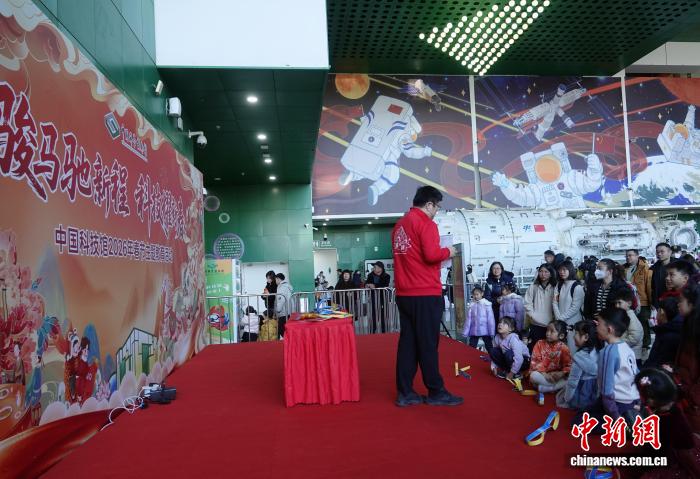
马年春节“科技大联欢” 全国科技馆接待观众超350万人次
Zhong Guo Xin Wen Wang· 2026-02-24 03:15
Core Insights - The "Technology Gala" during the Year of the Horse Spring Festival attracted over 3.5 million visitors across the national science museum system, showcasing a blend of zodiac culture, intangible heritage skills, and cutting-edge technology [1][2][4]. Group 1: Event Overview - The 17th "Technology Gala" was themed "Galloping Horse, Technology Shining in the New Spring," featuring four main sections including "Science Carnival" and "Myriad Scientific Tours" [2]. - The event included a special exhibition titled "Galloping Thousands of Miles - The Natural and Cultural Journey of Horses," which attracted 200,000 visitors and was shared electronically with 37 science museums nationwide [2]. Group 2: Regional Participation - Various provinces organized unique activities: - Shandong's 17 venues received 220,000 visitors, featuring activities like "Exploring Non-Heritage, Understanding Technology" [4]. - Anhui's 11 venues attracted over 65,000 visitors, with exhibits on quantum entanglement and interactive experiences [4]. - Guangdong's science center launched a sound exhibition and the world's first zodiac-themed movie, drawing over 80,000 visitors [5]. Group 3: Visitor Engagement - The Beijing Science Center hosted over 50,000 visitors with more than 300 educational activities [2]. - Liaoning's science museum engaged over 88,000 visitors with interactive projects like curling challenges and liquid nitrogen experiments [2]. - The event's cross-regional collaboration added a unique scientific flavor to the Spring Festival celebrations, enhancing public interest in science [7].

粤港澳科普场馆联动打造“科普百花秀”迎新春
Zhong Guo Xin Wen Wang· 2026-02-15 02:28
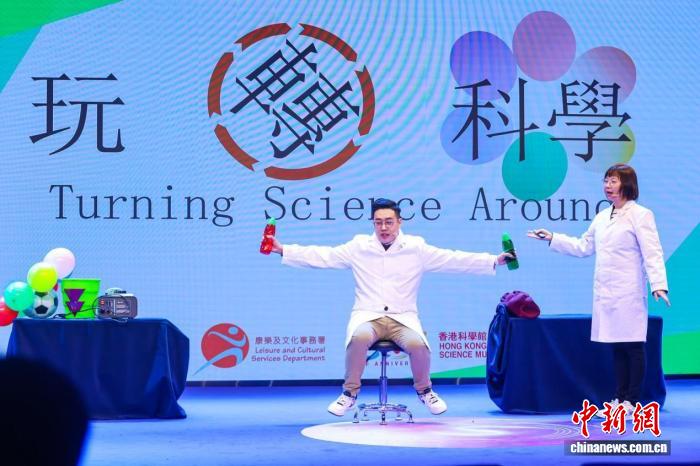
Core Viewpoint - The "Science Flower Show" aims to transform hard scientific knowledge into an engaging cultural experience during the Spring Festival, utilizing various artistic expressions to attract a younger audience [4]. Group 1: Event Overview - The "Science Flower Show" is a collaborative initiative involving over ten science popularization units from the Guangdong-Hong Kong-Macao Greater Bay Area, supported by the Guangzhou Science and Technology Bureau [4]. - The event will be broadcasted on television and online platforms starting from the 15th, focusing on the theme "Technology Lights Up a Beautiful Life" [4]. - The program aims to integrate science and art, making scientific knowledge more accessible and relatable to the public during the festive season [4]. Group 2: Participating Organizations and Activities - Participating organizations include the Guangdong Science Center, Hong Kong Science Museum, Macau Science Museum, and several others, showcasing a variety of scientific demonstrations and performances [4]. - The Guangdong Science Center will present a science stand-up comedy titled "Is Math Difficult?" which humorously explores mathematical concepts through engaging examples [5]. - The Hong Kong Science Museum will conduct experiments to explain scientific principles like Bernoulli's principle and centripetal force in an entertaining manner [5]. - The Macau Science Museum will focus on cutting-edge scientific applications, demonstrating the value of microfluidic technology in medical diagnostics and environmental monitoring [5]. Group 3: Program Format and Audience Engagement - Each segment of the "Science Flower Show" is designed to be under 10 minutes, aligning with the public's viewing habits during the Spring Festival while effectively conveying scientific knowledge [5].
中国科技馆2026年将启动会员体系,开展会员招募
Xin Lang Cai Jing· 2026-01-01 02:19
Core Viewpoint - The China Science and Technology Museum will officially start its membership recruitment in January 2026, aiming to enhance public engagement in scientific cultural development and resource sharing [1] Group 1: Membership System - The membership system is designed to promote the co-construction and sharing of science popularization resources, establishing a symbiotic mechanism that benefits both the museum's development and the members [1] - Three initial membership types are planned: "Innovator" members (students), "Dream Builder" members (young and middle-aged technology professionals), and "Pathfinder" members (renowned experts) [1] Group 2: Member Benefits - The membership system will provide convenient access to the museum, with plans to gradually open exclusive science popularization activities, customized deep experiences, and high-end academic exchanges [1] - Members will not only enjoy the museum's resources and services but also create value and achieve self-empowerment through the platform [1] Group 3: Future Collaboration - The museum aims to deepen collaboration with various sectors through mechanisms like "Science Popularization Salon" and "Beichen Laboratory," transitioning members from "service recipients" to "intelligent contributors" and "co-builders of science popularization" [1]
锚定“两翼理论” 深耕科普沃土——滨州市率先实现县域科技馆全覆盖纪实
Xin Lang Cai Jing· 2025-12-23 14:58
Core Viewpoint - Binzhou City has successfully established a comprehensive science museum system, achieving full coverage of county-level science museums by 2025, which serves as a model for science popularization in other cities [1][12]. Group 1: Development of Science Museum System - The construction of the science museum system in Binzhou has evolved from "single-point breakthroughs" to "full-area connectivity" over the past twelve years, with a total building area of 37,700 square meters and an investment of 152.6 million yuan [1][2]. - The city has received over 3.4088 million visitors, averaging more than 623,000 visitors annually, and has conducted over 500 science popularization activities [1][2]. Group 2: County-Level Science Museums - The first county-level science museum in Wuzi County opened in September 2013, followed by the Binzhou Science Museum in January 2017, which serves as a core platform for city-level science education [2]. - Recent years have seen a focus on integrating county-level science museum construction into the city's key tasks, with significant progress in standardization and unique characteristics [2][3]. Group 3: Integration and Innovation - The "Five-in-One" construction standard includes physical science museums, social science popularization museums, mobile science museums, campus science museums, and digital science museums, creating a multi-dimensional service structure [3][4]. - The digital science museum has achieved over 450,000 views, and new media platforms have garnered 311,000 followers, significantly enhancing the reach of science popularization efforts [3][4]. Group 4: Cultural and Educational Integration - The city promotes the integration of science popularization with culture, education, and industry, enhancing the public's scientific literacy and fostering innovation [5][9]. - Initiatives such as the "Liu Hui Star" naming and various cultural events aim to deepen the connection between local heritage and science education [6][9]. Group 5: Future Directions - Binzhou aims to enhance the operational efficiency of science museums, deepen integration with industry and education, and expand the reach of science popularization to rural areas [13][14]. - The city plans to establish a sharing mechanism for science resources between urban and rural areas, ensuring that science education reaches all demographics [13][14].
中国科普作家协会发布年度科普热词
Ren Min Ri Bao Hai Wai Ban· 2025-12-11 00:40
Core Viewpoint - The China Association for Science and Technology has released the "Top Ten Science Popularization Buzzwords" for 2025 to stimulate public interest in science and create a favorable atmosphere for scientific appreciation [1] Group 1: Key Buzzwords - The ten buzzwords identified for 2025 are: National Science Popularization Month, Scientist Spirit, Large Models, Low-altitude Economy, Humanoid Robots, Intelligent Agents, Innovation Culture, Industrial Heritage, Scene Innovation, and Science Fiction Industry [1] - These buzzwords reflect the development of science popularization, technological frontiers, and the integration of scientific communication with social culture in China [1] Group 2: Evaluation Process - The selection process involved extensive collection of recommendations across various fields, utilizing big data platforms like the National Language Resource Monitoring Corpus for statistical analysis [1] - The evaluation criteria included industry recognition, media attention, and public interest, leading to a comprehensive discussion and assessment by an expert group [1]
全国共有科协组织12.9万个
Ke Ji Ri Bao· 2025-11-09 01:11
Group 1 - The China Association for Science and Technology (CAST) reported a total of 129,000 associations nationwide as of December 2024 [1] - The 10th National Congress of CAST had 1,390 representatives, with 219 national scientific societies and 7.183 million individual members [1] - There are 3,202 local associations at the provincial, municipal, and county levels, with a total of 376,000 representatives [1] Group 2 - The national system manages 1,150 science popularization venues, 763 mobile science museums, and 1,350 science outreach vehicles, serving 150 million people throughout the year [2] - A total of 901,000 science popularization activities were held online and offline, with 1.69 million science communication websites and 3,713 WeChat public accounts [2] - There are 199.7 million part-time and full-time science communicators, and 516.6 million science volunteers engaged in various activities [2]
2025长三角科普创作交流活动暨第五届科学传播苏州论坛举行
Su Zhou Ri Bao· 2025-11-02 00:23
Core Insights - The event held on November 1, 2023, focused on the theme of "Deep Integration of Science Popularization Theory and Application in the Era of Artificial Intelligence" [1] - Over 150 experts and scholars from the Yangtze River Delta region and across the country participated to discuss the innovative development of science popularization empowered by AIGC technology [1] Group 1: Event Overview - The event included multiple expert presentations on topics such as AI-driven science popularization strategies and diversified development under a national system [1] - Eight parallel sub-forums were conducted, featuring over 40 scholars discussing scientific communication effectiveness and innovation in science popularization venues [1] Group 2: Practical Engagement - Attendees were scheduled to visit the Suzhou Institute of Nano-Tech and Nano-Bionics to understand its research progress and science popularization practices [1] - The forum aimed to strengthen the connection between theory and practice, showcasing Suzhou's achievements in integrating technological innovation with science communication [1] Group 3: Organizers - The forum was co-hosted by the Yangtze River Delta Science Popularization Creation Alliance, Soochow University, and the Jiangsu Provincial Science Writers Association [1] - The event was organized by the School of Media at Soochow University and the Jiangsu Provincial Science Communication Center [1]
广东为科技创新强省建设、推动高质量发展注入科学动能
Zhong Guo Fa Zhan Wang· 2025-10-20 15:35
Core Insights - The event "National Science Popularization Month" and the 8th "Guangdong Science Carnival" will take place on October 17-18, 2025, at the Guangdong Science Center, focusing on the theme "Technology Changes Life, Innovation Wins the Future" [1] - The event aims to showcase the latest achievements in science and technology innovation in Guangdong Province, promoting high-quality development through a comprehensive science popularization approach [1][6] Group 1: Event Overview - The event will feature a variety of activities including exhibitions, a science night market, and interactive experiences, emphasizing a "Science +" concept that integrates science exhibitions, cultural creativity, and night economy [1][2] - Nine key areas of collaboration will be highlighted, including actions from national science centers, universities, enterprises, and local governments, along with a display wall for the "Science Popularization Law" [2] Group 2: Science Night Market - The science night market will host nearly 30 participating units, featuring booths that cover AI, cultural creativity, and traditional medicine, showcasing the integration of technology and daily life [3] - Unique exhibits at the night market aim to promote the concept of scientific living and enhance the public's understanding of science [3] Group 3: Interactive Experiences - Attendees can engage in hands-on activities such as traditional paper-making and movable type printing, allowing them to experience ancient techniques while learning about their scientific principles [4] - The interactive area will include three main sections: traditional skills analysis, scientific exploration of traditional games, and modern technology applications [4] Group 4: Venue and Exhibitions - The Guangdong Science Center will open 13 themed venues and showcase popular science films, including a new exhibition titled "Walking with AI: Entering a New Era of Intelligent Civilization" [5] - The exhibition will cover AI's evolution and societal impact through four sections, encouraging visitors to explore the future of AI [5] Group 5: Overall Impact - In September, the first statutory "National Science Popularization Month" saw over 3,000 activities conducted across the province, effectively integrating quality science resources and fostering a culture of scientific appreciation and innovation [6] - The initiative aims to enhance public scientific literacy and lay a solid foundation for building a stronger technology innovation province [6]
星火成炬 点亮科学之光
Zheng Zhou Ri Bao· 2025-10-11 00:52
Core Points - The article emphasizes the importance of science popularization alongside technological innovation, as highlighted by President Xi Jinping's remarks [1] - The newly revised "Law of the People's Republic of China on Popularization of Science and Technology" has been implemented, marking the first nationwide Science Popularization Month in September [1] - The transition from "National Science Popularization Day" to "National Science Popularization Month" signifies a broader and more inclusive approach to public science activities [1] Summary by Sections National Science Popularization Month - The first National Science Popularization Month was launched in September, allowing for a more extensive range of activities compared to the previous single-day event [1] - As of October 10, 5580 science popularization activities were conducted in Zhengzhou, leading the province in activity numbers [1] Local Initiatives in Zhengzhou - Zhengzhou's science popularization efforts include a variety of themed activities aimed at enhancing public scientific literacy and supporting technological innovation [3] - Different districts in Zhengzhou have tailored their activities to local characteristics, such as "precise science popularization" in Jinshui District and "cultural science + public service" in Guancheng District [3][4] Community Engagement - The activities have reached over 316,000 people in various districts, with significant participation from schools and local communities [4][9] - Innovative formats like "science markets" and "subway check-ins" have been introduced to integrate science into daily life [8] Educational Focus - The focus on youth is evident, with numerous activities designed to inspire students' interest in science and technology, including hands-on experiences and lectures from experts [10][13] - The establishment of a "30-minute science circle" aims to enhance resource sharing among educational institutions and science venues [13] Collaboration and Resource Sharing - The collaboration between local science associations and educational institutions has led to a rich array of activities, including workshops and interactive exhibits [6][14] - The integration of cutting-edge technology in educational settings has been emphasized, with events showcasing AI and aerospace topics [5][6] Overall Impact - The initiatives have fostered a culture of scientific curiosity and engagement among the public, making science accessible and relatable [14] - The activities not only serve to educate but also to inspire a new generation of scientists and innovators [10][14]
蓝皮书:新疆、西藏科普事业实现历史性跨越
Xin Hua She· 2025-10-01 04:40
Core Insights - The blue papers titled "70 Years of Science Popularization in Xinjiang" and "60 Years of Science Popularization in Tibet" highlight the significant advancements in science popularization in these regions since their establishment [1] Summary by Sections Development of Science Popularization - Xinjiang has established a comprehensive science popularization organization network covering urban and rural areas, with a three-tier system of science museums at the regional, prefectural, and county levels [1] - Tibet has developed modern science popularization venues, including the Tibet Natural Science Museum, and has increased the number of mobile science museum exhibits to 14 sets [1] Achievements in Public Scientific Literacy - In Xinjiang, the proportion of citizens with scientific literacy increased from 3.97% in 2015 to 10.60% in 2023, indicating a significant improvement in public scientific understanding [1] - In Tibet, the proportion of citizens with scientific literacy rose from 1.93% in 2015 to 7.60% in 2023, reflecting a steady growth in public scientific knowledge [1]